The Middle East no longer has a war-ending mechanism. That may be the most dangerous conclusion to draw from the latest escalation between the United States and Iran.
The US military’s September 5 strikes on three Iranian oil tankers, after Iran fired ballistic missiles towards two American warships, are significant not simply because another threshold has been crossed. They are significant because every new round of retaliation is making the next round more likely, while making a negotiated exit progressively harder.
The United States can inflict enormous military and economic damage on Iran. Israel can destroy Iranian installations, eliminate commanders and degrade military capabilities. Iran can retaliate against American forces, regional infrastructure and shipping. But none of the three has demonstrated how its military actions lead to a sustainable political settlement. They have, in that sense, lost the plot.
Military operations are supposed to serve political objectives. Increasingly, the political objective in the Middle East appears subordinate to the military cycle itself: strike, retaliate, escalate, deter and strike again.
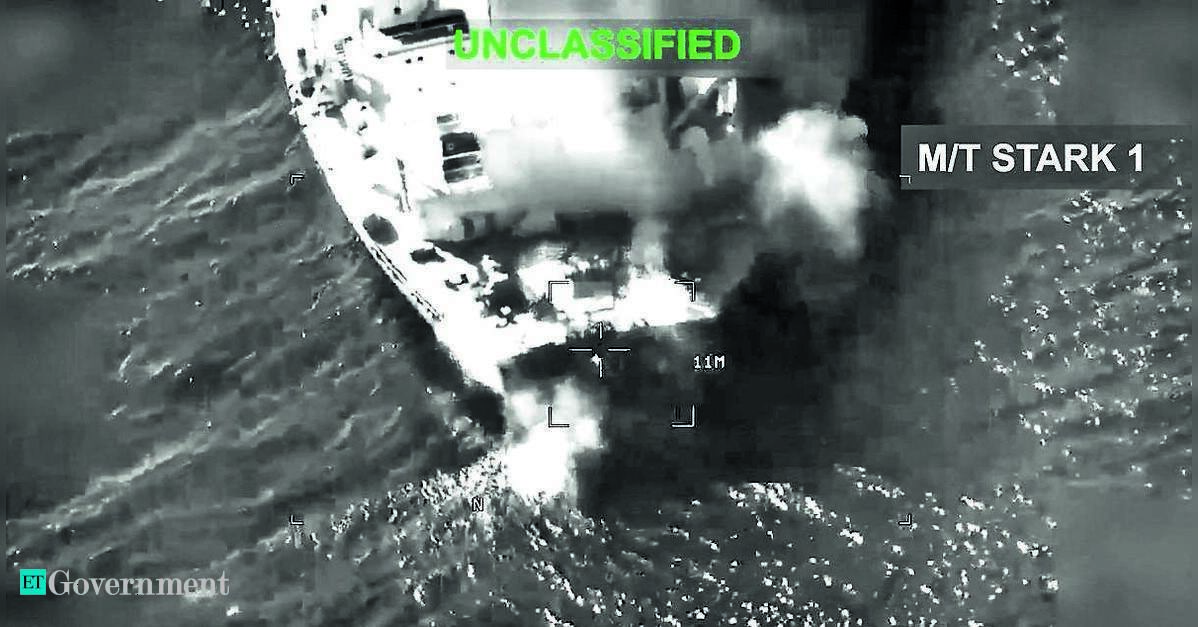
The September 5 attacks illustrate the problem. US Central Command said two Iranian oil carriers were disabled and a third destroyed after Iran targeted an American aircraft carrier and a guided-missile destroyer. Washington’s message was explicit: attacks on American forces would impose a higher economic cost on Tehran. Iran responded by threatening more severe action if attacks on its shipping continued.
Each side can rationally explain its next escalation. Collectively, however, those rational decisions are producing an increasingly irrational strategic outcome.
Iran has been battered but has not capitulated. The United States possesses overwhelming conventional superiority but cannot easily translate battlefield dominance into a stable Iranian or regional political order. Israel can weaken Iran’s military infrastructure but cannot bomb away the geopolitical forces that produced Iranian hostility in the first place. Tehran, meanwhile, can threaten shipping and American interests, but every such action provides justification for further attacks on its economy and military capabilities.
The result is a conflict with many escalation mechanisms and almost no credible termination mechanism. For India, this is not a distant geopolitical tragedy. It is an economic and national-security problem.
India imports nearly 90 per cent of its crude requirement. Brent has crossed $95 a barrel amid the latest escalation, while India’s oil import bill stood at around $123 billion in FY2025-26. One estimate suggests that a sustained $1-per-barrel increase in crude could add roughly ₹18,000 crore to India’s annual oil import bill.
The transmission mechanism from Middle Eastern warfare to the Indian economy is brutally simple. Higher crude prices increase the cost of transport, petrochemicals, fertilisers and manufacturing. Expensive LNG affects gas-based industries and power. Higher freight and insurance premiums raise landed energy costs even when supplies remain available. A larger import bill can weaken the rupee, widen the current-account deficit and feed inflation.
India therefore faces two separate risks: availability and affordability. The more dramatic danger is disruption of physical supplies. Around 40 per cent of India’s crude imports normally came through the Strait of Hormuz, according to recent estimates, and a significant portion of that supply has already been affected. Iraq’s supplies to India have fallen sharply, while Saudi Arabia and the UAE possess some capacity to bypass Hormuz through pipelines.
But the second danger may prove more persistent. Hormuz does not have to be hermetically sealed to damage India. Tankers merely have to perceive sufficient danger for freight rates and insurance premiums to rise. Shipping schedules become unpredictable, refiners pay more for alternative crude, voyages become longer and working-capital requirements increase.
The disruption of both Hormuz and Bab al-Mandab has already exposed this vulnerability. Alternative supplies from Russia, Africa and Latin America are available, but longer voyages and changing freight economics impose additional costs.
India must therefore stop thinking about the Middle Eastern crisis primarily as something that will eventually “end”. Policy must increasingly be designed around the possibility that instability itself is becoming permanent.
That means larger strategic petroleum reserves, broader crude sourcing, more flexible refinery configurations, resilient shipping and insurance arrangements and stronger energy partnerships with Russia, Central Asia, Africa and Latin America. It also strengthens the strategic case for domestic renewable energy, nuclear power, biofuels and electrification. Energy transition is no longer only a climate objective. It is geopolitical insurance.
There is another uncomfortable consequence of this emerging world disorder. China could eventually become its biggest relative winner.
Beijing is hardly immune to the Middle Eastern crisis. China remains heavily dependent on imported energy and is exposed to maritime chokepoints. But its response demonstrates the advantages of having spent years constructing multiple supply options. Sinopec has sharply increased purchases of Russian crude as Middle Eastern supplies have become less dependable.
China can also access some Russian and Central Asian energy through overland infrastructure, reducing — though certainly not eliminating — its dependence on vulnerable sea lanes. More importantly, China is competing differently.
The United States is expending military resources in the Middle East. Russia and Europe have been consumed by the war in Eastern Europe. Israel and Iran are devoting enormous resources to their confrontation. Defence budgets are rising, infrastructure is being destroyed and political attention is being absorbed by wars whose endpoints remain uncertain.
China, meanwhile, can concentrate on securing resources, industrial capacity, technologies, supply chains and markets.
The Ukraine war pushed Russian energy towards Asia. Middle Eastern instability is forcing another reorganisation of global commodity flows. Chinese refiners are now competing aggressively for Russian crude, with stronger Chinese demand contributing to pressure on India’s Russian oil purchases in August.
This does not mean every war automatically benefits Beijing. China also pays higher energy and shipping costs and faces disruption to trade. But there is a fundamental strategic asymmetry. While other major powers expend missiles, aircraft, ships, ammunition and fiscal resources on military confrontation, China has considerable scope to pursue economic and resource advantages without firing a missile or bullet.
That should concern India as much as the immediate oil shock. The lesson from the three Iranian tankers is therefore larger than the fate of those ships. The international system is moving towards an era in which wars do not necessarily conclude with treaties, settlements or decisive victories. They can instead become semi-permanent conditions around which economies are forced to reorganise.
The United States, Iran and Israel may still possess enormous capacity to escalate the Middle Eastern conflict. What none of them has convincingly demonstrated is how the escalation ends.
India cannot determine the answer. It can, however, prepare for the consequences. The strategic assumption must now be stark: the Middle East may remain unstable for years, oil routes may remain vulnerable, energy may remain expensive, and great-power competition may intensify even as wars drain the resources of many of the principal actors. India’s task is no longer to wait for normality to return. It is to build an economy capable of prospering without it.