The skies over Jodhpur will become a laboratory for the future of air warfare when some of the world’s most advanced combat aircraft converge for Tarang Shakti 2026. But for the Indian Air Force, the exercise is not primarily about assembling an impressive line-up of fighters. It is about learning how different technologies, doctrines and operational experiences can be integrated in an increasingly complex battlespace.
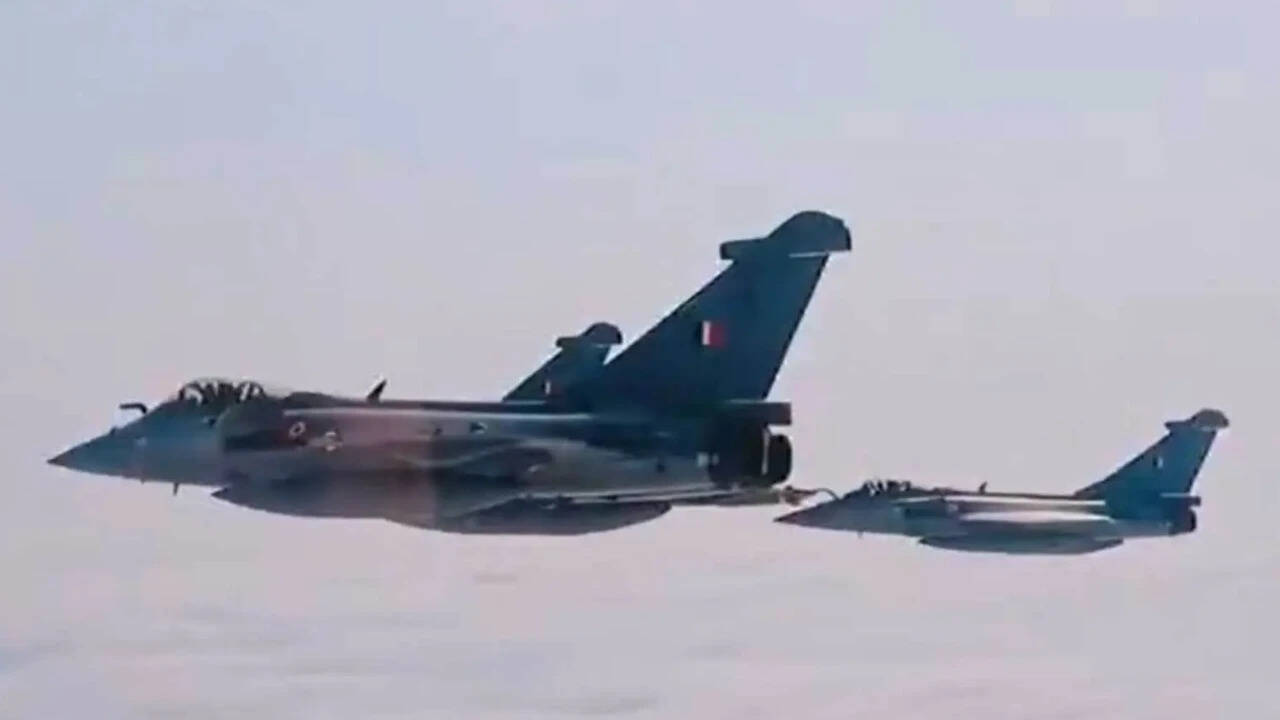
The second edition of the IAF-hosted multinational exercise will run from September 26 to October 12 at Air Force Station Jodhpur. The headline development is the participation of the US F-35, which will exercise with the IAF on Indian soil for the first time. The fifth-generation stealth fighter will operate in an environment that also includes F-16s, Rafales and specialised support platforms, alongside an extensive Indian contingent including Su-30MKIs, Rafales, Mirage-2000s, MiG-29s and Tejas fighters.
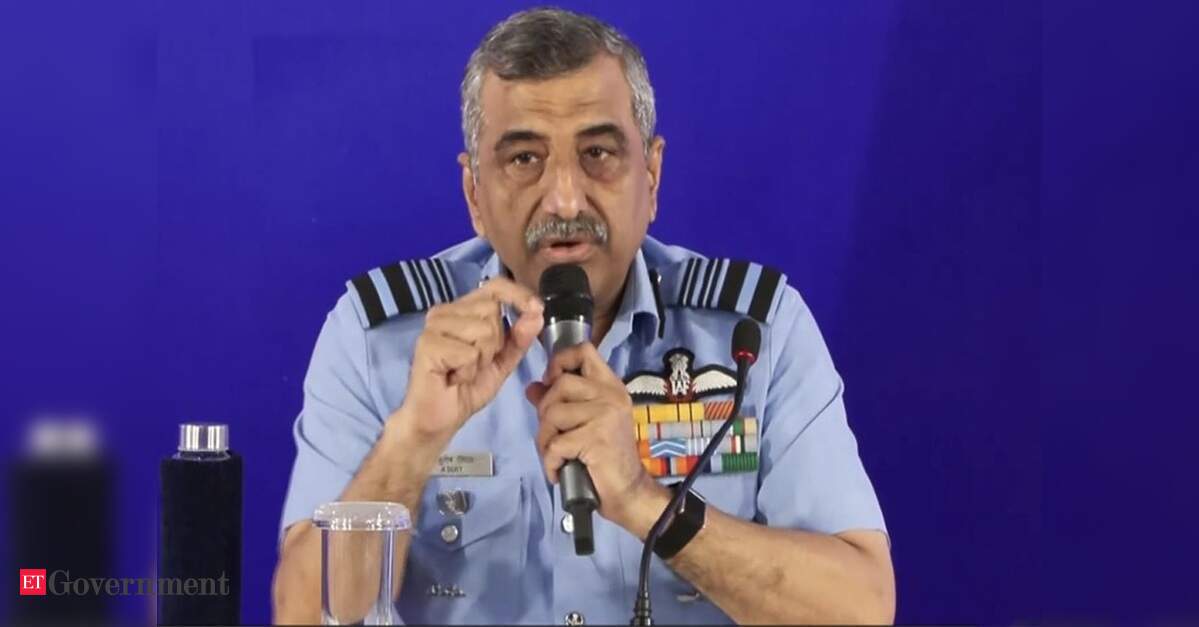
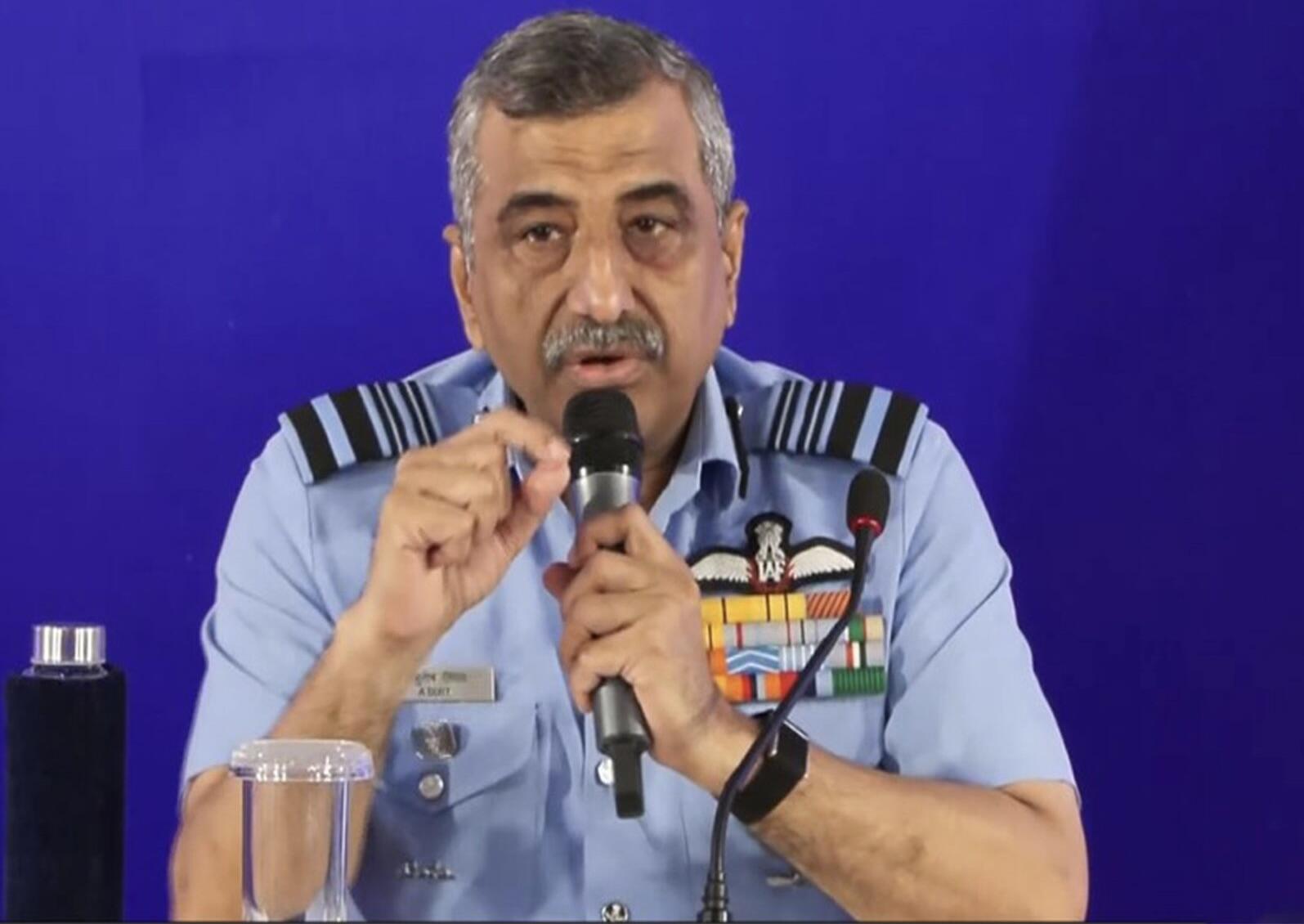
Vice Chief of Air Staff Air Marshal Ashutosh Dixit confirmed the significance of the F-35’s participation. “For the first time, we are going to exercise with the F-35 on Indian soil,” he said.
The F-35 has appeared in India before, including at Aero India, but participation in a combat exercise is fundamentally different from an air-show appearance. It gives IAF crews exposure to a fifth-generation platform in an operational training environment, although the precise nature of missions and the capabilities that participating forces reveal will inevitably be constrained by operational security.
Dixit himself indicated those limits, saying that after the exercise the IAF might be able to discuss its experience—or “may not like to talk about it” because “there is a slight operational security issue here.”
Beyond bilateral exercises
Tarang Shakti also reflects an important evolution in the IAF’s international engagement. For decades, bilateral exercises allowed Indian pilots and planners to understand individual foreign air forces. Multinational operations create a more complicated problem: aircraft with different sensors, weapons, communications architectures, operating procedures and doctrines have to function within a common operational construct.
“For many years, our operational engagement with foreign air forces was largely through bilateral exercises. We learnt to operate with one partner at a time. Tarang Shakti changed that approach,” Dixit said.
The first Tarang Shakti in 2024 involved 11 countries deploying air assets across two phases. According to Dixit, 45 aircraft undertook 76 missions and generated more than 800 sorties. For the 2026 edition, invitations were sent to 65 friendly countries, while seven foreign countries—the US, France, Germany, Australia, Bangladesh, Sri Lanka and the UAE—are participating with air assets and 32 countries are expected as observers.
The real test, therefore, is not how many aircraft can be put into the air, but how effectively disparate forces can plan and execute missions together. Counter-air operations, air defence, reconnaissance, airlift, aerial refuelling and complex combat missions require coordination across sensors, command-and-control networks and multiple aircraft types.
Operation Sindoor enters the training cycle
Tarang Shakti 2026 is particularly significant because the IAF intends to feed lessons from Operation Sindoor into its training.
“Operation Sindoor has reinforced many of these realities for us. It demonstrated the importance of intelligence-led operations, precision, integrated air and missile defence, counter-UAS, and jointness across domains,” Dixit said.
That formulation points towards the changing character of air power. Modern air operations can no longer be understood simply as contests between fighter aircraft. Long-range precision weapons, drones, electronic warfare, airborne early-warning systems, ground-based air defence, satellites and networked intelligence increasingly determine how effectively combat aircraft can operate.
The challenge for the IAF is therefore to build an integrated combat architecture in which fighters constitute one element of a much wider kill chain.
Tarang Shakti provides an opportunity to test some of these concepts against air forces carrying their own operational experience. As Dixit put it: “We do not conduct Tarang Shakti to demonstrate what we already know. We conduct it to discover what we still need to learn.”
He added that combining Indian and foreign operational experience in a realistic environment allows participants to “test assumptions, challenge procedures, understand different methods of employing air power and improve interoperability.”
That may ultimately be the most consequential dimension of the exercise. Training against unfamiliar tactics exposes weaknesses that scripted exercises can conceal.
The fifth-generation learning opportunity
The presence of the F-35 adds another layer. Fifth-generation aircraft combine low observability with advanced sensors, data fusion and networked operations. For the IAF, which is developing the indigenous Advanced Medium Combat Aircraft while operating a fleet dominated by fourth and 4.5-generation fighters, exercising alongside such a platform offers exposure to the operational logic of fifth-generation warfare.
It should not, however, be interpreted as access to the F-35’s most sensitive capabilities. Participating countries carefully protect electronic signatures, sensor performance, tactics and classified mission systems during international exercises. The value lies instead in understanding how fifth-generation aircraft alter mission planning, situational awareness and the interaction between stealth and conventional platforms.
A showcase for Indian aerospace
Tarang Shakti also serves another strategic purpose: placing Indian platforms before a large international military audience.
Tejas will share the exercise environment with some of the world’s best-known combat aircraft, while Indian sensors, weapons and unmanned systems will also be showcased. With dozens of countries represented, the exercise becomes an instrument of defence diplomacy as well as a potential platform for India’s defence exports.
Dixit encapsulated the relationship between the two objectives when he said, “Atmanirbharta and international cooperation are not contradictory. They complement each other.”
That is perhaps the larger significance of Tarang Shakti 2026. India is simultaneously trying to absorb lessons from recent combat, learn from technologically advanced air forces, strengthen interoperability with partners and demonstrate its own aerospace capabilities.
The F-35 may attract the most attention at Jodhpur. But the more important story will be what the IAF learns from operating in a multinational, multi-platform and increasingly multi-domain battlespace—and how quickly those lessons are translated into doctrine, technology and combat capability.