“What is that technology without which India cannot afford to be denied?”
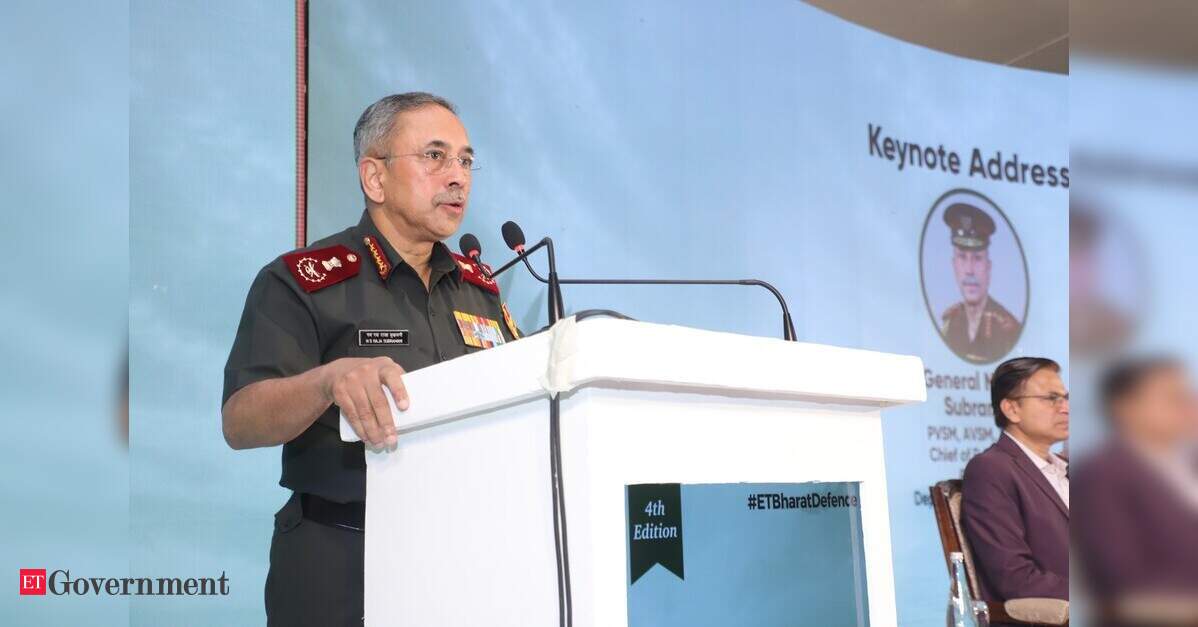
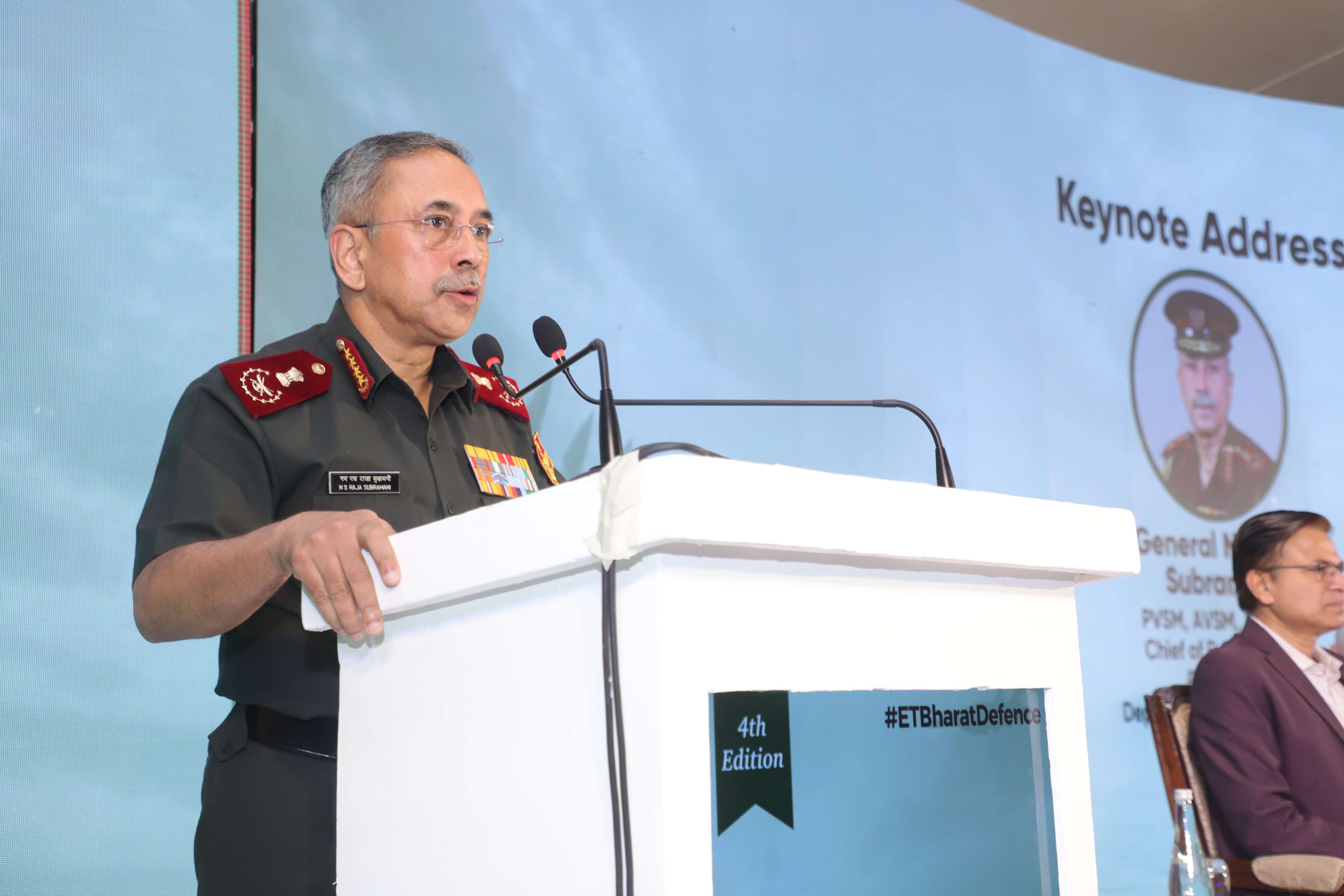
With this question, General NS Raja Subramani, PVSM, AVSM, SM, VSM, Chief of Defence Staff and Secretary, Department of Military Affairs, placed technological sovereignty at the heart of India’s future military preparedness, arguing that Atmanirbharta must go far beyond domestic production to encompass design, intellectual property, critical components, sustainment and the ability to operate when foreign supplies or services are unavailable.
Delivering the keynote address at the Bharat Defence Conclave 2026 in New Delhi, the CDS outlined five priorities for India’s military transformation: deeper jointness, ownership of critical technologies, faster conversion of innovation into operational capability, scale and speed in production, and preservation of the human advantage.
His first proposition was that the armed forces must now take jointness to a more consequential level. “We need to move from operational integration to capability integration,” General Subramani said.
India has already travelled considerable distance in joint operations, planning, processes and logistics. But the wars of the future, he argued, will not be fought by individual platforms or individual services. They will increasingly be fought through interconnected systems of data, networks and effects.
The traditional approach of asking separately what the Army, Navy or Air Force requires must therefore evolve towards asking: what military effect does India need to create, and what combination of capabilities will deliver that effect?
Jointness, in this framework, has three dimensions. The first involves integrated structures, common operating concepts and procedures, planning and logistics. The second is technological jointness—common standards, open networks and systems capable of communicating and operating together. The third is a joint ecosystem connecting the armed forces with industry, academia, startups, innovators and production agencies.
Atmanirbharta as a strategic and warfighting imperative
The CDS’s second proposition was that defence self-reliance cannot be regarded merely as an economic or industrial objective.
“Atmanirbharta is often viewed as an economic necessity, as an industrial necessity. In my view, it is a strategic imperative. It is a warfighting imperative,” he said. India will continue to work with international partners, but General Subramani said the country must identify technologies that it simply cannot afford to have denied during a crisis or conflict.
“We have to move from assembly to design, from production to intellectual property, from transfer to critical components, from products to ecosystems, and from acquisition to ownership of capability,” he said.
Possessing a weapon system does not necessarily mean possessing sovereign capability. The more important questions concern control over its critical components, electronics and technologies: Can India maintain and sustain it independently? Can production continue when global supply chains are disrupted? Can critical components be replaced? Can the system continue operating if foreign services or software are denied?
“These are not merely industrial questions. They are questions of military preparedness,” the CDS said. India’s ambition, therefore, should extend beyond Make in India towards a more comprehensive objective: “Design in India, Make in India, Make for the World.”
Bharat Defence Conclave brings national security ecosystem together
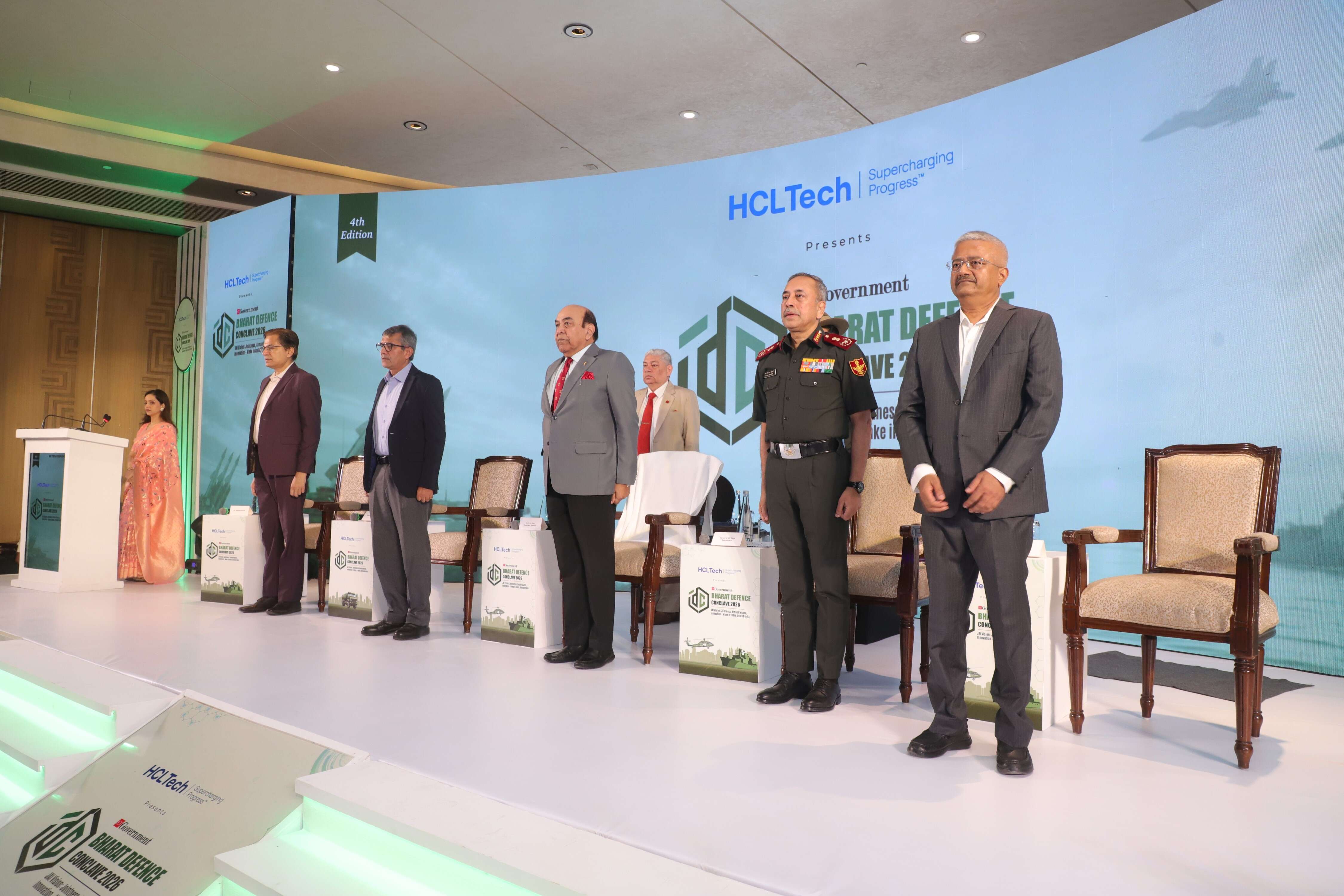
General Subramani was delivering the keynote address at the fourth edition of the Bharat Defence Conclave, organised by ETGovernment – The Economic Times at Hyatt Regency, New Delhi, on September 24. The conclave brought together senior leaders of the armed forces and government, diplomats and defence attachés, DRDO scientists, defence manufacturers, technology companies, startups, academia and other stakeholders in India’s defence and strategic ecosystem.
Centred on jointness, Atmanirbharta and innovation, the conclave examined the technological and industrial transformation of India’s armed forces, future warfare, defence manufacturing, artificial intelligence and autonomous systems, cyber and cognitive warfare, and defence acquisition.
General Subramani’s address connected these themes to a central challenge: how India can convert its growing technological and industrial potential into deployable military power.
From innovation to operational capability
India, the CDS argued, does not suffer from a shortage of ideas or talent. It possesses engineering capability, research institutions, startups, academia and an increasingly vibrant public and private defence industrial base.
The more pressing issue is whether innovations can be deployed and scaled quickly enough to remain relevant. Technology is moving faster than traditional development and acquisition cycles. A prototype can emerge within months, but it can also become obsolete rapidly.
India therefore needs to accelerate the journey from idea to prototype, testing, improvement, production and operational deployment—and then continue improving the technology after induction.
The armed forces must also become better users of technology. Instead of prescribing a particular technological solution, they should increasingly define the operational problem and the military effect required. That would give innovators greater freedom to experiment, prototype and develop solutions.
“The test of innovation is not whether you can demonstrate it,” General Subramani said, stressing that the real questions are whether a technology can be deployed rapidly, scaled and continuously improved. Only then does innovation acquire meaningful military value.
‘Technology without scale remains a demonstration’
The fourth pillar of the CDS’s roadmap was scale and speed. Future warfare will require sophisticated high-end systems, but also drones, autonomous platforms, counter-UAS systems, sensors and other capabilities that can be produced and employed in large numbers. “Technology without scale remains a demonstration. And scale without technology remains a vulnerability,” he said. India, therefore, requires “technology at scale”.
The decisive advantage will not necessarily belong to the country that discovers a technology first. It will increasingly belong to the nation that can identify a promising technology, adapt and test it rapidly, manufacture it in sufficient quantities and deploy it before an adversary can respond.
This requires compressing the distance between operational problems and innovation, innovation and testing, testing and procurement, and procurement and deployment. Once a capability proves itself, India must possess the industrial capacity to scale it rapidly. “This is where industry becomes central to national security,” General Subramani said.
The armed forces and industry must consequently become co-creators of capability rather than simply buyer and supplier. Startups can contribute disruptive thinking, academia research depth, industry engineering and manufacturing capacity, while the armed forces provide operational problems and define the effects required.
People remain the decisive advantage
The fifth pillar was human capital. Platforms, doctrines and technologies will continue to change, but General Subramani emphasised that the quality of people remains decisive.
India needs commanders who are technologically literate and comfortable with experimentation, engineers capable of understanding operational problems, innovators who can rapidly translate ideas into solutions, and military leaders comfortable working with technologists and industry.
The technological transformation of the armed forces, therefore, is as much about developing people as acquiring machines. In an environment of considerable uncertainty, India cannot predict precisely when, where or how the next conflict will emerge. What it can create, the CDS argued, are options, resilience and freedom of action.
His roadmap ultimately converges on one strategic objective: move from service-specific capabilities to integrated military effects; own technologies that could be denied in wartime; solve operational problems rather than merely procure products; build the ability to scale production rapidly; and develop technological leadership across the armed forces and the wider defence ecosystem.
India already possesses scientific talent, engineering capability, industry, an expanding innovation ecosystem and armed forces undergoing transformation. The challenge now is conversion—turning an idea into capability, capability into a product, the product into scale, and scale into military power.
The ambition, General Subramani said, must be to build an India capable of conceiving, creating, integrating, scaling and sustaining its military capabilities—and, when required, fighting with India’s weapons, India’s technology and India’s human ingenuity. That is the pathway from Atmanirbharta to strategic autonomy.