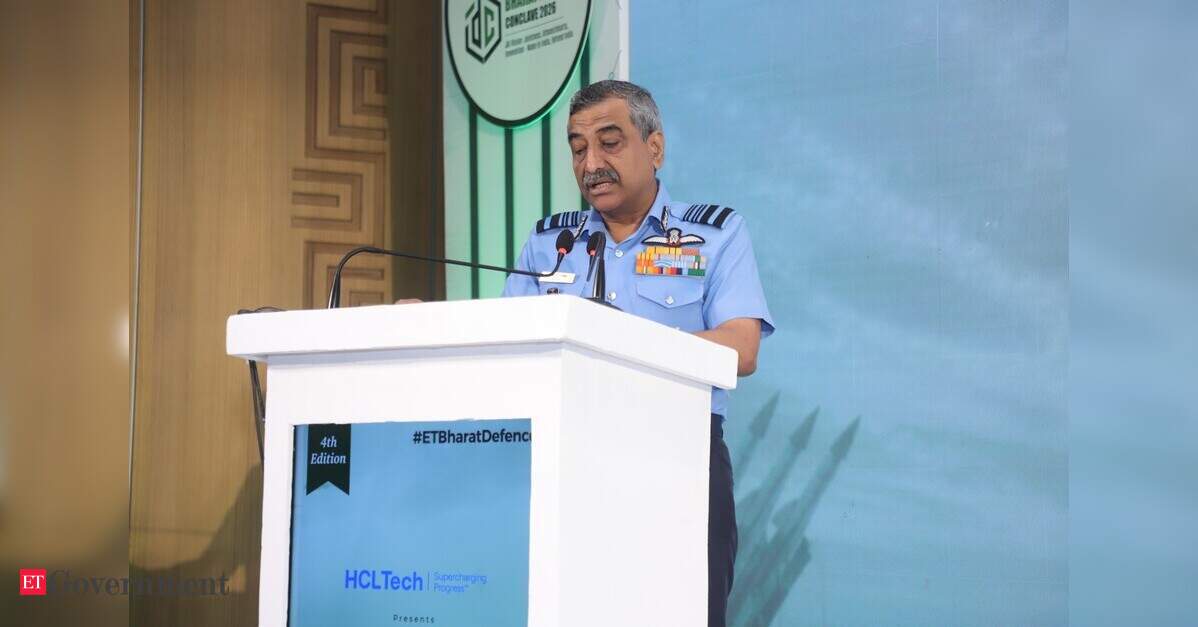
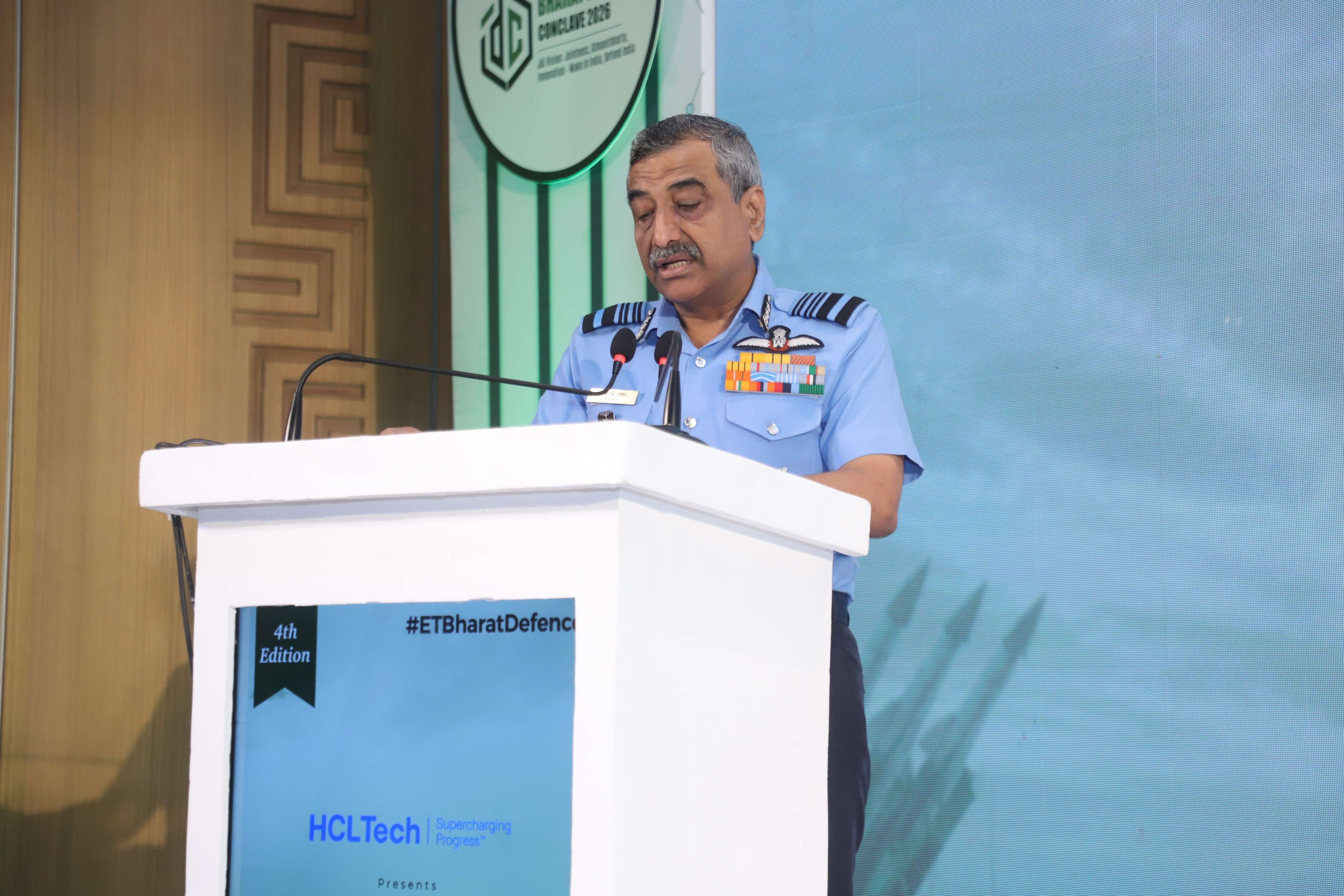
“The strength of an air force is not the length of its shopping list. It is not how many advanced systems we buy. It is how well we turn those systems into a single fighting force.”
With this assertion, Air Marshal Ashutosh Dixit, PVSM, AVSM, VSM, VM, Vice Chief of the Air Staff, Indian Air Force, outlined a vision of air power in which networks, artificial intelligence, space capabilities, autonomous systems, cyber resilience and indigenous aero-engines will increasingly determine combat effectiveness.
Addressing the Bharat Defence Conclave 2026 in New Delhi, Air Marshal Dixit argued that the character of warfare is undergoing a fundamental transformation. The traditional battlefield of land, sea and air has expanded into space, cyberspace and the electromagnetic spectrum, creating an environment in which individual weapons platforms cannot be viewed in isolation.
“The old walls between land, air, sea and space, and of course cyber, are slowly but surely coming down,” he said. A future operation, he suggested, could begin with a satellite, move through a digital network and culminate in action by a fighter aircraft operating alongside unmanned systems.
“That is why we are thinking less about platforms, and we have started thinking much more in terms of systems,” he said.
AI and the battle against information overload
Artificial intelligence will be central to this transformation, but Air Marshal Dixit cautioned against treating AI as an end in itself.
“We are not talking about AI just because it has become fashionable,” he said. Its military value will lie in helping commanders make better and faster decisions in an increasingly information-saturated battlespace.
“In the next war, our problem will not be too little information. Our problem will be too much information.”
Commanders could face simultaneous feeds from radars, satellites, drones and electronic sensors. AI will therefore have to fuse data, identify significant signals amid the noise, predict equipment failures and assist mission planning.
But he drew a clear boundary around machine autonomy in critical military decisions: “AI will advise; however, the commander will decide.”
He also emphasised that AI capability ultimately depends on data, computing infrastructure and secure indigenous ecosystems, describing good-quality Indian data as an important national asset.
Bharat Defence Conclave brings defence ecosystem together
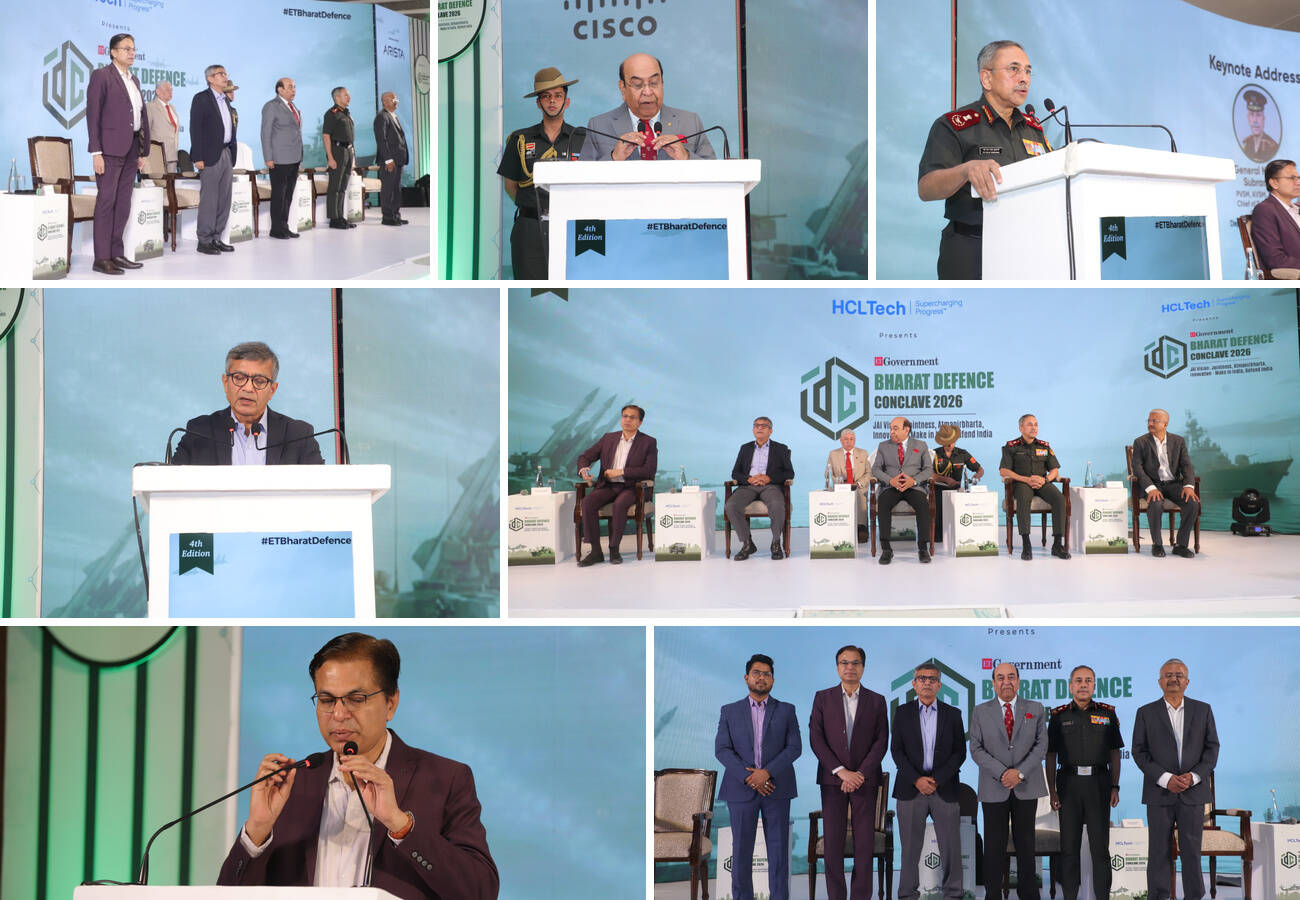
Air Marshal Dixit was speaking at the fourth edition of the Bharat Defence Conclave, organised by ETGovernment – The Economic Times at Hyatt Regency, New Delhi, on September 24. The conclave brought together senior leaders from the armed forces and government, diplomats and defence attachés, DRDO scientists, defence manufacturers, technology companies, startups and other stakeholders in India’s strategic and defence ecosystem.
The broader theme of the conclave centred on jointness, Atmanirbharta and innovation, with discussions examining the technologies reshaping warfare and the challenge of translating India’s growing defence-industrial capabilities into deployable military systems.
Air Marshal Dixit’s address placed that challenge squarely within the IAF’s technological roadmap for the coming decade.
Space and autonomous systems
Space, he said, will become increasingly inseparable from air operations. Communications, navigation, surveillance and targeting increasingly depend on space-based assets, creating both capability and vulnerability.
“Whatever you depend on, the enemy will try to take away,” he said. The answer is resilience: distributed satellite constellations, redundancy, rapid replacement capability, assured positioning and timing, and better space-domain awareness.
Autonomous systems represent another major shift. The future air force, according to the Vice Chief, will not simply consist of increasingly expensive crewed aircraft. It will combine manned platforms with large numbers of unmanned systems capable of coordinating, adapting and operating together.
“The pilot will be captain of the team,” he said, with unmanned systems extending “how far he can see, how far he can reach, and how much risk he can take without risking himself.”
The proliferation of inexpensive drones also creates the opposite requirement: sophisticated counter-drone capabilities. Detection, identification, tracking and defeat of hostile unmanned systems will therefore have to evolve alongside India’s own autonomous capabilities.
Cyber resilience must be built in
The digitalisation of warfare makes cyber resilience equally critical. “An enemy no longer has to shoot a radar out to take it out of the fight. He only has to reach for the software, the data, or the links it lives on,” Air Marshal Dixit said.
Cyber security, therefore, can no longer be an addition made after a system has been developed. “Cyber resilience is now a design rule, not an add-on,” he said.
Military systems must be capable of operating under attack—in jammed, degraded and hostile electronic environments rather than only under ideal conditions.
Aero-engines and the unfinished task of self-reliance
Among all the technological priorities discussed, Air Marshal Dixit identified aero-engines as one of India’s most consequential unfinished tasks.
“We have built our own aircraft. We now need to power them with our own engines,” he said. “We cannot claim real independence there while we depend on someone else’s engine.”
Achieving this capability will require sustained investment in high-temperature materials, single-crystal turbine blades, specialised coatings, digital engine controls and associated technologies.
“There are no shortcuts here,” he cautioned. It will require patient research and deep partnerships between industry, laboratories and universities, but “the prize is real independence.”
His argument went beyond import substitution. India, he said, must move from merely buying technology towards creating and continuously improving it.
Technology cycles are increasingly shorter than traditional defence procurement and development cycles. The solution is a system in which an idea can rapidly become a prototype, the prototype can enter trials and successful technologies can move into operational service—and continue evolving thereafter.
From platforms to ecosystems
Air Marshal Dixit ultimately reduced the IAF’s technological roadmap to a fundamental change in approach: India must think in terms of interconnected ecosystems rather than individual pieces of equipment.
“Our vision for the next 10 years is not simply more technology. It is integrated technology—built faster, improved continuously, and placed as real capability in the hands of real users.”
The decisive measure of technological strength, therefore, will not simply be how sophisticated an aircraft, drone, satellite or missile is individually, but whether sensors, shooters, networks, algorithms and people can operate together under combat conditions.
And despite the accelerating role of machines, he placed trained personnel at the centre of that architecture. “Every system I have described today is only as good as the person using it,” he said.
For the IAF, the technological race of the next decade will therefore be about more than acquiring advanced systems. It will be about integrating them, protecting them, making critical technologies indigenous and developing personnel capable of exploiting them in seconds.
“Our task is not just to adopt the future when it arrives,” Air Marshal Dixit concluded. “It is to have the confidence, the capability, to create it and to shape it.”