India and Argentina are steadily expanding their strategic partnership beyond traditional agricultural trade into critical minerals, energy, investment and advanced technologies. With India seeking diversified and reliable supply chains and Argentina looking towards Asia’s rapidly growing markets, the economic complementarities between the two countries are becoming increasingly significant.
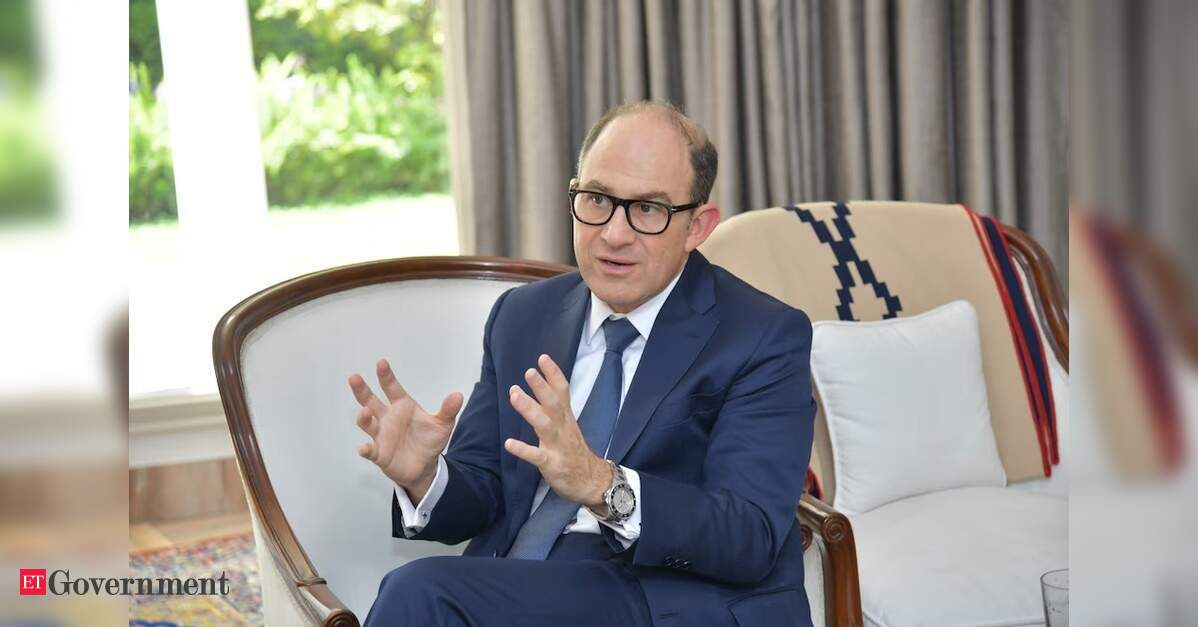
In conversation with Anoop Verma, Mariano Agustín Caucino, Ambassador of Argentina to India, discusses the prospects for deeper trade and investment, cooperation in lithium and energy, India–MERCOSUR engagement, economic reforms and India’s emergence as a major global power.
Edited excerpts:
India and Argentina describe their relationship as a Strategic Partnership. Prime Minister Narendra Modi’s visit to Argentina in July 2025 gave fresh momentum to bilateral ties. What has changed most significantly since that visit, and what should be the priorities for the next phase?
First of all, we have to remember that Argentina and India have maintained bilateral relations for almost eight decades. Argentina was among the first Latin American countries to establish an embassy in India after its independence, and we have maintained a diplomatic presence here since 1950.
The relationship has acquired greater momentum over the past seven or eight years, particularly since it was elevated to a Strategic Partnership in 2019. Prime Minister Modi’s visit to Argentina in July 2025 was very positive and gave further impetus to the relationship. Today, Argentina is India’s number one supplier of edible oils, particularly soybean oil, and the second-largest supplier of sunflower oil. In that sense, we are contributing to India’s food security.
Two other important areas are now emerging. One is mining, particularly lithium, where cooperation has already begun. The other is energy, where we are still at an initial stage but see considerable potential.
Bilateral trade has expanded substantially, with India emerging as one of Argentina’s major trading partners. Yet the trade basket remains concentrated in a relatively small number of commodities. Which new sectors could drive the next phase of trade growth?
The economic and trade relationship has grown considerably, but it remains concentrated, particularly in edible oils supplied by Argentina.
There is substantial scope for diversification if market access improves and duties and regulatory barriers are reduced. Take wine, for example. Argentina exports some wine to India, but import duties remain extremely high. There are several other food products that Argentina could competitively supply to Indian consumers.
There is a natural complementarity between our economies. Argentina is almost as large geographically as India, but our population is only around 50 million, whereas India has a population of more than 1.4 billion. Our climatic conditions are also very different. Argentina can produce food and energy far beyond what its domestic market can consume.
This makes large Asian economies such as India natural partners for us. There are products, including certain agricultural commodities, that Argentina can supply during seasons when domestic availability in India is limited. Therefore, if the Indian economy opens further to these products, it can benefit both bilateral trade and Indian consumers.
The India–Argentina Joint Trade Committee recently discussed market access, pharmaceuticals, agriculture, digital technologies, space, mining and energy. What concrete outcomes do you expect from this renewed economic engagement?
I hope it will contribute to expanding the Preferential Trade Agreement between India and MERCOSUR. Argentina is a founding member of MERCOSUR, along with Brazil, Paraguay and Uruguay.
The Preferential Trade Agreement was signed in 2004 and came into operation later, but it still covers a limited number of products. There is now an intention on both sides to expand it, and I believe the recent Joint Trade Committee meeting is a positive step in that direction.

However, trade negotiations take time. I would like to be more optimistic and say these issues can be resolved quickly, but experience shows that such negotiations are complicated. India is simultaneously engaged in important trade negotiations with major economies, and these processes inevitably involve many difficult issues.
India and Argentina have agreed to work towards expanding the India–MERCOSUR Preferential Trade Agreement. How ambitious can this process realistically become?
Both sides can benefit substantially. India can benefit from stronger trade relations not only with Argentina but also with Brazil, Paraguay and Uruguay, and our countries can benefit from greater access to the Indian market. The complementarity between the economies is an objective reality. Latin American countries are increasingly looking towards India, and India is also paying greater attention to our region.
One indication is India’s expansion of its diplomatic presence across Latin America, including new embassies in countries where it previously had limited representation. That demonstrates greater Indian interest in the region. So I am optimistic about the direction of the relationship. Where I am less optimistic is about the speed at which trade negotiations move. These things take time.
Critical minerals have emerged as one of the most strategic areas of cooperation. India already has access to lithium blocks in Argentina. Could Argentina become a long-term partner for securing lithium and other critical minerals needed for India’s energy transition and manufacturing ambitions?
India has an ambitious objective of becoming a fully developed economy in the coming decades. One of the major transformations underway here is the transition towards electric vehicles. For that, you need batteries, and batteries require lithium and other critical minerals.
The Government of India also wants to reduce excessive dependence on a limited number of countries and diversify its sources of supply. Argentina and other countries in our region can be reliable partners in this process.
We have one disadvantage, which is distance. But, paradoxically, distance can also be an advantage because Argentina is far removed from many of the geopolitical disruptions affecting other regions. Unfortunately, there is little reason to believe that many of the conflicts we see today will disappear quickly. South America, and Argentina in particular, is relatively free from major geopolitical disruptions. This makes us potentially reliable suppliers.
Another important factor is our relatively small population. We possess significant natural resources without the kind of domestic consumption pressures that might constrain exports. These factors make Argentina and the wider region potentially dependable long-term partners for India and other Asian economies.
Energy is another area with considerable potential, particularly with Argentina developing Vaca Muerta. How do you see the possibilities for Indian investment and long-term energy partnerships?
I see them very positively. Again, this reflects the high degree of complementarity between the two countries and regions.
Argentina possesses substantial natural resources and has a relatively small population. India, meanwhile, has a huge and growing economy and population, and therefore its energy requirements will continue to increase. India needs to import energy, while Argentina needs large markets. So there is a natural economic logic bringing the two countries together.
India is also pursuing a strategy of diversifying its energy suppliers. It already sources different forms of energy from a large number of countries. Argentina can become part of that diversification, and from our perspective that would be a very positive development.
Agriculture has traditionally been central to bilateral trade. How can the two countries move beyond commodity trade towards deeper cooperation in food processing, agricultural technology and resilient supply chains?
That should certainly be one of the next steps. If Indian companies invest in Argentina, establish operations and develop businesses there, it would benefit those companies as well as the bilateral relationship. The same applies to Argentine companies coming to India, either directly or through partnerships with Indian companies.
India is an enormous market with a rising middle class, and the country is growing rapidly. That creates huge long-term potential. Some of this depends on companies, but governments also have an important role. Argentina’s present government is making a major effort to open and deregulate the economy. India itself has undertaken significant economic reforms over the past three decades.
Even when governments intend to open economies, regulations can sometimes remain complicated. Reducing unnecessary barriers would encourage greater investment and economic integration between our countries.
Argentina and India are also expanding cooperation in advanced sectors such as nuclear energy and space. Where do you see opportunities for technology-driven collaboration?
There is already a very positive example in nuclear cooperation. Almost two decades ago, Argentina developed a nuclear research reactor for India in Mumbai, and it remains an example of what our countries can achieve together.
Argentina has significant capabilities and experience in nuclear technology, while India has an extensive and advanced nuclear programme. I believe there is potential for the two countries to work together further.
There are also possibilities in other advanced technological areas, although I would leave the technical details to the experts. The broader point is that both countries possess capabilities that can complement each other.
The international environment is increasingly fragmented by geopolitical rivalries, trade restrictions and competition over energy and critical minerals. As two major democracies and members of the G20, where do Argentina and India find common ground?
Argentina is a Western country and South America is part of the Western Hemisphere. But beyond such classifications, what is important is that Argentina and India work very well together within the G20.
Both countries see the G20 as a representative global platform because it brings together developed and developing economies. It should be a forum where major international challenges can be addressed without reproducing the confrontation that we increasingly see elsewhere. India occupies an interesting position. As your leaders have said, India may not define itself simply as a Western country, but neither is it anti-Western. It maintains relations with countries across different geopolitical groupings.
India’s role in the world is also growing rapidly. It is already among the world’s largest economies and is likely to become the third-largest economy in the coming years. When you combine that economic weight with the world’s largest population, India inevitably becomes an increasingly important global player.
For those of us serving here as ambassadors, it is fascinating to witness the rise of India. By 2047, when India celebrates 100 years of independence, I believe it will be firmly established among the most important countries in the world.
India’s economic engagement with Latin America has historically remained below its potential despite the region’s importance in energy, minerals, agriculture and technology. What role can Argentina play in facilitating a deeper Indian presence in the region?
Once again, there is strong economic complementarity between the two regions. India needs many of the resources that our region possesses, while countries such as Argentina need access to India’s vast and growing market.
Governments can facilitate this process by promoting trade and investment—or, at the very least, by avoiding unnecessary restrictions. If trade barriers are reduced, Indian consumers will gain access to a wider range of products, potentially at more competitive prices. At the same time, India’s global economic role is expanding, and its business community is becoming increasingly international. Sooner or later, Indian companies will have a greater presence in every part of the world, including regions geographically distant from India such as South America.
One challenge is that we do not have large Indian communities in Argentina, nor do we have large Argentine communities in India. In some other regions, diaspora and family networks naturally drive economic relations irrespective of what governments do. That factor is largely absent in our relationship. Therefore, companies and governments have an even greater role to play in creating those connections.
President Javier Milei has emerged as one of the world’s most vocal advocates of free markets and economic deregulation. Argentina has undergone significant economic changes under his government. What lessons can other developing economies draw from Argentina’s experience?
I would not say that Argentina is in a position to give lessons to India. India itself has undertaken economic deregulation, reforms and modernisation over the past 20 or 30 years, and particularly during the past decade. In some respects, we should learn from India.
But there is a broader lesson from economic history. Governments do not themselves create wealth. Wealth is created by people, entrepreneurs and businesses. Governments, however, can prevent wealth from being created if regulation becomes excessive. When governments try to decide who should produce what, or attempt to plan too much of the economy, even with good intentions, the result can become over-regulation. Unfortunately, Argentina experienced this for many decades.
The size of government can also become a problem when the state accounts for an excessive proportion of economic activity or becomes the principal employer. Argentina has learned from this experience. The current philosophy is essentially to have as much market freedom as possible with the minimum regulation necessary.
There are lessons from Asia as well. The rise of economies such as Singapore, Hong Kong, Taiwan and later China demonstrated the impact of opening economies and encouraging markets. India’s economic opening and modernisation provide another important example.
Asia’s share of the world economy has increased enormously over recent decades. In general, when economies open, establish clear rules and allow private enterprise to operate, the results tend to be positive.