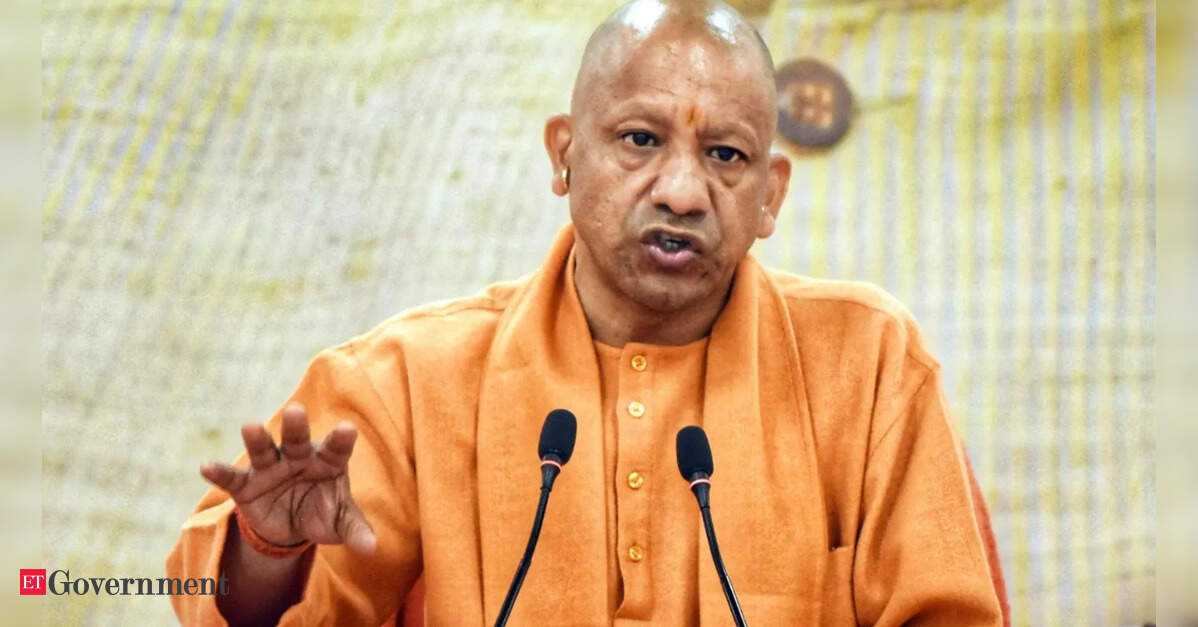
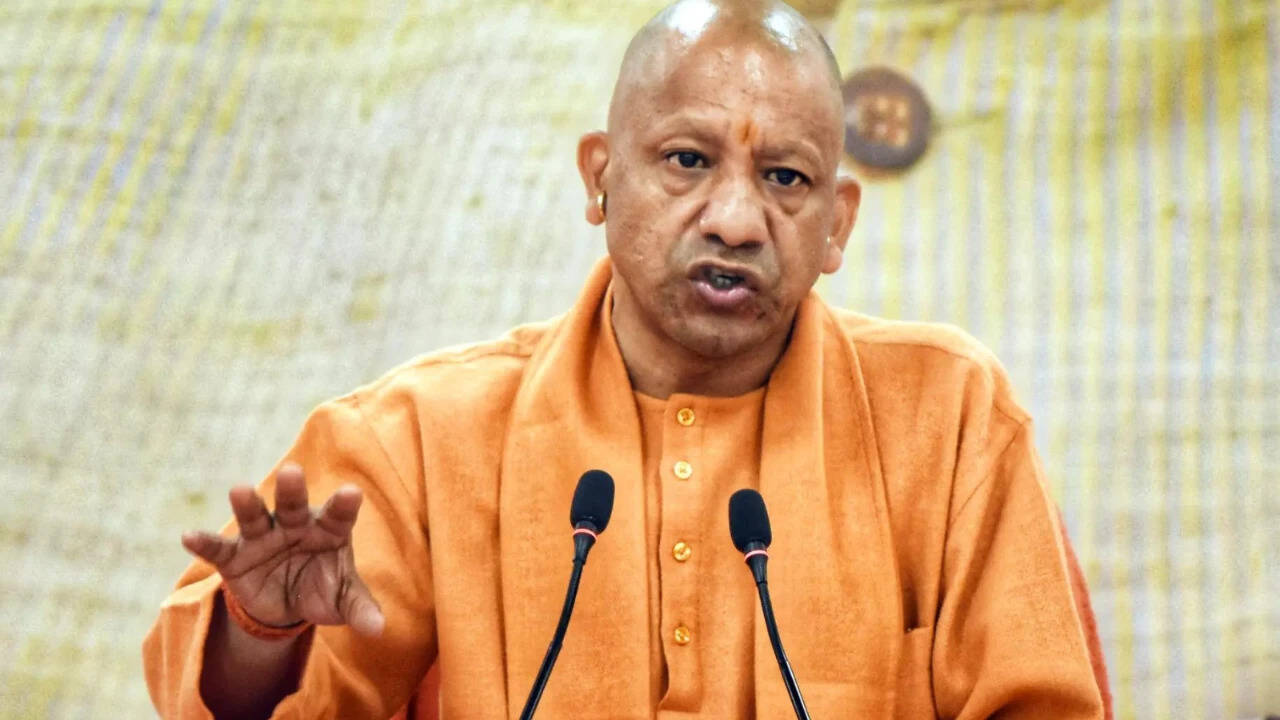
The Uttar Pradesh Cabinet, chaired by Chief Minister Yogi Adityanath, on Friday approved the Uttar Pradesh Artificial Intelligence Mission (UP-AIM), with targets to support at least 100 AI startups, train five lakh AI-skilled youth and develop artificial intelligence applications for governance and public services.
The Cabinet also approved the Uttar Pradesh Startup Procurement Scheme, 2026, which seeks to expand market access for startups by enabling government departments to procure innovative solutions directly, subject to eligibility conditions and prescribed limits.
The AI mission will focus on building an integrated digital infrastructure for artificial intelligence, strengthening research and skill development, supporting startups and promoting the safe and responsible deployment of AI across government departments.
Alok Kumar, principal secretary, IT and Electronics Department, said UP-AIM would operate in mission mode, with a focus on AI-led innovation, high-capacity computing, entrepreneurship and AI-based digital public infrastructure.
Under the mission, the state plans to develop an integrated UP AI Stack comprising an AI-ready data ecosystem, an AI operating framework, departmental applications, a secure data exchange platform and GPU-based computing facilities.
The government has set a target of developing or implementing more than 100 AI use cases, of which 25-30 would be scaled up for wider deployment. The mission also aims to prepare 50,000 Forward Deployed AI Professionals, alongside providing financial and non-financial support to at least 100 AI startups.
UP-AIM will be structured around seven pillars: AI infrastructure and data exchange; talent and future skills; research and Centres of Excellence; startups and MSMEs; computing and digital infrastructure; trust and assurance; and district-level AI enablement.
The state plans to establish AI centres across all 75 districts to promote training, employment, entrepreneurship and locally relevant AI solutions. Research and innovation will also be encouraged through Centres of Excellence, research projects, innovation challenges and hackathons.
To address concerns around the deployment of AI in public services, the mission envisages an AI Trust and Assurance Framework covering security, privacy, risk assessment, pre-deployment evaluation and human oversight for high-impact government applications.
UP-AIM will be established as an independent society under the IT and Electronics Department. Its governance structure will include an apex body, a governing body and an executive committee, with a chief executive officer leading implementation.
A Master System Integrator will be selected to design, develop, integrate, deploy, operate and maintain the UP AI Stack and associated AI solutions. Its performance will be assessed against service-level agreements and specified milestones.
The state plans to make the UP AI Stack available to government departments and provide associated AI startups and technology partners access to tools such as open-weight small and large language models, development sandboxes and testing environments.
Startup procurement push
Separately, the Startup Procurement Scheme, 2026, is intended to create a pathway for startups to supply technology and other innovative solutions to government departments.
Under the proposed framework, eligible startups will be able to access direct procurement opportunities of up to ₹50 lakh. The limit will be enhanced to ₹1 crore for solutions in specified sunrise sectors, including deep technology, AI, drones, green energy, climate technology and advanced manufacturing, said Alok Kumar.
The scheme also provides for limited tenders of up to ₹1 crore exclusively for startups where multiple eligible startups can meet the requirement.
A dedicated UP Startup e-Marketplace is proposed to connect startup offerings with government departments. Departmental innovation funds will support pilot projects, proofs of concept and procurement.
The procurement policy is aimed at enabling the government to become a potential customer for startup-developed solutions, while giving emerging companies an opportunity to test and scale products in public-service applications.
Together, the two initiatives seek to link AI infrastructure and skills development with a procurement framework that could help startups translate new technologies into deployable solutions for the state.
The scale of implementation, including the rollout of district AI centres, adoption of use cases across departments and access to procurement opportunities, will be central to translating the announced targets into outcomes.