

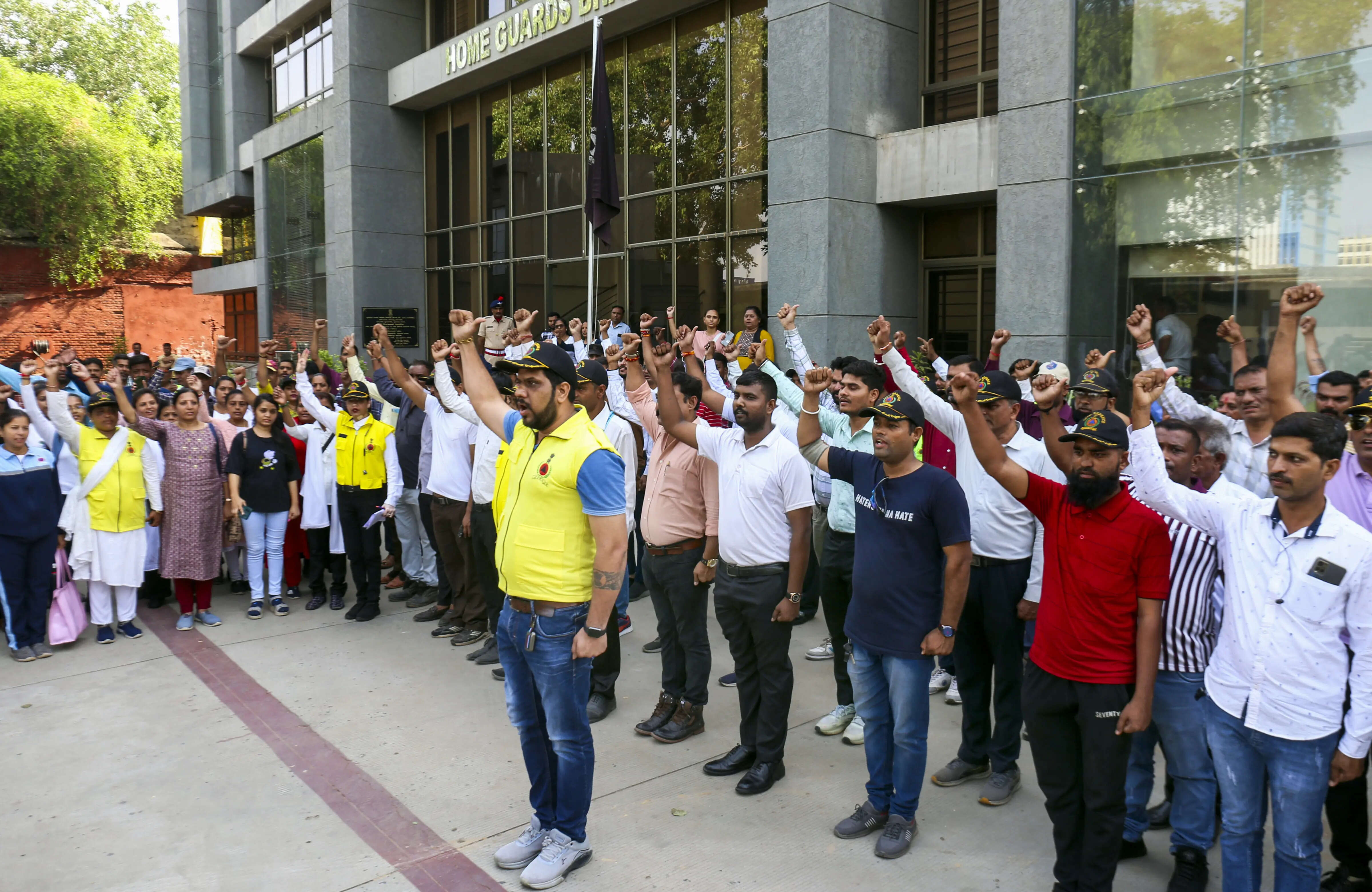
India’s next line of defence may not be stationed at its borders. It could be operating in neighbourhoods, industrial centres, railway stations and critical infrastructure facilities, where trained civilians would be expected to respond to emergencies before specialised security forces arrive.With the Union Home Ministry and Indian Army launching a joint initiative to strengthen the country’s civil defence network, India is taking an important step towards preparing its civilian population for the security challenges of an increasingly unpredictable world.The initiative, announced on October 23, follows Prime Minister Narendra Modi’s Independence Day address on August 15, when he outlined his vision of establishing a modern civil defence network equipped with advanced technologies and contemporary emergency-response capabilities.The programme seeks to address an important weakness in India’s security architecture: while the country has developed substantial military, policing and disaster-response capabilities, organised civilian preparedness remains uneven across regions.Under the first phase, the Directorate General of Fire Services, Civil Defence and Home Guards, working with the Indian Army, will train 600 master trainers drawn from 12 states and Union Territories. Each participating state or UT will nominate 50 trainers for specialised three-day courses at designated Army training establishments. The first phase is proposed to be completed by the second week of November 2026.The participating regions are Jammu and Kashmir, Punjab, Rajasthan, Gujarat, Delhi, Meghalaya, Sikkim, Assam, Uttar Pradesh, Kerala, Karnataka and Tamil Nadu. Each master trainer will subsequently train 100 civil defence volunteers, potentially creating a network of 60,000 trained personnel. The government intends to extend the programme to other states and Union Territories after assessing the pilot’s outcomes.Why civil defence has become a national security priority
The importance of civil defence has increased as the distinction between military and civilian targets becomes less clear. Modern conflicts can involve drone attacks, cyber disruptions, sabotage of electricity networks, communication failures and attacks on transportation infrastructure. Such incidents can affect civilian populations far from conventional battlefields, making local preparedness an important component of national security.The training programme accordingly covers three areas: threat awareness, including hybrid warfare and air raids; protection and emergency response, including chemical, biological, radiological and nuclear threats; and communication and coordination, including cyber hygiene, digital resilience and civil-military cooperation. These subjects reflect an understanding that national security preparedness must extend beyond the armed forces.India already has a statutory civil defence framework under the Civil Defence Act, 1968, alongside the institutional arrangements for disaster management. However, civil defence organisations have historically differed considerably in their operational strength, training and volunteer participation.The new initiative offers an opportunity to strengthen these existing structures rather than establish an entirely separate emergency-response system.How the United States and other democracies organise civil defence
Civil defence is not unique to India. The United States maintains an extensive civilian emergency-preparedness architecture, although it no longer operates primarily through the traditional Cold War model of civil defence.The Federal Emergency Management Agency (FEMA), state emergency-management agencies and local authorities coordinate preparedness for natural disasters, terrorism, technological emergencies and other threats.An important American initiative is the Community Emergency Response Team (CERT) programme, which trains volunteers in basic disaster-response skills, including fire safety, search and rescue, emergency medical assistance and team organisation. The American approach places considerable emphasis on local capacity, recognising that professional emergency responders may be overwhelmed during large-scale incidents.The United Kingdom follows a comparable principle through the Civil Contingencies Act, 2004. Its Local Resilience Forums bring together police, fire services, local authorities, health organisations and other agencies to assess risks and prepare coordinated emergency responses. Military and voluntary organisations can also support these arrangements. The British framework demonstrates the importance of institutional coordination and clearly assigned responsibilities.Other democracies, including Finland and Sweden, have developed broader concepts of comprehensive security and total defence, integrating civilian institutions, public services, businesses and communities into national preparedness. Their experience suggests that civilian resilience depends not simply on trained volunteers but also on reliable public communication, infrastructure continuity and sustained public participation.Amit Shah’s emphasis on modernising civil defence
Union Home Minister Amit Shah has previously emphasised the need to transform India’s civil defence organisations. Addressing the All India Home Guards and Civil Defence Conference in Gandhinagar in October 2024, Shah warned that institutions must evolve with changing security requirements. He observed that if an organisation’s charter remained unchanged for 50 years, both the organisation and its charter could become obsolete.Shah also called for greater youth participation, systematic emergency-response training and an expanded role for civil defence volunteers. His remarks provide policy context for the Army-led initiative, although the Home Ministry’s October 23 announcement did not include a fresh quotation from him.During the security tensions of May 2025, Shah directed states to strengthen preparedness, ensure continuity of essential services and maintain coordination among civil defence organisations, Home Guards, police and the armed forces. He also emphasised public participation and the need to counter rumours during emergencies. These directions underline the operational importance of a trained civilian network.From training targets to operational capability
The principal challenge will be converting the proposed 60,000 volunteers into an effective emergency-response capability. Three-day training for master trainers can provide a foundation, but operational readiness requires regular exercises, communication equipment, protective gear, clear command structures and coordination with district administrations.The American CERT model offers a useful lesson: volunteers supplement professional responders rather than replace them. Sweden’s total-defence framework similarly demonstrates that civil preparedness must include infrastructure operators, businesses, healthcare institutions and local governments.For India, the programme’s effectiveness will depend on how successfully it integrates with the National Disaster Response Force, state disaster-response agencies, police, fire services and district authorities. Transparent assessment of training outcomes, equipment availability and response times will be essential.The Army-led initiative is therefore a potentially important beginning, not yet a completed transformation. Its ultimate significance will be measured not by the number of volunteers trained, but by whether communities across India can protect lives, maintain essential services and respond effectively when an emergency strikes.
