


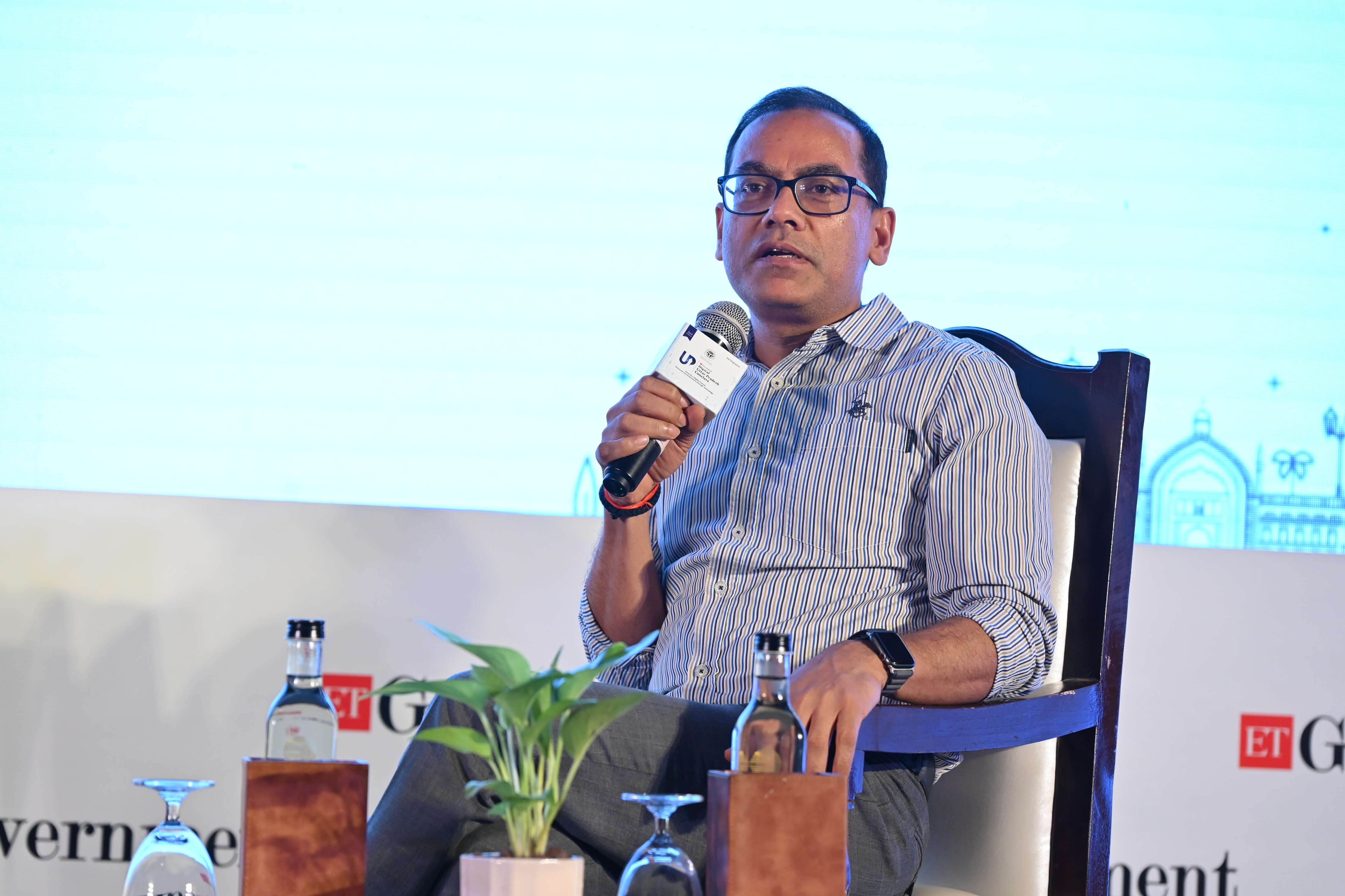
As Uttar Pradesh seeks to strengthen its position in India’s technology and innovation landscape, the state is looking to move beyond traditional IT services towards a more integrated ecosystem spanning Global Capability Centres (GCCs), artificial intelligence, startups and DeepTech.The focus is on attracting global technology investments, developing future-ready talent and creating an environment where enterprises can expand, startups can scale and research can translate into commercially viable innovation.Ahead of the GCC Innovation Summit in Lucknow on October 26, Alok Kumar, Principal Secretary, Planning & Programme Implementation and IT & Electronics, Government of Uttar Pradesh, speaks to Arpit Gupta about the state’s strategy to attract and deepen GCC investments, advance AI adoption, strengthen startup and research ecosystems, and develop a competitive digital economy.He outlines how coordinated policy support, industry-academia collaboration and effective investment facilitation could help Uttar Pradesh emerge as a destination for higher-value technology functions and innovation-led growth.Edited excerpts:What is Uttar Pradesh’s larger vision for IT/ITeS, GCCs, AI, startups and DeepTech? How do these initiatives complement one another?
Our vision is to build an integrated technology and innovation economy—not a collection of standalone schemes. IT/ITeS companies and Global Capability Centres bring enterprise demand, high-quality jobs and global market access. Startups bring speed, entrepreneurship and new solutions. Academia contributes research and talent. AI, DeepTech Hubs and Centres of Excellence can connect these capabilities and help transform ideas into commercially relevant products.For Uttar Pradesh, the opportunity is to move from primarily supplying technology talent to creating an ecosystem in which global enterprises invest, products are developed, intellectual property is generated and skilled professionals build careers within the state. Policy support matters, but the real measure will be operational companies, sustained employment, innovation outcomes and investments that continue to expand.How will UP distinguish itself from established technology hubs while leveraging Noida, Greater Noida, Lucknow and emerging cities?
Our strategy is to compete on a combination of access to talent, connectivity, competitive operating economics, infrastructure, a strong academic base and responsive government facilitation. We do not need to replicate Bengaluru or Hyderabad city by city. We need to develop locations with complementary advantages.Noida and Greater Noida offer the scale and NCR access of an established corporate and technology ecosystem. Lucknow offers a promising next-wave location, with an educational catchment, growing digital ecosystem and potential for second-campus and hub-and-spoke operations. Other cities can evolve around specialized capabilities where credible demand and infrastructure exist. The focus is on giving global companies practical options to establish, diversify and grow their operations in Uttar Pradesh.How will the state attract new GCC investments and encourage existing IT/ITeS enterprises and GCCs to expand?
We are pursuing both objectives in parallel. New GCC investors need credible location intelligence, talent availability, office infrastructure, policy clarity and confidence that their setup can be facilitated efficiently. Existing GCCs need a different conversation: which additional global mandates, product functions or engineering responsibilities could they bring to their UP operations?Invest UP’s role is to engage directly with enterprise leaders, understand requirements, coordinate with relevant departments and development authorities, and help address the issues that influence investment decisions. Our ambition is not merely to increase the number of centres, but to enable existing operations to move toward higher-value functions such as AI, R&D, product engineering and digital transformation. The upcoming summit provides a useful platform for both conversations.What is the vision behind the proposed UP AI Mission?
AI should be viewed as an economic capability, not just a technology programme. Our proposed strategic direction is to make AI useful and accessible to startups, universities, industry and government, while creating opportunities for businesses to build solutions in Uttar Pradesh.That requires attention to the complete AI value chain: responsible access to computing, usable and appropriately governed data, technical talent, models, experimentation environments and pathways to deploy applications. We see strong potential in healthcare, education, agriculture, manufacturing and public services. The AI Mission is an evolving strategic agenda; specific structures, funding and implementation mechanisms should be announced only once formally approved. The fundamental test will be how many meaningful applications, enterprises and skilled jobs the ecosystem enables.AI requires computing capacity, quality data and research capability. How could UP bring these pieces together?
Our priority should be access and productive use, rather than measuring success only by the amount of physical infrastructure built. Compute resources must be available to the startups, researchers and enterprises that can translate them into solutions. Equally important is access to high-quality, lawfully usable data with clear privacy, security and governance safeguards.A practical approach could combine partnerships with technology companies, academic research institutions, industry-led challenge programmes, common experimentation environments and startup enablement. GCCs can provide real business problems, researchers can develop techniques, and startups can turn promising solutions into deployable products. These are priorities for ecosystem design, not claims that every component is already operational.How can the Startup Mission help startups move from early innovation to scalable businesses?
A strong startup ecosystem needs more than incubation and funding announcements. Founders need access to customers, mentors, technical infrastructure, skilled people and pathways to commercial adoption. We want to focus on helping startups move from proofs of concept to reference deployments and repeatable business models.A particularly promising opportunity is to connect Uttar Pradesh startups with GCCs and large enterprises. Such enterprises have genuine challenges across AI, cybersecurity, health technology, FinTech, manufacturing and enterprise software. If startups can solve those problems, they gain market validation and the potential to scale far beyond the state. The role of government and ecosystem institutions is to facilitate these connections transparently and help reduce barriers to experimentation and adoption.What role could DeepTech Hubs and Centres of Excellence play in creating a globally competitive ecosystem?
DeepTech innovation often requires specialized researchers, advanced tools, laboratory access, long development cycles and patient support. Centres of Excellence and DeepTech Hubs can help concentrate capabilities that would otherwise be difficult for individual startups or smaller businesses to build on their own.The strongest model would be industry-linked rather than infrastructure-led: define priority technology domains, secure corporate problem statements, connect premier institutions and technical experts, support testing and validation, and create pathways to commercialization. Potential focus areas include AI, semiconductors, advanced manufacturing, cybersecurity and healthcare technologies. The state should assess these hubs by research outcomes, industry adoption, intellectual property and new enterprises—not simply by their physical footprint.How can GCCs, startups, universities and CoEs collaborate to convert research into commercial innovation?
The opportunity is to create a reinforcing cycle. GCCs can articulate global product and operational problems. Universities and research institutions can contribute deep technical knowledge. Startups can build and iterate solutions rapidly. Centres of Excellence can provide shared expertise and validation facilities. Industry customers can then assess and adopt solutions at scale.We should encourage curated challenge programmes, industry-sponsored applied research, joint proofs of concept, internships and talent exchanges, all with clear governance for data, intellectual property and commercial rights. The GCC Innovation Summit brings these communities into one room. Its value will depend on what happens afterward: named partners, agreed pilot opportunities and sustained follow-through.How will Invest UP ensure that investment commitments and partnerships translate into operational projects and employment?
Execution is the distinguishing factor. An MoU is a starting point, not an investment outcome. Investors need a coordinated interface for location evaluation, policy guidance, infrastructure requirements, talent partnerships and resolution of operational bottlenecks.Our approach is to strengthen engagement across the investment lifecycle, including expansion after the initial establishment. Working with relevant departments and development authorities, we want to convert serious interest into structured opportunities with a decision-maker, proposed location, project requirements, accountable relationship owner and clear next steps.Progress should be evaluated through milestones such as site decisions, commencement of operations, realised investment and verified jobs. The goal is a predictable, responsive partnership with investors—not one-time event facilitation.What makes the GCC Innovation Summit strategically important beyond GCC investments?
The summit, co-hosted by Invest UP and IIT Kanpur Alumni Association in Lucknow on 26 October, is designed to connect the different pieces of the technology ecosystem.The planned inaugural programme includes a keynote by the Hon’ble Chief Minister, a roundtable with GCC investors and developers, five Letters of Comfort, 15 investment MoUs and separate MoU exchanges with 13 premier universities and institutions. These are scheduled programme elements, subject to final confirmation.The agenda also features eight panel discussions across two halls, keynote and government addresses, and an exhibition covering GCCs, talent, startups and AI Centres of Excellence. Themes include real GCC location decisions, why UP can attract the next wave of investments, AI-first GCCs, product ownership, startup and CoE partnerships, campus-to-GCC pathways and workforce reskilling.The larger message is that UP wants to link investment with talent, technology, infrastructure and innovation. We want investors to see not only where to establish a centre, but also the ecosystem that can help their businesses innovate and grow.Uttar Pradesh’s aim is to build an environment where enterprises can establish and expand, startups can innovate, universities can commercialise research and young professionals can access global opportunities closer to home. The guiding proposition is simple: Build in UP. Innovate in UP. Scale from UP.
