

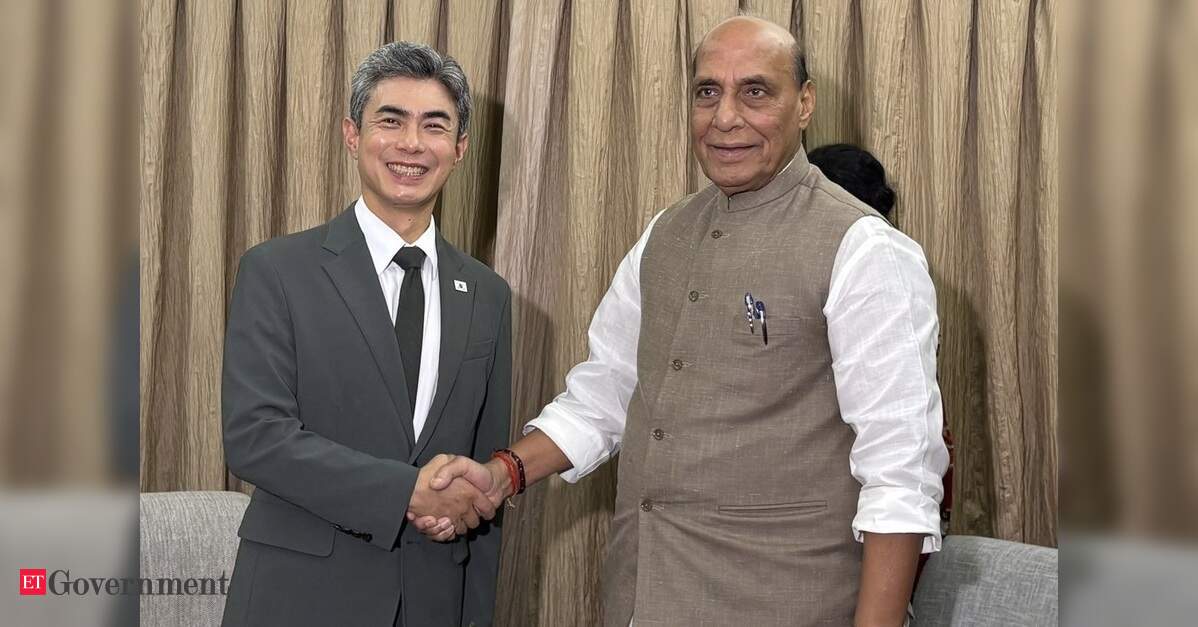
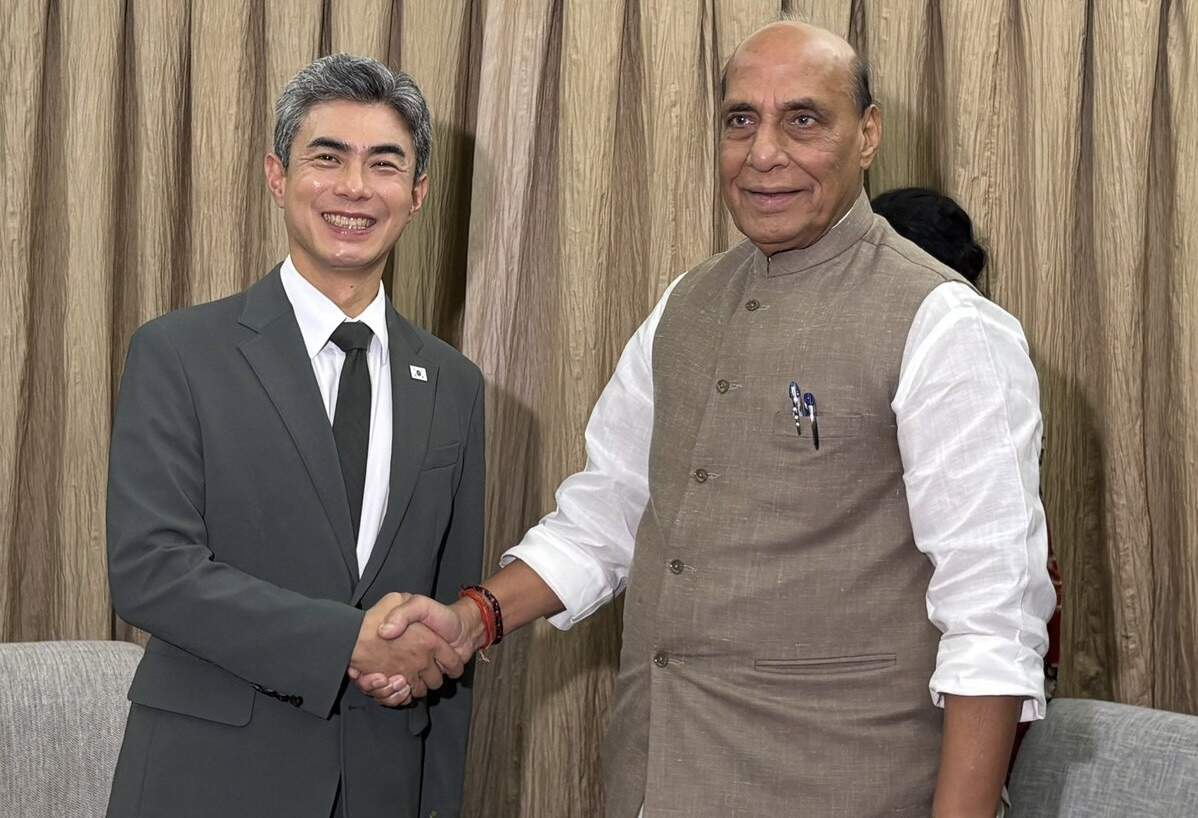
India and South Korea are examining a new phase of defence cooperation that could move their relationship beyond military equipment purchases towards the joint development of advanced technologies. The initiative comes as Asia’s major democracies confront growing maritime security challenges, technological competition and the need to reduce dependence on concentrated global supply chains.Defence Minister Rajnath Singh and his South Korean counterpart Kang Shin-chul discussed military technology co-development, defence industrial collaboration and Indo-Pacific security during their meeting on October 28, on the sidelines of the 13th ASEAN Defence Ministers’ Meeting-Plus (ADMM-Plus) in Cebu, Philippines.According to the Ministry of Defence, the ministers reviewed expanding bilateral defence cooperation and examined opportunities to strengthen industrial partnerships and maritime security. The discussions have not yet resulted in an identified joint development programme or funding commitment, but they indicate an intention to deepen cooperation in strategically important technologies.The significance extends beyond bilateral defence relations. India and South Korea are two major Asian democracies with substantial industrial capabilities, large technology sectors and strong interests in maintaining open maritime trade routes. Their cooperation could contribute to a broader network of partnerships among democratic Asian countries seeking greater strategic autonomy without creating exclusive military blocs.Defence cooperation beyond conventional procurement
South Korea has emerged as a major defence manufacturer, with capabilities in artillery systems, naval shipbuilding, military electronics, armoured vehicles and aerospace technologies. India, meanwhile, is expanding domestic defence manufacturing and seeking greater access to advanced technologies through indigenous development and international partnerships.The K9 Vajra self-propelled artillery programme provides an established example of industrial cooperation. The system is manufactured in India by Larsen & Toubro in partnership with South Korea’s Hanwha Aerospace. An additional order for 100 K9 Vajra systems was signed in April 2025, reinforcing the industrial relationship between the two countries.The proposed shift towards co-development would go further. Rather than manufacturing an existing foreign-designed platform, Indian and Korean companies could collaborate on research, engineering, intellectual property and new systems designed for domestic and international markets.Potential areas include naval platforms, autonomous systems, military electronics, sensors and advanced materials. However, these remain possible areas of cooperation rather than programmes announced at the October 28 meeting.A $25.6-billion economic relationship
The defence initiative rests on a substantial commercial relationship. Bilateral trade reached $25.6 billion in calendar year 2025, including Indian exports of $6.4 billion and imports of $19.2 billion. The Comprehensive Economic Partnership Agreement (CEPA), implemented in 2010, has facilitated trade and investment, although the imbalance remains considerable.More than 670 Korean companies operate in India. Samsung, Hyundai, LG and other Korean manufacturers have established major operations across electronics, automobiles and industrial manufacturing. Korean investment has contributed to India’s manufacturing capacity, while Indian companies have developed opportunities in Korea’s technology and industrial markets.Both governments have set a target of increasing bilateral trade to $50 billion by 2030 and are negotiating improvements to CEPA, with an objective of concluding the upgrade by the first half of 2027.Technology cooperation is becoming equally important. South Korea’s strengths in semiconductors, electronics, advanced manufacturing and telecommunications complement India’s capabilities in software engineering, digital public infrastructure and technology services.The India-Korea Digital Bridge framework launched in April 2026, alongside cooperation in science and technology, provides another institutional mechanism for expanding engagement in artificial intelligence, digital infrastructure and emerging technologies.These capabilities also have defence applications, particularly in secure communications, electronics, cybersecurity and autonomous systems.Why cooperation among Asian democracies matters
The strategic context gives the relationship wider importance. Asia contains some of the world’s largest manufacturing economies, busiest shipping routes and most contested maritime regions. Disruptions in the South China Sea, East China Sea or Indian Ocean can affect energy supplies, international commerce and industrial production across the continent.India and South Korea have different immediate security concerns. Seoul’s defence priorities are shaped substantially by North Korea and its alliance with the United States. New Delhi’s priorities include its continental borders, Indian Ocean security and maintaining strategic autonomy.Nevertheless, both countries depend on predictable international rules, freedom of navigation and resilient supply chains. Closer cooperation among democratic Asian countries, including Japan and other regional partners, can improve maritime awareness, technology resilience and crisis-response capabilities.Such cooperation need not be directed against any particular country. Its practical value lies in strengthening regional capabilities, reducing vulnerabilities and ensuring that Asian countries have greater influence over the security and economic arrangements affecting them.The ADMM-Plus framework offers an appropriate setting because it brings together ASEAN members and major regional powers, including countries with competing strategic interests. This allows defence cooperation to develop alongside dialogue and confidence-building measures.Maritime security and industrial resilience
Maritime cooperation is particularly relevant. South Korea depends heavily on seaborne energy imports and international shipping, while India’s geographic position gives it a substantial role in Indian Ocean security.The two navies conducted their inaugural bilateral naval exercise in October 2025. Regular port visits and coast guard exchanges have also strengthened operational engagement. Cooperation could expand into maritime surveillance, ship maintenance, logistics and information-sharing.South Korea’s advanced shipbuilding industry and India’s expanding naval construction requirements create opportunities for industrial partnerships, although defence-specific agreements would require separate negotiations.The challenge now is implementation. Co-development requires agreement on technology transfer, intellectual property, investment, export permissions and production responsibilities. Differences in procurement procedures and operational requirements could complicate negotiations.For India, the priority would be acquiring genuine technological capabilities rather than relying primarily on licensed production. For South Korean companies, commercial viability, intellectual property protection and access to markets would be important considerations.The October 28 meeting therefore represents an opening rather than a concluded agreement. Its significance will depend on whether the two governments identify specific projects and establish workable industrial arrangements.With substantial trade, complementary technological strengths and shared maritime interests, India and South Korea have a credible foundation for deeper cooperation. Converting that foundation into jointly developed defence technologies would strengthen their bilateral partnership while adding to the industrial and security capabilities of democratic Asia.
