

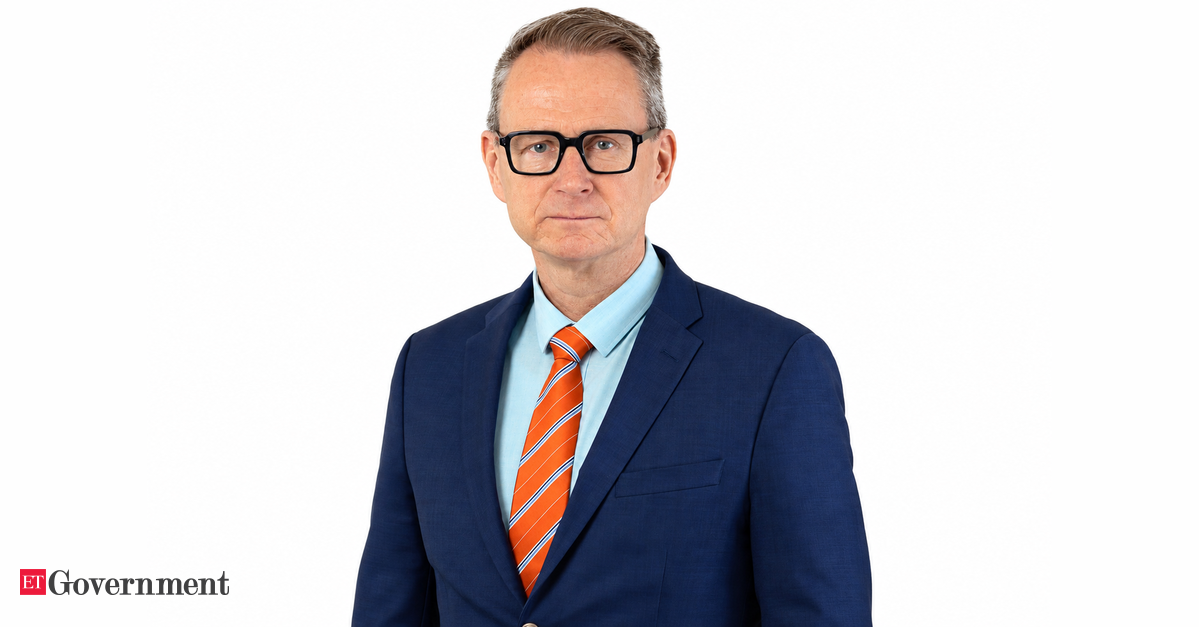
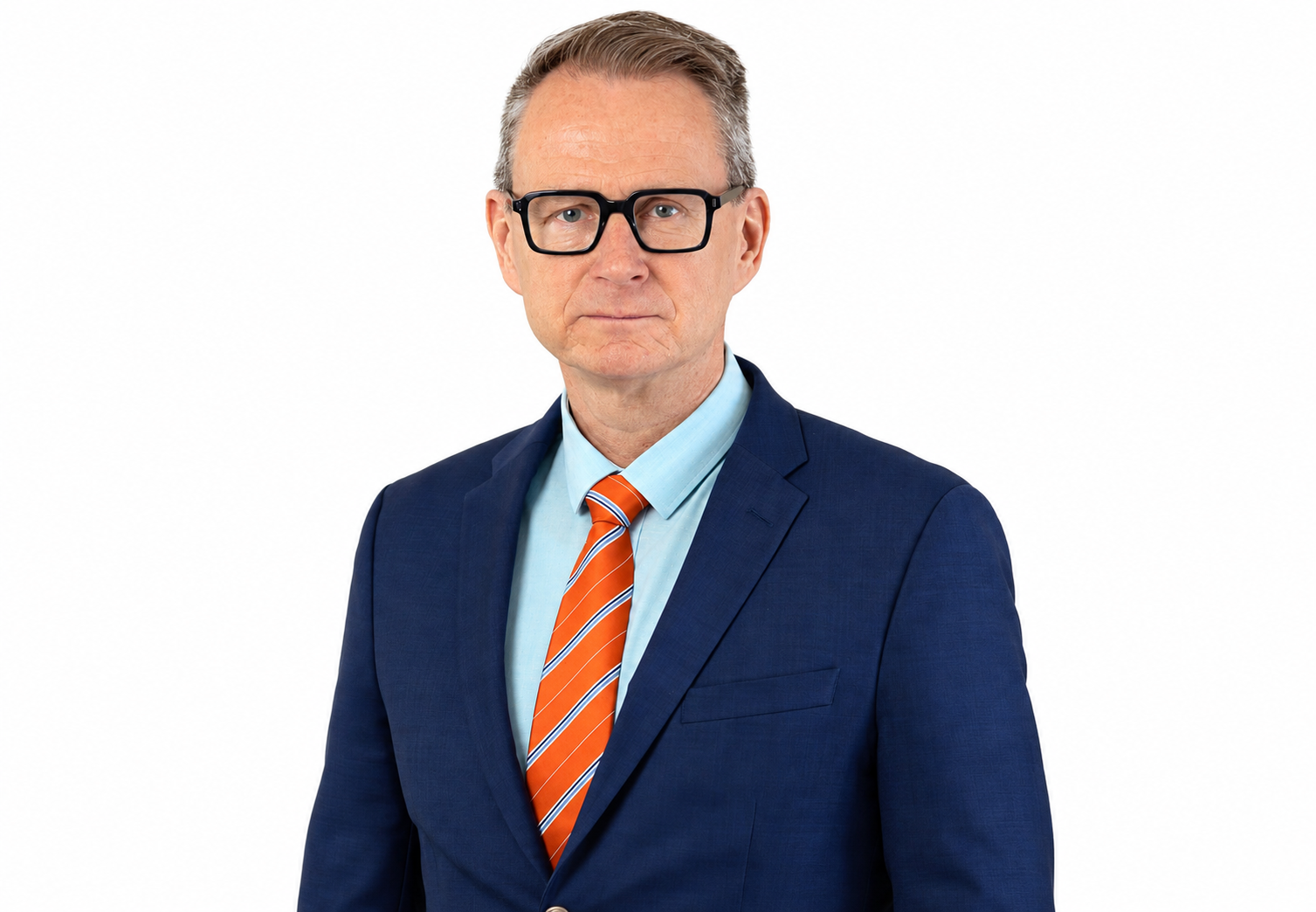
At a time when geopolitical uncertainties, technological competition and shifting global supply chains are reshaping international relations, India and Finland are entering a new phase of strategic and economic cooperation. The elevation of bilateral ties to a Strategic Partnership in Digitalization and Sustainability, growing Finnish investments in India and the proposed India–EU Free Trade Agreement have opened new avenues for collaboration in advanced technologies, clean energy, defence and innovation.In an exclusive interview with Anoop Verma, Mikko Kivikoski, Ambassador of Finland to India, discusses the future of bilateral economic relations, the opportunities emerging from the India–EU partnership, cooperation in 6G, artificial intelligence and space technologies, and the changing European security landscape. He also reflects on India’s role in international diplomacy and Finland’s distinctive tradition of sauna diplomacy, which has helped build trust and foster dialogue even during the Cold War.Edited excerpts:India and Finland elevated their bilateral relationship to a Strategic Partnership in Digitalization and Sustainability during President Alexander Stubb’s state visit in March 2026. What concrete progress has been achieved since then, and which areas do you see emerging as the principal drivers of the partnership over the next five years?
During the state visit, our bilateral relationship was elevated to a Strategic Partnership in Digitalization and Sustainability. At the same time, the Finnish Ministry for Foreign Affairs and India’s Ministry of External Affairs were tasked with establishing working groups on sustainability and digitalisation and preparing action plans for both areas.That work is now underway. The working groups are meeting, and the action plans are being prepared. This will provide a clear focus for our cooperation in these two areas, which encompass much of what our countries are already doing together and reflect the respective strengths of both nations. In digitalisation, the principal areas of cooperation will include 6G, artificial intelligence, quantum computing, cybersecurity and space technologies. Space is becoming an increasingly important area of engagement.On sustainability, our cooperation covers renewable energy, biofuels, bioenergy, the circular economy, smart grids, energy efficiency, green hydrogen and water management. These are some of the concrete areas where we are already working together and where we see considerable potential for further cooperation.India and Finland have set an ambitious target of doubling bilateral trade, which currently stands at approximately USD 3.7 billion. What are the major opportunities and challenges in achieving this target?
I believe the opportunities are considerable. The objective of doubling bilateral trade is partly linked to the India–EU Free Trade Agreement. The European Union and India have a similar ambition to double their trade, so it is only logical that Finland, as an EU member state, should pursue the same objective.The Free Trade Agreement will be extremely important. We also hope that the negotiations on an Investment Protection Agreement will be successful, because such an agreement would be a valuable complement to the FTA. From my perspective, the principal challenge is to promote India more effectively as an opportunity for Finnish businesses. Until now, India has not received the attention it deserves among Finnish companies.However, the results are promising. More Finnish companies are entering the Indian market, and interest is growing continuously. Once the FTA is implemented, and hopefully an Investment Protection Agreement is also in place, the opportunities for expanding our economic relationship will be enormous.Which sectors offer the greatest potential for Finnish businesses in India over the next four or five years?
Technology, innovation and digitalisation will certainly remain among the most promising sectors. India has a strong industrial base, considerable scale and an enormous pool of talent. Finland may be a small country in terms of population, but we have substantial strengths in innovation and technology. When these capabilities are combined, the prospects are extremely encouraging.We already have a strong foundation in telecommunications and digital networks. Nokia, for instance, employs more than 20,000 people in India. Its operations today are focused on telecommunications networks rather than mobile phones, and the company is also placing increasing emphasis on defence-related technologies. Indian companies operating in Finland are heavily concentrated in information and communications technology and digitalisation. I expect this cooperation to continue expanding.One particularly promising new area is space technology, including satellites and satellite networks. We have several strong Finnish companies in this sector that are either entering the Indian market or planning to expand their presence. A recent example is the cooperation announced between Nokia and the Finnish company ICEYE. They are collaborating on independent, sovereign, dual-use satellite communication systems for governments.An important feature of these systems is that the purchaser retains full control and ownership. This represents an emerging area where I believe India and Finland can significantly deepen their cooperation.Union Commerce and Industry Minister Piyush Goyal visited Finland in July 2026 with a high-level business delegation. What have been the principal outcomes of that visit?
One of the most important outcomes was the visit itself. It sent a strong signal to Finnish and European businesses that the partnership between India and the European Union is deepening. It was also important for us to have Minister Goyal and the accompanying Indian business delegation in Finland, explaining directly to Finnish companies the opportunities for expanding cooperation.There have already been concrete follow-ups. Just yesterday, I met representatives of an Indian company that participated in the visit, and they have made further progress on their project involving Finnish partners. So we are seeing tangible developments. Our Minister for the Environment also visited Gujarat during the World Circular Economy Forum, and we are expecting a business delegation from Gujarat to visit Finland by the end of this month.There is considerable interaction between our countries, involving business delegations, government representatives and companies. These exchanges demonstrate that India and Finland, as well as India and the European Union more broadly, are becoming increasingly engaged with one another.Foreign direct investment is an important priority for India. Are Finnish companies planning major new investments in sectors such as engineering, telecommunications, clean energy and advanced manufacturing?
Finnish companies have so far invested approximately €4 billion in India. We have around 150 Finnish companies operating in the country, and that number is growing. Companies approach the Embassy almost daily, either to discuss plans to enter the Indian market or to expand their existing operations.Just last week, I was in Gujarat to inaugurate a new facility established by Lindström, a Finnish company specialising in industrial textiles. This is one example of the investments that are taking place. Several Finnish companies already operating in India have plans to expand their activities, which will involve additional investment. At the same time, new companies are exploring opportunities to establish a presence here.In recent weeks alone, approximately half a dozen Finnish companies have been in contact with us regarding plans to begin operations in India. So, yes, we are seeing new investments, and I expect this trend to continue.The India–EU Free Trade Agreement is one of the most consequential developments in the economic relationship between India and Europe. How does Finland assess its potential to transform bilateral trade, investment and industrial cooperation?
We are extremely pleased that the agreement is moving towards completion. It has taken a very long time, and Finland has consistently been a strong advocate of the India–EU Free Trade Agreement. We hope the agreement will be signed by the end of this year and enter into force during the first half of next year.Even before its implementation, the prospect of the agreement is having a positive impact. We are already witnessing increased interest among Finnish companies in the Indian market and greater business activity. Once the agreement enters into force, I expect this momentum to accelerate, with more Finnish companies establishing operations in India.However, I would again emphasise the importance of the Investment Protection Agreement. The message I receive from Finnish and other European companies is that investment protection is almost as important as the Free Trade Agreement itself. If both agreements are in place, their combined impact could be substantially greater. We would then be moving towards something resembling a more integrated economic space.Another important aspect is that India and the European Union are negotiating and concluding trade agreements with other countries and regions. This creates additional opportunities for companies operating in either market to benefit from wider international trade networks.The FTA also sends an important message to the international community. At a time of increasing uncertainty in global trade, India and the European Union are demonstrating their commitment to a rules-based international trading system. That is a significant signal in the present geopolitical environment.The European Union is increasingly focused on economic security, strategic autonomy and diversification of global supply chains. How does Finland view India’s emergence as a manufacturing and technology partner for Europe?
Finland certainly sees India as a major partner for the future. As a member of the European Union, Finland is part of the broader strategic partnership between India and the EU. Earlier this year, during the India–EU Summit in New Delhi, another important dimension was added through the Security and Defence Partnership.This demonstrates how Europe increasingly views India as a strategic partner. We are living through turbulent times in the global economy and international politics. Countries are seeking to strengthen their strategic autonomy and establish more reliable supply chains. However, no country can achieve everything independently. We all need partners, and one of the most important criteria in choosing partners is trust.I recall that India’s Commerce and Industry Minister, Piyush Goyal, remarked during a visit to Germany that trust is becoming the new rare earth. I think that is a very appropriate observation. Trust is becoming an increasingly important factor in international economic relations. Europe and India see each other as trusted partners, and there is a shared understanding that deeper cooperation across different sectors would be mutually beneficial.Could India become an important part of Europe’s strategy to build more resilient supply chains, particularly in the context of recent global disruptions?
Resilience is something that every country is now seeking to strengthen. The COVID-19 pandemic was a major test of global resilience. Subsequently, Russia’s war against Ukraine, the conflicts in the Middle East and other geopolitical developments have further demonstrated the vulnerability of international systems.These developments have reinforced the importance of resilience, whether in supply chains, economic structures or national security. Finland has been investing in resilience for a long time. We have developed what we call a comprehensive security system. This approach goes beyond the military dimensions of defence. It also recognises the importance of civilian preparedness, economic resilience and the ability of society to function during crises.We have been promoting this comprehensive approach within the European Union, and it is also an area where we would be pleased to cooperate with India. As strategic partners, resilience and strategic autonomy should naturally form part of our broader cooperation.Finland has established a strong position in telecommunications through companies such as Nokia and research institutions such as the University of Oulu. India is also pursuing indigenous 6G capabilities through the Bharat 6G Alliance. How do you envisage cooperation between the two countries developing in this sector?
I believe this cooperation is developing very well. As you mentioned, the University of Oulu is an important centre of telecommunications research. India also has a strong telecommunications ecosystem, particularly in Bengaluru. There is already concrete cooperation between institutions and companies in Oulu and Bengaluru.The private sector plays a particularly important role in this relationship. Finland is a relatively small country, and our companies are often the principal actors in technological cooperation. Experience shows that the most effective results are achieved when there is a good combination of public-sector support and private-sector engagement. From the government’s perspective, our role is to support and facilitate cooperation between companies and research institutions, including in 6G and telecommunications.We also have a long tradition of cooperation in this sector. India’s telecommunications infrastructure has benefited significantly from the involvement of European companies, including Nokia from Finland and Ericsson from Sweden. This provides a strong foundation for the next generation of technological collaboration.Do you see opportunities for India and Finland to jointly develop intellectual property, international technology standards and commercially deployable solutions for global markets?
To a certain extent, this is already happening. But I certainly believe there is considerable scope to do more. Intellectual property rights are an important consideration in such cooperation. Industrial policies and regulatory frameworks also have a significant influence on the development of joint technological ventures.Regulation is necessary, but excessive regulation can sometimes become an obstacle to innovation and cooperation. With the Free Trade Agreement, and hopefully an Investment Protection Agreement, I believe we will see more joint ventures involving Finnish and Indian companies. These ventures could operate in Finland, elsewhere in Europe or in India, while developing technologies and products for global markets.That is the direction in which I hope our technological partnership will evolve.India and Finland have identified artificial intelligence, quantum computing, semiconductors and high-performance computing as priority areas for cooperation. How can the two countries move beyond research collaboration towards joint technology development and commercialisation?
Companies will play the central role in taking this cooperation to the next level. Our companies are already in contact with Indian counterparts, and there are existing collaborations in research and technology. I do not see any fundamental limitations preventing these partnerships from developing further. The most important contribution governments can make is to create the best possible environment for companies to cooperate, innovate and invest. If we establish the right regulatory and economic conditions, businesses will be able to take the next steps towards joint development and commercialisation.Finland has considerable expertise in clean energy, circular economy solutions, waste management, smart grids and industrial sustainability. What opportunities exist for Finnish technologies to contribute to India’s green hydrogen, renewable energy, waste-to-energy and urban sustainability programmes?What Finland can bring to the partnership is our experience and technological expertise. At present, approximately 95% of the electricity produced in Finland is fossil-free. We have developed considerable expertise in renewable energy and other fossil-free energy technologies. Our electricity generation includes a combination of renewable energy and nuclear power.Several Finnish companies are already working in India and providing solutions in these areas. However, I would particularly emphasise energy efficiency. Sustainability and energy efficiency should not be viewed as separate sectors; they need to be integrated across the economy. That is the approach we have followed in Finland.One promising area of cooperation with India is the maritime sector, including shipbuilding and ports. Here, digitalisation, sustainable technologies, energy efficiency and circular economy solutions can all make important contributions. Finland has the technological capabilities, while India has the industrial base, scale and talent. Combining these strengths creates significant opportunities.India and Finland signed a Migration and Mobility Partnership Agreement in March 2026. How will this agreement improve opportunities for Indian students, researchers, engineers and skilled professionals, particularly as economic and technological cooperation expands?
The agreement is very important because interaction between our countries is increasing, and this naturally includes people-to-people contacts. We are seeing more people moving between India and Finland for education, employment, research and business.As trade and investment increase, the movement of people will also grow. Companies expanding their operations will require skilled professionals, and this will create opportunities in both countries. We already have more than 30,000 Indians living, working or studying in Finland. I expect this number to increase as our economic relationship develops.It is important to recognise that mobility is a two-way process. Finnish professionals and businesses are also becoming more active in India. The agreement provides an excellent framework for facilitating this movement and ensuring that both countries can access the skills and talent they need.Finland’s accession to NATO in 2023 represented a major shift in its security policy, while Russia’s continuing war against Ukraine has fundamentally altered Europe’s strategic environment. How does Finland assess India’s position on the conflict and its broader approach to strategic autonomy?
For Finland, Russia’s war of aggression against Ukraine has fundamentally changed the European security environment. Russia represents a long-term security threat to Finland, and our decision to join NATO was a direct consequence of the war.Before the invasion, Finnish public opinion was strongly opposed to NATO membership. An opinion poll conducted three days before the war showed that approximately 70% of Finns were against joining NATO. When a similar poll was conducted three days after the invasion, the situation had reversed, with approximately 70% supporting membership. Today, support is above 80%.This illustrates how profoundly the war changed Finland’s security outlook. For every government, the security and prosperity of its people are among the most important responsibilities. I am not here to advise the Indian government on its foreign policy. India must make its own decisions based on its national interests.For Finland, however, our position is clear. We regard Russia as a long-term security threat. In addition to the war itself, we are witnessing various hybrid and grey-zone activities in Europe, which represent another dimension of this threat. Our approach is to support Ukraine and increase pressure on Russia to end the war.We have seen further negotiations recently, but unfortunately, in our assessment, Russia has not demonstrated sufficient willingness to engage seriously in efforts to end the conflict or agree to a ceasefire. At the same time, we appreciate India’s efforts to help bring the war to an end.India is well positioned because it maintains channels of communication with both Moscow and Kyiv. Indian proposals concerning maritime security, food security and energy are helpful contributions. The international community must continue working to create the conditions and incentives necessary to bring the war to an end.The conflict has continued much longer than many expected, and the humanitarian consequences have been devastating. Too many lives have been lost.Do you see opportunities for closer cooperation between India and Finland in strengthening European security and international diplomacy, particularly following the new India–EU Security and Defence Partnership?
There are certainly opportunities for deeper cooperation. In January, the European Union and India agreed to establish a Security and Defence Partnership. As an EU member state, Finland is naturally part of this broader framework. We are already seeing promising developments in defence and security cooperation.There is increasing activity involving European and Finnish defence companies and their Indian counterparts, particularly in defence equipment and related technologies. I hope this cooperation will continue to expand. The broader India–EU partnership provides a strong foundation for developing closer engagement between Finland and India in security and defence.The sauna occupies a unique place in Finnish culture, serving not only as a space for relaxation and social interaction but also as an instrument of diplomacy. During the Cold War, Finnish leaders, particularly President Urho Kekkonen, used sauna diplomacy to build trust and facilitate discussions with foreign leaders, including those from the Soviet Union. How important has sauna diplomacy been in Finland’s diplomatic history, and can this tradition still play a meaningful role in today’s increasingly complex and technology-driven world?I absolutely believe that personal relationships and direct human interaction are as important today as they have been in the past. Their importance will continue in the future, regardless of technological developments. At the end of the day, we are human beings, and decisions are made by people.You are absolutely right that the sauna has been one of the environments Finland has used to create and maintain personal relationships. The sauna is an integral part of Finnish culture. It has traditionally been a place where families resolve disagreements, business deals are discussed and diplomatic relationships are developed.Our former President Urho Kekkonen was a great enthusiast of the sauna. During the Cold War, when Finland faced serious issues in its relations with the Soviet Union, he frequently invited his Soviet counterparts to the sauna. These encounters often produced positive results, and difficult matters could sometimes be resolved in that informal environment.The broader lesson is the importance of personal trust. Even as technology advances and our societies become increasingly digital, personal encounters and relationships will remain essential. I would even suggest that their importance may increase in the future. The sauna is also becoming increasingly popular internationally, including in India, particularly as part of the wellness industry.There is growing recognition of the physical and mental health benefits associated with sauna use, and Finnish companies are naturally interested in participating in this expanding market. But beyond its health and wellness dimensions, the sauna remains an important part of our national culture and an enduring symbol of the value Finland places on personal relationships.
