

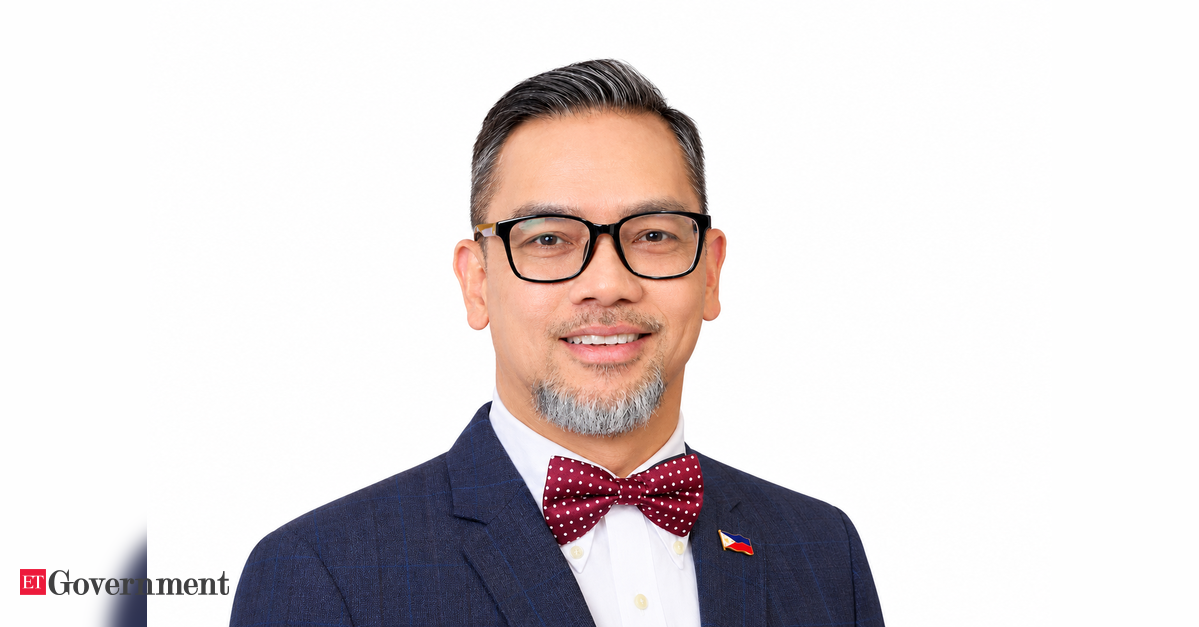
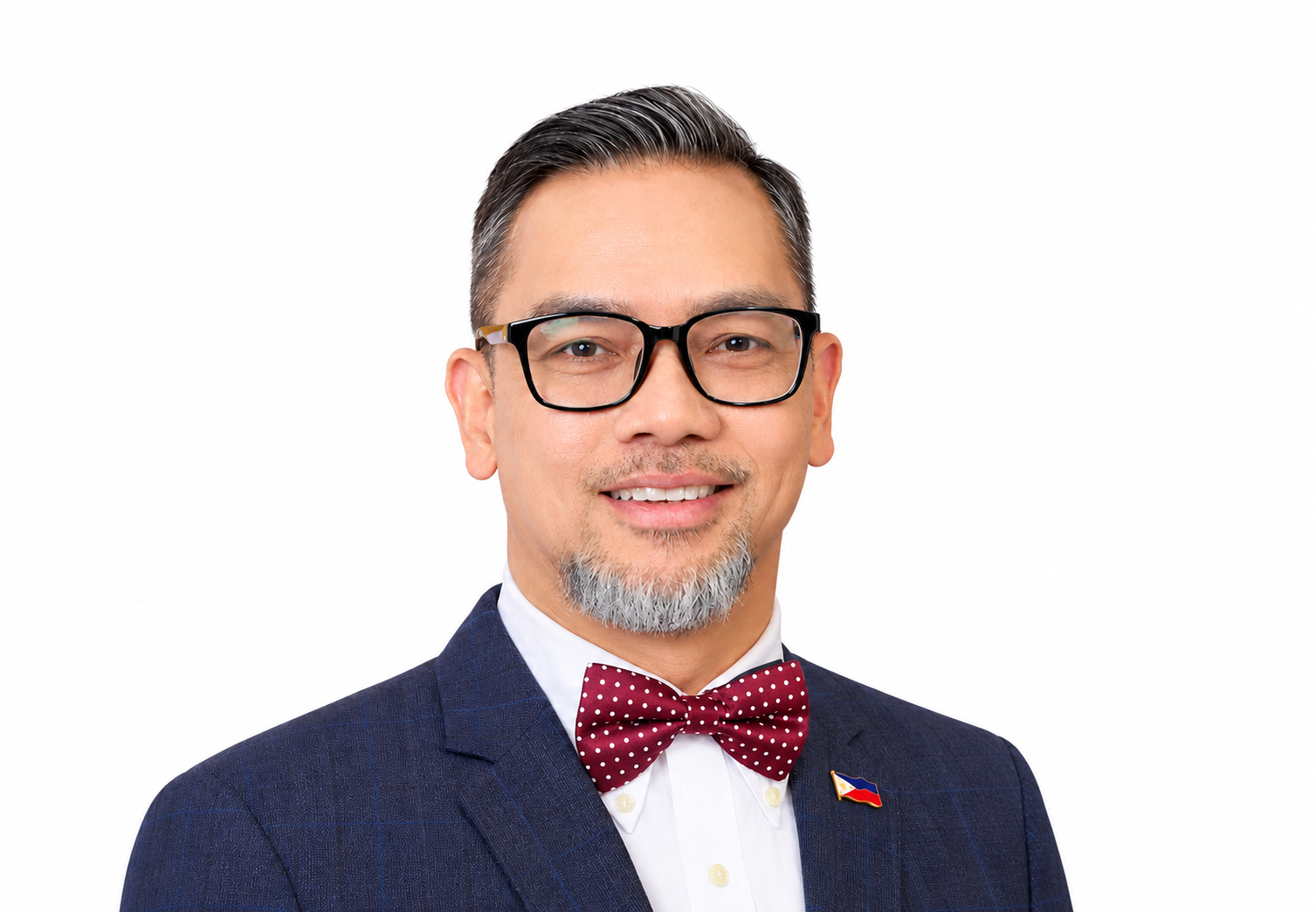
The elevation of India–Philippines relations to a Strategic Partnership in 2025 reflects a growing convergence of economic, geopolitical and security interests between the two countries.With bilateral trade approaching $4 billion, cooperation is expanding beyond traditional sectors into defence manufacturing, semiconductors, critical minerals and digital public infrastructure. Maritime security and adherence to international law in the Indo-Pacific have emerged as important pillars of the relationship.In conversation with Anoop Verma, Josel F. Ignacio, Ambassador of the Philippines to India, discusses the progress towards a Preferential Trade Agreement, the strategic significance of the BrahMos acquisition, India’s growing influence in Southeast Asia and the prospects of bilateral cooperation in emerging technologies.Ambassador Ignacio also shares his vision of doubling bilateral trade and elevating ties to a Comprehensive Strategic Partnership over the next five years.Edited excerpts:India and the Philippines elevated their bilateral relationship to a Strategic Partnership in 2025. What concrete progress has been achieved since then, and what are your priorities for taking this relationship forward?
One thing that I always emphasise when talking about the Strategic Partnership is that the Philippines is very deliberate about whom it enters into strategic partnerships with. India became only our fifth strategic partner, joining a group that includes Japan, South Korea and Australia. This highlights how much India has risen to become a trusted and valued partner for the Philippines.The Strategic Partnership covers all aspects of the relationship, and there is a Plan of Action that guides our specific activities. We are making very good progress in executing our commitments. On the military front, for instance, we agreed to develop service-level talks. Meetings involving the Air Force and the Army have already been convened, and I believe the Navy will be next.On trade, we committed to expanding the basket of goods and concluding a Preferential Trade Agreement (PTA). Our bilateral trade reached $3 billion in 2023 and is now approaching the $4 billion mark in just two and a half years. Both countries have reached an agreement on the terms of reference that will guide the PTA negotiations.On the defence and military side, we want to see India become more involved in the modernisation of our armed forces. Of course, specific procurement decisions have to be made by our defence ministry and armed forces. But with BrahMos and other projects, I think we are off to a good start.In trade, we want to bring more high-value products into the bilateral trade basket rather than limiting ourselves to raw materials and food products. Another priority where India’s contribution will be significant is the development of digital public infrastructure (DPI). India has committed to providing some funding for a sovereign cloud system for the Philippines, and discussions are ongoing.One significant undertaking that both governments are closely looking at is the Philippines’ adoption of the Unified Payments Interface (UPI). When our President was in India for the BRICS Summit, representing ASEAN, we arranged a presentation on India’s digital payments ecosystem. It was an eye-opening experience for the Philippine government.When people talk about digital payments, they often think only about using mobile phones and QR codes to purchase goods. But the Indian example amazed us because of the JAM Trinity. It brings together bank accounts, including zero-balance accounts, national identity through Aadhaar, and mobile-enabled financial services.In the Philippines, these are generally treated as three different things. India’s experience demonstrates how technology can bring them together seamlessly in a manner that truly benefits people at the grassroots.The Philippines is chairing ASEAN in 2026, at a time when the Indo-Pacific is experiencing significant geopolitical and economic changes. How does Manila view India’s growing strategic and economic role in Southeast Asia?
We recently concluded the 49th ASEAN Summit and related summits. For every ASEAN chairmanship, the year-end summits are normally the high point. Many ASEAN leaders, along with leaders of dialogue partners and guest countries, attended. We were particularly happy that Prime Minister Narendra Modi attended in person.The Philippines sees India as an influential and rising power that is using its power responsibly to advance shared goals, uphold the rule of law and serve as a force for stability. This is in contrast to other powers that tend to undertake destabilising actions.India has been a responsible first responder. Within ASEAN, it has been a force for good, supporting connectivity, maritime security, disaster preparedness, and digital and economic integration. In that sense, we see India as an example of how countries, as they gain influence and accumulate political, economic and diplomatic resources, can use these assets to contribute positively to the international community.What opportunities do you see for strengthening cooperation between India and ASEAN under India’s Act East Policy?
With the introduction of India’s Act East Policy in 2014, following the formation of Prime Minister Narendra Modi’s government, India has become one of ASEAN’s most important and consequential dialogue partners.The Act East Policy is central to fostering cooperation between ASEAN and India in terms of culture, commerce, connectivity and capacity building—the four Cs of the policy. For India, it also contributes to the development of the northeastern region through connectivity projects and other initiatives.What we particularly appreciate is India’s consistent commitment to ASEAN centrality and unity, and its active participation in ASEAN-led frameworks, including the ASEAN–India Summit, the East Asia Summit and the ASEAN Regional Forum. We recently hosted the 23rd ASEAN–India Summit in Manila.In the context of broader Indo-Pacific stability, it is also meaningful for the Philippines that the recent Quad Leaders’ Summit took place in Manila on the sidelines of the 49th ASEAN Summit.Prime Minister Modi himself acknowledged that Manila has become closely associated with high-level Quad meetings. Manila hosted the revival of the Quad in 2017, subsequently hosted foreign minister-level meetings, and, most recently, the leaders’ summit.Bilateral trade between India and the Philippines is approaching $4 billion. Which sectors offer the greatest opportunities for expanding trade and investment between the two countries?
We are very happy that bilateral trade has crossed the $3 billion mark and is now approaching $4 billion. However, when we look at the basket of goods, a large proportion consists of food products. The Philippines, for instance, imports considerable quantities of buffalo meat from India.One of India’s major strengths is pharmaceuticals, and the Philippines imports a significant volume of pharmaceutical products. We also trade in industrial products, including different types of machinery. What would really benefit both countries, apart from expanding trade in agricultural, food and processed food products, is greater emphasis on high-technology and high-value products.The Philippines has been a major centre for the semiconductor industry for four or five decades. We have considerable experience in integrated circuit assembly, chip packaging and semiconductor assembly. This can complement India’s Semiconductor Mission and its efforts to develop a domestic semiconductor ecosystem.We need to identify areas where our semiconductor industries can collaborate. As India develops its own ecosystem, the Philippines can play a part in that process. Another important area of opportunity is critical minerals, particularly as both countries seek to develop their high-technology industries. The Philippines is the world’s second-largest producer of nickel after Indonesia. However, much of our nickel has traditionally been exported in ore form.India is developing its electric vehicle and battery industries, and the Philippines can help meet its requirements. But what we want in the Philippines is to develop our nickel industry so that we are not merely exporting raw ore.We would like to partner with Indian companies to develop a nickel-processing ecosystem close to the mining sites, enabling us to produce and export higher-value nickel products. These are some of the priority areas that we can explore as we negotiate the Preferential Trade Agreement.India and the Philippines are working towards a Preferential Trade Agreement, while the ASEAN–India Trade in Goods Agreement is also undergoing review. What progress has been made in these negotiations?
Both countries have committed to negotiating a Preferential Trade Agreement. Before the actual negotiations can begin, we have to agree on the terms of reference that will guide the process.I believe we have concluded the terms of reference for the PTA negotiations. Hopefully, we will soon move to the next phase, which involves actual negotiations on the goods that will be covered and the concessions that both countries will offer. The process is moving along quite well. Inevitably, both sides will also factor in the ongoing review of the ASEAN–India Trade in Goods Agreement (AITIGA). I believe the next meeting of the joint committee for the AITIGA review will take place in New Delhi in January.At the political level, all the governments involved—ASEAN members and India—have committed to pushing resolutely for progress in the review. We acknowledge that there are outstanding issues that need to be ironed out, but both sides have demonstrated a strong commitment to resolving them.The Philippines became the first foreign customer for India’s BrahMos supersonic cruise missile system. How has this acquisition influenced your country’s defence modernisation strategy, and what opportunities exist for further defence cooperation with India?
The Philippines is modernising its armed forces based on the Comprehensive Archipelagic Defence Concept. Our defence strategy has to be tailored to the geographical realities of the Philippines, which is an archipelago of 7,641 islands, surrounded by the sea and neighbouring powers.BrahMos is one of the most technologically advanced defence acquisitions that we have made, complementing our acquisition of naval vessels, aircraft and other military platforms. In terms of weapon systems, BrahMos is certainly among our most sophisticated acquisitions. BrahMos represents some of the most advanced supersonic cruise missile technology available today. We are glad and proud to possess multiple batteries of the system in our arsenal.What this acquisition demonstrates is the strategic trust that exists between the two countries. That trust has enabled us to enter into a contract involving such sensitive and powerful technology.For our armed forces, our defence establishment and certainly for our people, the acquisition has highlighted how much India has risen and how far its indigenous defence industry has developed. India is producing technology that is among the most advanced, while maintaining a very competitive price point.We are also happy that, since our acquisition of BrahMos, several other countries have expressed interest in acquiring the system. The Philippines has thus played a role in opening up other markets and opportunities for India’s defence industry.The South China Sea remains one of the most sensitive geopolitical flashpoints in the Indo-Pacific, with competing territorial claims and concerns over freedom of navigation. How does the Philippines assess the current security situation, particularly its maritime disputes with China?
At the outset, I would like to emphasise that when people use the expression ‘South China Sea dispute’ as a general term, perhaps for convenience, they miss the reality that not all claims in the South China Sea are equal.The Philippine claims are based entirely on the United Nations Convention on the Law of the Sea (UNCLOS). Our claims to territorial waters, maritime entitlements, the Exclusive Economic Zone (EEZ) and the continental shelf, as well as the baselines from which these are measured, are all faithful to and aligned with the UNCLOS.The claims of some other littoral states are not as compliant with international law. We know, for instance, that one country’s claims far exceed what is permitted under international law. These claims are based on questionable history, questionable narratives and questionable research. The trouble is that military power is being used to advance these baseless and questionable claims. It reduces the issue to a question of might rather than right.The Philippine position stands on even stronger legal footing because our maritime entitlements have been validated by an international arbitral tribunal established pursuant to UNCLOS. Its ruling, under international law and UNCLOS, is final and binding, regardless of whether the other party recognises it.Unfortunately, the situation is very tense. Incidents are occurring at times almost daily, and their intensity is increasing. This is not because the Philippines is doing anything offensive, but because we are being forced to defend our rights and entitlements against continued encroachment and the assertion of claims that have no basis in law.In my personal view, these tensions would be unnecessary if only we adhere to international law and the principle of peaceful approaches to dispute resolution. The Philippines will continue to assert and defend its rights through diplomatic, legal, political and defensive as well as deterrent means.What role can India play in supporting maritime security, international law and regional stability in the South China Sea?
India can play an important role on multiple fronts. Politically and diplomatically, India has made pronouncements that we value greatly. For instance, External Affairs Minister Dr S. Jaishankar, during his visits to Manila, has expressed India’s support for the Philippines in defending its sovereignty. That is a very important statement.In the years since the arbitral ruling was issued, India’s position has evolved from initially taking note of the decision to acknowledging the ruling as an important basis for resolving the dispute peacefully and in accordance with international law. On the naval and military front, we are pleased that India has started making its presence felt. The Indian Navy has been deploying vessels to the South China Sea and engaging the Philippine Navy in joint manoeuvres.This cooperation is not limited to the bilateral level. During the recent ASEAN–India Maritime Exercise, Indian naval vessels participated alongside Philippine vessels and those of other ASEAN countries. We hope India will continue to participate in and support the Philippines’ efforts to bring partner nations together for maritime cooperative activities that uphold UNCLOS and international law in the South China Sea.India has been a force for good and stability in maritime security. On the other side, in the Indian Ocean region, India has demonstrated how it can contribute positively by responding to vessels in distress, including those attacked by the Houthis, and rescuing seafarers from ships that have been hit. Those rescued include Filipino seafarers. We are very grateful that India has played such an important role as a first responder in the Indian Ocean.Can we expect more regular naval exercises, maritime domain awareness initiatives, intelligence sharing, Coast Guard cooperation and joint capacity-building programmes between India and the Philippines?
I am not just confident; I am quite certain that India and the Philippines are moving in these directions. These subjects figure prominently in the various conversations taking place between the Indian and Philippine sides, whether through Track 1, Track 1.5 or Track 2 dialogues. Maritime domain awareness, capacity building and joint manoeuvres are consistently part of these discussions.This is a very good indication of the direction in which both countries are moving in terms of cooperation to strengthen maritime security. Such cooperation is not limited to addressing maritime disputes. It also benefits other important areas, including environmental protection, humanitarian assistance and disaster relief. I am quite happy that both countries are moving in these directions.Tourism and people-to-people exchanges are emerging as important areas of bilateral cooperation. What measures are being taken to improve connectivity and increase tourist flows between India and the Philippines?
The Philippine government sees considerable untapped potential for tourism growth between the Philippines and India. We have centuries-old civilisational links, but geography and the historical lack of direct air connectivity have limited tourism between our countries.In the past, both sides tried to introduce direct flights, but the market was not sufficiently developed to make those services commercially viable. Consequently, after a few years, those flights tended to be discontinued. What both sides have realised is that we need to create the conditions and develop a market that makes tourism sustainable. Three things are particularly important: direct flights, easy visa access and attractive destinations.Both India and the Philippines satisfy the third requirement. The Philippines has outstanding beaches, shopping destinations and vibrant urban centres. India, too, has a wealth of destinations worth exploring. We have also taken steps to address the other two requirements. The Philippines has considerably relaxed visa access for Indian travellers. For those who require visas, we have introduced an electronic visa system that makes the application process easier.Indian passport holders can now visit the Philippines visa-free for 14 days. Those holding qualifying visas from certain other countries, including the United States, Canada, the United Kingdom, Australia, Japan, Singapore and Schengen countries, can stay for up to 30 days.These incentives have made the Philippines more accessible and attractive to Indian travellers. We are seeing this reflected in the increasing number of visitors. Last year, approximately 105,000 Indians visited the Philippines. Our objective is to return to pre-pandemic levels this year, and with more direct flights coming, we are confident of achieving that.Although I represent the Philippine Embassy in India, we are also working with the Indian Embassy in Manila to encourage more Filipinos to visit India. We have longstanding civilisational links, but somehow we have not turned our attention sufficiently towards each other. We need to discover each other. We are therefore encouraging more Filipinos to travel to India as well.During your tenure as Ambassador, India–Philippines relations have witnessed considerable growth. What would you consider the most important achievement of your diplomatic tenure in New Delhi?
There are many achievements that come to mind, but I think the sterling achievement during my tenure has been the formal elevation of the bilateral relationship to a Strategic Partnership. A Strategic Partnership reflects the degree of strategic trust that exists between two countries and their determination to take all aspects of their relationship to a much higher level in a sustained and continuous manner.The Strategic Partnership encompasses developments in tourism, economic cooperation, political engagement and defence relations. In all these areas, both sides have done much to nurture the relationship and achieve things that had not been achieved before. For that reason, I would identify the establishment of the Strategic Partnership as the most significant achievement.How do you envision the India–Philippines bilateral relationship evolving over the next five years?
Over the next five years, I believe there is room for the relationship to formally progress from a Strategic Partnership to a Comprehensive Strategic Partnership. By then, I believe there should be a strong basis for such an elevation. Perhaps bilateral trade would have crossed the $6–7 billion mark and doubled. That is our hope, particularly with the Preferential Trade Agreement and other initiatives.I believe that, five years from now, our cooperation in maritime security and defence will have gone considerably beyond what we are doing today. Maritime exercises, dialogues on maritime security and cooperation in counterterrorism should have intensified and produced more tangible results.We should also see more high-level visits between the two countries. Apart from regular dialogues among senior officials, we would like to see more exchanges at the leadership level. Over the past two years, we have witnessed two visits to New Delhi by President Ferdinand Marcos Jr., followed by a visit to the Philippines by Prime Minister Narendra Modi. I am confident that over the next five years, we will see our leaders exchanging more visits.What we are particularly looking forward to, from the Philippine side, is a bilateral visit by the Indian Prime Minister. Indian Presidents and Prime Ministers have visited the Philippines, but prime ministerial visits have generally taken place in connection with ASEAN meetings. The last such bilateral visit by a Prime Minister was in 1981, approximately 45 years ago, during the tenure of Prime Minister Indira Gandhi. There is much that we can still achieve.How has the growing convergence of strategic interests between India and the Philippines shaped your diplomatic priorities and your experience as Ambassador in New Delhi?
For an ambassador, the best thing is to be able to say at the end of one’s tenure that one has done much to advance the mission for which one was assigned to the country. When you assume a position, you do not necessarily have to make a conscious effort to achieve great things. You simply have to do your work well on a day-to-day basis, and I believe the achievements will follow naturally.I am happy that the stars aligned. I am not claiming credit for everything that has happened. I have been here, trying to do my work and play my part. It so happened that my tenure coincided with a period when India, driven by its own imperatives, was also turning its attention more closely towards East Asia, Southeast Asia and particularly the Philippines. This convergence of interests has created an environment in which my work as Ambassador has complemented the intentions and priorities of both countries. I am simply happy to have contributed.
