


The NABARD Grade A English Descriptive Paper in Phase 2 is not just a language test.
It is a thinking and articulation paper that checks how well you understand issues related to agriculture, rural development, the economy, and society, and how clearly you can express them in writing. The questions are predictable in nature, structured in format, and strongly linked to ARD, ESI, and current affairs.
In this blog, we have provided details about the types of questions asked and preparation tips for the NABARD Grade A English Descriptive Paper.
From which topics are questions asked in the NABARD Grade A English Descriptive Paper?
The NABARD Grade A English Descriptive Paper is Paper I of Phase 2 and is entirely descriptive in nature. The paper evaluates how clearly and professionally a candidate can write in English while demonstrating proper understanding of the given topic or passage.
Instead of testing difficult vocabulary or literature, NABARD focuses on practical writing skills that are required in an officer-level role, such as drafting essays, summarising content, understanding passages, and writing formal correspondence.
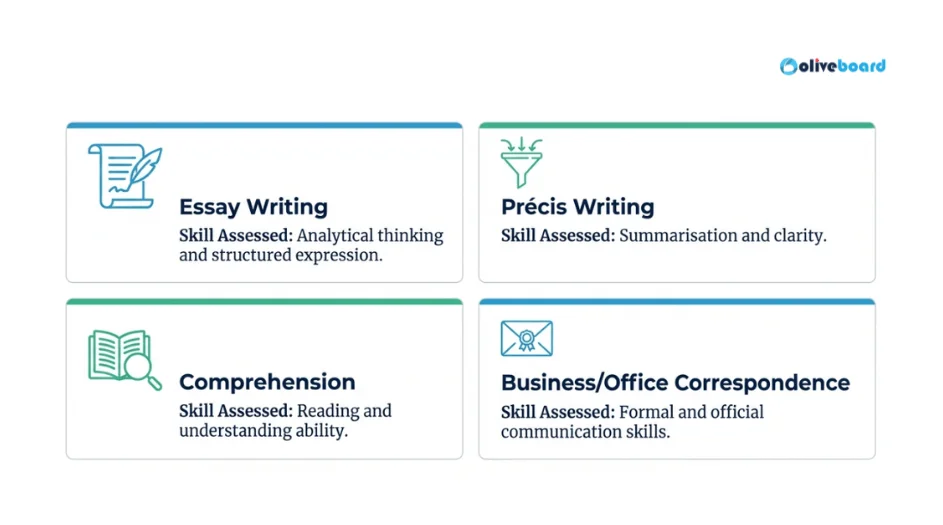
| Section | Skill assessed |
| Essay writing | Analytical thinking and structured expression |
| Précis writing | Summarisation and clarity |
| Comprehension | Reading and understanding ability |
| Business / Office correspondence | Formal and official communication skills |
What are the common essay topics asked in NABARD Grade A English paper?
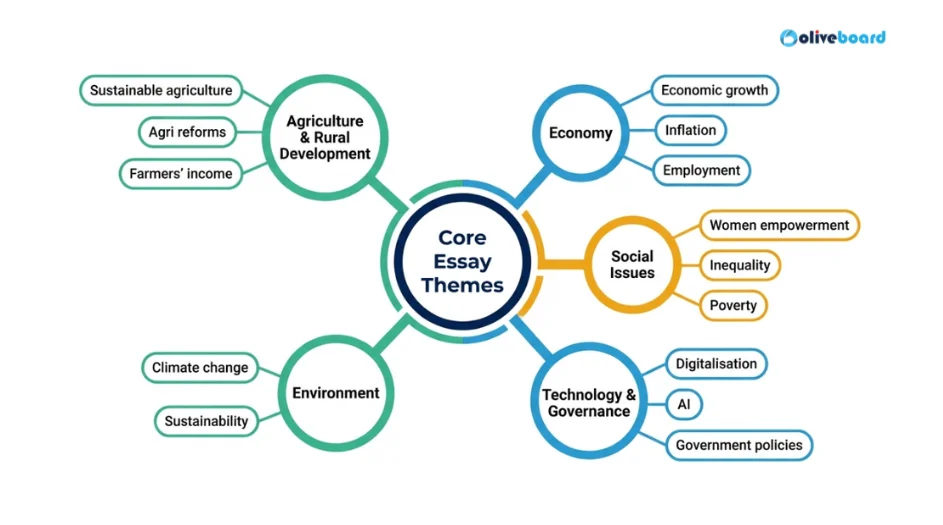
In the NABARD Grade A English paper, essay topics are theme-based and predictable. They are usually linked to current issues of national importance, especially those connected to agriculture, rural development, economy, society, and governance.
These topics test not only writing skills but also awareness and understanding of real-world issues.
| Broad theme | Common topics asked |
| Agriculture & Rural Development | Sustainable agriculture, agri reforms, farmers’ income |
| Economy | Economic growth, inflation, employment |
| Social issues | Women empowerment, inequality, poverty |
| Environment | Climate change, sustainability |
| Technology | Digitalisation, AI, innovation |
| Governance | Government policies, reforms, institutions |
What has been the trend of questions in the NABARD Grade A English paper over the years?
The English Descriptive paper follows a stable and predictable trend. Topics are closely linked to NABARD’s functional areas such as agriculture, rural development, banking, and economic policy.
| Area | Observed trend in NABARD Grade A English Paper |
| Essay writing | Essay questions are based on repeated themes, though the exact wording of questions changes every year |
| Précis writing – source | Précis passages are usually selected from government reports, economic editorials, and rural or development-focused articles |
| Comprehension – question type | Questions are mostly direct and meaning-based, with limited scope for inference |
| Overall preparation insight | Because of these stable patterns, focused and syllabus-based preparation is more effective than wide or random reading |
How should you approach essay writing as per NABARD syllabus?
To write a good essay in the NABARD Grade A exam, focus on clear ideas and simple English rather than memorising ready-made answers. Start with a short introduction that explains the topic in easy words and shows why it is important, especially in the context of agriculture, rural development, or the economy.
The main part of the essay should flow smoothly through two to three connected paragraphs. Each paragraph should add value by explaining how the issue affects the economy, society, or rural sector, followed by the challenges linked to it. Where required, practical solutions or policy-level efforts can be included to show balanced understanding. The essay should close with a clear and optimistic conclusion that highlights a realistic way forward. Throughout the answer, ideas must be presented in continuous paragraphs, without using headings, numbering, or bullet points.
Also Check: NABARD Grade A Descriptive Writing Preparation 2026
What is Précis writing and how is it tested in NABARD Grade A?
Précis writing tests your ability to summarise a given passage accurately while retaining its core meaning. The goal is to reduce the length of the passage without changing its intent. In NABARD, précis writing focuses on clarity, conciseness, and logical flow, not complex language.

| Aspect | What to do |
| Length | Follow the word limit strictly |
| Content | Include only main ideas |
| Language | Use your own words |
| Structure | Maintain logical order |
How are comprehension questions framed in the NABARD Grade A English paper?
In the NABARD Grade A English paper, comprehension questions are framed to check how well a candidate can read, understand, and interpret a given passage. The focus is not on speed reading, but on careful understanding of ideas and the ability to respond in clear and accurate English. Questions are usually based directly on the passage and require factual answers, logical inference, or interpretation of the writer’s intent.
| Area | Skill checked |
| Understanding | Ability to grasp the main ideas of the passage |
| Interpretation | Ability to infer meaning from the given content |
| Expression | Ability to write clear and accurate answers |
What is business or office correspondence in NABARD English paper?
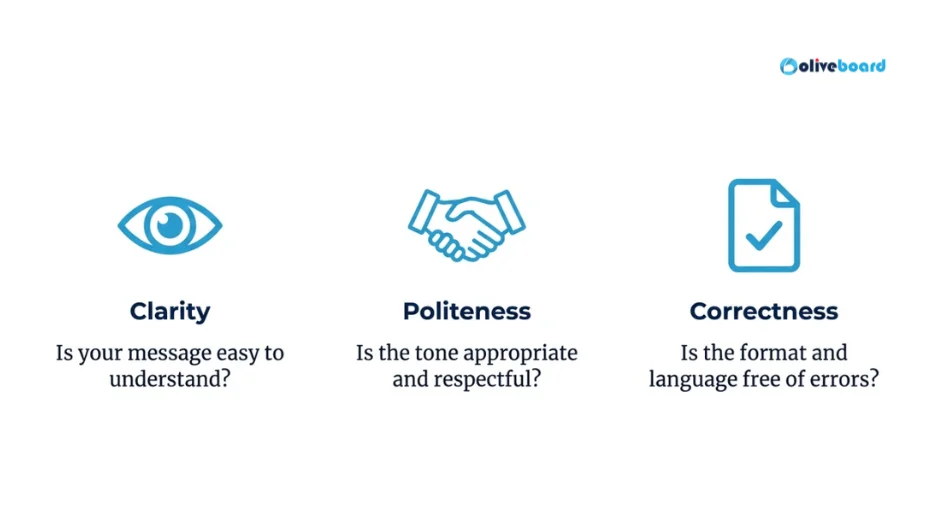
Business or office correspondence topics tests your ability to write formal and professional communication, such as official letters or workplace correspondence. This section checks whether you can communicate clearly, politely, and correctly in an official setting.
| Type | Purpose |
| Official letters | Requests, complaints, explanations |
| Office communication | Notices, formal responses |
How is the NABARD Grade A English descriptive paper evaluated?
The English paper is evaluated on content quality and language accuracy. Even strong ideas may lose marks if expression is unclear or grammatically incorrect.
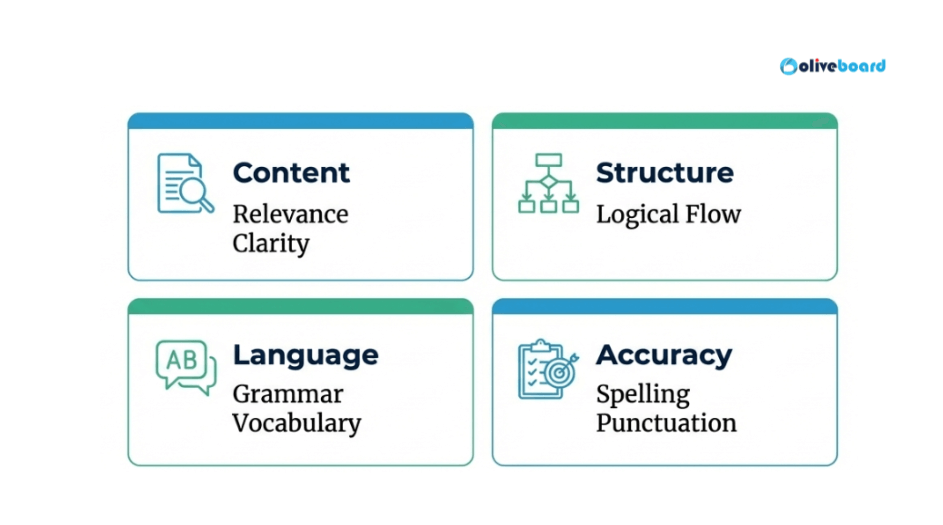
| Parameter | What examiners look for |
| Content | Relevance and clarity |
| Structure | Logical flow |
| Language | Grammar and vocabulary |
| Accuracy | Spelling and punctuation |
What common mistakes reduce marks in the English descriptive paper?
Many candidates lose marks not due to lack of knowledge, but due to avoidable writing errors. NABARD examiners prefer clarity and discipline over complexity.
- Using headings, bullet points, or numbering in essays
- Writing memorised or generic introductions
- Crossing word limits
- Using informal or conversational tone
- Weak or abrupt conclusions
- Overuse of difficult vocabulary
What is the ideal structure to follow for each question type?
Following a fixed structure helps maintain clarity and saves time during the exam. NABARD answers are expected to be paragraph-based and well-organised.
Essay structure
- Introduction: Meaning and relevance of the topic
- Body: Impact, challenges, examples (2–3 paragraphs)
- Conclusion: Way forward or positive outlook
Précis structure
- Read and identify central idea
- Write in own words
- Maintain original tone
- Avoid personal opinions
Letter writing structure
- Formal opening
- Clear purpose
- Polite and professional tone
- Proper closing
How should aspirants prepare for the English descriptive paper?
Preparation should be practice-oriented and syllabus-based. Writing regularly and getting feedback is the most effective way to improve.
- Practice essays on syllabus-based themes
- Write précis from newspaper editorials
- Practice comprehension passages
- Revise formats for official letters
- Focus on grammar and clarity
How should candidates revise English in the last 7–8 days before the exam?
In the final week, preparation should be revision-focused, not content-heavy. Writing practice with time control is the key.
- Practice 1 essay every alternate day
- Write 1 précis daily from editorials
- Revise letter formats once
- Read previous essays, not new topics
- Focus on grammar basics
FAQs
Yes, the English Descriptive paper is compulsory and qualifying in nature for Phase 2.
The paper tests essay writing, précis writing, comprehension, and formal office correspondence.
Comprehension questions are mostly direct, meaning-based, and involve limited inference.
Yes, focused practice and revision are more effective than wide reading in the final week.
Ignoring word limits, poor structure, and grammatical errors are the main reasons for mark loss.

Hi, I’m Aditi. I work as a Content Writer at Oliveboard, where I have been simplifying exam-related content for the past 4 years. I create clear and easy-to-understand guides for JAIIB, CAIIB, and UGC exams. My work includes breaking down notifications, admit cards, and exam updates, as well as preparing study plans and subject-wise strategies.
My goal is to support working professionals in managing their exam preparation alongside a full-time job and to help them achieve career growth.
