

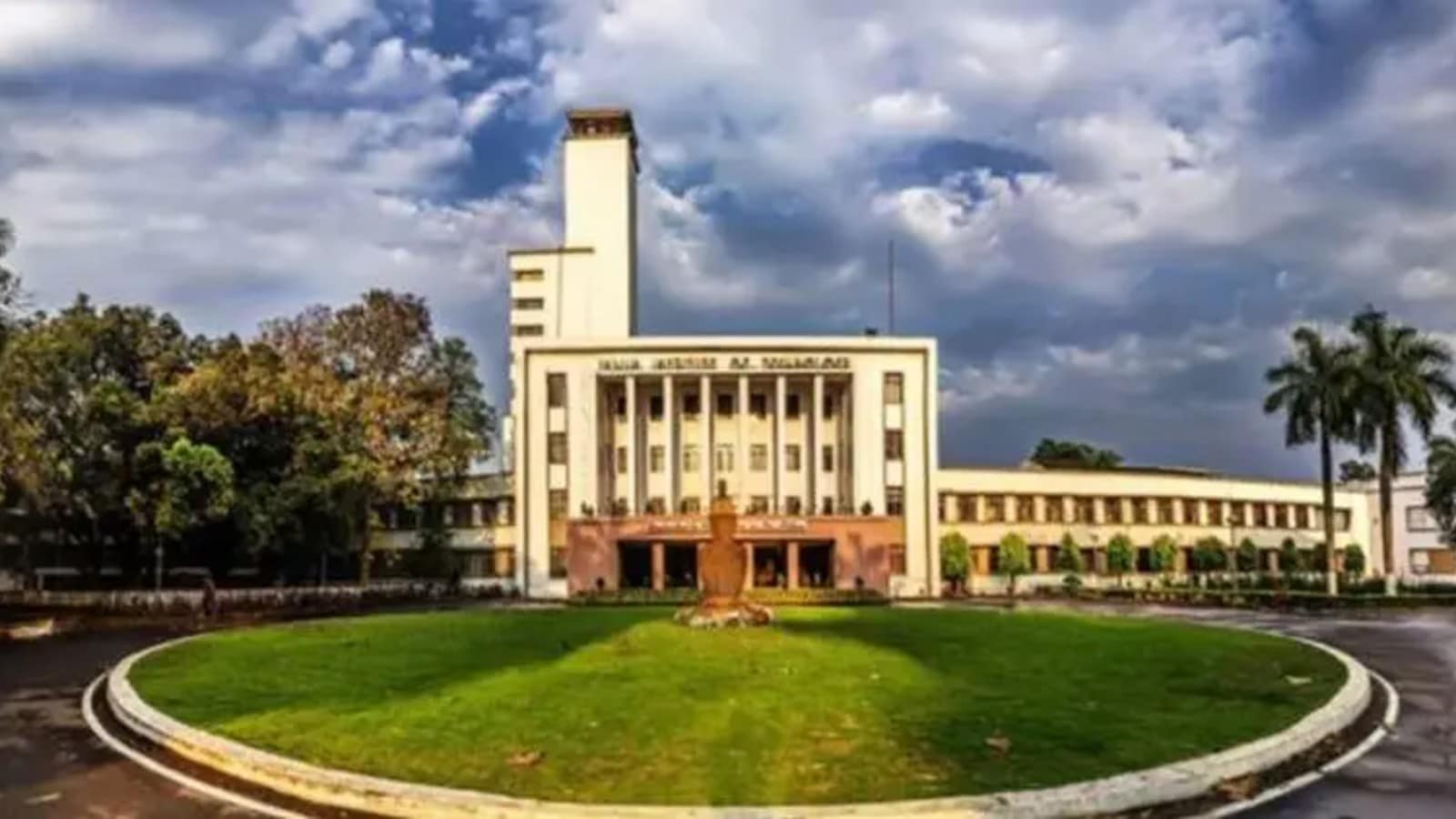
The Indian Institute of Technology Kharagpur (IIT Kharagpur) has announced the commencement of online applications for admission to its specialised law and public policy programmes for the academic year 2026. Applications are now open for the LLB (Honours in Intellectual Property Law), LLM., and the Master’s in Public Policy, Law and Governance (MPPLG) programmes.
For all programmes, online applications commenced on December 15, 2025, and the last date for submission is February 20. Detailed admission guidelines and application links are available at iitkgp.ac.in/llb-llm and iitkgp.ac.in/mpplg.
The three-year, full-time LLB (Honours in Intellectual Property Law) programme is for graduates from engineering, technology, science, medicine, and allied disciplines who aspire to transition into the legal profession and specialise in intellectual property and technology-driven legal practice.
Eligibility criteria for the LLB (Honours) programme
–First Class Bachelor’s degree in Engineering, Technology, or Medicine, or equivalent
–OR First Class Master’s degree in Science or Pharmacy, or equivalent
–OR First Class MBA degree in combination with any of the above qualifications
–In cases where “First Class” is not explicitly awarded, a minimum of 60 per cent marks or a CGPA of 6.5 on a 10-point scale
Story continues below this ad
–Final-year students are eligible to apply, subject to the fulfilment of eligibility requirements at the time of admission
Fees
The application fee is Rs 3,000 for male candidates (General/OBC) and Rs 1,500 for female, third gender, SC, ST, PwD, and EWS candidates, in accordance with institute norms.
Exam
Admission to the LLB programme will be through a computer-based test (CBT) conducted by IIT Kharagpur. The two-hour online examination assesses candidates on mathematics aptitude, science aptitude, English, logical reasoning, legal aptitude, and current affairs, with no negative marking. The entrance test will be conducted in Delhi, Pune, Bengaluru, and Kolkata.
Master’s in Public Policy, Law and Governance
In addition, IIT Kharagpur has opened applications for the Master’s in Public Policy, Law and Governance (MPPLG), a two-year, full-time postgraduate programme offered by the Centre of Excellence in Public Policy, Law and Governance (CoEPPLG).
Structure
Story continues below this ad
The programme provides an integrated understanding of public policy, legal frameworks, and governance structures, preparing professionals for roles across government, civil society, industry, international organisations, and academia.
Eligibility criteria
–Bachelor’s degree (minimum four years) in Science, Engineering, Law, Medicine, Commerce, or Arts
–Minimum 65 per cent marks or 7 CGPA for General/OBC/EWS candidates
–Minimum 60 per cent marks or 6.5 CGPA for SC/ST/PwD candidates
Story continues below this ad
–Upper age limit of 30 years for General/OBC/EWS and 35 years for SC/ST/PwD candidates as on 1 January 2026
–Age relaxation applicable for working professionals, as per institute norms
–Preference given to female candidates and those with relevant work experience
–Final-year students are eligible to apply provisionally
Fee
The application fee is Rs 3,000 for male candidates (General/OBC) and Rs 1,500 for female, third gender, SC, ST, PwD, and EWS candidates, and is non-refundable.
Exam
Story continues below this ad
Admission to the MPPLG programme will be conducted in two stages, beginning with a Computer-Based written test assessing English, quantitative aptitude, current affairs, and logical reasoning, followed by group discussion and personal interview for shortlisted candidates. The entrance test will be conducted in Delhi, Pune, Bengaluru, and Kolkata.
Commenting on the announcement, Prof Dipa Dube, Dean, RGSOIPL, IIT Kharagpur, said, “Legal and policy education today must respond to a world shaped by rapid technological, economic, and social transformation. Our programmes are designed to equip students with interdisciplinary knowledge and analytical depth, enabling them to contribute meaningfully to law, governance, policy-making, and institutional development in India and globally.”
