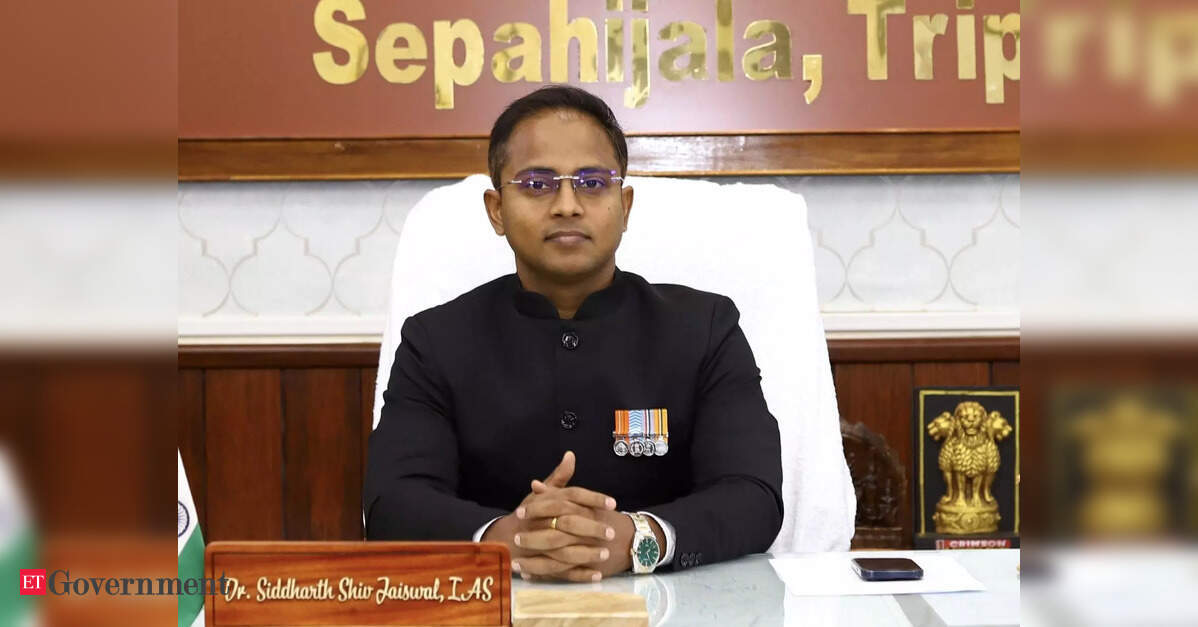
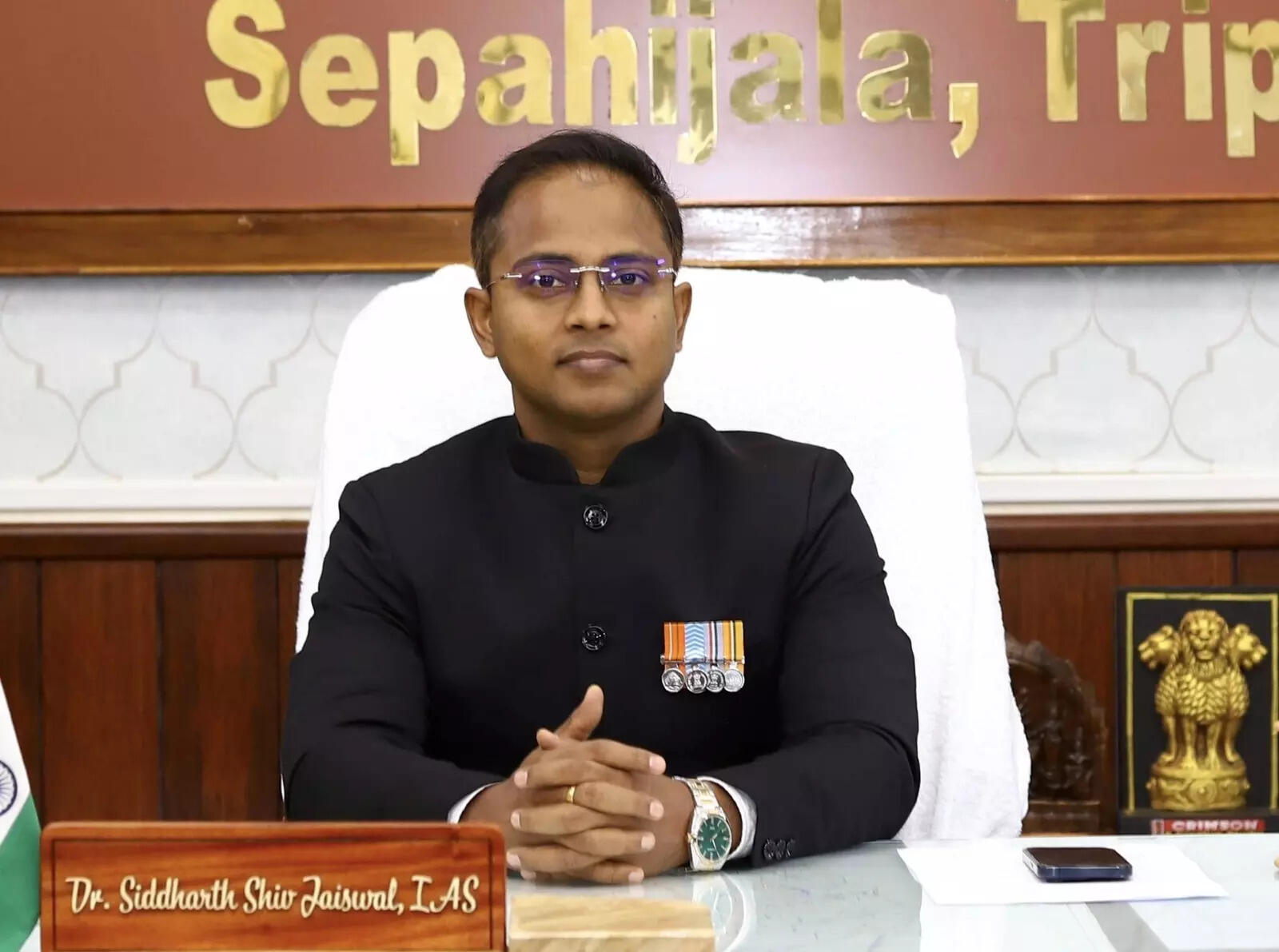
In a country where district administrations are often judged by scheme implementation, Sepahijala in Tripura stands out for something more difficult — changing social behaviour.
Under District Magistrate and Collector Dr. Siddharth Shiv Jaiswal, the district has emerged as a laboratory of grassroots governance, from eliminating child marriages in multiple villages to creating India’s first self-sustaining ‘Bio-Village 2.0’ and winning national recognition for water conservation.
In this interview with Arpit Gupta of ETGovernment, Jaiswal outlines the thinking behind these interventions and why community ownership, not coercion, lies at the heart of lasting reform.
Edited excerpts:
Under your leadership, Sepahijala has made significant strides in reducing child marriages through Mission Sankalp, with 10 villages now certified as child marriage-free. What inspired you to take on this issue so aggressively, and how did you convince local communities to embrace this change?
In Sepahijala, combatting child marriage isn’t just a policy priority — it’s a social imperative. The district borders Bangladesh and has deep agrarian traditions, where early marriage has historically been a challenge. Incidence of Child Marriage was reported as high as 51.9% and consequential teenage pregnancy at 26% as per NFHS – 5. I was inspired by the belief that sustained social change must marry administrative resolve with community ownership. 10 villages out of 169 GP/VC attained the status of Child Marriage Free Village within a year. Mission Sankalp was designed to shift mindsets through awareness, education and accountability. We reinforced the legal framework with positive incentives for villages, celebrated local champions and engaged Panchayati Raj institutions, schools, Anganwadi centres and families at every step and prevented and rescued 290 children from Child Marriage during the period from December 2024 to till date. Over time, people began seeing the lifelong benefits of delaying marriage — improved education, stronger livelihoods and greater dignity for young girls — and embraced the change as their own.The certification process involves a three-tier verification mechanism (block-level, SDM, child welfare committee). How did you design this system, and what challenges did you face in ensuring both rigor and trust?
We needed a system that was both credible and rooted in transparency, so we created a three-tier structure. At the first level, village claims are submitted by the Gram Pradhan to the Block Development Officer and assessed based on local records and field data. Next, Sub-Divisional Magistrates and their teams conduct site visits and community consultations. Finally, the Child Welfare Committee conducts the conclusive review before certification. This combination ensures checks and balances without bureaucratic bottlenecks. The main challenge was building trust: people needed assurance that the system would recognize genuine progress rather than bureaucratic box-ticking. Regular interaction with community leaders, inclusive monitoring mechanisms, and public recognition of certified villages helped bridge that gap.
Do you see the Mission Sankalp model being replicated in other districts or states? What are the key ingredients that make it scalable — or what could hinder replication?
Mission Sankalp is already being looked at as a potential template for other regions. The core ingredients are simple: strong community engagement, localized monitoring, transparent verification, and tangible recognition. What makes it scalable is that it doesn’t rely on massive budgets — but on institutional convergence and people’s participation. Over the year through 152 Awareness Sessions, 11,124 participants were reached in vulnerable pockets across the District. Students from Schools actively participates in this initiative and attends door to door campaign on prevention of Child Marriage.
Special sessions with religious leaders and marriage solemnisers were conducted and interacted with more than 80 religious leaders across the District. That said, replication hinges on political will, alignment across departments (education, social welfare, panchayats), and the capacity to adapt the model to local social dynamics. In areas where community mobilization is weak or local leadership is reluctant, the pace of progress could be slower if those foundational relationships aren’t built first.
Daspara village has become India’s first self-sustaining ‘Bio-Village 2.0’ under renewable energy, organic farming, biogas and more. Can you walk us through your role in promoting this project, and how much of this was administrative push vs community demand?
Daspara’s success is a testament to what happens when innovation meets community aspiration. The Bio-Village 2.0 initiative — originally introduced by the Tripura Government and Biotechnology Directorate — focuses on renewable energy adoption, organic practices, and sustainable livelihoods. My role as DM was to facilitate convergence: ensuring access to solar pumps, biogas plants, improved agricultural inputs, and linkages with funding streams while reducing procedural friction. However, it was the villagers who embraced these technologies wholeheartedly. Their willingness to pivot away from chemical inputs, adopt solar and biogas solutions, and collectively decide on the best approach for their needs made it truly community-led.
What social and economic impacts have you seen in Daspara and other bio-villages so far? How do you evaluate success beyond global climate goals?
In Daspara, the impacts are multi-layered. Economically, households that adopted sustainable practices — from organic farming to bio-energy — report additional monthly incomes and more reliable food security. Healthier soils and diversified livelihoods like beekeeping and mushroom cultivation have created resilience against climatic fluctuations. Socially, the community has become more cohesive, with shared ownership of outcomes rather than dependency on external support. Success is not just measured in carbon reduction; it’s in increased incomes, improved nutrition, and the empowerment of families to make choices for a better future.
Sepahijala recently won the Best District Award in the 6th National Water Awards. Could you explain the key water conservation strategies you implemented, and how they align with your broader vision for sustainable development?
Our water strategy was rooted in ecological restoration and community stewardship. We focused on riverbank rejuvenation, groundwater recharge, and revival of traditional water bodies. Structures like check dams, recharge trenches, and embankments were constructed to enhance storage and reduce erosion. We also geo-tagged water bodies to monitor their status and coordinated plantation drives of native species. Aligning with sustainable development principles, these efforts not only conserve water but also enhance biodiversity, enable year-round irrigation for farmers, and improve overall climate resilience in the district.
Your administration is overseeing a joint survey of ‘enemy property’ in Sepahijala under the Enemy Property Act. How are you balancing legal, social, and political sensitivities, and what long-term vision do you have for the land once identified?
The survey under the Enemy Property Act requires meticulous legal compliance while being sensitive to local sentiments. Our priority is transparent engagement: informing landholders, explaining the legal rationale, and ensuring no one feels sidelined. We are working closely with legal experts, social welfare officers, and community leaders to prevent misinformation. Long-term, once properties are rightfully identified, the vision is to repurpose them for community benefit — whether it’s skill centres, housing solutions, or public utilities — in a manner that respects heritage while advancing socio-economic development.
ODOP Sepahijala wood and bamboo handicraft items have gained visibility in the last year. How are you supporting artisans, SHGs, and local entrepreneurs, and what steps are underway to move these products into national and global value chains?
Under the One District One Product (ODOP) initiative, we have designated Sepahijala’s wood and bamboo handicrafts as a flagship product — reflecting age-old traditions of craftsmanship. The administration is facilitating convergence across schemes like PM Vishwakarma, MUDRA loans, Tripura Rural Livelihood Mission, and Skill Development programs to train artisans, upgrade designs, and improve market readiness. We are also catalyzing brand building through associations with recognized labels and platforms that showcase products beyond local markets. The vision is to embed these products into national and international value chains — by improving quality standards, enabling e-commerce access, and participating in trade fairs — so that artisans can earn premium value for their heritage crafts.