 “>
“>The recently concluded India–EU Free Trade Agreement marks a turning point in the economic engagement between India and the European Union, opening new avenues for trade, technology collaboration and investment.
For Central European economies such as Slovakia, the agreement is expected to deepen commercial and strategic ties with India while integrating both partners more closely into resilient global supply chains.
In this context, Slovakia has been steadily expanding its engagement with India across sectors ranging from automotive manufacturing and engineering to cybersecurity, renewable energy and advanced technologies. Bilateral trade has grown significantly in recent years, and Slovak companies are increasingly exploring opportunities in India’s rapidly evolving industrial and digital landscape.
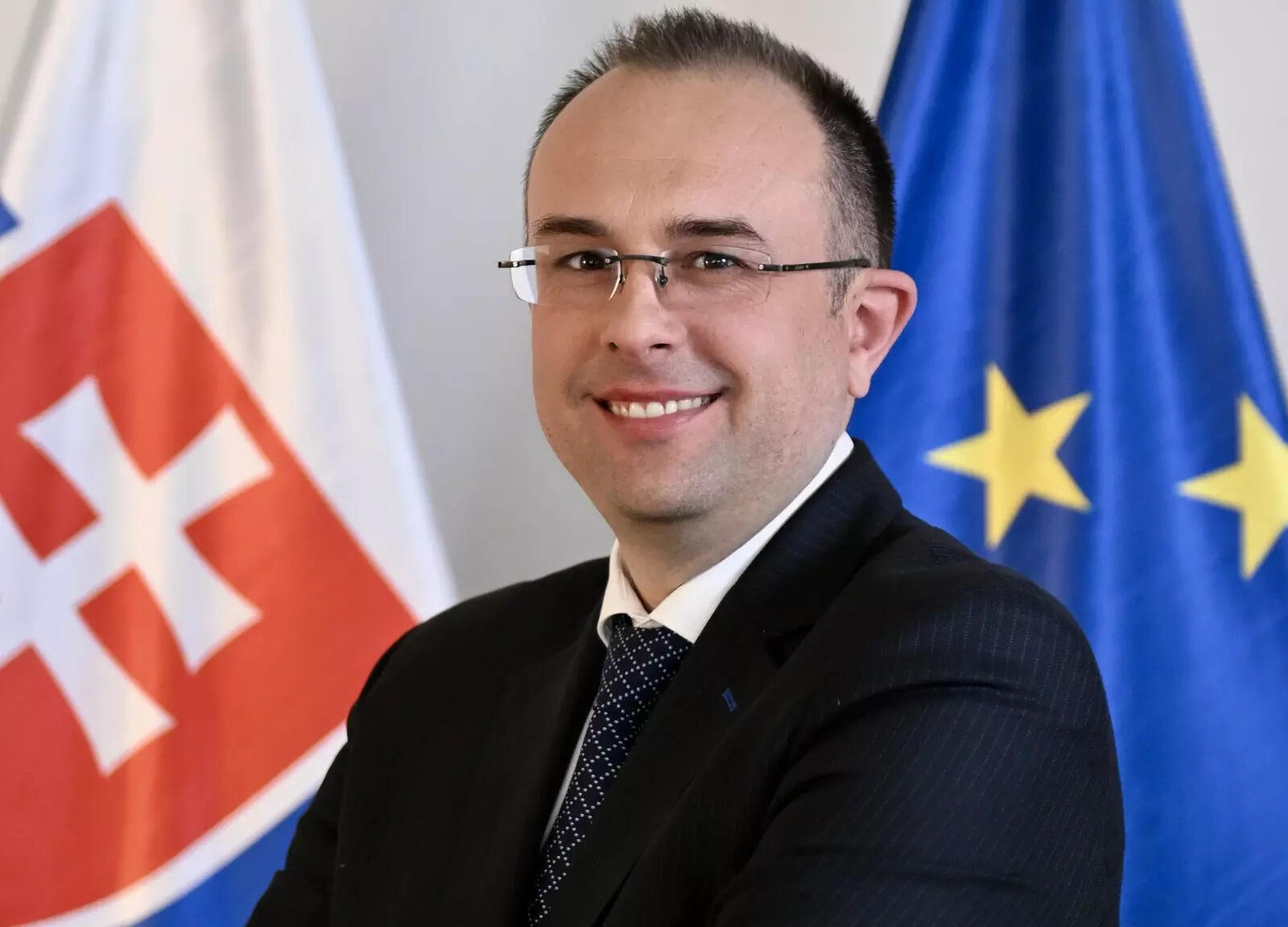
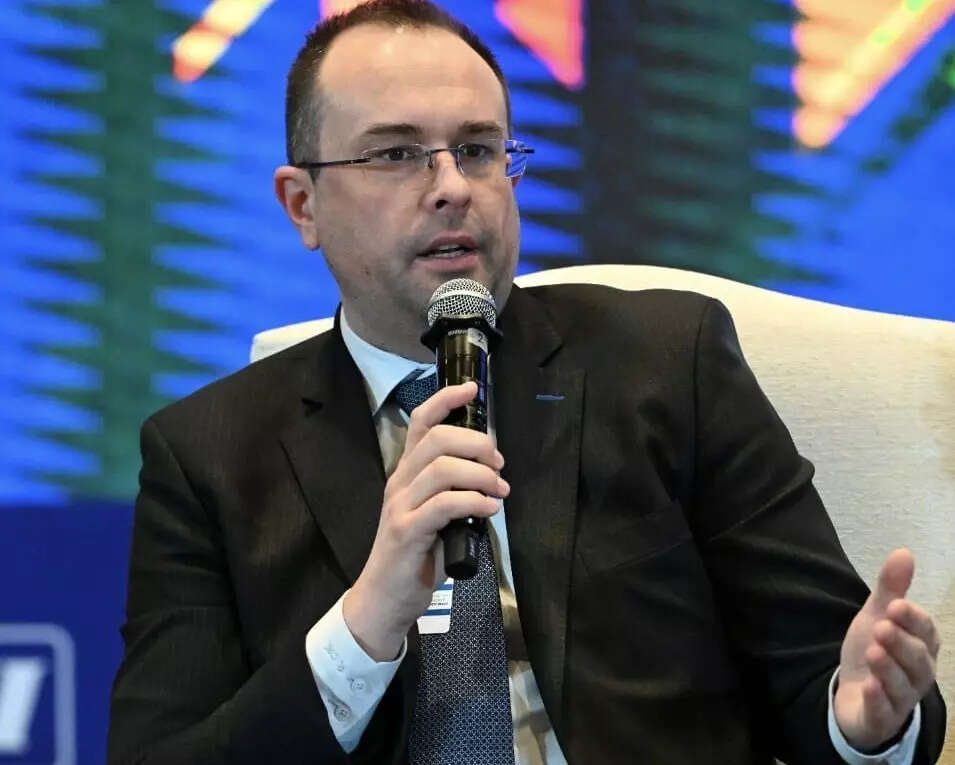
In this interview with Anoop Verma, Rastislav Chovanec, State Secretary at the Ministry of Foreign and European Affairs of the Slovak Republic, outlines how the India–EU FTA could reshape Slovak–Indian economic cooperation, highlights emerging areas of collaboration in technology and manufacturing, and reflects on the broader strategic potential of the India–EU partnership in a changing geopolitical environment.
Edited excerpts:
From the Slovak perspective, what are the key economic and geopolitical implications of the India–EU Free Trade Agreement, and how might it reshape Slovak–Indian engagement across sectors?
The India–EU Free Trade Agreement represents the most ambitious trade opening India has ever offered to a partner, creating a vast economic zone that connects two billion people. It is not simply a trade deal; it is a cornerstone of a broader strategic partnership based on resilient supply chains, trusted economic interdependence, and rules-based global trade.
The conclusion of negotiations marks an unprecedented milestone and opens a new chapter in trade and investment relations between the world’s largest democracies. For Slovakia, this agreement is particularly significant because it will deepen engagement with India across sectors such as automotive manufacturing, machinery, agriculture, technology, and sustainability. In essence, it is a historic strategic shift that will further strengthen the economic foundations of Slovak–Indian relations.
Bilateral trade between Slovakia and India has grown steadily in recent years. What new opportunities do you foresee emerging once the FTA comes into force?
Trade between our two countries has already been expanding at an impressive pace. In 2024, bilateral trade crossed €1 billion for the first time since Slovakia’s independence in 1993 and eventually reached nearly €1.3 billion. By 2025 it is expected to exceed €1.7 billion, representing almost a 40% increase, and this positive momentum is continuing into 2026.
Traditional sectors such as automotive, engineering, defence and electronics remain the pillars of our economic relationship. However, the partnership is gradually moving toward high-value sectors. We are seeing growing collaboration in green technologies, electric mobility, cybersecurity, disaster management systems, telecommunications equipment, space technologies and climate monitoring.
Several Slovak investment projects are already underway in India. These include renewable energy initiatives such as a biofuel plant in Uttar Pradesh and connectivity projects related to railway infrastructure in West Bengal and Odisha. Such initiatives are creating jobs, facilitating the transfer of advanced technologies and strengthening long-term industrial cooperation. The FTA will further ease tariff and non-tariff barriers in sectors like machinery, chemicals and pharmaceuticals, and it will also provide valuable support to small and medium-sized enterprises seeking to enter each other’s markets.
Slovakia’s strengths in advanced manufacturing align closely with India’s “Make in India” vision. How can the FTA deepen industrial cooperation between the two countries?
Slovakia’s capabilities in automotive and machinery manufacturing complement India’s ambition to strengthen domestic manufacturing under the Make in India initiative. The FTA provides an ideal framework for expanding industrial cooperation.
One important change will be the gradual reduction of tariffs on personal automobiles from 110 percent to 10 percent, while tariffs on automotive components are expected to be eliminated within five to ten years. Slovakia hosts five major automotive plants, making it one of the leading car manufacturing hubs in Europe. This creates substantial opportunities for collaboration with India, especially in emerging areas such as electric vehicles, battery technologies, energy storage systems and advanced automotive engineering.
 Make in India initiative.”
“>
European investment in India has been increasing. What factors make India particularly attractive for Slovak companies?
India is widely seen by Slovak businesses as a market with virtually unlimited opportunities. Several factors contribute to this perception. Slovakia has a long tradition in heavy industry and advanced manufacturing, which positions our companies as strong partners for India’s expanding industrial ecosystem.
A good example is the Slovak company Tatravagónka, which has formed a joint venture with the Indian company Jupiter Wagons. They are currently building a new plant in Odisha to produce railway wheelsets and bogies. The facility, expected to begin production in 2027, will help modernize India’s railway infrastructure, transfer technology and create skilled employment.
Another example is the Slovak renewable energy company Envien, which has partnered with Zuari Industries in Uttar Pradesh to establish an ethanol production facility. The project contributes to India’s clean energy transition and highlights how industrial collaboration can support sustainability goals.
Beyond manufacturing and renewable energy, Slovak companies are also exploring opportunities in space technologies, aviation systems, early warning technologies and specialized defence equipment. These sectors represent promising avenues for deeper investment and technological cooperation.
Services and digital technologies are major drivers of growth today. How might the FTA enhance collaboration in these areas?
India’s rapidly expanding economy continues to attract global investors, while Slovakia contributes advanced technologies and a competitive industrial base. This combination creates strong opportunities in the digital economy.
Slovak companies are already involved in several innovative areas in India, including smart city technologies, tunnel lighting systems, weather-forecasting solutions and advanced rubber manufacturing. Cybersecurity is another promising field. Slovakia’s leading cybersecurity company, ESET, recently participated in the India AI Impact Summit and plans to establish an office in Delhi. This development underscores the growing importance of digital security cooperation between the two countries.
As digital trade expands, the FTA can facilitate greater collaboration in innovation ecosystems, technology transfer and cross-border services, benefiting both economies.
With global supply chains being reshaped by geopolitical shifts, how can India and Slovakia cooperate to build more resilient supply chains?
Both countries have complementary strengths that make supply-chain cooperation particularly promising. Slovakia serves as an important manufacturing hub within the European Union, while India offers scale, a large skilled workforce and a rapidly expanding industrial base.
By integrating these strengths, the two countries can diversify and strengthen supply chains in sectors such as automotive manufacturing, electronics, machinery and emerging technologies like electric mobility and battery production. Building trusted supply chains between Europe and India will also reduce over-dependence on single regions and contribute to greater economic resilience.
Defence technologies and dual-use innovation are increasingly important areas of cooperation. What opportunities exist for Slovakia and India in this domain?
Slovakia has developed niche expertise in defence engineering, including land systems, avionics, mission simulators and precision manufacturing. These capabilities align well with India’s push for indigenisation under the “Make in India” and “Atmanirbhar Bharat” initiatives.
Several Slovak companies already operate successfully in the Indian market. Virtual Reality Media, for example, works with Indian partners to provide advanced simulation technologies and training systems. Other companies contribute specialised equipment and components that support defence and aviation industries.
Academic and research collaboration is also expanding. The Technical University of Košice works with Indian institutions such as IIIT Allahabad and NIT Silchar on projects involving autonomous mobility, smart industry and drone technologies. Slovakia’s first satellite, skCUBE, was launched by ISRO from Sriharikota, demonstrating the potential for deeper cooperation in space technologies as well.
Cultural and educational exchanges often reinforce economic partnerships. How are people-to-people ties between Slovakia and India evolving?
People-to-people engagement has been expanding steadily in recent years. Slovakia offers a wide range of academic programs in English across its universities, and Indian students are increasingly choosing Slovak institutions for fields such as engineering, medicine, economics and international relations.
Academic exchanges have grown stronger, particularly after a delegation of Slovak universities visited India for the APAIE education conference in New Delhi in 2025. Cultural exchanges are also flourishing. Slovak folklore groups have performed across India, introducing audiences to traditional music, dance and storytelling.
A particularly meaningful milestone was the translation of the Upanishads into the Slovak language by the Slovak Academy of Sciences, symbolising a deep intellectual connection between the two cultures. Such exchanges help build a stronger foundation for long-term partnership.
Looking ahead, what would success look like for Slovakia–India relations over the next decade?
India and Slovakia have become partners in the Indo-Pacific region. In late 2025 the Slovak government adopted a Strategic Concept for Slovak Engagement in the Indo-Pacific that identifies India as a key partner. Success over the next decade would mean deeper cooperation in trade, technology, sustainable development and global governance. Slovakia recognises India’s strong economic growth, its dynamic technology sector and its role in maintaining regional stability. By working together on shared global challenges and building strong local partnerships, both countries can strengthen economic ties and expand people-to-people connections in a mutually beneficial way.