As Software Technology Parks of India (STPI) marked its 35th Foundation Day in New Delhi, the focus was not merely on celebrating a distinguished institutional legacy, but on examining how India can position itself at the forefront of the next global technology revolution.
At a time when artificial intelligence, semiconductors, deep-tech innovation and trusted digital ecosystems are reshaping economies worldwide, the STPI Tech Summit 2026: India’s Next Leap, on June 5, served as a platform for charting India’s path from a leading technology services destination to a global centre for innovation, product development and frontier technologies.
Organised by STPI under the Ministry of Electronics and Information Technology (MeitY), the summit brought together policymakers, industry leaders, investors, entrepreneurs and technology experts to deliberate on the opportunities and challenges that will define India’s digital future. The event also commemorated STPI’s remarkable journey since its establishment in 1991, when it was created to catalyse India’s nascent software exports sector.
Three-and-a-half decades later, the organisation stands as one of the country’s most influential technology ecosystem builders, with a nationwide presence spanning startups, innovation centres, incubation programmes and digital infrastructure.
The inaugural session featured Jitin Prasada, Minister of State for Electronics and Information Technology; S. Krishnan, Secretary, Ministry of Electronics and Information Technology; Arvind Kumar, Director General, Software Technology Parks of India; Deepak Bagla, Mission Director, Atal Innovation Mission, NITI Aayog; and Debjani Ghosh, Distinguished Fellow, NITI Aayog, and Chief Architect of the NITI Frontier Tech Hub.
Their addresses collectively underscored a common theme: India’s next leap will be driven not only by advances in artificial intelligence and semiconductor manufacturing, but also by the ability to nurture innovation beyond traditional technology hubs, strengthen the startup ecosystem, empower young entrepreneurs and transform the country from a consumer and executor of technology into a creator of globally relevant technological solutions.
Jitin Prasada: Technology Self-Reliance Will Define India’s Future
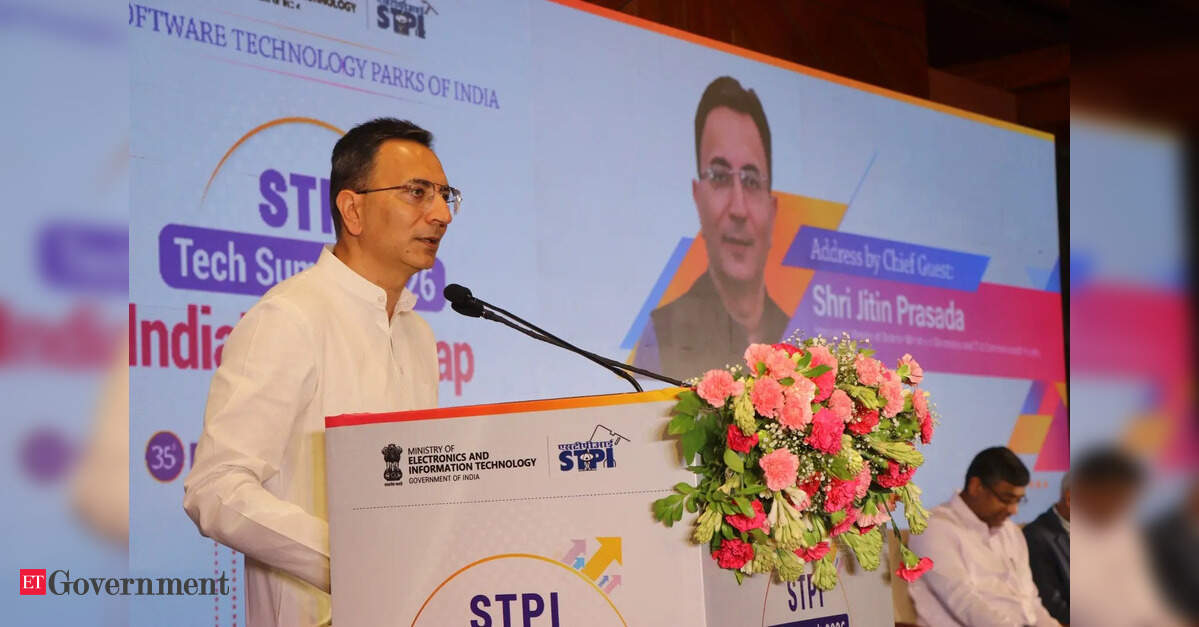
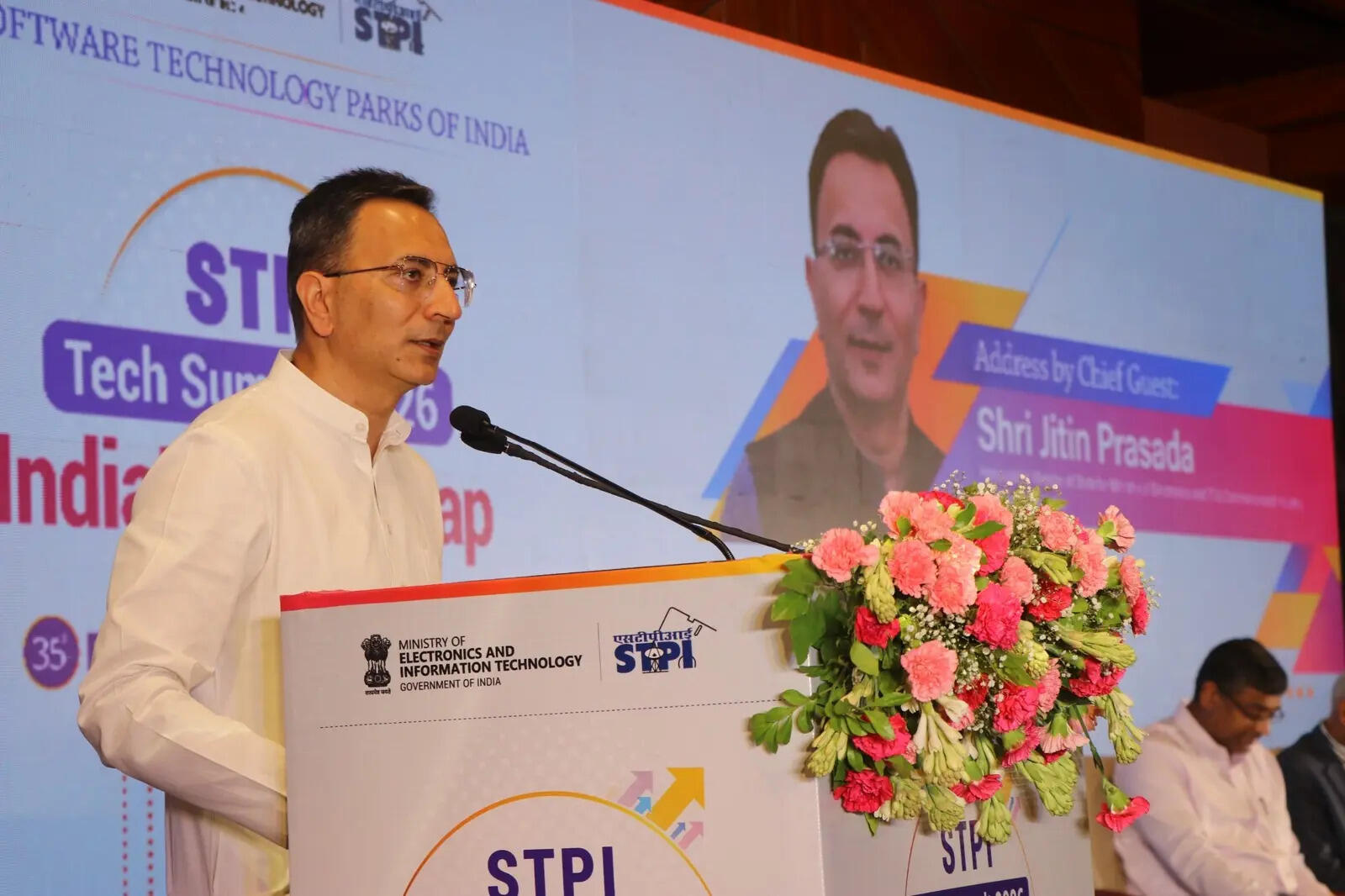
Delivering the keynote address as Chief Guest, Jitin Prasada, Minister of State for Electronics and Information Technology, placed the summit within the larger framework of Prime Minister Narendra Modi’s vision for Viksit Bharat@2047.
Prasada said India’s technological ambitions today extend far beyond software exports and digital services. The country is now building capabilities across semiconductors, artificial intelligence, advanced electronics manufacturing and deep-tech innovation, areas that are increasingly critical in an era marked by geopolitical uncertainty and rapidly evolving global supply chains.
“STPI’s 35-year journey reflects the remarkable transformation of India’s technology ecosystem and its emergence as a global digital powerhouse,” he said. “Guided by the vision of Hon’ble Prime Minister Shri Narendra Modi Ji for Viksit Bharat@2047, India is creating a future-ready digital economy driven by innovation, entrepreneurship and technological self-reliance.”
The Minister highlighted the growing significance of flagship initiatives such as the India Semiconductor Mission and the IndiaAI Mission, which he described as critical building blocks for India’s future innovation economy.
“Flagship initiatives such as the India Semiconductor Mission and the IndiaAI Mission are opening new avenues for research, manufacturing and innovation-led growth,” he said.
Speaking about the future role of STPI, Prasada argued that innovation infrastructure should expand beyond traditional technology hubs and reach every corner of the country.
“There should be a Software Technology Park in every district of the country,” he said, emphasising that India’s next generation of innovators will emerge not only from metropolitan centres but also from smaller towns and rural regions.
He also underlined the government’s focus on ease of doing business and access to advanced technology infrastructure. Referring to the IndiaAI Mission, he noted that India is making GPU access available at globally competitive rates to ensure that researchers, startups and innovators can develop world-class AI solutions.
“The Government remains committed to fostering an enabling ecosystem through progressive policies, ease of doing business and enhanced access to technology,” he said. “Institutions such as STPI will play a critical role in fostering entrepreneurship, nurturing innovation, strengthening emerging technology ecosystems and enabling the development of world-class solutions for global markets.”
S. Krishnan: India Must Ride the AI Wave, Not Fear It
While the Minister outlined the broader vision, S. Krishnan, Secretary, Ministry of Electronics and Information Technology, focused on perhaps the most consequential technological disruption facing the industry today—artificial intelligence.
Krishnan acknowledged the growing concerns about AI’s impact on employment and the IT services industry but argued that India should approach the technology as an opportunity rather than a threat.
“Artificial intelligence is not a technology wave that we can hold back. The question is how do we ride it,” he said. Drawing a parallel with the IT revolution of the 1990s that helped transform India’s economic trajectory, he argued that AI presents a similar moment of opportunity.
“India’s opportunity fundamentally lies in how AI gets deployed across manufacturing, agriculture, healthcare, education, governance and every other sector of the economy,” he said.
Krishnan articulated an ambitious objective for the country: “India has to become the AI application capital of the world.”
According to him, the greatest value in the AI era will not come merely from developing models or acquiring computing infrastructure but from creating applications and solutions that solve real-world problems and generate economic value.
“Once applications are developed and deployed, that is where the revenue will be, that is where the incomes will be earned, and that is where the value will be unlocked,” he said. The Secretary also emphasised the importance of STPI’s nationwide presence in supporting the next generation of innovation.
“One of STPI’s greatest strengths has always been its convening power—its ability to bring together entrepreneurs, mentors, venture capitalists and industry stakeholders to create a critical mass for innovation,” he said.
With centres spread across 73 locations, most of them in Tier-II and Tier-III cities, STPI is uniquely positioned to support startups, promote Global Capability Centres (GCCs) and drive AI-led innovation beyond India’s established technology clusters.
STPI’s Expanding Role in India’s Digital Economy
Earlier, welcoming the dignitaries, Arvind Kumar, Director General, STPI, reflected on the organisation’s evolution over the past three-and-a-half decades.
He noted that STPI was established in 1991, and, in FY1991-92, software exports stood at around ₹52 crore. Today, STPI-registered units contribute nearly ₹12.4 lakh crore in annual exports and account for almost half of India’s IT exports.
“Over the last 35 years, STPI has emerged as a key pillar of India’s digital economy,” Kumar said.
“With 73 centres across the country, support extended to more than 1,700 startups and a significant contribution towards India’s IT exports, STPI has enabled technology-led growth beyond metropolitan cities and created opportunities across Tier-II and Tier-III regions.”
According to Kumar, STPI has supported over 1,700 startups, facilitated more than 2,000 mentorship programmes, created over 2,100 technology products, generated more than 1,000 intellectual property assets and helped create thousands of technology jobs across the country.
He described the summit as an opportunity to examine a significant transformation in India’s technological ecosystem: today India is ready not merely to participate in the global technology order, but to help shape it.
Deepak Bagla: India’s Innovation Movement Is Unstoppable
Offering a broader perspective on India’s innovation ecosystem, Deepak Bagla, Mission Director, Atal Innovation Mission (AIM), NITI Aayog, described the country as being at a historic economic and technological inflection point.
He highlighted the rapid pace of India’s growth and the emergence of grassroots innovation across the country.
“Your job is to match the aspiration of a new India. This is a movement which is unstoppable,” Bagla said while sharing examples of students from government schools developing innovative solutions and competing successfully on global platforms.
He noted that India today ranks among the world’s leading startup ecosystems. “Today, you are number three in the world in the number of unicorns, number two in the world in the number of startups and number one in the world in startups being created every day,” he said.
Bagla argued that India’s greatest strength lies not only in its technology sector but also in its vast network of entrepreneurs, innovators, MSMEs and young problem-solvers spread across the country.
Debjani Ghosh: The Rules of Technology Are Being Rewritten
Debjani Ghosh, Distinguished Fellow, NITI Aayog and Chief Architect of the NITI Frontier Tech Hub, described the current moment as a fundamental turning point for the global technology industry.
Reflecting on STPI’s contribution, she remarked that it was difficult to imagine the growth of India’s technology sector without the institution’s role in reducing operational barriers and enabling entrepreneurship.
“If STPI hadn’t existed, it is impossible to imagine what the Indian technology industry would look like today,” she observed. However, she argued that India now faces an entirely different technological environment shaped by what she described as three defining forces: speed, abundance and control.
“The rules of the game are changing completely,” she said. According to Ghosh, artificial intelligence is dramatically accelerating the pace of innovation, shortening development cycles and transforming the economics of technology businesses.
“The superpower of technology is not how much compute you have and how much data you have. It is what impact are you creating,” she said. She added that institutions such as STPI would once again have to reinvent themselves to help India remain relevant and competitive in the emerging deep-tech era.
New Initiatives Unveiled
The summit also witnessed several significant announcements aimed at strengthening India’s innovation ecosystem. STPI exchanged a Memorandum of Understanding with the Wadhwani Foundation to enhance innovation, entrepreneurship and skill development initiatives.
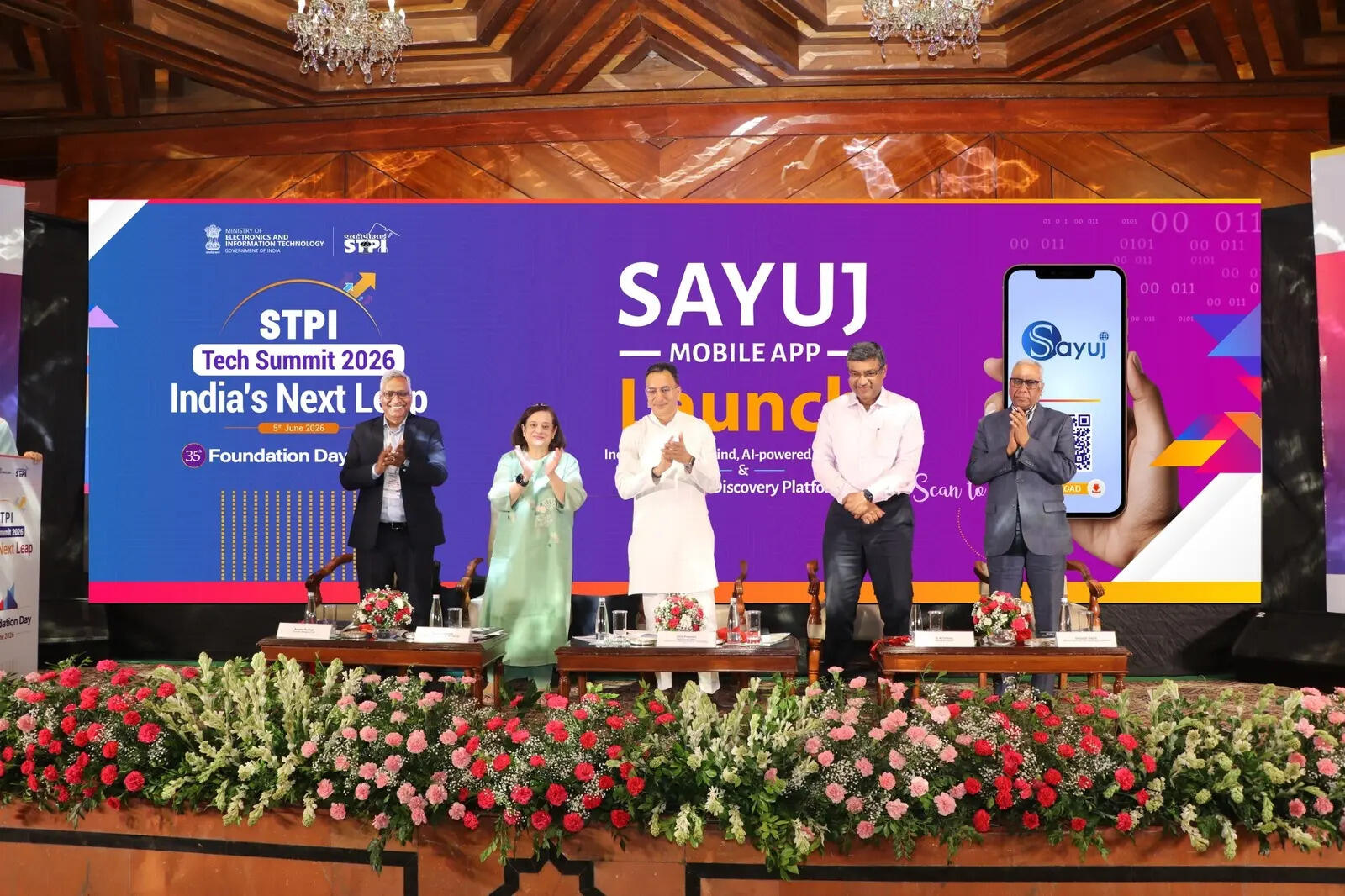
A major highlight was the launch of Sayuj, an AI-enabled mobile application designed to connect startups, innovators, mentors, incubators and ecosystem stakeholders through a unified digital platform.
The organisation also launched Open Challenge Program (OCP) 1.0 under the upcoming STPI NERVE Centre of Entrepreneurship in Nagpur and the STPI SmartAgri Centre of Entrepreneurship in Chhattisgarh to identify promising technology solutions and accelerate innovation-led entrepreneurship.
The summit featured discussions on deep-tech investments, state-led innovation ecosystems, AI adoption, frontier technologies and India’s transition from being a global executor of technology to becoming a global originator of technology. Industry leaders, investors, policymakers and startup founders collectively underscored the importance of collaboration among government, industry, academia and venture capital in shaping India’s next technology chapter.
Thirty-five years after helping launch India’s software export revolution, STPI now finds itself at the centre of another transformation. If the first phase established India as the world’s technology back office, the challenge before the institution today is far more ambitious: helping India emerge as a global leader in artificial intelligence, semiconductors, deep-tech innovation and technology entrepreneurship.