 “>
“>As India accelerates its transition toward an AI-enabled and cloud-driven governance ecosystem, the institutions responsible for building and operating the country’s digital infrastructure are assuming a strategic role. Among them, the National Informatics Centre Services Inc. (NICSI) occupies a distinctive position.
A Section 8 company under the National Informatics Centre, functioning within the Ministry of Electronics and Information Technology, NICSI has for decades served as a key implementation arm for government technology initiatives—executing projects that underpin India’s expanding Digital Public Infrastructure.
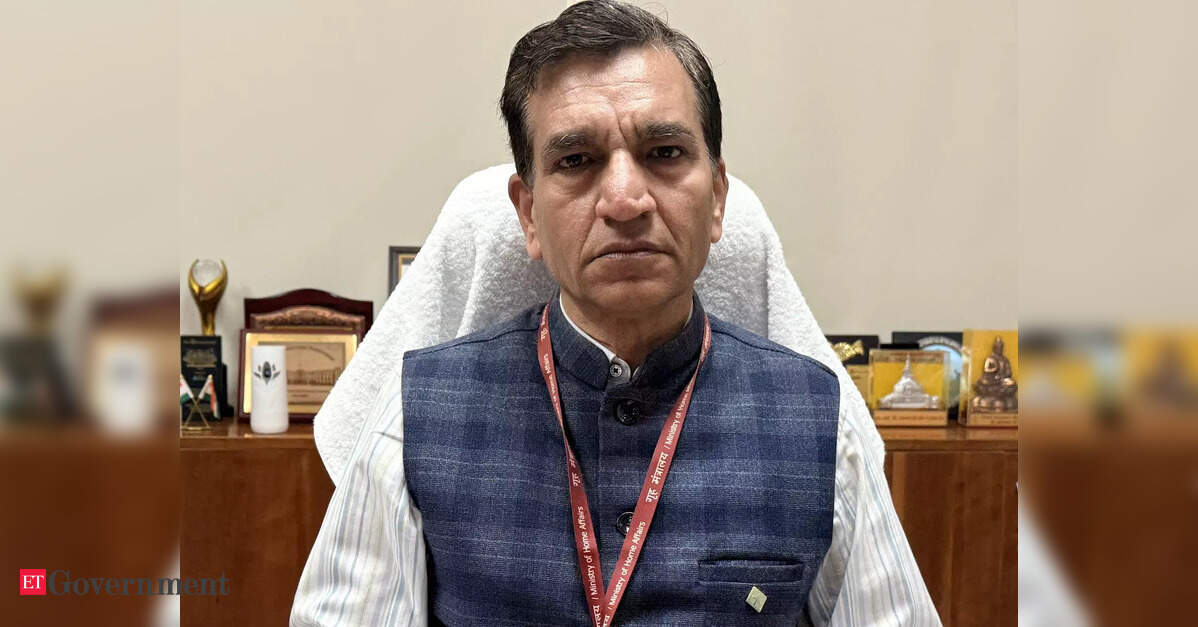
Over time, NICSI’s role has evolved significantly. What began largely as a procurement and implementation support organisation has gradually transformed into a technology partner for the government’s most complex digital programmes—ranging from national platforms and cloud infrastructure to cybersecurity frameworks and emerging AI-driven solutions. With more than 25,000 projects delivered in India and abroad and a turnover of close to ₹2,500 crore, the organisation now sits at the intersection of policy, infrastructure, and technological innovation within India’s digital state architecture.In this interview, Anoop Verma speaks with Alok Tiwari, Managing Director of NICSI, about the growing influence of artificial intelligence in governance, the role played by NICSI in the India AI Impact Summit, the transition from legacy monolithic systems to microservices-based platforms, and the expanding importance of sovereign cloud infrastructure, cybersecurity, and data governance in the next phase of Digital India.
Edited excerpts:
AI is influencing every layer of digital governance today. How do you see its impact, and what role did NICSI play in the India AI Impact Summit?
Artificial intelligence is now influencing almost every domain of information technology and governance. Its impact can be seen in areas ranging from cybersecurity and cloud computing to compliance management and emerging technologies such as quantum computing. AI has a dual character in some domains—it can empower defenders in cybersecurity while simultaneously enabling more sophisticated attacks by malicious actors. Yet in many areas, particularly cloud computing, the impact of AI has been overwhelmingly positive.
Today, we are moving away from monolithic systems and adopting microservices-based architectures. In such environments, AI plays a major role in predictive analytics and resource optimisation. It enables governments to use cloud resources far more efficiently and allows platforms to scale intelligently according to demand.
The India AI Impact Summit served an important purpose in this context. It brought together global technology companies, policymakers, and researchers to deliberate on how AI is transforming economies and governance systems. The summit significantly increased awareness about emerging technologies such as agentic AI, which is likely to reshape the way repetitive and process-driven work is performed. As these technologies evolve, organisations like NICSI must ensure that human resources adapt alongside them, using AI tools to enhance efficiency rather than replace human capability.
NICSI has executed over 25,000 projects and recorded a turnover of close to ₹2,500 crore. How has its mandate evolved over the years?
NICSI has moved significantly beyond its earlier role as a procurement and implementation agency. Today, it is increasingly functioning as a strategic partner in India’s Digital Public Infrastructure ecosystem.
One of the key transitions we are driving is the migration of legacy government applications from monolithic architectures to microservices-based systems. Across government platforms there are still thousands of legacy code bases that were designed for earlier technological environments. These systems are difficult to scale efficiently. In a monolithic architecture, if one component requires scaling, the entire application often needs to be scaled.
Microservices architecture allows us to scale individual components independently. This improves efficiency, reduces costs, and makes systems more adaptable to AI and cloud computing environments. To support this transition, NICSI has established a Centre of Excellence in Artificial Intelligence and is preparing empanelment frameworks for companies that can help modernise legacy government applications.
This shift reflects our broader transformation—from executing projects to enabling technological evolution within government systems.
NIC and NICSI are central to India’s National Cloud initiative and the MeghRaj 2.0 vision. How are you positioning cloud services for an AI-intensive future?
The Government of India has already empanelled multiple Cloud Service Providers (CSPs) through the Ministry of Electronics and Information Technology. These providers form an important part of the evolving government cloud ecosystem.
NICSI has undertaken a structured effort to discover and rationalise the cost of cloud services across different providers. We invited all empanelled CSPs to participate in a structured process of price discovery and service categorisation. The objective is to ensure transparency and cost efficiency for government departments using cloud infrastructure.
At the same time, MeghRaj 2.0 continues to support large enterprise-scale government applications. Through partnerships with providers such as Yotta and Jio, we are delivering sovereign cloud services that are physically hosted within India. This ensures that sensitive government data remains within national jurisdiction.
Today, more than 800 cloud accounts have already been provisioned for central and state government departments under this framework. The aim is to create a hybrid and multi-cloud environment where ministries can adopt the most appropriate infrastructure while maintaining sovereignty, security, and cost-effectiveness.
How do you balance the use of government cloud infrastructure with private cloud providers while ensuring sovereignty?
Data sovereignty is central to our approach. When we engage with private cloud providers, we ensure that their infrastructure is hosted within India and complies with sovereign data requirements. For example, providers such as Jio and Yotta operate infrastructure located inside Indian data centres. Their compute and storage resources are physically deployed within government facilities. This ensures that data does not leave the country’s jurisdiction.
When evaluating private providers, we conduct strict technical and compliance assessments. Only those companies that meet the government’s “Make in India” and sovereignty requirements are empanelled. Through this model, we are able to combine the flexibility of private cloud providers with the security and sovereignty requirements of government infrastructure.
NICSI has launched AI-MEDHA and is exploring cybersecurity platforms. How will such shared platforms change how governments consume digital capabilities?
Shared platforms will significantly change how ministries and states adopt advanced technologies. Instead of each department building separate capabilities from scratch, they will be able to consume services such as AI, analytics, and cybersecurity through common platforms. However, one of the major challenges today is awareness. Cybersecurity awareness in India remains relatively low—even among government employees. In controlled experiments we conducted, nearly 25 percent of officials still clicked on phishing links and submitted sensitive information to fake websites.
In many developed countries, this number is closer to six or seven percent. This gap highlights the need for large-scale awareness initiatives. NICSI is therefore planning a nationwide awareness programme in partnership with MeitY. The programme will include workshops across states and districts—potentially more than 800 sessions across the country. The aim is to build awareness about cybersecurity and artificial intelligence among government officials and citizens alike.
NIC and NICSI data centres and cloud platforms are increasingly at the core of mission-critical services. How are you strengthening resilience—disaster recovery, business continuity, and cyber defence—at a time of rising geopolitical cyber risks?
Resilience is now a foundational requirement for government systems. Every major data centre we deploy is paired with a disaster recovery site. Earlier, recovery times could extend to several hours or even days. Today, our recovery time objective has been reduced to approximately thirty minutes to one hour.
In parallel, we are building a Government Security Operations Centre (G-SOC) at Shastri Park. This facility will ingest and analyse logs from across government infrastructure—including applications, networks, and databases. The system will process hundreds of thousands of events per second.
Using advanced tools such as SOAR, UEBA, and network threat response platforms, the G-SOC will monitor threats in real time and enable rapid response. The government is also establishing regional and state-level security operations centres, supported by a broader cybersecurity roadmap.
This reflects a fundamental shift: cybersecurity is no longer treated as an add-on control but as a core component of national digital infrastructure.
Looking ahead five years, what are the key strategic priorities for NICSI?
Over the next five years, three areas will define the future trajectory of digital governance. The first is artificial intelligence. AI will have the most transformative impact across sectors—from governance and public service delivery to cybersecurity and data analytics. The second is cybersecurity. As digital systems expand, the threat landscape is also evolving rapidly. Governments must adopt proactive and AI-enabled security frameworks to protect national infrastructure.
The third is the implementation of the Digital Personal Data Protection Act. Consent management will become an important operational requirement for organisations handling citizen data. Many large companies are already investing in infrastructure to manage consent frameworks, and similar systems will increasingly be required across government platforms. Together, these three areas—AI, cybersecurity, and data governance—will shape the next phase of India’s digital transformation.