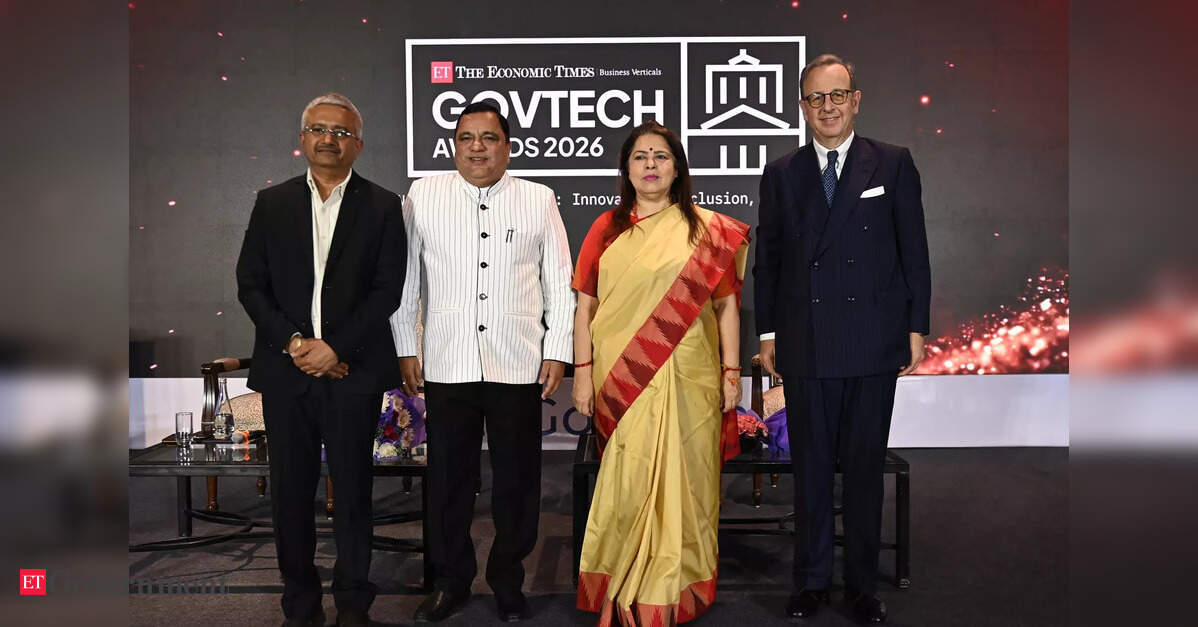
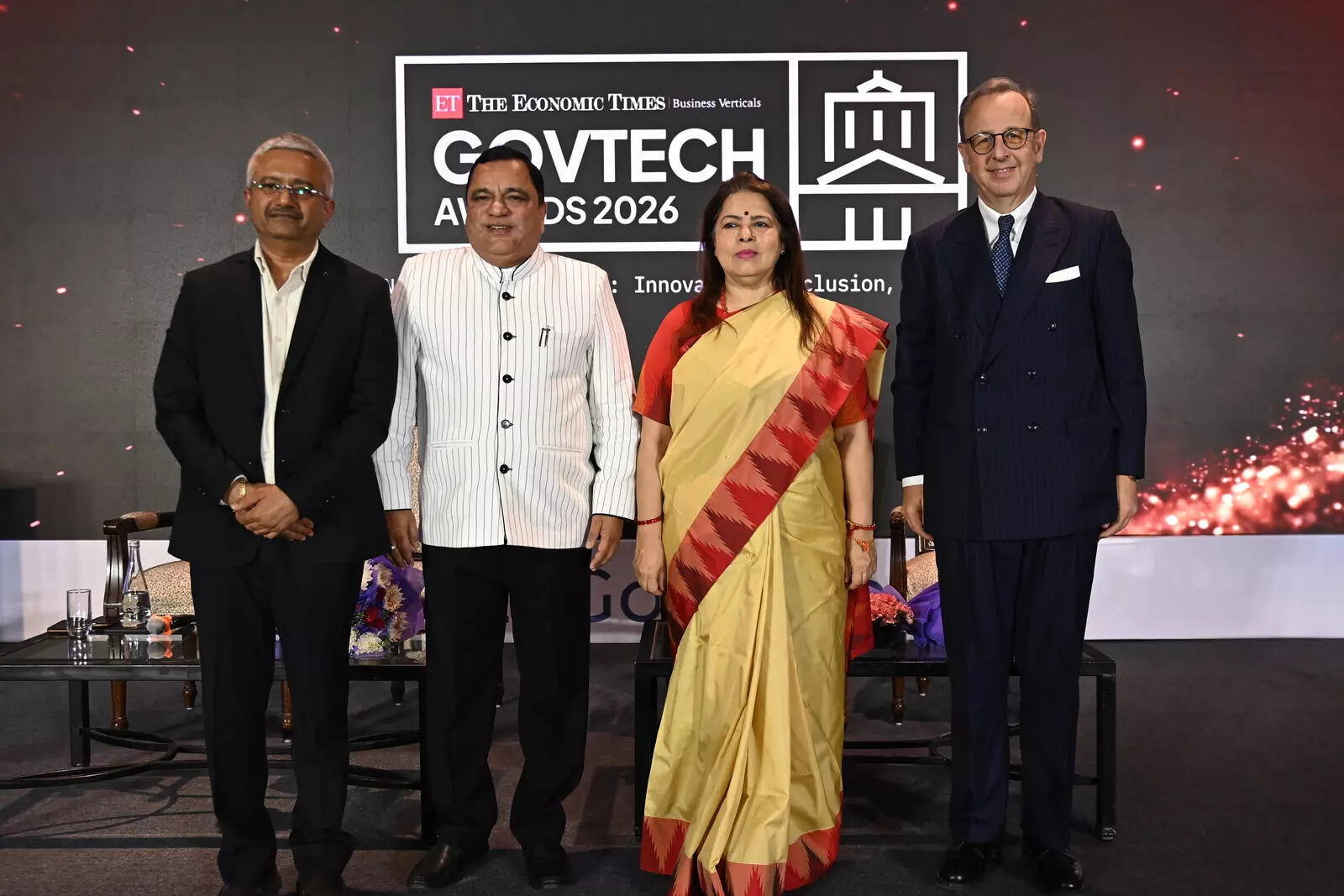
The Oval Hall of the Hyatt Regency in New Delhi, on the evening of March 19, was not merely a venue—it became a theatre of ideas, recognition, and institutional affirmation.
Between 6 PM and 8 PM, in a setting charged with anticipation and animated by an enthusiastic audience, the Awards Ceremony of the GovTech Summit & Awards 2026 unfolded as a compelling culmination of a day devoted to reimagining governance in the digital age.
The ambience carried a certain duality—celebratory in spirit, yet deeply reflective in substance. The hall, filled to capacity, brought together over 300 distinguished participants—senior government officials, industry leaders, technology experts, representatives from private corporations, think tanks, academic institutions, and media professionals—collectively embodying the expanding ecosystem of India’s digital governance architecture.
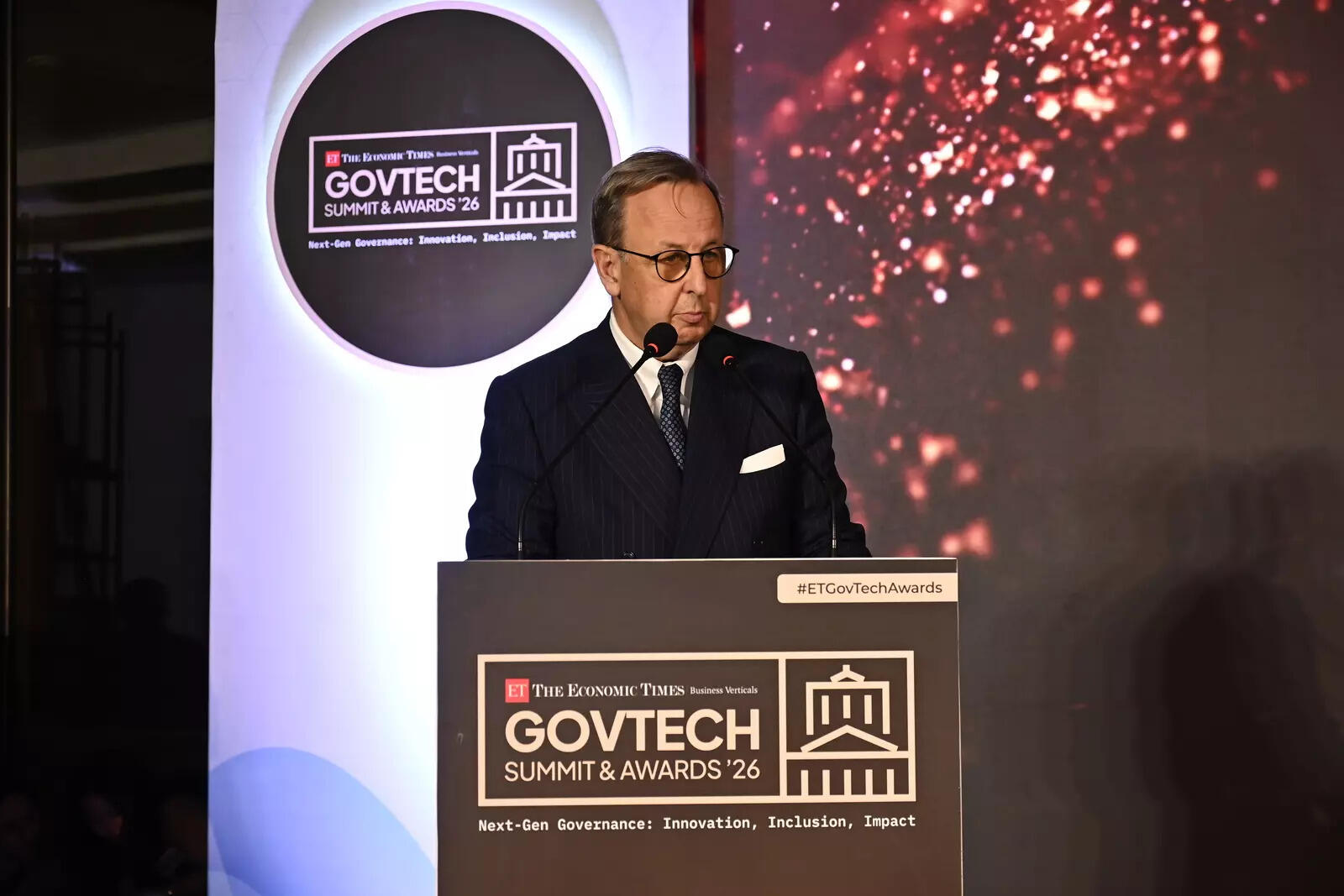
Goa minister Mauvin Godinho, Former Minister of State Meenakshi Lekhi and Italy Ambassador H.E. Antonio Enrico Bartoli were the guests of honor at the award ceremony.
Among those present were Arvind Kumar, Director General, Software Technology Parks of India; Dr. Madan Mohan Tripathi, Director General, National Institute of Electronics and Information Technology; Vinay Thakur, Special Director General, BISAG-N, Ministry of Electronics & Information Technology; and IPS Sethi, Former Director General, National Informatics Centre—figures who have themselves played pivotal roles in shaping India’s digital transformation journey.
The ceremony began with the welcome and awards overview address by Anoop Verma, Editor, ETGovernment, who framed the evening within the broader arc of India’s digital governance journey.
He offered a detailed account of the rigorous evaluation process undertaken by the jury, underlining that the awards were not mere tokens of recognition but the outcome of a carefully structured assessment of impact, scalability, and innovation. His remarks subtly underscored a larger truth—that governance in contemporary India is no longer defined by administrative intent alone, but by measurable outcomes enabled through technology.
This was followed by the keynote address of His Excellency Antonio Enrico Bartoli, Ambassador of Italy to India, whose reflections expanded the horizon of the evening from national to global. Moving beyond familiar cultural stereotypes, he remarked that Italy’s engagement with India is increasingly anchored in advanced technologies and industrial collaboration.
“Forty percent of our exports to India is machinery,” he noted, emphasising that the relationship is driven as much by innovation ecosystems as by trade.
Ambassador Bartoli’s address was particularly notable for its articulation of a shared technological future. He spoke of Italy’s investments in supercomputing, artificial intelligence, and research clusters, referencing initiatives such as high-performance computing systems and innovation hubs that bridge academia and industry.
His vision of collaboration was not transactional but structural—rooted in long-term partnerships across sectors such as sustainable mobility, life sciences, and digital infrastructure. In a particularly forward-looking remark, he highlighted the emerging India–Italy technological partnership as one that seeks to “foster research between startups, companies, universities, and national research centres,” pointing towards an integrated innovation architecture that transcends national boundaries.
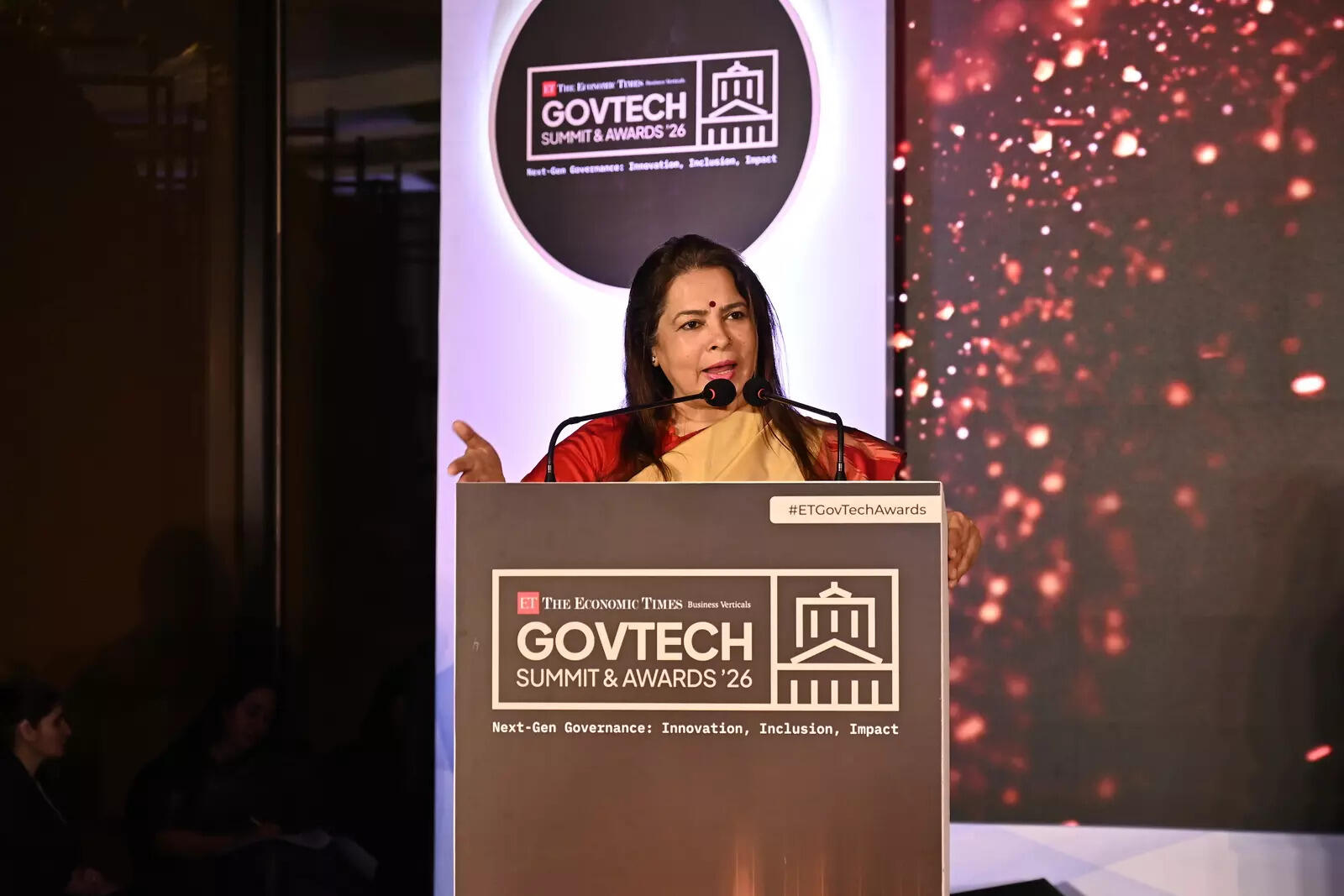
If Bartoli’s address was global in scope, that of Meenakshi Lekhi, Former Minister of State for External Affairs and Culture, brought the discourse back to civilisational depth and philosophical grounding. Her speech was both reflective and provocative, weaving together themes of technology, sustainability, and India’s intellectual heritage.
Drawing an interesting contrast with Italy’s famed “three Fs”—food, furniture, and fashion—she proposed what she described as India’s contemporary imperatives: “food, fuel and fertiliser.” These, she argued, are not merely economic categories but strategic necessities in a world marked by volatility and resource competition. Her remarks carried a clear policy undertone, linking technological innovation with issues of energy security, agricultural resilience, and environmental sustainability.
Yet, her most compelling intervention lay in her critique of technological determinism. “Quantum computing, AI, IoT… are not just fashionable words, but necessary idioms of the day,” she observed, cautioning that their transformative potential must be anchored in structural and intellectual depth.
Invoking the ancient grammarian Panini, she drew a striking analogy: the Ashtadhyayi, she suggested, was “almost like an algorithm” created 2,500 years ago—an early testament to India’s computational thinking. Through this, she advanced a broader argument—that the future of technology must remain in dialogue with the wisdom of civilisational knowledge systems.
In a moment of philosophical clarity, she remarked, “the real computer is the human brain,” a statement that resonated as both a caution and a call—to ensure that technological advancement does not outpace intellectual and ethical development. Her address ultimately framed governance not just as a matter of efficiency, but as a balance between innovation and inherited wisdom.
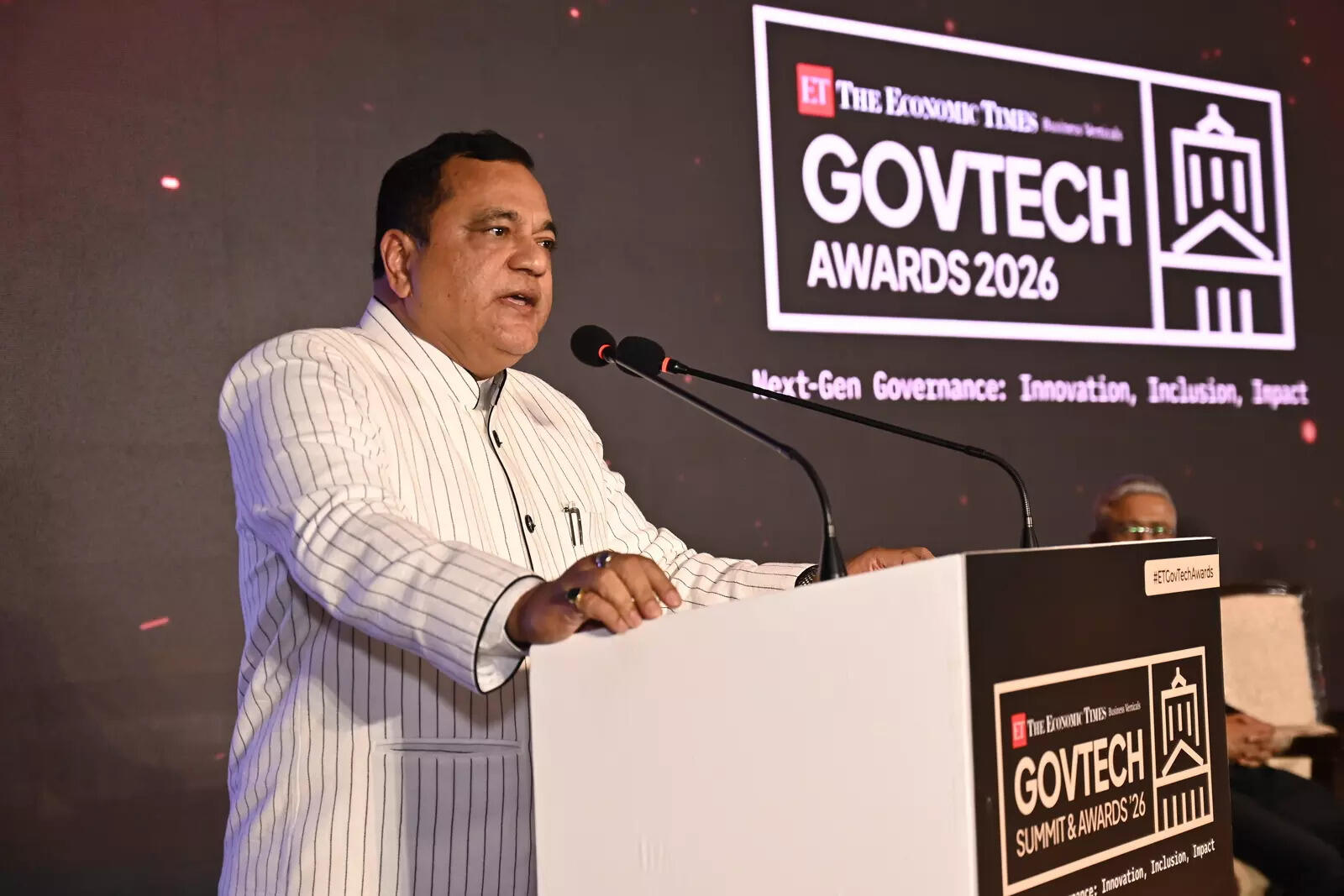
The final keynote of the evening was delivered by Mauvin Godinho, Minister for Transport, Industries, Trade & Commerce, Panchayati Raj, Protocol & Hospitality, and Legislative Affairs, Government of Goa, whose speech provided a grounded, practitioner’s perspective on governance transformation.
Godinho’s address was marked by a quiet confidence and a strong emphasis on outcomes. Reflecting on Goa’s recognition at the awards, he noted that what began as “a small thing” had evolved into a transformative initiative with wide-ranging public impact. His remarks challenged prevailing perceptions of Goa as merely a tourism-driven economy. “Thirty-three percent of the GDP… is generated through industry, which not many people know,” he pointed out, signalling a deliberate effort to reposition the state as an emerging industrial hub.
Central to his narrative was the role of digital governance. He described how the adoption of digital public platforms and the simplification of regulatory processes had led to measurable improvements in efficiency. “When you have everything available on the dashboard… and simplified procedures, that is what we have done,” he said, adding that timelines for approvals had been reduced by as much as 65 percent.
His remarks illustrated a crucial shift in governance philosophy—from opacity to transparency, from procedural complexity to user-centric design. More significantly, he emphasised that such transformation need not always require large financial outlays; often, it is the intelligent deployment of existing digital infrastructure that yields the most significant gains.
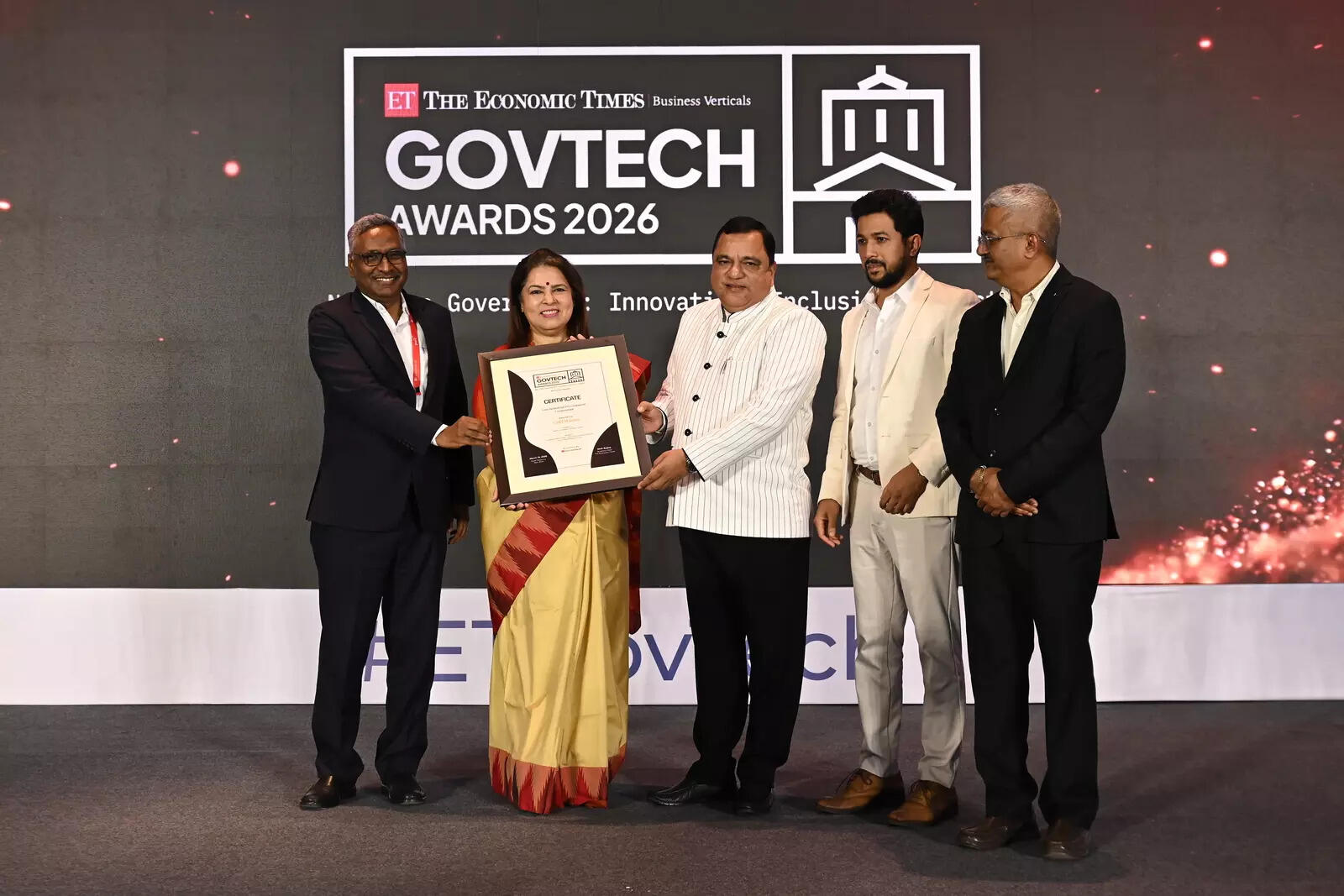
The ceremony reached its crescendo with the presentation of over 44 awards across diverse categories, recognising exemplary initiatives by government departments and institutions that have leveraged technology to enhance transparency, efficiency, and public service delivery. Each award, in its own way, represented a microcosm of India’s broader digital transformation narrative.
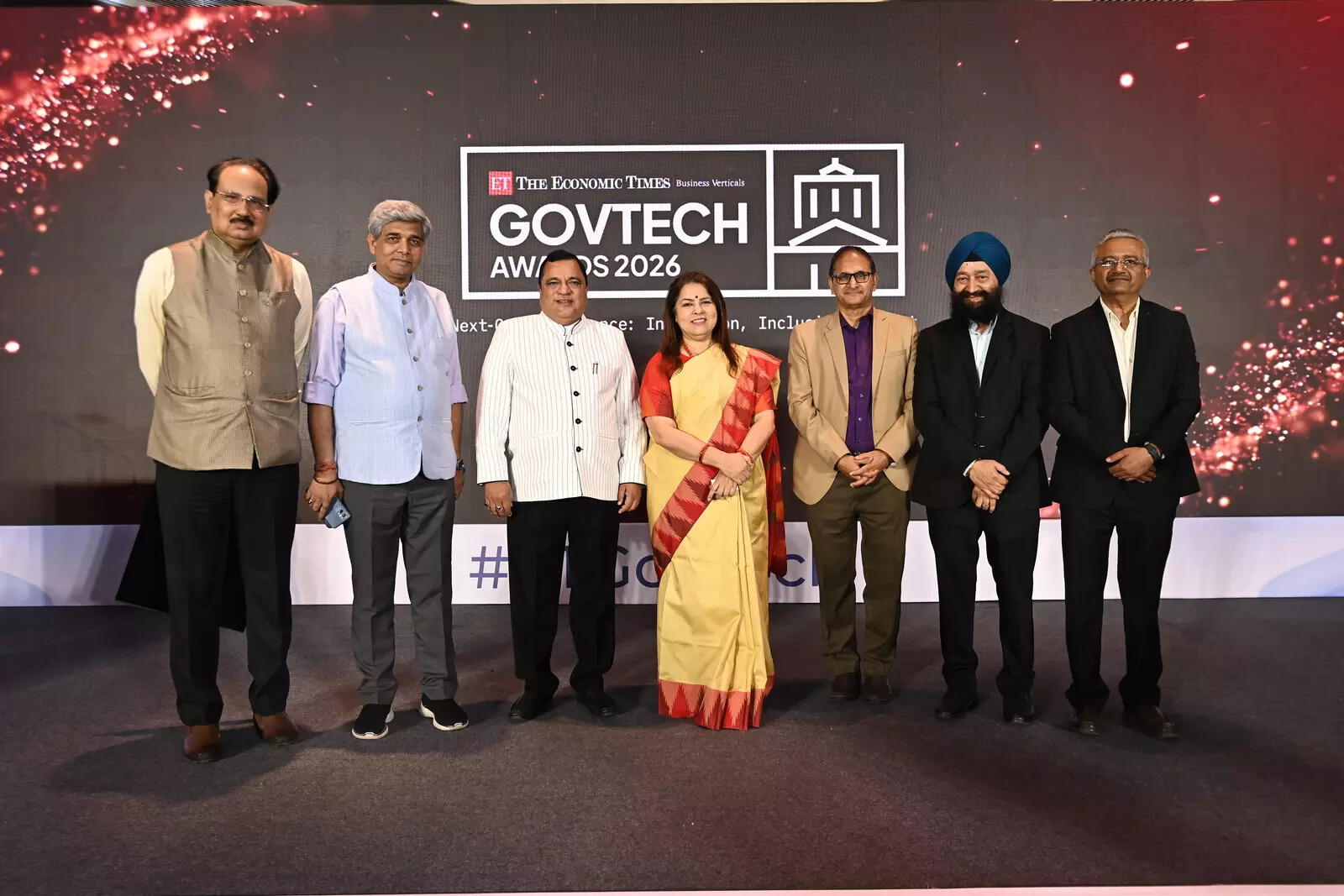
In a moment that symbolised both recognition and validation, Mauvin Godinho himself received the award on behalf of the Goa Industrial Development Corporation (Goa-IDC), underscoring the tangible impact of policy-driven technological adoption at the state level.
As the evening drew to a close, what lingered was not merely the memory of accolades conferred, but the deeper realisation that governance in India is undergoing a structural redefinition. The awards ceremony, in this sense, functioned as more than a ceremonial endpoint—it was a mirror reflecting the evolving architecture of the Indian state.
In the interplay of global partnerships, civilisational insights, and grassroots innovation, one could discern the contours of a new governance paradigm—one where technology is not an end in itself, but an instrument of public value, and where recognition is not just about achievement, but about setting new benchmarks for what governance can aspire to become.