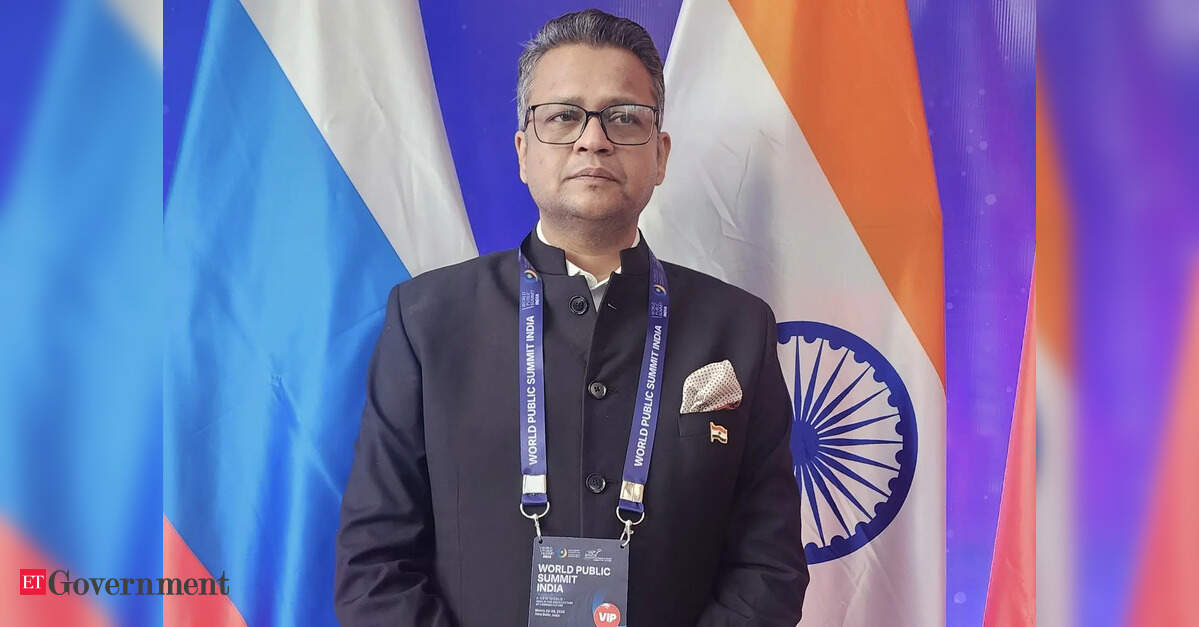
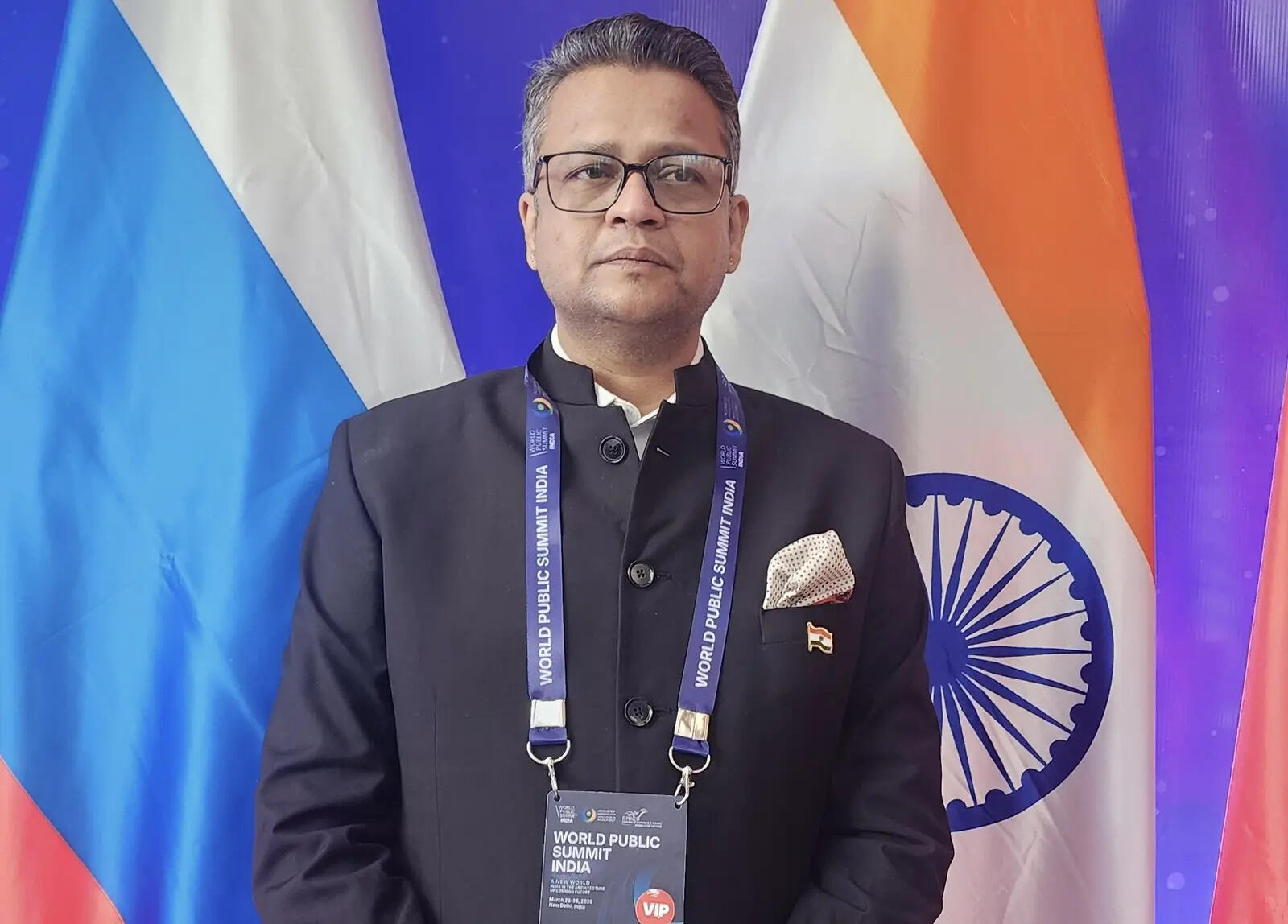
At the sidelines of the World Public Summit India—held under the theme “A New World: India in the Architecture of Common Future”—Anoop Verma spoke with Sameep Shastri, Vice Chairman of the BRICS Chamber of Commerce & Industry. The conversation situates the summit within a broader effort to recalibrate global engagement at a time marked by conflict, economic realignments, and shifting power equations.Conceived around the ideals of inclusive development, global bonhomie, and collective progress, the summit reflects an aspirational vision of a more cooperative international order. It underscores the belief that even amid geopolitical tensions, sustained dialogue, equitable growth, and mutual respect can serve as the foundations of a more stable and multipolar world—one where developing nations play a more decisive role in shaping global outcomes.
In this interaction, Shastri outlines the strategic intent behind the summit, the evolving trajectory of India–Russia engagement, and the expanding role of platforms such as BRICS and the World Peoples Assembly in fostering trade, sustainable development, and cross-border collaboration. He also reflects on India’s unique positioning as a bridge across geopolitical divides and its growing influence in shaping the contours of the emerging global order.
Edited excerpts:
What motivated the conceptualisation of this World Public Summit-India, and why was there a need for an India-centric edition?
The central idea behind the summit is to strengthen India–Russia relations while creating a broader platform for collaboration. The World Peoples Assembly has traditionally focused on culture, trade, and commerce, making it a highly diversified organisation. A few months ago, they approached our chamber, and we conceptualised the idea of hosting an India-centric event. While global engagements are important, regional summits are equally critical.
This is the first such summit being held in India, where discussions span culture, commerce, sustainable development, and business cooperation. We also organised B2B engagements with the Russian delegation, particularly in areas like smart cities. The summit is essentially a comprehensive platform—a mix of priorities relevant to governments—aimed at bridging long-standing gaps and fostering collaboration across sectors.
How does this summit align with India’s evolving geopolitical and economic positioning, particularly in the context of BRICS and global shifts?
India has historically had strong ties with Russia since independence, but trade relations have not reached their full potential. Recent geopolitical shifts, including sanctions and the oil crisis, have opened new opportunities, with Indian businesses benefiting from engagement with Russia and CIS countries.
At a broader level, BRICS represents nearly 49 percent of the global population, making it a critical global bloc. India occupies a unique position, maintaining strong relations with both Western and Eastern powers, as well as the Middle East. Today, India is at a strategic juncture where global players are keen to engage with it. With a young population of over 1.4 billion, India itself is a massive market.
The focus of this initiative is not geopolitical confrontation but rather trade, sustainable development, and the creation of a multipolar world order where developing nations also have a strong voice.
This event is taking place amid significant global conflicts. How do you convince countries that unity and collaboration are still possible in such an environment?
As a human race, we have always progressed by taking risks. Even during the COVID-19 pandemic, people had choices—whether to stay confined in fear or step forward to keep systems running. Many chose to act, to contribute, and to sustain society. Similarly, in today’s geopolitical climate, despite conflicts and tensions, countries have chosen to participate in this summit. We have representation from over 20 nations, and their presence itself is a statement—that dialogue and cooperation must continue despite global uncertainty. It reflects a collective belief that we cannot allow conflict to halt engagement. Instead, we must continue to create platforms for dialogue, collaboration, and understanding.
What role can BRICS play in addressing current global conflicts and tensions?
BRICS has evolved into one of the most significant global blocs. A decade ago, it was largely symbolic, but today it has become a substantive platform addressing a wide range of issues.
The bloc is increasingly seen as a counterbalance in global economic and geopolitical structures. It is shaping discussions around trade, financial systems, and global cooperation. Its declarations now cover diverse areas—from environmental conservation and biodiversity to sustainable development and economic integration.
BRICS is no longer just an acronym; it is a dynamic framework that brings together emerging economies to collectively influence global discourse.
The summit emphasises the idea that ‘human dignity is the foundation of peace.’ How do you interpret this in today’s conflict-driven world?
These ideas may seem idealistic, but they are essential to propagate. Many concepts that guide societies—like faith—are not always visible but are deeply influential. Human dignity is fundamental because, ultimately, when situations deteriorate, societies realise the importance of unity and mutual respect. While it may sometimes take extreme circumstances for this realisation, the goal is to build awareness before reaching that point.
Dialogue remains the most powerful tool. No conflict is beyond resolution through conversation. Differences in ideology, interests, or perspectives should not prevent engagement. Peaceful negotiation is always possible, and that is the message we must continue to reinforce.
Given the evolving geopolitical conflicts, particularly in energy and trade, how do you see their impact on India?
India has demonstrated resilience in navigating global disruptions. During earlier conflicts, the country was able to benefit from alternative energy sourcing, particularly through discounted oil imports. However, emerging conflicts present new challenges. India is actively diversifying its energy partnerships, including discussions with countries rich in LNG resources. The government is focused on ensuring that domestic and commercial sectors are not adversely affected by supply disruptions.
At the same time, the situation is concerning because the global system is under stress. Countries like Iran, which have faced prolonged sanctions, are now asserting their position in ways that can influence global economic stability. It is important to examine the historical context of such conflicts and recognise that even smaller or historically marginalised nations can significantly impact global systems. This underscores the need for a more balanced and inclusive global order.
What are your key takeaways from this summit?
The most important takeaway is that nations are still willing to come together despite global turmoil. The very act of sitting across the table and engaging in dialogue is a significant achievement in today’s environment. This summit should not remain just a one-time event. The objective is to take these discussions forward—through research, policy recommendations, and concrete initiatives that can create meaningful impact. The focus must be on building a better future, supporting collaborative efforts, and ensuring that these conversations translate into actionable outcomes.