
As India recalibrates its engagement with West Asia amid shifting geopolitical alignments and emerging economic corridors, its partnership with Jordan is acquiring renewed strategic depth.
Positioned at the crossroads of Asia, Africa, and Europe, Jordan has long been viewed as a stabilising force in a volatile region—an attribute that aligns closely with India’s own emphasis on balanced diplomacy and regional stability. Recent high-level engagements, including Prime Minister Narendra Modi’s visit to Amman, have further accelerated this momentum, expanding the scope of cooperation from traditional sectors such as fertilisers and trade to newer domains like digital public infrastructure, renewable energy, and innovation ecosystems.
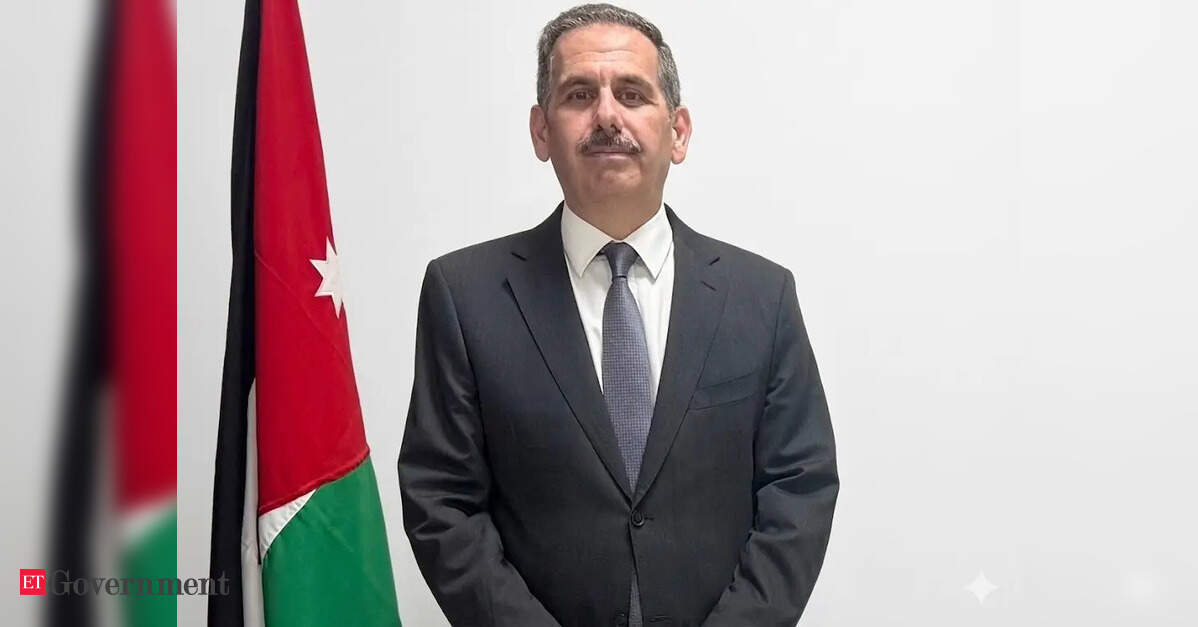
In this context, Yousef Abdelghani, Ambassador of the Hashemite Kingdom of Jordan to India, speaks with Anoop Verma, on the evolving contours of bilateral relations. In this wide-ranging conversation, he outlines Jordan’s vision for a future-oriented strategic partnership with India—one that leverages complementarities in trade, technology, and connectivity, while also reflecting shared commitments to stability, moderation, and sustainable development in an increasingly complex global order.
Edited excerpts:
India and Jordan have long shared a relationship anchored in mutual respect and historical goodwill. How would you assess the current trajectory of bilateral ties in the context of an evolving West Asian geopolitical landscape?
The relationship between India and Jordan has entered a new and more ambitious phase.
As we marked 75 years of diplomatic relations recently, it became evident that our engagement is no longer confined to goodwill alone—it is steadily transforming into a future-oriented strategic partnership. This shift was reinforced by Prime Minister Narendra Modi’s landmark visit to Amman in December 2025, which injected renewed momentum into bilateral cooperation.
Today, the trajectory is defined by deep political engagement, mutual trust, and a strong convergence on issues such as regional stability and economic development. Both countries are now focused on translating longstanding diplomatic warmth into tangible outcomes across sectors such as technology, trade, energy, security, and food industries.
Bilateral trade between India and Jordan has grown steadily. Which sectors are currently driving this engagement, and where do you see the most promising areas for expansion?
Trade between our two countries has reached approximately $3 billion in the financial year 2024–25, and it is underpinned by complementary economic structures. Jordan’s exports to India are dominated by phosphates, potash, fertilisers, and phosphoric acid—resources that are critical to India’s food security. In turn, India exports cereals, petroleum products, electrical machinery, chemicals, and textiles to Jordan.
Looking ahead, both governments have set an ambitious target of reaching $5 billion in trade within the next five years. The most promising areas for expansion include pharmaceuticals, digital health, fintech, green energy, agri-tech, high-tech industries, and green mobility. This reflects a conscious shift towards value-added and technology-driven sectors.
India is among the largest importers of phosphates and fertilisers from Jordan. How do you view this strategic economic linkage, and what are the prospects for deeper cooperation in critical minerals?
This linkage is not merely commercial—it is strategic in nature, particularly for India’s food security. Joint ventures such as the Jordan India Fertiliser Company (JIFCO), valued at $860 million, and the Indo-Jordan Chemical Company have ensured a reliable and long-term supply of phosphoric acid.
Recent Memorandums of Understanding, including those worth $1.5 billion signed in 2022 and 2025, underscore our intent to deepen cooperation in this domain. Jordan considers India a priority partner and its largest buyer, and collaboration in phosphates, potash, fertilisers, and phosphoric production will remain a central pillar of our strategic partnership going forward.
India’s engagement with West Asia has expanded through initiatives such as I2U2 and the India–Middle East–Europe Economic Corridor (IMEC). How does Jordan position itself within these emerging frameworks?
Jordan sees itself as a natural strategic hub and logistics gateway within these emerging regional architectures. In the context of IMEC, our geographic location and infrastructure — particularly the Port of Aqaba — position us as a vital transit point connecting India to European and African markets. During Prime Minister Modi’s visit, both sides agreed to enhance cooperation in trade facilitation and connectivity. Jordan is keen to play an enabling role in these corridors by leveraging its logistical capabilities and strategic positioning.
Given Jordan’s reputation as a stabilising force in a volatile region, how do you view the geopolitical significance of India–Jordan relations today?
Jordan is widely regarded by India as an anchor of stability in West Asia, and this perception is grounded in our consistent foreign policy approach. Our ability to maintain balanced relations across the Arab world and beyond makes us a reliable partner for India’s nuanced diplomacy.
Both countries share common values, including a strong commitment to combating terrorism and promoting regional and global peace. We have also demonstrated mutual solidarity in times of crisis — Jordan stood firmly with India following the Pahalgam attack in 2025, while India extended its support to Jordan during recent regional conflicts. This mutual understanding enhances the geopolitical depth of our partnership.
Cultural diplomacy has historically been a strong pillar of bilateral ties. How do you see its role evolving in strengthening people-to-people connections?
Cultural diplomacy continues to play a vital role in reinforcing the human dimension of our relationship. Our shared civilisational values — particularly those of moderation and dialogue — create a natural affinity between our societies.
Recent initiatives reflect this deepening engagement. A twinning agreement between Petra and the Ellora Caves was signed in 2025, symbolising heritage cooperation. Jordan is also being actively promoted as a filming destination for Bollywood, which enhances cultural visibility.
Connectivity is improving as well, with Royal Jordanian resuming direct flights between Amman and Mumbai and plans to restart Delhi operations soon. Additionally, Jordanian cultural groups have been actively participating in events across Indian cities, showcasing our heritage and fostering deeper cultural understanding.
Education and skill development are emerging as key pillars of international cooperation. What initiatives are underway in this space?
Education is indeed a priority area. One of our flagship initiatives is the India-Jordan Centre of Excellence in IT at Al-Hussein Technical University, which aims to train around 3,000 Jordanian professionals in advanced fields such as artificial intelligence, cybersecurity, and big data. India has also increased its ITEC training slots for Jordan from 35 to 50, reflecting a commitment to capacity-building. Also, the Cultural Exchange Programme for 2025–2029 provides a structured framework to deepen cooperation in education, arts, heritage, and academic exchanges.
With India emerging as a global leader in digital public infrastructure, what opportunities do you see for collaboration in technology and innovation?
There is considerable scope for collaboration in digital transformation. During the 2025 visit, both sides signed a Letter of Intent focusing on digital cooperation, including the possibility of linking India’s Unified Payments Interface (UPI) with Jordan’s payment systems to enable interoperability. Beyond fintech, there are ongoing discussions on strengthening collaboration in cybersecurity and the broader digital economy. Jordan stands to benefit significantly from India’s leadership in digital public infrastructure and innovation ecosystems.
Energy security and sustainability are pressing global concerns. How can India and Jordan work together in these areas?
Our cooperation is expanding into new and critical areas such as renewable energy and sustainable resource management. An MoU on solar energy and green hydrogen was signed in 2025, marking an important step forward. Water management is another crucial area, given Jordan’s water scarcity. Collaboration in desalination, water-efficient agriculture, and aquifer management can benefit from India’s experience. At the multilateral level, Jordan has agreed to join key Indian-led initiatives such as the International Solar Alliance, the Global Biofuels Alliance, and the Coalition for Disaster Resilient Infrastructure. These platforms provide a strong foundation for long-term cooperation in sustainability.
What is your target for India–Jordan relations over the next decade, and what steps are needed to realise this vision?
Our target is to elevate the relationship into a full-fledged strategic alliance. This will involve moving beyond commodity-driven trade towards deeper integration in high-value sectors and global value chains. Enhancing connectivity — through direct flights and improved logistics—will be critical in boosting trade and tourism. Initiatives such as IMEC will further strengthen these linkages.
Equally important is the institutionalisation of dialogue. Regular meetings of ministerial and intergovernmental committees will ensure continuity and accountability. High-level visits will continue to play a vital role in sustaining momentum. Ultimately, the goal is to build a partnership that is resilient, diversified, and capable of delivering tangible outcomes for both nations in an increasingly complex global environment.