At a time when India’s security paradigm is being reshaped by technological disruption and increasingly complex threat landscapes, the management of borders has moved well beyond fences, roads, and physical patrols. It now operates at the intersection of data, intelligence, and real-time decision-making—where surveillance systems, artificial intelligence, and inter-agency coordination define the contours of national security.
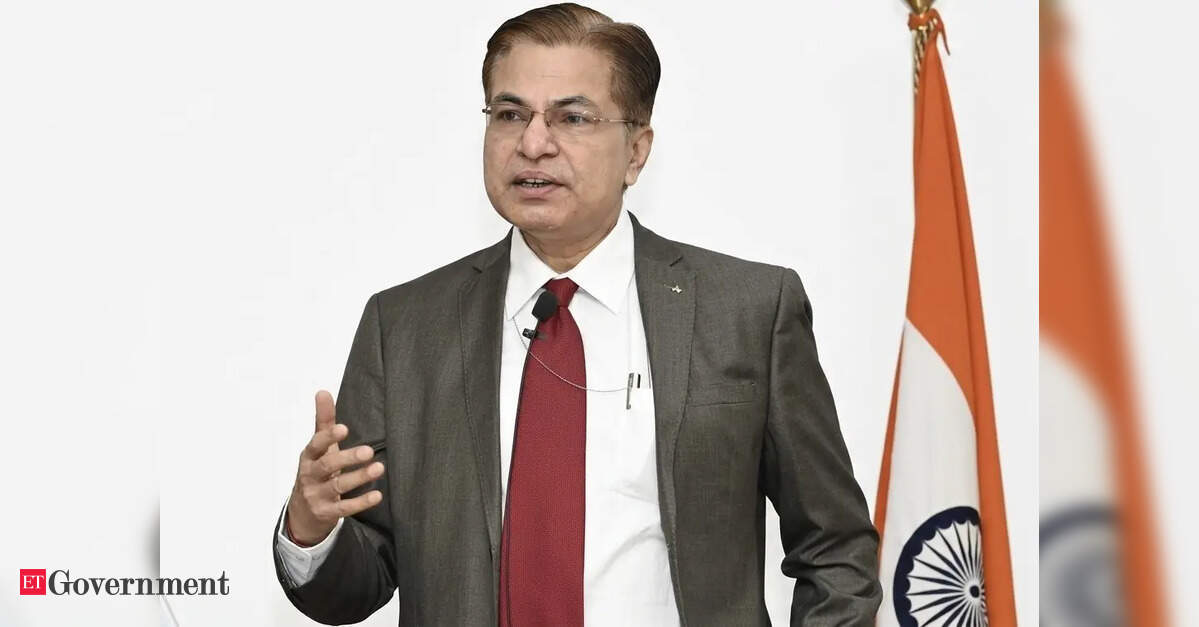
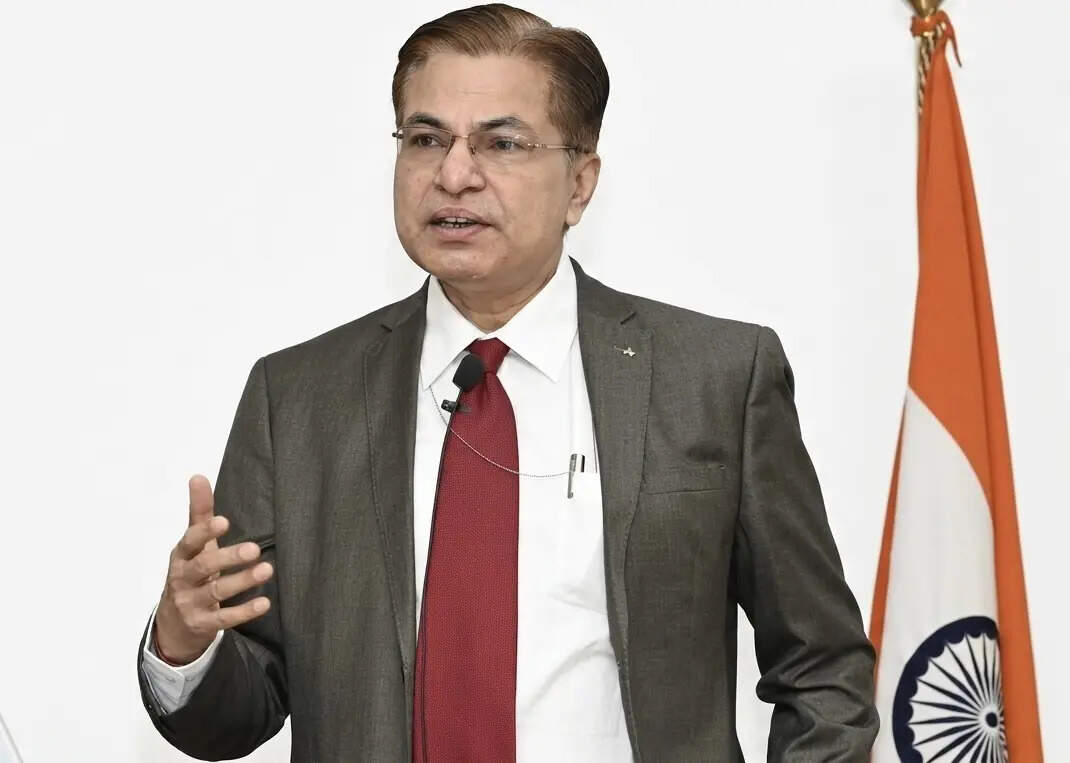
Dr. Rajendra Kumar, Secretary, Department of Border Management, Ministry of Home Affairs, carries the responsibility of overseeing this evolving domain across some of the world’s most challenging and sensitive frontiers. The Department’s approach reflects a shift towards integrated, technology-enabled border governance that is proactive, data-driven, and aligned with emerging security imperatives.
In this conversation with Anoop Verma, Dr. Kumar explains how India is re-conceptualising its borders as dynamic security ecosystems, the expanding role of AI and digital public infrastructure in surveillance and coordination, and the Ministry’s response to hybrid threats that increasingly blur the boundaries between physical and cyber domains. He also reflects on the centrality of human judgment in an AI-enabled environment and offers a forward-looking perspective on how technology could reshape India’s border management architecture by 2030.
Edited excerpts:
Border management today is no longer confined to physical infrastructure. How is the Ministry reimagining borders as a combined physical, digital, and data-driven security domain?
Border management has evolved far beyond physical infrastructure to encompass an integrated framework of terrain, technology, and intelligence. India’s borders are increasingly becoming sensor-rich and data-driven environments, where physical assets are seamlessly combined with digital surveillance, advanced analytics, space-based inputs, and real-time intelligence fusion.
The Ministry is reimagining borders as integrated security ecosystems, bringing together physical infrastructure with AI-enabled surveillance systems, unified data platforms, and dynamic operational dashboards. Intelligence, Surveillance and Reconnaissance capabilities are being strengthened through AI-enabled cameras, smart fencing, UAV imagery, predictive analytics on legacy datasets, and GIS-ERP integration.
This shift marks a transition from reactive border control to proactive, real-time situational awareness aligned with evolving threats and broader national security objectives.
How is AI being deployed across surveillance, threat detection, and decision-support systems in border management, and where do you see the greatest impact over the next five years?
Artificial Intelligence is already playing a significant role in border management through object and behaviour detection using PTZ cameras and thermal imaging, facial and number plate recognition systems, sensor fusion, UAV imagery analysis, and predictive hotspot identification. It is also helping optimise manpower deployment and logistics planning.
Over the next five years, the most significant impact is likely to emerge in predictive and prescriptive threat assessment, as well as in the integration of surveillance across land, sea, air, space, and cyber domains. AI-assisted logistics, personnel deployment, and robotics will further enhance operational efficiency. Unified intelligence dashboards, supported by NLP-driven open-source intelligence, will strengthen decision-making. The emphasis remains on achieving early warning and decision superiority rather than automation for its own sake.
Given the critical nature of border security, how does the Ministry ensure that AI systems augment human judgment rather than replace it, particularly in high-risk scenarios?
AI systems in border security are designed strictly as decision-support tools, with human oversight embedded at every critical stage. All high-risk actions require human-in-the-loop validation, supported by clearly defined standard operating procedures, role-based access controls, audit trails, and rigorous cybersecurity and data protection protocols.
In sensitive scenarios, AI functions in an advisory capacity rather than a directive one. Systems are designed to present probabilistic scenarios instead of deterministic commands, ensuring that human judgment remains central—especially in situations involving ethical considerations, diplomatic sensitivities, or escalation risks. Continuous training also ensures that personnel understand both the capabilities and limitations of AI systems.
India’s DPI stack has transformed service delivery. How is it being adapted for border management use cases such as identity verification, movement tracking, and inter-agency coordination?
The core principles of Digital Public Infrastructure—interoperability, modularity, and secure digital identity—are being adapted to border management through unified ERP and GIS platforms, standardised data architectures, and secure API frameworks. These systems enable robust identity verification through tools such as facial recognition and automatic number plate recognition, where appropriate. They also support controlled movement tracking and facilitate seamless inter-agency coordination through shared dashboards and enterprise identity management systems, thereby creating a cohesive and secure operational environment.
Border management involves multiple forces and ministries. How is e-governance helping break silos and enable real-time coordination?
E-governance is playing a pivotal role in dismantling institutional silos and enabling real-time coordination across agencies. This is being achieved through standardised project templates, joint inspections, integrated ERP systems covering operations, human resources, logistics, and inventory, and milestone-based financial tracking through PFMS. Additionally, Project Management Units and third-party quality audits connect the Centre, states, and field formations on a unified digital platform. The result is faster response times, reduced duplication of effort, and enhanced accountability, all while preserving command hierarchies and jurisdictional clarity.
Ransomware attacks on critical infrastructure are rising globally. How is the Ministry preparing to prevent or respond to such threats?
The Ministry is strengthening its cybersecurity posture by implementing standard operating procedures issued by the Ministry of Home Affairs and MeitY, alongside established institutional protocols. This includes ensuring forensic readiness, conducting regular cybersecurity audits, and institutionalising review mechanisms. These measures are aimed at enhancing preparedness against ransomware threats and broader systemic cyber risks affecting critical infrastructure.
Border security involves handling large volumes of sensitive data. How does the Ministry balance national security imperatives with data protection and accountability?
Sensitive data management is governed through a combination of air-gapped networks, stringent standard operating procedures, privacy impact assessments, and robust audit mechanisms. Role-based access controls and human oversight ensure that data is used securely and responsibly. This framework allows the Ministry to maintain a balance between operational security and accountability, ensuring that national security objectives are met without compromising data protection standards.
To what extent is the Ministry prioritising indigenous platforms, and what role do start-ups and PSUs play in this ecosystem?
In alignment with the Government’s broader vision of technological self-reliance, the Ministry is actively prioritising indigenous platforms and reducing dependence on foreign hardware and systems. Start-ups and public sector enterprises are being integrated into this ecosystem through structured engagement models, including proof-of-concept deployments and innovation validation platforms. These initiatives are enabling the gradual operationalisation of locally developed technologies within the border management framework.
How is the Ministry upgrading the digital and cyber capabilities of border personnel?
Capacity building remains a continuous and structured process. The Ministry is establishing specialised AI cells, strengthening digital forensics capabilities, and conducting targeted training programmes for personnel across border guarding forces. Workforce analytics and ongoing technical training ensure that personnel are equipped to effectively deploy and manage AI-driven systems and advanced analytical tools in operational environments.
Beyond physical infiltration, borders now face cyber-enabled and hybrid threats. How is the Ministry responding to these evolving challenges?
The Ministry is addressing hybrid threats through the integration of NLP-driven open-source intelligence, unified intelligence dashboards, predictive analytics, and enhanced inter-agency data sharing. Borders are increasingly being treated as converged physical-digital operational domains, where threats are identified and mitigated through a combination of technological and institutional responses.
Looking ahead to 2030, how do you envision technology reshaping India’s border management architecture?
By 2030, India’s border management architecture is expected to become significantly more integrated, intelligent, and responsive. Technology will act as a force multiplier, connecting remote border outposts through resilient digital infrastructure and enabling seamless integration of space-based and ground-level intelligence.
Artificial Intelligence will drive the transition from reactive monitoring to anticipatory awareness, while human judgment will continue to anchor decision-making processes. Equally critical will be institutional coordination, ensuring that multiple agencies work in cohesion to secure stability and prosperity across challenging terrains, in line with India’s long-term Viksit Bharat vision.