The global semiconductor race is no longer being fought only inside fabrication plants and clean rooms. Increasingly, it is also being fought through policy architecture, investor confidence, regulatory coordination, and the ability of governments to reduce friction for companies navigating complex supply chains.
India’s latest move in this direction — the launch of the “Investors Support” portal by the India Semiconductor Mission (ISM) — reflects a recognition that semiconductor manufacturing is as much about ecosystem management as it is about silicon engineering.
Announced on May 26, the new digital platform seeks to position the Indian government not merely as a provider of incentives, but as an active facilitator for investors entering one of the world’s most strategically sensitive industries.
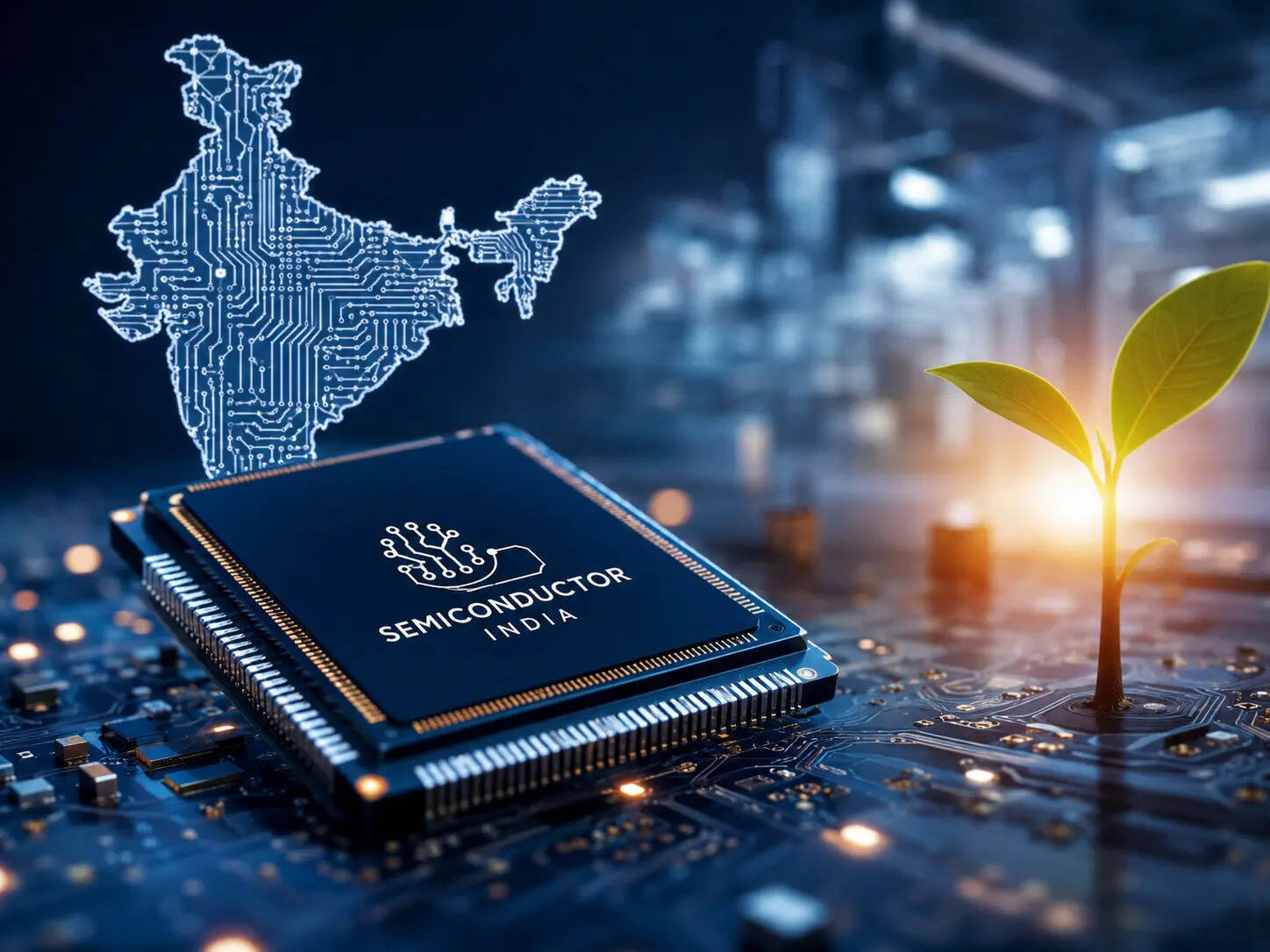
The portal, launched by the Ministry of Electronics and Information Technology (MeitY) under the India Semiconductor Mission, is designed as a single-window support mechanism to assist investors, resolve grievances, coordinate with multiple agencies, and provide access to information relating to government schemes, regulations, and approved projects under the Semicon India Programme.
The launch comes at a crucial moment in India’s semiconductor ambitions. Over the past four years, the country has moved from being largely absent in the semiconductor manufacturing conversation to becoming one of the world’s most closely watched emerging chip ecosystems.
The government says that under the Semicon India Programme, 12 fabrication and packaging projects, along with 24 semiconductor design projects, have already been approved.
At the launch event, Amitesh Kumar Sinha, Additional Secretary, MeitY and CEO of India Semiconductor Mission, stressed the importance of investor facilitation and institutional coordination. He said that the semiconductor ecosystem required sustained “handholding and facilitation of foreign investors” and urged stakeholders to proactively resolve investor concerns to strengthen India’s semiconductor manufacturing and design ecosystem.
The significance of the portal lies not merely in digitisation, but in the strategic message it sends to global investors. Semiconductor manufacturing is among the most capital-intensive and geopolitically sensitive sectors in the world.
Investors entering the industry require long-term policy predictability, quick approvals, stable supply chains, customs facilitation, infrastructure support, and coordination between multiple layers of government. India’s semiconductor ambitions can succeed only if the state is able to reduce bureaucratic uncertainty and create institutional trust.
The portal appears to be an attempt to address precisely this challenge.
According to the government, the platform will provide a “secure, role-based, single-window digital interface” that will enable coordination among ministries, departments, state governments, approved project companies, and trade associations. Investors will also be able to register grievances and concerns that can be addressed in a time-bound manner through designated nodal officers.
This institutional approach reflects an important evolution in India’s semiconductor policy framework. In its early phase, the focus of the India Semiconductor Mission was primarily on announcing fiscal incentives and attracting anchor investments. The next stage appears to involve ecosystem consolidation — ensuring that companies already committed to India are able to scale efficiently and that new investors encounter fewer operational bottlenecks.
The new portal had, in many ways, been anticipated by industry observers. Earlier this year, Amitesh Kumar Sinha had indicated that the government was working on a single-window facilitation mechanism for semiconductor companies facing regulatory and supply-chain hurdles.
Speaking at the IESA Vision Summit 2026, he said the government was developing a portal that would help companies address issues involving customs, state governments, and supply-chain coordination. “We understand that the foreign companies, including those from Japan, Singapore, Malaysia, and European countries coming to India and trying to provide some kind of materials or supply items to their local companies are facing some problems,” Sinha had said.
The semiconductor industry operates through highly fragmented global supply chains involving equipment manufacturers, specialty chemical suppliers, gas manufacturers, wafer producers, design firms, packaging units, and logistics providers. Even minor delays in customs clearances or regulatory approvals can disrupt production schedules and escalate costs. In this context, India’s move to institutionalise investor facilitation may become an important differentiator.
The background of the India Semiconductor Mission itself illustrates how dramatically India’s policy thinking has evolved. The mission was launched in 2021 with a financial outlay of ₹76,000 crore as part of the Semicon India Programme.
The initiative was designed to support silicon semiconductor fabs, display fabs, compound semiconductors, assembly and testing facilities, and semiconductor design ecosystems. Over time, the programme has expanded beyond manufacturing subsidies into a broader strategy aimed at creating a complete semiconductor value chain.
Amitesh Kumar Sinha has repeatedly argued that semiconductor development must be viewed as a long-term national project rather than a short-term industrial scheme. At the Deep Tech Summit 2026 in Chennai, he observed that semiconductor development is “a long-term marathon, not a T-20 match.” He also stated that the government was shaping policies under “Semicon India 2.0” to build a “complete semiconductor ecosystem” by adding layers involving materials, chemicals, gases, equipment manufacturing, research and development, and skilling.
This broader ecosystem approach is increasingly important because semiconductor manufacturing alone cannot sustain industrial competitiveness. Countries that dominate the global semiconductor industry — including the United States, Taiwan, South Korea, Japan, and increasingly China — possess dense networks of suppliers, researchers, universities, logistics infrastructure, and specialised labour pools. India is now attempting to construct such an ecosystem almost from scratch.
The geopolitical context has also worked in India’s favour. The disruptions caused by the COVID-19 pandemic, combined with growing strategic tensions between the United States and China, have fundamentally altered global semiconductor supply chains. Governments and corporations are increasingly seeking “China-plus-one” strategies to diversify manufacturing risks and build resilient supply chains.
India has attempted to position itself as a trusted and democratic technology partner within this emerging realignment. Sinha recently remarked that the government is working to ensure that semiconductor intellectual property, business-critical information, and datasets remain protected and secure. This emphasis on trust and resilience is central to India’s semiconductor diplomacy.
The country’s progress, while still at an early stage compared to global leaders, is no longer purely aspirational. Major investments involving Tata Electronics, Micron Technology, CG Power, Renesas, Kaynes Semicon, and other firms have begun creating the foundations of a domestic semiconductor manufacturing ecosystem.
KLA Corporation’s recent expansion of its R&D and innovation hub in Chennai with an investment of ₹300 crore further signals growing global interest in India’s semiconductor ambitions. At the inauguration, Amitesh Kumar Sinha stated that such investments strengthen “industry-government collaboration” and support the vision of establishing India as a “trusted global partner in the semiconductor supply chain.”
At the same time, significant challenges remain.
India still lacks deep upstream capabilities in semiconductor-grade materials, advanced lithography equipment, high-purity chemicals, and sophisticated fabrication technologies. Power reliability, water availability, logistics efficiency, and talent shortages remain structural concerns. Semiconductor manufacturing also requires extraordinary policy consistency because investment cycles often extend across decades.
Moreover, global competition is intensifying. The United States, European Union, Japan, South Korea, and China are all deploying massive subsidy programmes and industrial policies to secure semiconductor dominance. India’s challenge is not simply to enter the semiconductor industry, but to do so while competing against countries with decades of technological lead and deeply entrenched ecosystems.
Yet the scale of opportunity is immense.
India’s semiconductor demand is projected to grow sharply over the next decade, driven by smartphones, data centres, artificial intelligence, automotive electronics, telecom infrastructure, defence systems, industrial automation, and consumer electronics. According to estimates cited by industry observers and government officials, India’s semiconductor demand could rise to more than $100 billion by 2030.
The rise of AI and edge computing may further strengthen India’s position. Unlike earlier technology cycles dominated by a few countries, the AI era requires massive distributed compute infrastructure, advanced packaging capabilities, and large-scale electronics manufacturing ecosystems. India’s existing strengths in software engineering, digital public infrastructure, and electronics manufacturing may provide strategic advantages if integrated effectively with semiconductor development.
The Investors Support portal therefore represents more than an administrative initiative. It reflects a deeper shift in India’s industrial policy philosophy — from announcing schemes to building execution frameworks.
For decades, India’s manufacturing ambitions were often constrained not merely by lack of policy intent, but by fragmented implementation. Semiconductor manufacturing, however, leaves little room for institutional inefficiency. Investors in this sector require governments that can act with precision, speed, and continuity.
The success of India’s semiconductor journey will ultimately depend not only on the number of fabrication plants inaugurated, but on whether the country can build an ecosystem where investors feel confident enough to commit capital for the long term. In that sense, the launch of the Investors Support portal may appear administrative on the surface, but strategically it signals something much larger: India is attempting to evolve from a market for semiconductors into a serious semiconductor state.