As warfare becomes increasingly defined by algorithms, orbital assets, and real-time intelligence, India’s military and strategic leadership is making one message unmistakably clear: future conflicts may be won or lost in space.
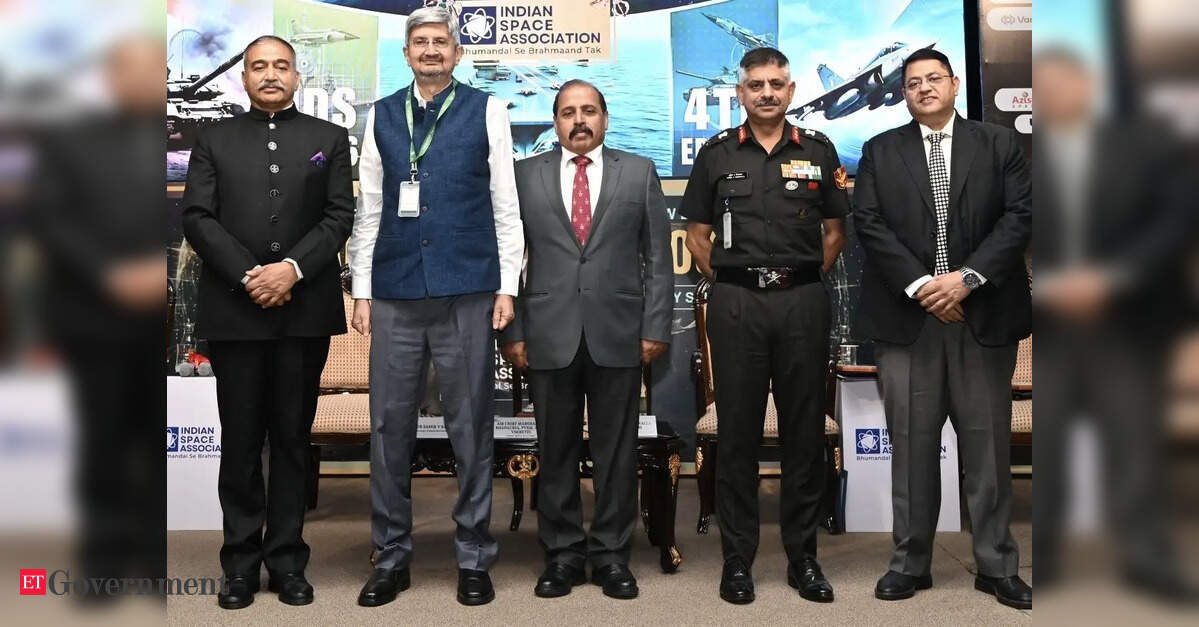
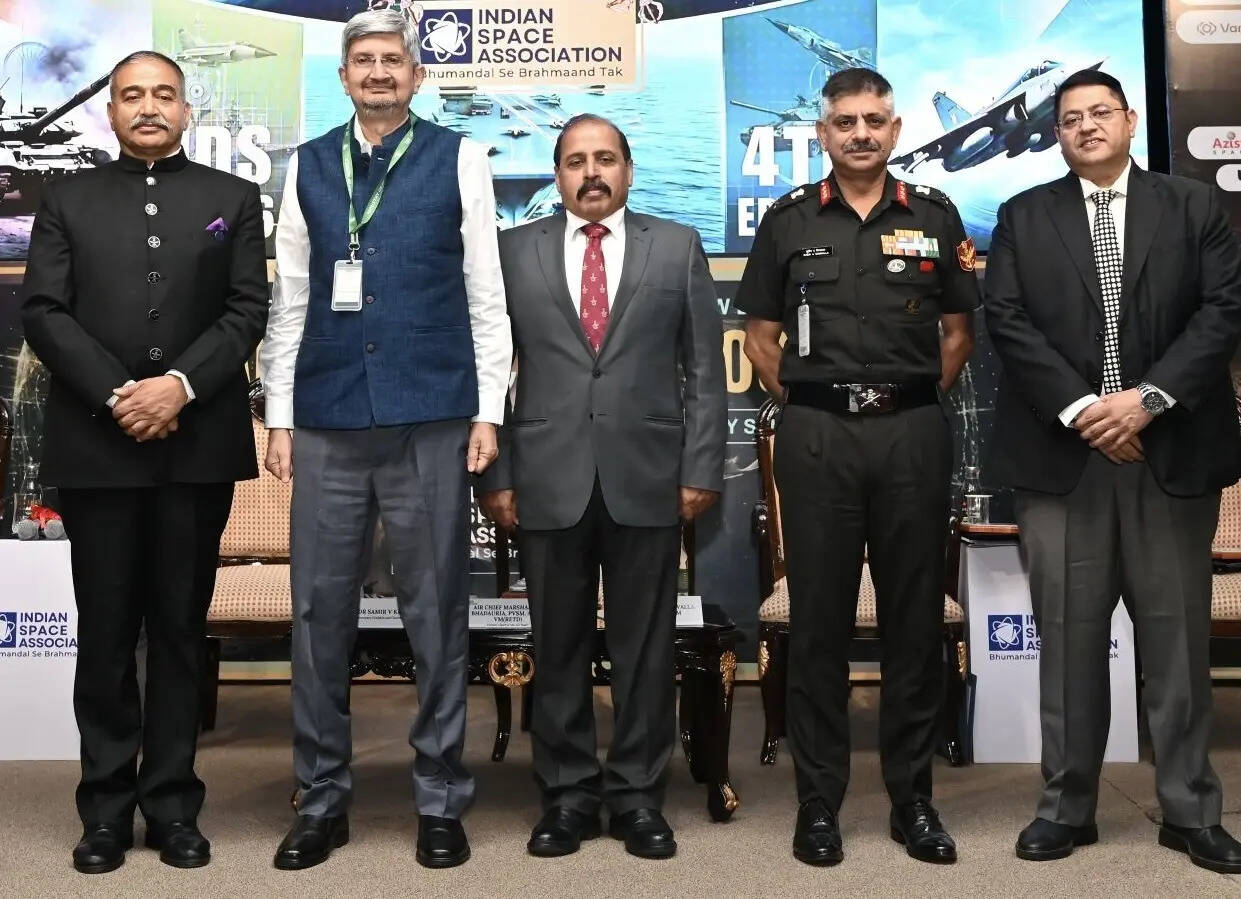
That strategic reality shaped the opening day of the Indian Defence Space Symposium (IDS) 2026, organised by the Indian Space Association (ISpA) in New Delhi, where senior defence officials, scientists, policymakers, industry leaders, and private space players converged to discuss how India can build resilient and sovereign capabilities in what is rapidly emerging as the newest theatre of conflict.
The two-day forum (April 23 and 24) comes at a time of heightened geopolitical instability, with conflicts in West Asia and Eastern Europe demonstrating how space-based intelligence, satellite communications, navigation systems, and precision targeting are increasingly shaping military outcomes. Against this backdrop, India’s defence establishment argued that the country can no longer treat space as a peripheral support function—it must now be viewed as a central pillar of national security strategy.
In a keynote virtual address, General Anil Chauhan delivered perhaps the most consequential strategic assessment of the day, arguing that space has fundamentally altered the character of warfare.
“The battlefield today is informed, shaped, and often decided by what happens in Earth’s orbit,” he said, noting that modern conflicts increasingly reflect what he described as “convergence warfare,” where space-based intelligence, surveillance, reconnaissance and precision targeting are integrated across multiple domains.
Drawing lessons from contemporary conflicts, including tensions involving Iran, Israel and the United States, General Chauhan observed that even actors without indigenous space infrastructure are now able to leverage satellite navigation and intelligence services. This democratisation of access, he warned, creates both strategic opportunities and vulnerabilities.
He argued that India must move away from dependence on a limited number of high-value satellites and instead build “distributed, resilient and proliferated architectures” supported by redundancy, inter-satellite links and rapid replenishment mechanisms. In an era where orbital assets may be targeted during conflict, survivability has become as important as capability.
A major theme of his address was the growing role of artificial intelligence in transforming military space operations. General Chauhan said AI would shift space systems from passive observation platforms to active decision-making instruments capable of generating predictive battlefield intelligence.
“Artificial intelligence must sit at the core, not at the periphery, of space architecture,” he said, explaining how AI-enabled systems can integrate satellite feeds, cyber intelligence, electromagnetic signatures and terrestrial sensors into real-time operational models. Such systems, he argued, would compress military decision cycles and give commanders significant strategic advantage.
He also stressed the importance of developing independent Positioning, Navigation and Timing systems to reduce vulnerability in future conflicts where adversaries may attempt navigation denial through jamming or spoofing attacks. Quantum-secure communications, anti-jamming technologies, zero-trust cyber architecture and secure semiconductor supply chains were identified as essential pillars of future military preparedness.
Perhaps most significantly, General Chauhan called for a structural shift in how India thinks about defence space development.
“The time has come to move from a procurement mindset to a mission-mode mindset,” he said.
He emphasised that India’s future space capabilities cannot be built by government institutions alone. Instead, he called for deeper integration between the armed forces, private industry, start-ups and academia to create dual-use infrastructure capable of serving both civilian and military objectives.
“If we fail in space, we will be forced to fight blind. However, if we dominate in space, we will fight with foresight,” he remarked.
Echoing this urgency, Dr. Samir V Kamat, Secretary of the Department of Defence R&D and Chairman of the Defence Research and Development Organisation, described space as the “dominant domain” that could determine the outcome of future wars.
He warned that India’s current investments remain inadequate for the scale of the challenge.
“Today, we spend only 0.65 per cent of our GDP on R&D and only 5 per cent of our defence budget on R&D. We need to invest much more if we are to catch up with our rivals,” he said.
Kamat emphasised that while some technologies can be sourced globally, critical strategic systems must remain sovereign and indigenous. He argued that India’s ability to compete with major powers will depend on significantly accelerating domestic research and innovation capabilities.
Lt. Gen. Zubin A Minwalla reinforced the importance of speed and institutional agility. He said India must avoid over-reliance on any single institution and instead create an ecosystem where government agencies, defence establishments and private companies operate in complementarity.
He highlighted the growing role of the Defence Space Agency, noting that it has evolved into a fully operational tri-service entity and could eventually mature into a full-fledged space command. However, he acknowledged that India continues to face dependencies in critical technologies and gaps in advanced indigenous systems.
Air Chief Marshal RKS Bhadauria delivered one of the sharpest critiques of India’s traditional procurement structures, arguing that legacy bureaucratic processes are slowing progress.
“The challenge is not technology. The challenge is how we are trying to implement change using legacy processes,” he said. He urged policymakers to abandon outdated systems if India is serious about achieving technological sovereignty in defence space capabilities.
From the private sector, Rahul Vatts highlighted the strategic importance of indigenous satellite communication capabilities, especially as India prepares to expand commercial satellite services. He stressed that secure communications infrastructure would be critical not only for defence preparedness but also for economic growth.
Meanwhile, Lt. Gen. A.K. Bhatt said India’s private sector has emerged as a crucial pillar of national capability but warned that dependence on imported technologies remains a major vulnerability.
The symposium also saw the release of three major reports focused on in-space servicing, geospatial AI models and long-term strategic priorities for India’s commercial space ecosystem.
Taken together, the discussions reflected a deeper strategic shift in India’s defence thinking. Space is no longer viewed merely as an extension of civilian scientific achievement led by Indian Space Research Organisation. It is increasingly being framed as a contested strategic domain where technological self-reliance, military readiness and industrial capability must converge.
The broader message from IDS 2026 was clear: in future wars, superiority may not be determined solely by armies, air forces or navies—but by which nation controls the orbital infrastructure that enables them all.