As India pushes toward its long-term ambition of becoming a $5 trillion economy, the spotlight is increasingly shifting to states that possess the scale, capital base, industrial depth, and policy ambition to drive that transformation. Few states embody that role more decisively than Maharashtra.
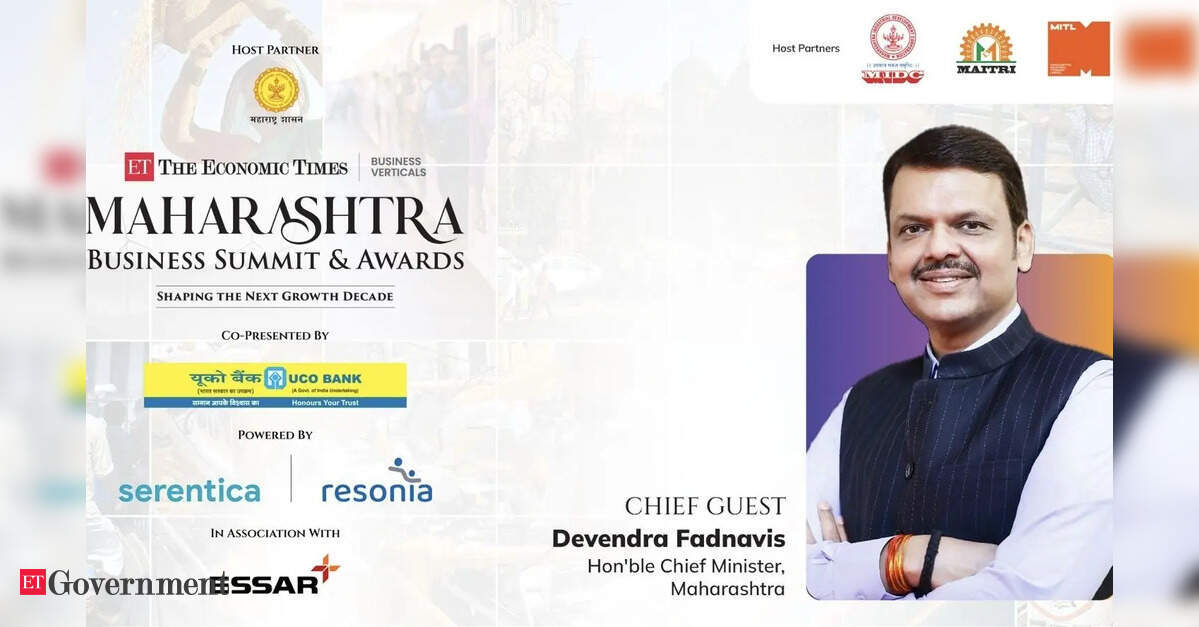
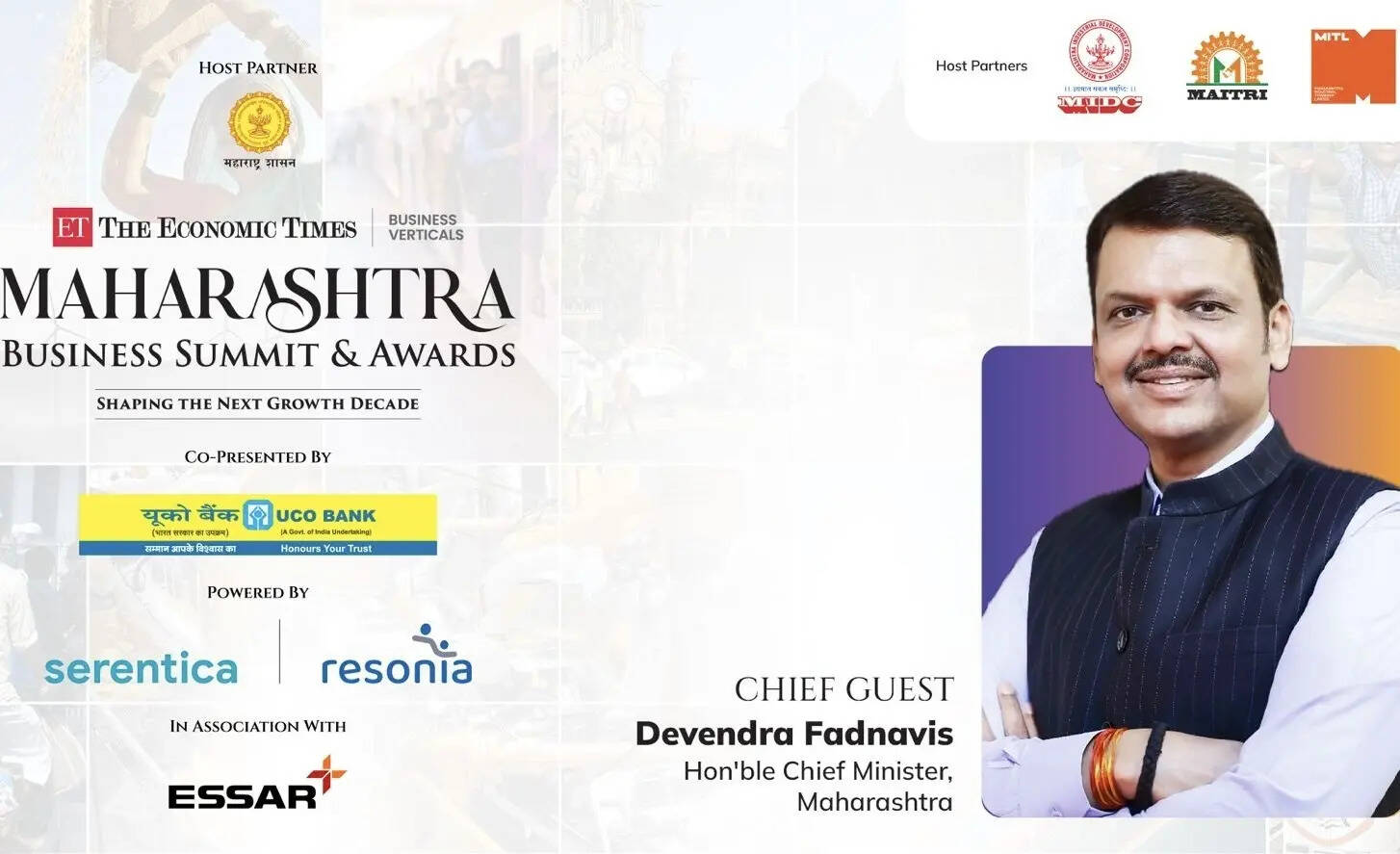
Against this backdrop, ETGovernment–The Economic Times is set to host the inaugural Maharashtra Business Summit & Awards 2026 on April 23–24 at Taj Lands End—a two-day forum that is expected to bring together some of the most influential figures from government, business, diplomacy, and global investment.
The summit is being headlined by Devendra Fadnavis, Chief Minister of Maharashtra, whose participation comes at a pivotal moment as the state sharpens its push to become India’s first trillion-dollar sub-national economy. His presence underscores the growing recognition that Maharashtra’s economic trajectory will have a disproportionate impact on India’s broader growth story.
But the summit is designed to be far more than a ceremonial gathering.
Several senior Union and state ministers, top bureaucrats, ambassadors, global CEOs, investors, and business leaders are expected to attend, making it one of the most significant public-policy and business platforms in the country this year.
At a time when global capital is becoming more selective and supply chains are being recalibrated, the summit seeks to position Maharashtra as a premier destination for investment, manufacturing, innovation, and infrastructure expansion. The timing is particularly significant.
India’s economic rise is increasingly being shaped by competitive federalism, with states competing to attract investment in sectors ranging from advanced manufacturing and logistics to renewable energy, semiconductors, digital services, and urban infrastructure.
Maharashtra remains central to that story—not merely because it houses India’s financial capital in Mumbai, but because of its deep industrial ecosystem, expanding infrastructure network, robust startup landscape, and strategic geographic advantage.
The summit’s agenda reflects these realities.
Over two days, policymakers and business leaders will deliberate on some of the most pressing questions shaping the state’s future. Conversations will focus on infrastructure modernization, urban transformation, energy transition, logistics efficiency, digital governance, MSME expansion, and the role of technology in building future-ready industries.
These discussions are expected to move beyond broad rhetoric. The summit has been structured as an outcome-oriented platform featuring keynote addresses, strategic panel discussions, closed-door roundtables, and high-level fireside conversations designed to facilitate practical collaboration between policymakers and investors.
That emphasis on execution is particularly important at a time when states are under pressure to translate ambitious announcements into measurable outcomes. Investors today are increasingly focused on policy stability, regulatory efficiency, ease of doing business, and long-term sustainability—areas where Maharashtra is seeking to strengthen its competitive advantage.
The participation of ambassadors and global stakeholders also signals another emerging reality: state economies are no longer operating in isolation. Foreign governments, sovereign funds, multinational corporations, and global institutions are increasingly engaging directly with Indian states to identify investment opportunities and strategic partnerships.
For Mumbai—India’s financial nerve centre—the summit also carries symbolic significance. It reinforces the city’s role as a gateway between domestic policy priorities and global capital flows.
The event will conclude with the Maharashtra Business Excellence Awards, which will honour organisations and leaders that have demonstrated exceptional innovation, leadership, and economic impact across sectors.
At a moment when India’s economic momentum is accelerating but global uncertainty remains high, the Maharashtra Business Summit 2026 arrives as more than just another conference.
It is emerging as a strategic forum where policy priorities, investment ambitions, and business execution are expected to intersect—and where conversations over two days in Mumbai could help shape the economic future of India’s most consequential state.