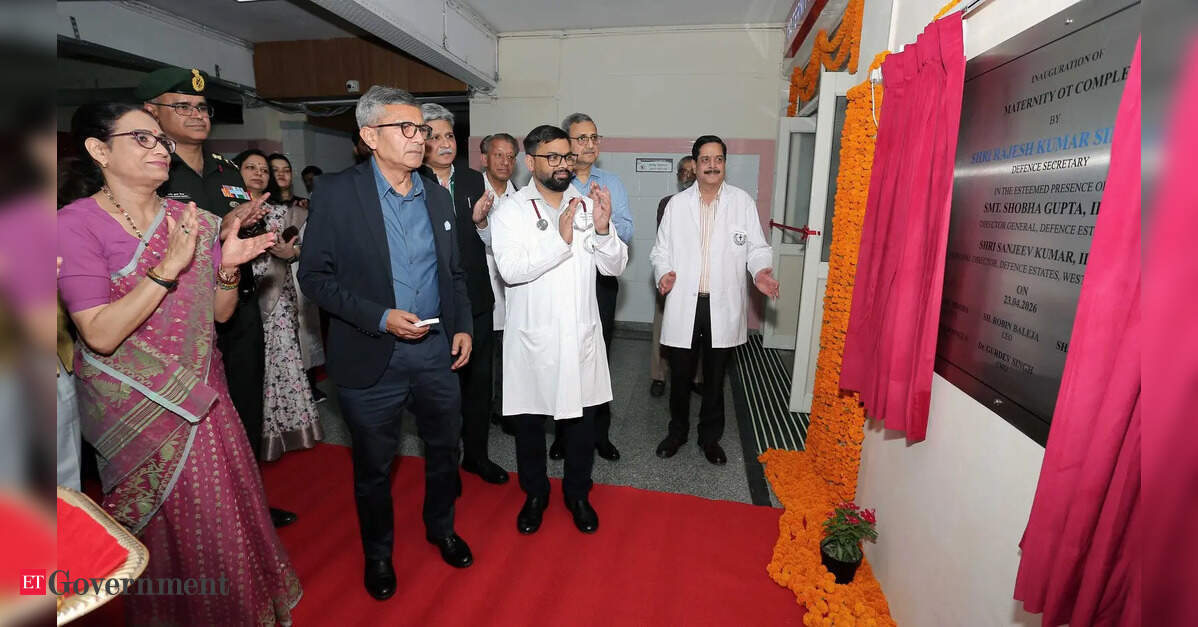
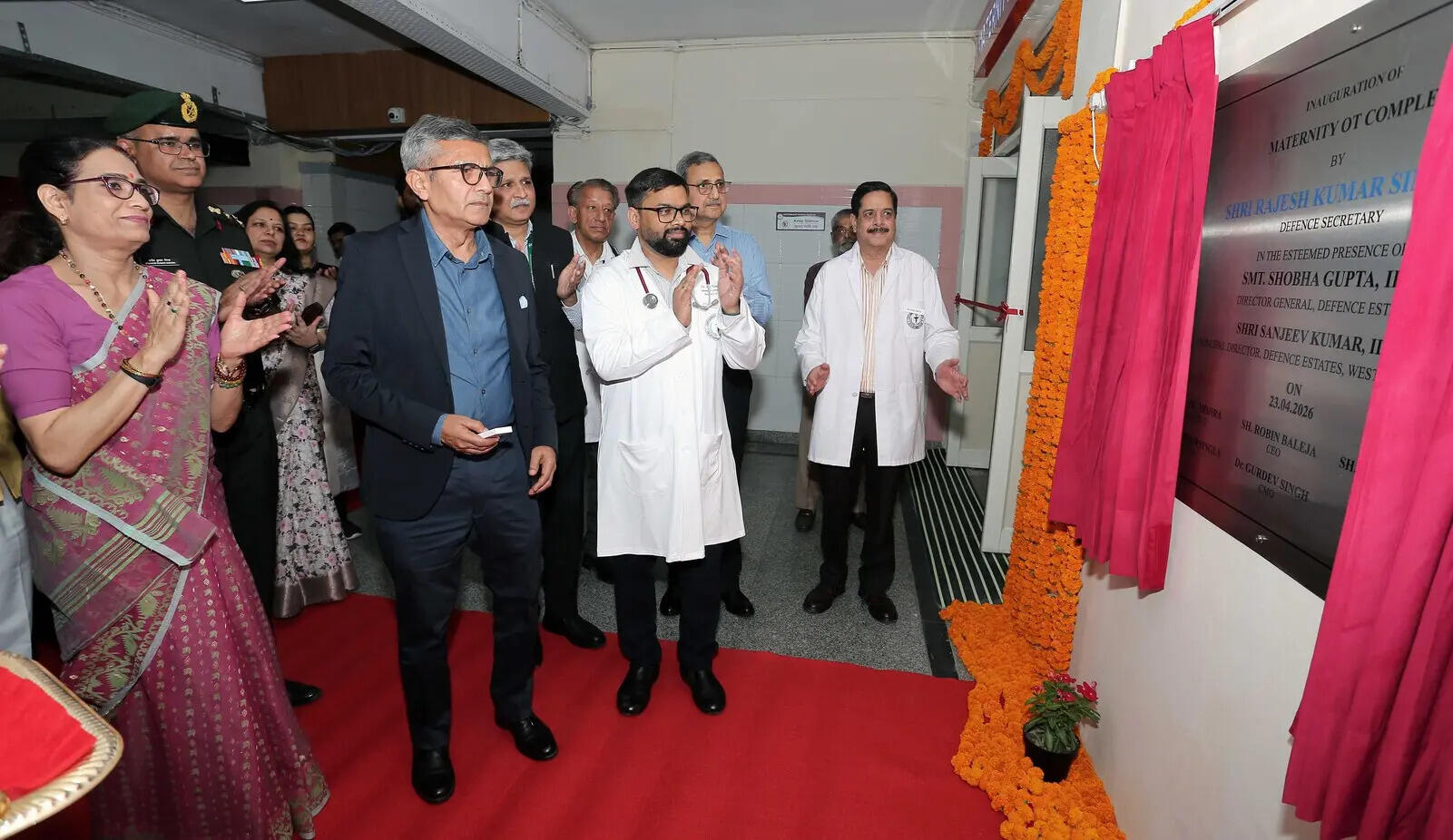
In a significant push towards modernising healthcare infrastructure in defence-administered civilian zones, Defence Secretary Rajesh Kumar Singh on Wednesday inaugurated a Robotic Orthopaedic System and a new Maternity Operation Theatre at the Cantonment General Hospital in Delhi Cantonment, marking a major technological upgrade in public healthcare delivery for residents of the area.
The inauguration ceremony was attended by Director General, Defence Estates, Shobha Gupta, along with senior officials and healthcare administrators. The newly launched facilities are expected to expand access to specialised medical services for residents of Delhi Cantonment as well as neighbouring municipal areas, where demand for quality healthcare infrastructure has continued to grow.
Speaking at the event, Rajesh Kumar Singh underscored the importance of upgrading healthcare systems in cantonment areas, stating that modern medical infrastructure is essential to improving public service delivery. He reaffirmed the government’s commitment to ensuring that residents have access to “high-quality medical services” through sustained investment in advanced healthcare facilities.
His remarks reflect a broader trend within India’s healthcare ecosystem, where both public and private institutions are increasingly adopting robotics, artificial intelligence-assisted diagnostics, and precision-driven surgical systems to improve outcomes while reducing procedural risks.
The newly installed robotic orthopaedic system represents one of the most notable technological additions to the hospital. Robotic-assisted orthopaedic procedures have emerged globally as a transformative development in surgeries involving knee replacements, hip replacements, spinal procedures, and trauma-related interventions. These systems enable surgeons to operate with far greater precision by using advanced imaging, real-time navigation tools, and robotic arms that minimise human error.
Medical experts argue that such systems significantly reduce surgical complications, improve implant positioning accuracy, lower blood loss, and shorten post-operative recovery periods. In India, robotic surgery has largely remained concentrated in premium private hospitals and tertiary care institutions. Its introduction at a cantonment hospital signals a gradual democratisation of advanced medical technologies.
Officials noted that the robotic system will substantially strengthen the hospital’s capacity to manage complex orthopaedic cases with greater efficiency and accuracy. For patients, this could translate into shorter hospital stays, faster rehabilitation timelines, and improved long-term outcomes.
Alongside orthopaedic advancements, the newly inaugurated Maternity Operation Theatre is expected to enhance maternal healthcare services in the region by providing safer and more comprehensive surgical care for expectant mothers. At a time when maternal health remains a critical pillar of India’s healthcare priorities, the addition of specialised maternity infrastructure is likely to improve emergency response capabilities and ensure better outcomes for mothers and newborns.
Director General Defence Estates Shobha Gupta described the initiative as an important step in strengthening healthcare delivery within cantonment zones. She noted that such interventions would improve community welfare and create a stronger healthcare ecosystem for residents dependent on these institutions.
The inauguration also offered a glimpse into an ambitious healthcare expansion roadmap for the Cantonment General Hospital. Officials presented plans for several upgrades scheduled over the next three months, including the establishment of a Dialysis Centre, expansion of laboratory facilities, upgrades to the Central Sterile Services Department (CSSD), and improvements to intensive care infrastructure.
Over the next year, the hospital is expected to witness a more comprehensive transformation with the planned addition of a Paediatric ICU, Neonatal ICU, CT Scan facility, MRI unit, Cancer Screening Centre, High Dependency Unit, Multispecialty Ward, and a dedicated Surgical ICU.
Taken together, these upgrades signal a broader effort to transform cantonment hospitals from basic healthcare facilities into technologically advanced multi-specialty institutions capable of serving both defence communities and civilian populations.
At a time when India is increasingly focused on strengthening healthcare accessibility while embracing cutting-edge medical innovation, Delhi Cantonment’s latest upgrade reflects how technology-led interventions are beginning to reshape healthcare delivery beyond metropolitan private hospitals and into public institutions serving ordinary citizens.