West Bengal’s political transformation is not merely the story of an election. It is the story of a society slowly attempting to reclaim its confidence after decades of ideological domination, political violence, institutional fear, and cultural stagnation.
It is also the story of lakhs of ordinary BJP workers, many of whom will never be known beyond their districts and booths, who continued to fight despite intimidation, social isolation, physical attacks, and years of political hopelessness.
For decades, Bengal functioned under two very different political dispensations, yet with strangely similar methods of political control. The Left Front ruled for over three decades with a deeply embedded organisational structure that extended into campuses, labour unions, cultural spaces, intellectual institutions, and village life. Dissent became difficult because politics was not merely electoral. It became social and institutional.
When Mamata Banerjee rose against the Left, Bengal expected liberation from this ecosystem. Instead, over time, many of the same instruments of political dominance survived under a different banner. Political violence remained. Cadre intimidation continued. Local syndicate culture deepened. Corruption allegations multiplied. Appeasement politics sharpened social fault lines. Institutions increasingly appeared partisan rather than neutral.
The tragedy of Bengal was that power changed hands, but political culture did not. It was in this atmosphere that the BJP’s rise became historically significant.
The BJP did not inherit Bengal politically. It built Bengal painstakingly through organisational endurance. Unlike many states where the party expanded through existing political structures, Bengal required entirely new ground level architecture to be created in a hostile environment.
This was not a movement born in television studios or air conditioned political discussions. It was built through workers travelling to remote villages, organising booth committees in areas where even displaying a BJP flag could invite violence. Thousands of workers faced false cases, attacks, economic pressure, and social boycott. Many lost livelihoods. Some lost their lives. Yet they persisted because they believed they were participating in something larger than a routine electoral contest.

From Cooch Behar to Purulia, from Jangalmahal to North 24 Parganas, the BJP slowly transformed from a marginal political force into Bengal’s principal ideological challenger. The movement succeeded because it tapped into emotions that had quietly accumulated across Bengal for years.
There was growing fatigue with corruption and local extortion systems. Recruitment scams created anger among unemployed youth. Syndicate culture generated resentment among ordinary citizens. Many people had normalised fear to such an extent that even the idea of voting freely began carrying emotional significance.
At another level, Bengal was also experiencing a civilisational and cultural restlessness.
The BJP understood that Bengal’s identity could not be reduced merely to electoral arithmetic or ideological binaries. Bengal is the land of Bankim Chandra Chattopadhyay, Swami Vivekananda, Rabindranath Tagore, Syama Prasad Mookerjee, Netaji Subhas Chandra Bose, Sri Aurobindo, Kazi Nazrul Islam, and Sarat Chandra Chattopadhyay. Its historical consciousness is deeply intellectual, spiritual, literary, and nationalist all at once.
The BJP’s Bengal movement therefore became more than electoral mobilisation. It became an attempt to psychologically reconnect Bengal with a broader sense of national and civilisational confidence. Leadership played a crucial role in shaping this transformation.
Prime Minister Narendra Modi brought scale, emotional connection, and aspirational politics to Bengal. He consistently addressed Bengal not merely as a state but as a civilisational force that had historically shaped India’s intellectual and national awakening.
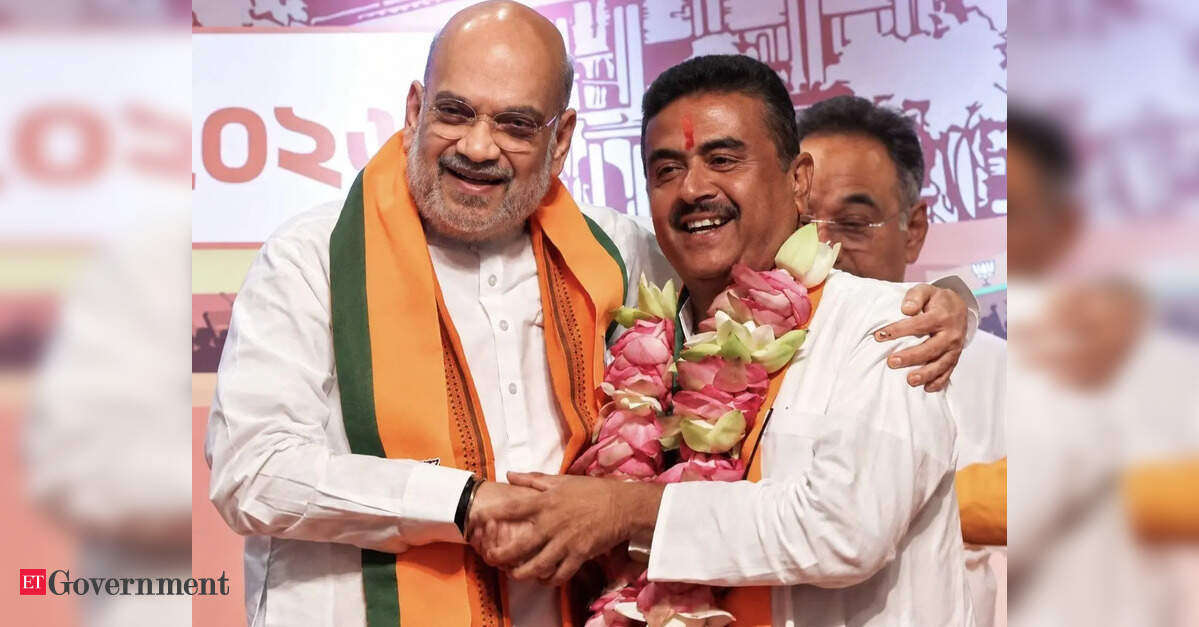
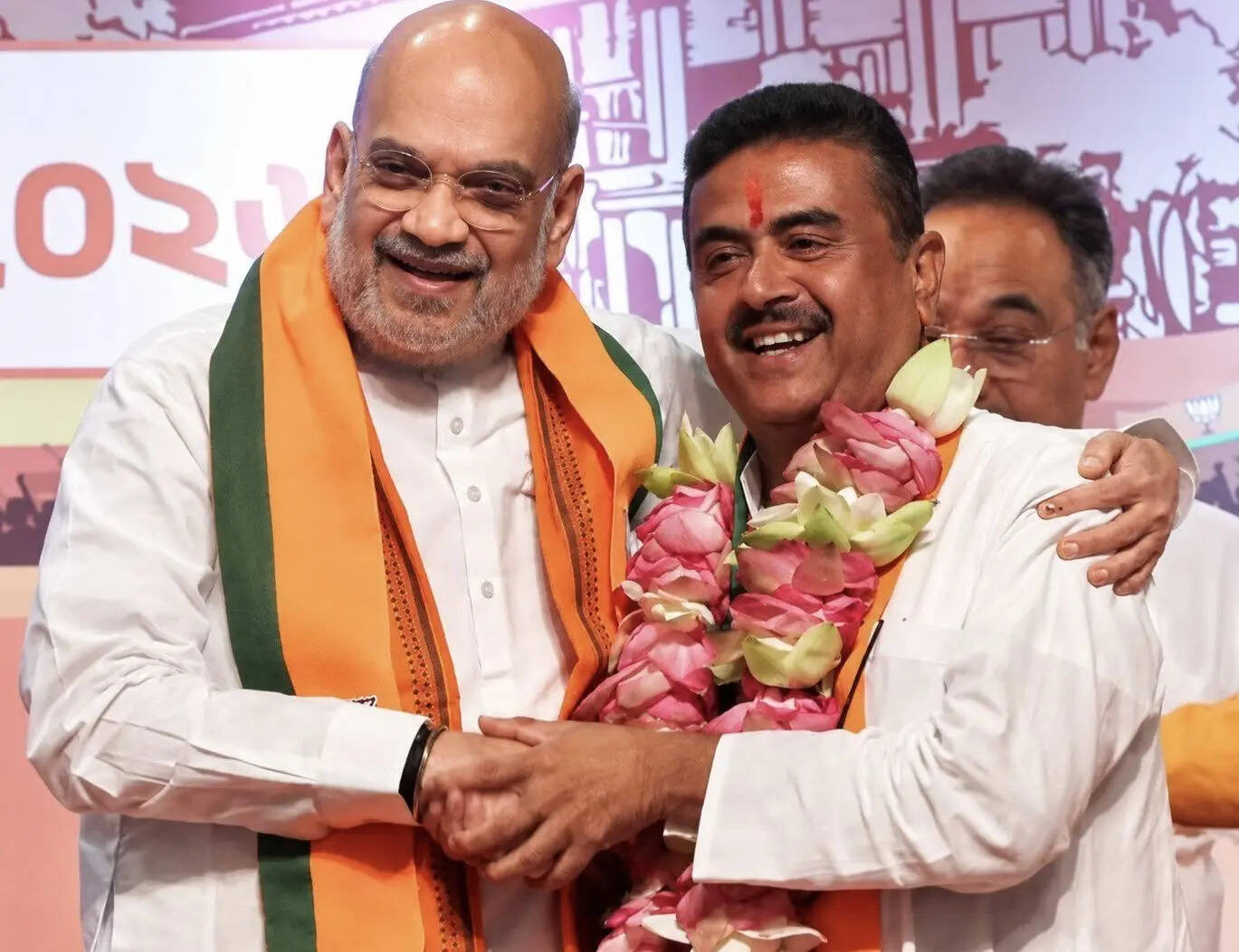
Amit Shah provided relentless organisational focus. Few leaders in modern Indian politics have invested so deeply in expanding a party in politically hostile terrain. Bengal was treated not as a symbolic experiment but as a long term ideological mission.
Leaders such as Dilip Ghosh helped build the BJP’s foundational organisational structure during years when the party lacked visibility and institutional support. Suvendu Adhikari emerged as the face of the decisive political breakthrough and eventually led the BJP to power, carrying with him the responsibility of converting electoral victory into administrative and cultural renewal.
Bhupender Yadav and Dharmendra Pradhan quietly strengthened organisational coordination and electoral management at crucial moments. Rupa Ganguly became one of the earliest cultural voices willing to publicly challenge the prevailing political atmosphere. Her emotional connect with ordinary Bengalis helped the BJP move beyond traditional political boundaries.
Agnimitra Paul represented a new generation of women leadership that connected strongly with youth and urban Bengal. Sukanta Majumdar sustained cadre morale during some of the most difficult organisational phases. Leaders including Arjun Singh, Locket Chatterjee, Nisith Pramanik, Shantanu Thakur, Jagannath Sarkar and Priyanka Tibrewal emerged as visible faces of resistance against an entrenched political system.
The role of the Matua community and refugee families from border districts was also historically significant. Their political participation reflected aspirations not merely for representation, but for dignity, citizenship, identity, and belonging. Women played an especially important role in Bengal’s transformation.
In district after district, women became not only voters but defenders of democratic participation itself. Many resisted intimidation quietly within their communities. Many became booth level organisers. Many spoke openly about violence and injustice despite enormous pressure.
During my tenure at the National Commission for Women, interactions with women from Bengal revealed how deeply political fear had entered everyday life. Yet one also witnessed extraordinary courage among ordinary women who had decided that silence could no longer remain the only mechanism of survival.
The anguish of the mother of the RG Kar victim became symbolic of a wider public frustration. The incident shook Bengal’s conscience because many people felt that institutions had become insensitive to ordinary citizens’ pain. The emotional response across Bengal reflected a larger yearning for dignity, justice, and accountability.
The BJP’s victory therefore cannot be explained merely through anti incumbency. It represents the cumulative effect of ideological perseverance, organisational discipline, emotional mobilisation, and public fatigue with political fear.
However, electoral victory is only the beginning. Now, under Chief Minister Suvendu Adhikari, Bengal enters a far more difficult phase. Winning power is easier than transforming political culture.
The real challenge before the new government is whether it can create a Bengal where democracy becomes normal again, where citizens can hold political opinions without intimidation, and where institutions function without partisan fear.
But political reform alone will not be enough. Bengal also requires cultural revival. Bengal was once India’s intellectual lighthouse. Its literature, theatre, music, poetry, cinema, and philosophical traditions shaped India’s modern consciousness. Over time, however, excessive politicisation weakened many cultural institutions.
The revival of Bengal must therefore include restoring artistic freedom, encouraging independent cultural spaces, and reconnecting younger generations with Bengal’s extraordinary intellectual heritage.
The works of Tagore, Vivekananda, Nazrul, Bankim Chandra, Sarat Chandra, and Syama Prasad Mookerjee cannot remain ceremonial references alone. Their spirit must once again shape public discourse and educational imagination.
Economic revival is equally critical.
For years, industry hesitated to invest in Bengal because of political uncertainty, labour unpredictability, cadre interference, and lack of policy confidence. Yet Bengal possesses enormous structural strengths. Its ports, intellectual capital, tea economy, tourism potential, river systems, and strategic location connecting mainland India with the Northeast and Southeast Asia position it naturally for economic resurgence.
If governance becomes transparent, politically neutral, and investment friendly, Bengal can once again emerge as a manufacturing, logistics, technology, and cultural economy hub. Kolkata, once among Asia’s great intellectual and commercial capitals, can reclaim its historical stature. Young Bengalis should not be compelled to leave their state in search of opportunity. Opportunity must return to Bengal itself.
The deeper lesson of Bengal’s political transformation is that ideology still matters in Indian democracy. Organisational perseverance still matters. Cultural identity still matters. And above all, ordinary workers still matter. Many political victories are built through temporary waves. Bengal was different. Bengal was built through accumulation of sacrifice, patience, belief, and endurance.
The BJP’s true achievement in Bengal will ultimately not be measured only through electoral numbers. It will be measured by whether Bengal once again becomes fearless, intellectually vibrant, culturally confident, economically aspirational, and emotionally connected to its own civilisational inheritance.
I am sure it will happen and when it happens Bengal’s transformation will not remain a regional political story. It will become a national one.
(The author is a Member of Parliament, Rajya Sabha; Views expressed are personal)