As the global geopolitical order undergoes transformation amid intensifying technological competition, supply chain realignments, and growing strategic tensions in the Indo-Pacific, Taiwan has emerged as one of the world’s most consequential technology powers.
From semiconductors and advanced electronics to cybersecurity and resilient manufacturing ecosystems, the island nation today occupies a central position in the global economy and strategic discourse.
At a time when India is accelerating its ambitions in semiconductors, artificial intelligence, electronics manufacturing, and trusted supply chains, engagement with Taiwan is acquiring increasing economic and geopolitical significance. Despite the absence of formal diplomatic relations, India and Taiwan have steadily expanded cooperation in trade, technology, education, healthcare, and strategic industries.
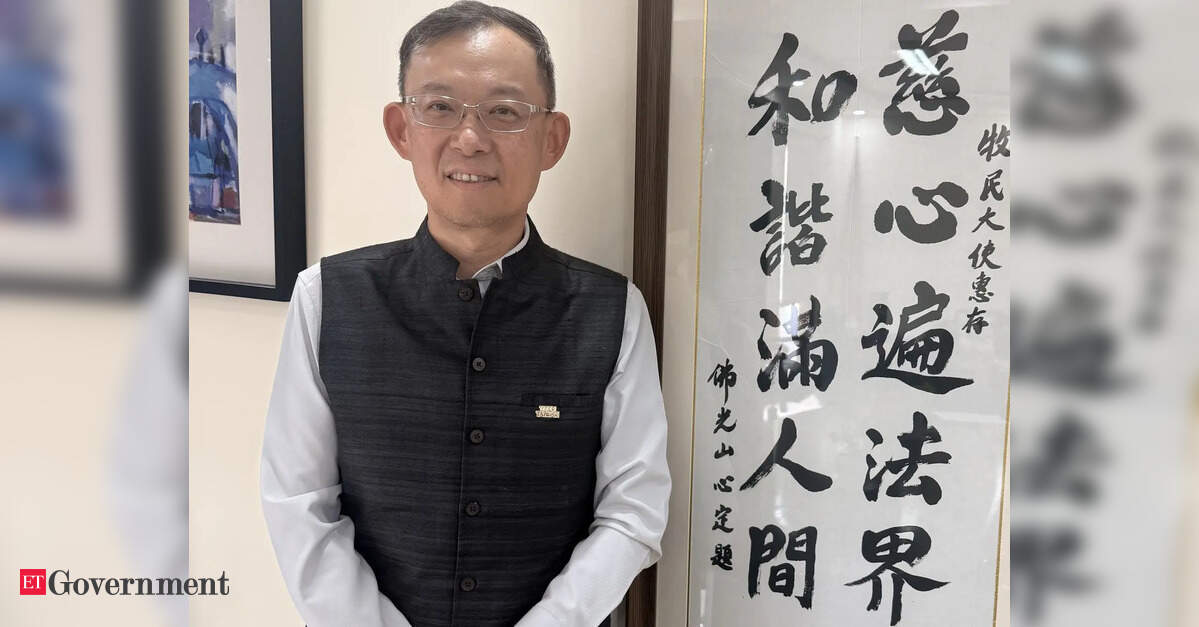
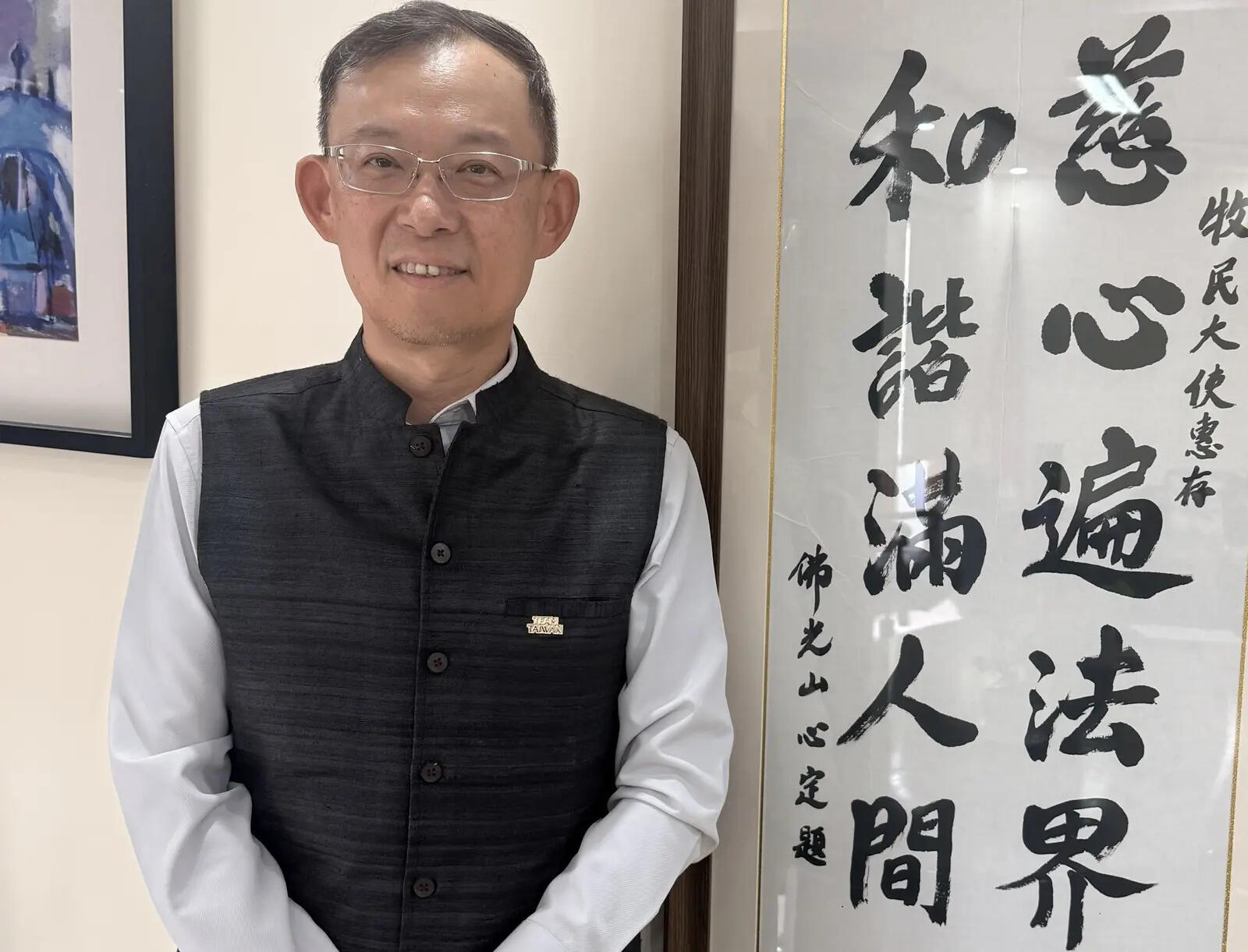
In this conversation with Anoop Verma, His Excellency Dr. Mumin Chen, Representative of the Taipei Economic and Cultural Center, discusses the future of India–Taiwan cooperation in semiconductors, talent development, artificial intelligence, cybersecurity, and advanced manufacturing.
Edited excerpts:
Taiwan has emerged as the nerve centre of the global semiconductor industry, with companies like Taiwan Semiconductor Manufacturing Company playing a foundational role in global supply chains. India is also trying to build its own semiconductor ecosystem through the India Semiconductor Mission. Where do you see the most realistic areas of collaboration between India and Taiwan in chip fabrication, design, packaging, talent development, and supply chain resilience?
If you ask me about the most realistic area of cooperation, I would say talent cultivation. For India to develop its semiconductor industry, infrastructure and capital are important, but the most important factor is skilled engineers. When Taiwan began developing its semiconductor industry in the 1970s, one of the first steps was to send young engineers to the United States to learn advanced technologies and then bring them back to serve the country.
India already has many strengths. It is a large economy, it can attract international investment, and its infrastructure is improving rapidly. But in terms of semiconductor talent, India still has to catch up. This is an area where Taiwan can contribute significantly. Taiwan has around 150 universities, many of which offer semiconductor-related programmes. Through talent exchanges, training programmes, and academic cooperation, I believe India and Taiwan can establish a very practical and meaningful partnership.
India has announced several semiconductor manufacturing projects in recent years. From Taiwan’s perspective, what are the key policy and ecosystem lessons India must learn if it wants to become a serious semiconductor manufacturing hub?
India must understand that semiconductors are not just one industry; they represent an entire ecosystem. The success of the semiconductor industry depends on building a complete supply chain around it. Taiwan succeeded because companies such as TSMC can find almost all their suppliers within a short distance. That level of industrial concentration creates efficiency and innovation.
Taiwan also has the advantage of being geographically compact, with semiconductor-related industries located close to one another. For India, the challenge is to build concentrated industrial clusters where related industries can work together. This is more important than simply distributing investments across different states. I understand that in a democracy there is always a desire to balance regional development, but semiconductor manufacturing requires concentration of resources and industries. That is how strong ecosystems are built.
Taiwanese companies such as Foxconn already have a major presence in India. Do you see Taiwanese investments moving beyond assembly operations into advanced manufacturing, research and development, and semiconductor fabrication?
I believe that transition has already started. Earlier this year, Foxconn and HCL announced a joint venture project in Greater Noida for a semiconductor packaging and testing plant. Some people may say packaging and testing are not the most advanced parts of the semiconductor industry, but there are different levels even within packaging and testing, and this project will involve advanced technologies.
The chips produced there will effectively become the first “Indian chips” manufactured and tested in India. What Foxconn is doing reflects a practical strategy. India has to move step by step. Taiwan’s foundry companies, such as TSMC, specialise in the most advanced chip manufacturing in the world, but India is still building its capabilities. What companies like Foxconn are doing today can help India gradually acquire technology, build expertise, and eventually develop a strong domestic semiconductor ecosystem.
The global semiconductor race is increasingly being shaped by geopolitical competition between the United States and China. How does Taiwan view India’s rise as a trusted technology partner in an era of supply chain diversification and “China Plus One” strategies?
India will play a key role in the new global supply chain architecture. In many sectors, especially information technology and electronics, the world still depends heavily on China for low-end manufacturing and components. But countries are increasingly seeking alternatives because relying excessively on one country creates strategic vulnerabilities.
India has tremendous potential and many advantages in building these alternative supply chains. Taiwan is willing to cooperate with India not only in technology but also in related industrial sectors. At the same time, India should pay closer attention to the situation in Taiwan because the world’s most advanced chips are still manufactured there.
The security of Taiwan and stability in the Taiwan Strait are not only important for Taiwanese people; they are important for the entire world. If Taiwan becomes unstable or is militarily overtaken, global supply chains and economies will suffer. India should not view Taiwan only as a trade or technology partner. India can also become a stakeholder in maintaining peace and stability in the region.
India and Taiwan do not have formal diplomatic relations, yet economic and technological engagement has expanded significantly. Do you believe the relationship remains underleveraged?
I usually say that India and Taiwan have substantial relations rather than focusing on the absence of formal diplomatic ties. Because of international realities, our engagement operates within a particular framework, but the relationship has made tremendous progress in recent years.
At the same time, we are not fully satisfied. One important area that needs improvement is greater interaction between Indian elected representatives and Taiwan. Parliamentarians, state government officials, and policymakers from India should visit Taiwan more frequently to understand what Taiwanese industries can offer and where partnerships can be built.
Many Taiwanese companies still do not fully understand the Indian market. India is a large country with many opportunities. More official visits and exchanges would help Taiwanese investors better understand India’s strengths and priorities. I should also point out that lawmakers and governors from many other countries regularly visit Taiwan. More than 25 governors from the United States have visited Taiwan, and in 2025 alone, more than 500 parliamentarians from around the world visited Taiwan. Unfortunately, no Indian Member of Parliament visited Taiwan during that period. I believe this is something that should change.
How do policymakers in Taiwan interpret China’s long-term strategic objectives in the Indo-Pacific?
There is no doubt that China wants to become the dominant power in the Indo-Pacific militarily, politically, and economically. But if a country wants to become a respected leader, its policies must be attractive and its relations with neighbours must be stable.
China’s relations with countries such as Japan, Taiwan, and India have become increasingly tense because of its aggressive policies. From Taiwan’s perspective, China’s actions over the past several years have made neighbouring countries uneasy. If China truly wants regional leadership, it must reconsider its approach. Otherwise, it becomes very difficult for neighbouring countries to trust China, conduct business confidently, or respect its leadership.
China’s Belt and Road Initiative has significantly expanded Beijing’s influence across South Asia and beyond. How does Taiwan interpret China’s broader regional strategy?
China’s Belt and Road Initiative has undoubtedly changed the geopolitical landscape across Asia, the Middle East, and Africa. Many countries have become more dependent on Chinese support and investment. But an important question must be asked: who actually benefits from these projects? Is it the people of those countries, or only governments and political elites?
Taiwan’s approach is very different. In our relations with partner countries, we focus more on healthcare, education, and social welfare rather than large infrastructure projects. We believe projects in health and education directly benefit ordinary people. This reflects a broader difference between Taiwan and China in the philosophy of international engagement.
Taiwan has maintained political autonomy despite decades of economic interdependence with China. What lessons could India learn from Taiwan’s experience?
The situation has changed significantly in recent years. Before 2024, Taiwan’s trade dependence on China was around 35 to 40 percent. But in 2025, the United States replaced China as Taiwan’s largest trading partner.
Similarly, before 2020, around 60 to 70 percent of Taiwan’s outbound investment went to China. Last year, investment into China accounted for only about 5 percent of Taiwan’s outbound investment. So if you ask which country has most successfully reduced dependence on China, I would say Taiwan.
China’s increasingly rigid and hostile policies pushed many Taiwanese companies to diversify away from China. Taiwan has rebuilt supply chains with the United States, Japan, Southeast Asia, and increasingly with India. India can also work with trusted partners in the region to reduce excessive dependence on Chinese imports and supply chains.
India remains heavily dependent on Chinese imports in several sectors. What practical lessons can India learn from Taiwan’s strategy of reducing dependence on China?
India needs a clear direction and a long-term strategy. Not all imports are the same. For example, India imports machinery and electronic components from Taiwan, which help build India’s own manufacturing capabilities. But many imports from China are low-cost finished products or components that do not contribute to building indigenous industry.
Taiwanese companies do not come to India to dump cheap products into the market. When I visit trade exhibitions in India, Taiwanese companies are mainly showcasing advanced machinery and industrial technologies. That is Taiwan’s advantage. Taiwan can become a true strategic partner for India because our exports help India strengthen its own industrial base.
Beyond semiconductors, which sectors offer the greatest potential for deeper India-Taiwan cooperation?
Artificial intelligence is one major area. Taiwan has strong capabilities in AI-related technologies and applications, while India has enormous potential because of its scale and talent base. Cybersecurity is another important sector. Taiwan has extensive experience dealing with cyberattacks, especially from China, and this is an area where both sides can cooperate closely.
There is also significant potential in drones and UAV technologies. Taiwan has developed drone manufacturing systems that are independent of Chinese components. As drones become increasingly important in modern warfare and civilian applications, this could become another strategic area of collaboration between India and Taiwan.
Taiwan has once again not been invited to the World Health Assembly despite its globally recognised healthcare system. What is your response to this situation?
Taiwan’s healthcare system is widely regarded as one of the best in the world. During the COVID-19 pandemic, Taiwan demonstrated strong capabilities in public health management, digital health systems, and medical technology. Taiwan has valuable expertise to contribute to the global health community.
Yet Taiwan continues to be excluded from international health organisations such as the World Health Assembly because of political pressure from China. We believe this is unacceptable. Health issues should not be politicised. Taiwan deserves a voice in global health discussions because we can make meaningful contributions.
When China claims to care about the welfare of Taiwanese people while simultaneously blocking Taiwan’s participation in global health forums, it exposes a contradiction. We hope countries such as India will support Taiwan’s participation in international health mechanisms so that Taiwan’s expertise can benefit the global community.