In a major milestone for India’s semiconductor and electronics manufacturing ambitions, Rajasthan on Thursday formally entered the country’s emerging semiconductor ecosystem with the inauguration of the state’s first semiconductor facility at Bhiwadi.
The development marks not only a strategic industrial shift for Rajasthan, but also reflects the broader transformation underway in India’s electronics manufacturing architecture under the Union government’s semiconductor and digital industrialisation push.
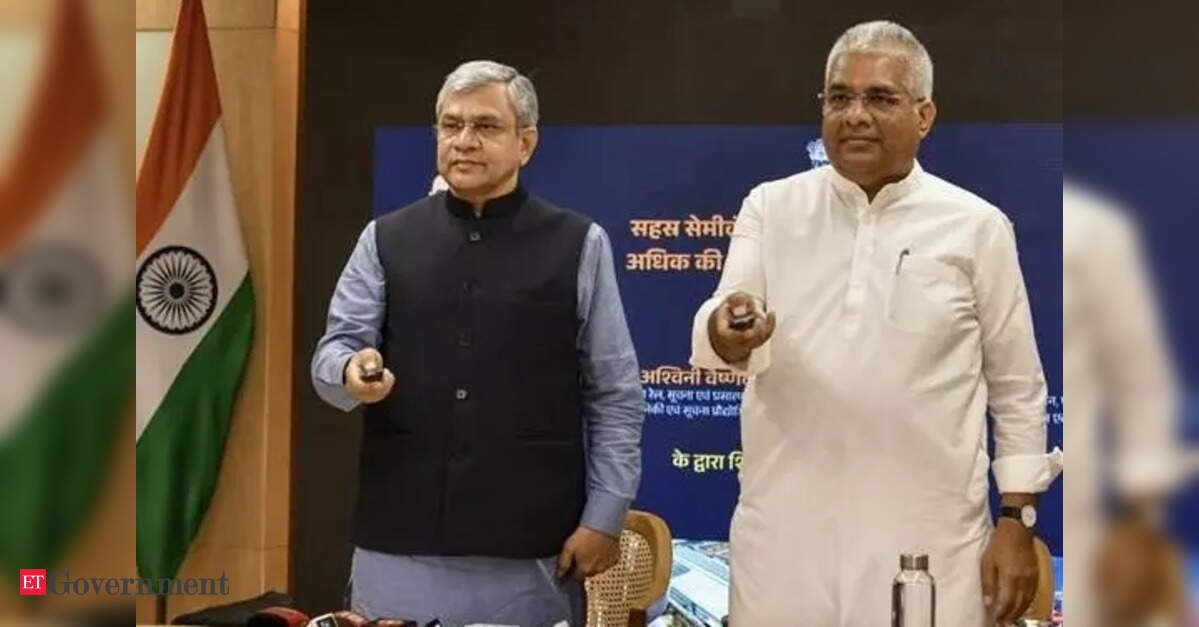
The Semiconductor ATMP/OSAT facility established by Sahasra Semiconductors Pvt. Ltd., alongside the Electronics Manufacturing Cluster (EMC) developed by ELCINA at Salarpur, Khushkhera in Bhiwadi, was virtually inaugurated by Ashwini Vaishnaw in the presence of Bhajan Lal Sharma and Bhupender Yadav.
The project assumes strategic significance at a time when semiconductors have become central to geopolitical competition, supply chain resilience, technological sovereignty, and advanced manufacturing capability. India’s semiconductor strategy, driven through initiatives such as the India Semiconductor Mission, SPECS, EMC and PLI schemes, seeks to position the country as a credible alternative manufacturing and packaging destination in the global electronics value chain.
Calling the inauguration a “historic day” for Rajasthan, Ashwini Vaishnaw said the state’s entry into semiconductors represented its participation in one of the world’s most strategically important industries. He pointed to the rapid growth of India’s electronics sector over the last twelve years, noting that electronics manufacturing had expanded nearly six-fold to approximately ₹13 lakh crore, while exports had touched around ₹4.24 lakh crore. He added that mobile phones had now emerged as India’s leading export commodity.
The minister credited this transformation to Prime Minister Narendra Modi’s emphasis on electronics and semiconductors as core sectors for national growth and strategic autonomy. According to him, schemes such as the Electronics Component Manufacturing Scheme (ECMS), Electronics Manufacturing Clusters (EMC), India Semiconductor Mission (ISM), and Production Linked Incentive (PLI) programmes were being implemented in close coordination with state governments and industry stakeholders.
For Rajasthan, the development signals a diversification beyond its traditional industrial identity. Bhajan Lal Sharma said the state government had recently introduced the Rajasthan Semiconductor Policy in March 2026 and was prioritising the development of the Delhi NCR-adjacent belt as a high-technology manufacturing hub.
Bhupender Yadav observed that while Bhiwadi had historically been associated with the automobile sector, the region was now steadily evolving into an electronics and semiconductor manufacturing destination as well.
At the heart of the initiative is the ELCINA Electronics Manufacturing Cluster spread across 50.3 acres and developed with a project cost of ₹46.09 crore, including direct Government of India support of ₹20.24 crore under the EMC scheme. The cluster has been established through a collaborative Special Purpose Vehicle promoted by MSME industry players under the banner of ELCINA.
The facility has been equipped with industrial infrastructure designed to support advanced electronics manufacturing, including uninterrupted power and water supply, internal road networks, centralised administrative facilities, testing and training centres, and a dedicated Skill Development Centre with laboratories and smart classrooms. Its strategic location near the National Capital Region, supported by strong multimodal connectivity, is expected to strengthen its attractiveness for future electronics investments.
The cluster has already attracted planned investments exceeding ₹1,200 crore from 20 companies operating across semiconductor packaging, electronic components, RFID technologies, EV parts, industrial electronics and air-conditioning systems. Eleven companies are already operational, with cumulative investments crossing ₹900 crore and employment generation exceeding 2,700 jobs.
Among the companies currently operating within the cluster are Sahasra Semiconductors Pvt. Ltd., Sahasra Electronics, E-Pack Durable and Electronics Sector Skills Council of India.
The Sahasra Semiconductors facility itself carries particular symbolic importance because it represents India’s first Small and Medium Enterprise-led semiconductor unit to begin commercial production of semiconductor chips. Developed under the Ministry of Electronics and Information Technology’s SPECS programme with an investment exceeding ₹150 crore, the facility spans 57,000 square feet and includes Class 10K and 100K cleanroom infrastructure.
The unit will package memory chips used in products such as Micro SD cards and flash storage devices, along with LED driver integrated circuits, eSIMs and RFID products. At present, the facility has an annual packaging capacity of 60 million semiconductor units, with plans to scale production to nearly 400–600 million units annually over the next two to three years.
Importantly, more than 60 percent of the facility’s production is already being exported to international markets including the United States, Germany, France, Eastern Europe, China and Nepal. The company is also moving towards indigenous semiconductor product research and development, including LED driver chips and other semiconductor solutions.
Simultaneously, the facility aims to support skill development and workforce training in semiconductor packaging and high-technology manufacturing through collaboration with technical institutions and the Electronics Sector Skills Council of India.
The emergence of semiconductor packaging and electronics manufacturing capacity in Rajasthan illustrates a deeper shift underway in India’s industrial strategy. While fabrication plants remain capital-intensive and technologically complex, semiconductor packaging, testing, assembly and OSAT capabilities are increasingly being viewed as viable entry points into the global semiconductor ecosystem.
Facilities such as Sahasra’s could therefore become important building blocks in India’s long-term ambition to reduce import dependence, strengthen supply chain resilience, and establish technological depth across the electronics value chain.
The inauguration was conducted virtually in response to Prime Minister Narendra Modi’s appeal to reduce fuel usage wherever possible in view of the prevailing global situation.