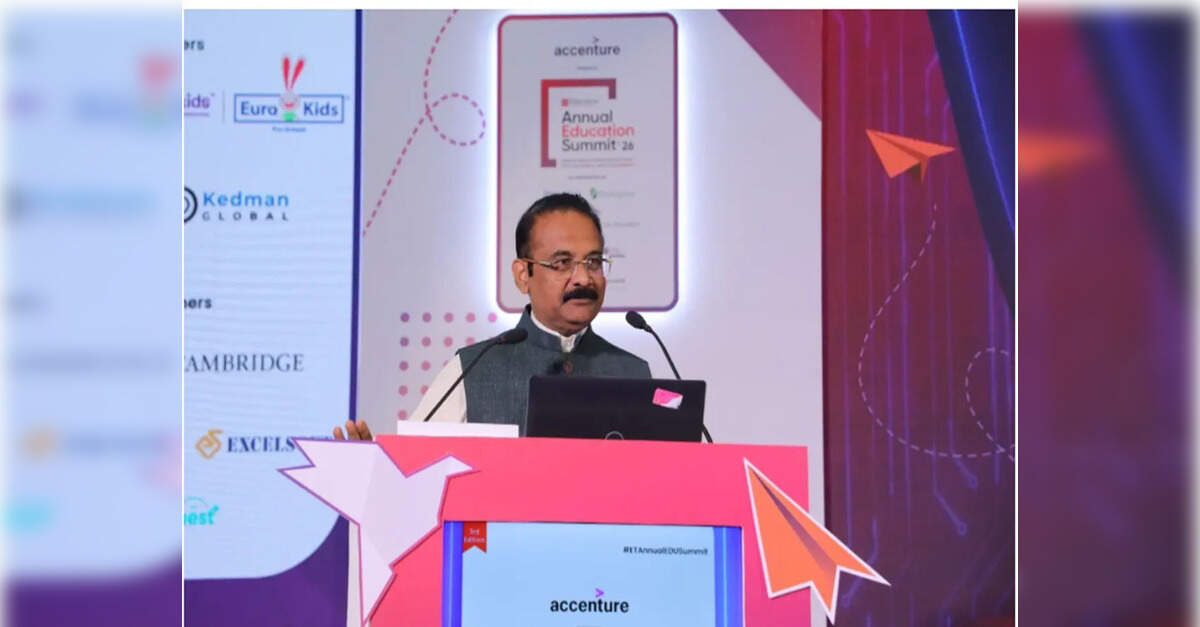
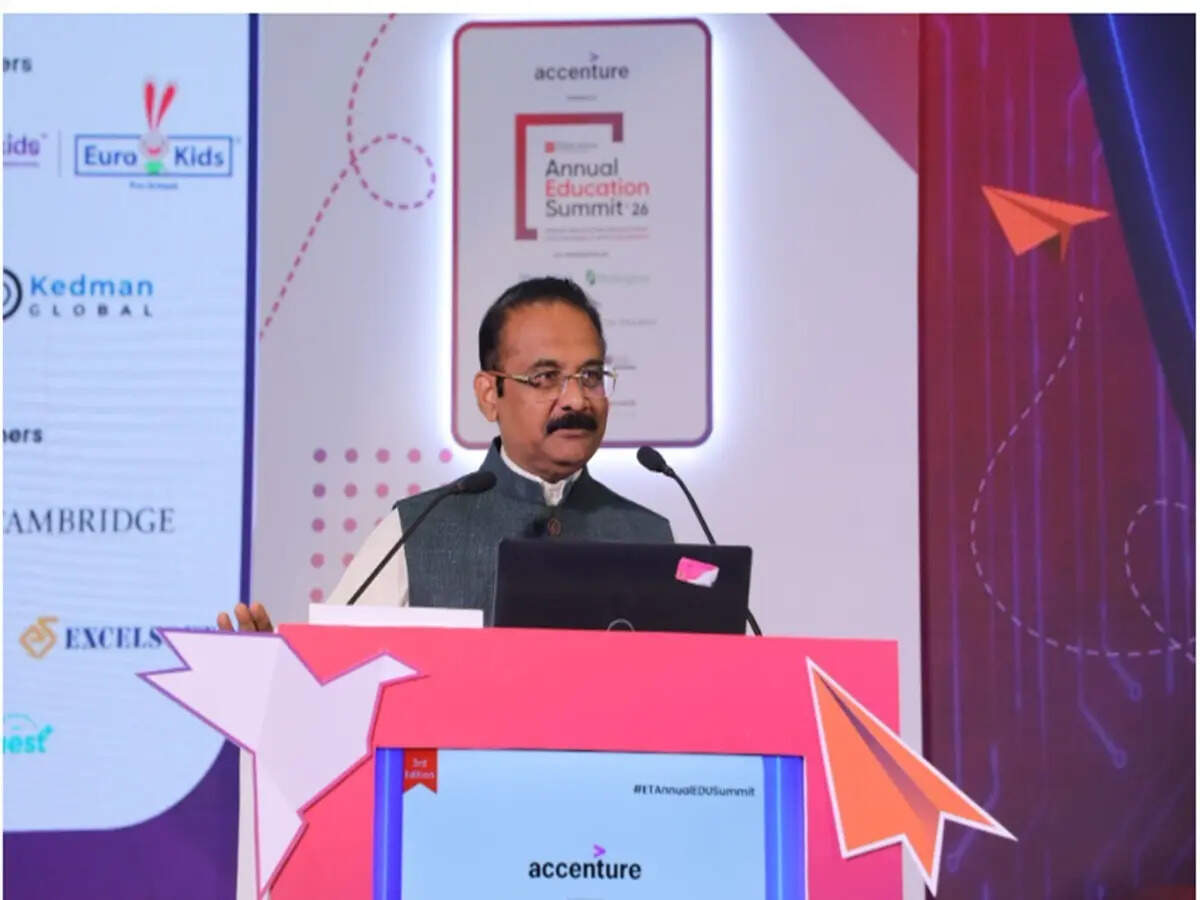
India’s education transformation must move beyond incremental reforms and evolve into a deeper revolution that creates entirely new norms for learning, employability and student development, said Dr Ashok Kumar Mittal, Member of Parliament (Rajya Sabha) and Founder Chancellor, Lovely Professional University.
Delivering his remarks during the inaugural session of the third edition of the ETEducation Annual Education Summit 2026, centred around the theme “India’s Education Revolution: For the World, With the World,” Mittal said education should no longer be viewed merely as a social priority but as a strategic national lever that determines India’s future economic growth and global competitiveness.
He argued that Indian higher education must now prepare students not simply to earn degrees or clear examinations, but to solve problems, make decisions, adapt to technological shifts and build meaningful careers.
“Transformation means changing the existing norms, and revolution means creating new norms,” Mittal said, calling for a shift in the national education conversation from improving legacy systems to designing new models aligned with future realities.
A key pillar of this transition, according to Mittal, is moving from classroom-led instruction to real-world application. He said students across disciplines should gain practical exposure as part of their learning journey rather than relying only on theoretical assessments.
Drawing examples across fields, Mittal suggested management students should experience buying, branding and selling products; finance students should gain supervised market exposure; fashion students should create market-ready products; and journalism and film students should be evaluated through real audience engagement.
“Real-life learning is important, not large learning, not simulation learning,” he said, emphasising that education systems must increasingly reward application and outcomes rather than information retention.
Mittal also urged institutions to embrace artificial intelligence as an enabler rather than a disruption to resist.
“AI is not the enemy; AI is a friend,” he said.
He argued that AI literacy should not remain confined to technical disciplines and instead become embedded across programmes, including languages, humanities and professional education. According to Mittal, future-ready institutions will be those that make technology readiness a foundational educational outcome.
Another major reform area, he said, is expanding student participation in institutional decision-making.
“Students are not the decision makers. We are the decision makers,” Mittal observed, arguing that universities should create mechanisms through which students contribute to discussions around curriculum, internships and learning design.
Mittal also highlighted the growing role of digital identity in employability and career outcomes. He said students should be encouraged to build professional visibility through platforms such as LinkedIn, blogs, newsletters and digital portfolios as part of career preparation.
“Social media is the reality. We can’t escape,” he said, adding that employers may increasingly evaluate candidates not only through academic records but also through digital presence, audience engagement and demonstrated capability.
Calling for broader measures of student success, Mittal proposed that learners should graduate with stronger academic, decision-making, social and entrepreneurial profiles rather than relying solely on grades.
His final emphasis was on career-linked education and entrepreneurial capability. Entrepreneurship, he said, should not be seen only as creating startups but as developing mindsets that make graduates more effective in jobs and future ventures.
“Every student should pass out with a career degree,” Mittal said.
His remarks reflected a broader shift underway in Indian higher education—one that aligns with the summit’s central message that India’s education revolution will be shaped not merely by scale, but by its ability to create globally relevant, future-ready and innovation-driven learning models.