 “>
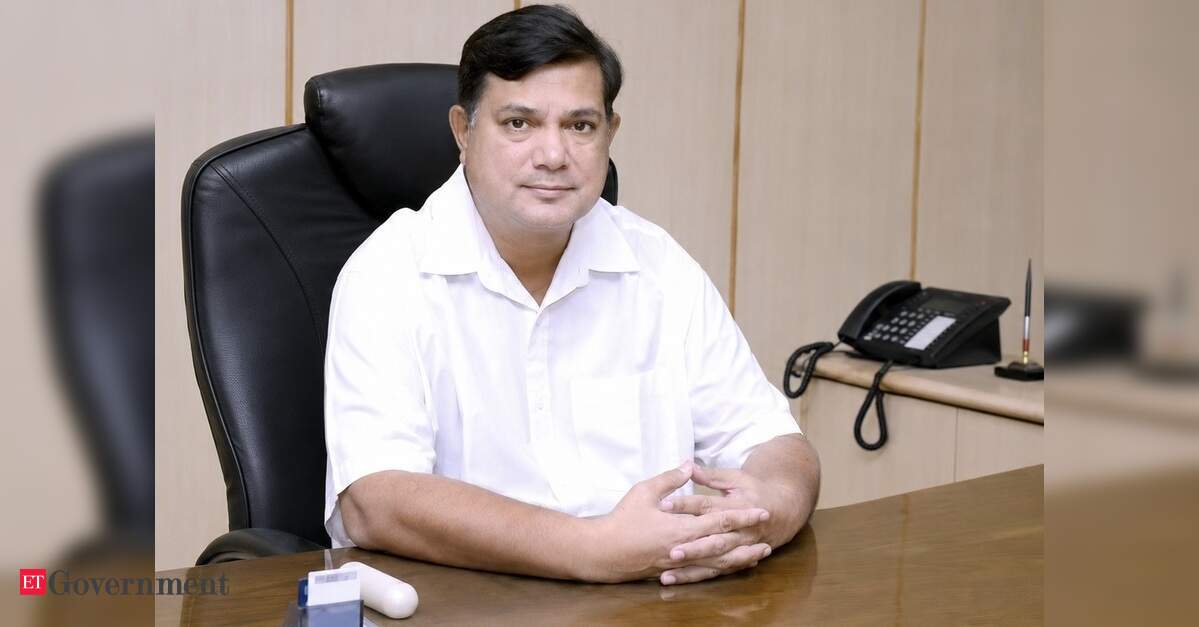
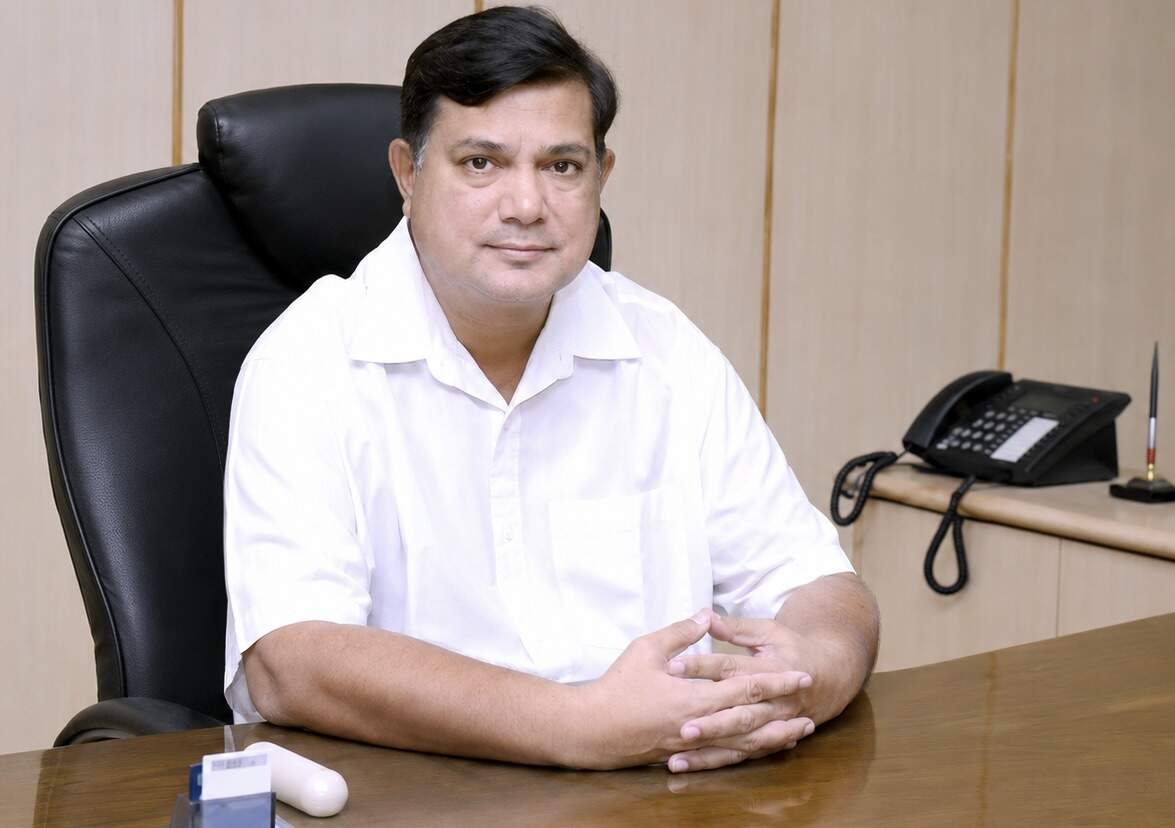
“>For close to four decades, K. K. Srivastava has been associated with one of India’s most important constitutional institutions—the Office of the Comptroller and Auditor General (CAG) of India. Over a 37-year career, he has held senior audit and administrative positions across several states, including Puducherry, Bihar, Jharkhand, Madhya Pradesh, Rajasthan, Gujarat and Kerala, before moving to the CAG headquarters as Additional Deputy Comptroller and Auditor General.
His professional journey has provided him with a rare vantage point on the functioning of public institutions, government expenditure, financial accountability and the challenges of governance. Beyond public audit, Srivastava is also known for his writings on governance, public policy, literature and poetry. He has authored several books spanning poetry, essays and socio-political commentary, while also contributing regularly to public discourse through articles and reviews.
In this conversation with Anoop Verma, K. K. Srivastava reflects on the role of audit in strengthening democratic accountability, the evolution of governance in India, the qualities required in constitutional oversight institutions, and the lessons drawn from decades of public service. He also discusses his literary pursuits, his engagement with mental health research ethics, and the intersection of public administration, philosophy and creative writing.
Edited excerpts:
You served in senior positions within the Comptroller and Auditor General (CAG) of India for nearly 37 years, heading audit offices in Puducherry, Bihar, Jharkhand, Madhya Pradesh, Rajasthan, Gujarat and Kerala before moving to the CAG headquarters. Based on your extensive experience, what are the major governance challenges that audits most frequently reveal?
For almost 80 percent of my career, I worked in the audit stream, examining government programmes and expenditure and contributing to the preparation of Audit Reports. Over the years, certain recurring issues emerged as significant impediments to good governance.
These included inefficient, inept and uneconomical management of public expenditure, imprudent financial and investment decisions, and inadequate planning and execution of government programmes. Another major concern was the absence of effective coordination among departments and agencies, which often resulted in delays, duplication of effort and suboptimal outcomes.
Equally important was the weakness of internal control systems. In many cases, either robust internal controls were absent altogether, or the warning signals generated by existing control mechanisms were ignored. Timely corrective action was often lacking, allowing deficiencies to persist and, in some instances, escalate. Audit findings repeatedly underscored the importance of sound financial management, institutional accountability and responsive internal controls in strengthening governance outcomes.
We published your article, “The People’s Watchdog: How CAG Reports Strengthen Democracy and Empower Citizens,” on August 15, 2025. Drawing on your experience, how important are CAG audit reports in today’s governance landscape?
Irrespective of the times, CAG audit reports remain immensely important and highly relevant. They are issued by a constitutionally independent authority and therefore carry significant credibility and institutional weight. At their core, these reports provide an objective assessment of what the executive claims to have achieved through public policies, programmes and expenditure. Audit serves as a mechanism to verify whether those claims are supported by evidence and whether intended outcomes have been achieved efficiently, economically and effectively.
Beyond identifying deficiencies and irregularities, CAG reports promote transparency, strengthen accountability and provide valuable inputs for legislative oversight. They enable Parliament, state legislatures and citizens to better understand how public resources are being managed and whether governance objectives are being met. In that sense, CAG reports are not merely audit documents; they are important instruments of democratic accountability that help bridge the gap between governmental claims and ground realities.
There have been debates about the logicality of ‘Notional figures’ worked out by auditors in Audit Reports. Your views please?
My response has no reference to any specific audit reports but constitutes my personal understanding. Auditors have to move within the contours set in CAG’s DPC Act 1971. The Act deals with governmental records that auditors legally obtain and audit findings emanate from those records which contain facts and actuals, I mean factual: data, correspondence, tender notices, orders at various levels, sanctions, approvals, and difference of opinion, if any at certain levels etc. So analysis and findings of auditors are based on actuals available in records/documents. That is the reason material sent to departments by audit are called factual statements. Any figures, pointed out, have firm, verifiable basis and thus are logical.
Contrariwise, ‘Notional’, as I understand, stems from Italian economist Piero Sraffa’s counterfactual propositions. What would have happened had variables say, X or Y or Z been different? Elements of hypothesis seem to be embedded here. Even Sraffa was unsure of results of ‘What if’ propositions and felt counterfactuals can lead to inflated and misleading findings. The evidentiary basis of such figures is a debatable issue. While dealing with things notional, auditors should not be oblivious of the aftermath. Now in lighter vein, when you talk of logic, please remember what Tweedledee said in Through the Looking Glass, ‘Contrariwise, if it was so, it might be; and if it were so, it would be; but as it isn’t, it ain’t. That’s logic.’ Many times logic defies logic.
In your view, what is the single most important quality that a Comptroller and Auditor General of India should possess?
I am perhaps not the most appropriate person to sit in judgment on the qualities of those who have held this high constitutional office. Every CAG I have worked under or observed has made a significant contribution to the growth and evolution of the institution.
However, if I were to identify one defining characteristic, I would draw upon an observation made by the Irish political scientist Basil Chubb in his book The Control of Public Expenditure. Chubb described the Auditor General as a “lone wolf” — a phrase that has stayed with me throughout my career.
I recall reporting to the Indian Audit and Accounts Service (IA&AS) Staff College in Shimla in December 1983. A professor who had earlier taught me macroeconomics at Gorakhpur University remarked, “You are joining the organisation of the CAG — a constitutionally independent authority.” At the time, I appreciated the statement, but its deeper significance became clear only later. While browsing the library a few months afterwards, I came across Chubb’s description of the Auditor General as a “lone wolf,” which, to me, captures the essence of constitutional independence.
The phrase signifies an ability to discharge responsibilities without fear or favour and to remain detached from competing pressures and influences. This independence must extend not only to the external environment but also to the internal workings of the institution itself.
Many CAGs in the last five decades have come from the Indian Administrative Service. One of the strengths they bring is the ability to approach the office with a fresh perspective, unencumbered by institutional predispositions. Such detachment can sharpen judgment, enhance objectivity and ensure impartial decision-making. Therefore, if I were to identify the most important quality of a CAG, it would be the capacity to uphold constitutional independence with complete objectivity — embodying, in Chubb’s memorable phrase, the qualities of a “lone wolf.”
You have been an ardent supporter of Prime Minister Narendra Modi. Your articles on his leadership qualities and model of governance have appeared in prominent newspapers. Your book: The Descent: Essays and Critiques (2010-2021) is a compilation of these articles. As a poet, writer and thinker, how will you summarise his leadership qualities?
While thinking of Prime Minister Narendra Modi’s leadership qualities, one gets a feeling the Prime Minister has much more than competence, skills and capability. He exudes an abundance of passion, compassion, honesty, intellectual integrity, courage, reliance on internal strengths and spiritualism. Prime Minister Modi has reached that stage of self and conscious awareness where philosophy, human psychology and meditation blend harmoniously. This blend has evolved into a leadership model enabling him decipher reality, ruminate comprehensively, act decisively, gain international acclaim and wallow in creativity.
Gunnar Myrdal called third world countries ‘Soft States.’ India was no exception. Looking back post 2014, is India still a ‘Soft state’? What changes do you observe have occurred from a good governance perspective?
Let us understand Myrdal’s concept of ‘soft state’. He connoted some properties of those states. For instance, deficiencies in legislation, law observance and enforcement manifested various types of social indiscipline; a widespread disobedience by public servants; their collusion with powerful persons/groups whose conduct is under their scrutiny; and incompetence of the government itself. For Myrdal, there exists an intimate relationship between poverty, population and soft state. India for a long remained a ‘soft state’ principally because of absence of ‘political guts and will’ to take timely hard decisions in larger public interest.
Post 2014, India witnessed foundational changes in economy and society. Prime Minister Modi, leader of 140 crore Indians, leads from the front be it digitization, demonetization, surgical strike, handling Covid pandemic, operation SINDOOR and a host of unleashed welfare measures taking benefits to the doors of marginal human beings. Most important evidence of India no longer being a ‘soft state’ is abolition of article 370 which resulted in evaporation of the veil covering J&K. Abolition facilitates the process of assimilation of Kashmiris into the national mainstream. Internationally India’s image under the present Prime Minister has been witnessing its zenith. Contrary to being a ‘soft state’, India is now ‘BHARAT MATA’; completely awake, in command and control.
Let me turn to your literary journey. Your first three books were collections of poetry, followed by a semi-autobiographical work of non-fiction and then a compilation of your articles and reviews written between 2010 and 2021. Your last poetry collection, Shadows of the Real, was published in 2012. Fourteen years later, readers are still waiting for your next volume of poems. What explains this long gap?
The question intrigues me as much as it does my readers. There are poets who take a remarkably long time to complete their next collection. One of my favourite poets, Adil Jussawalla, published his third collection, Trying to Say Goodbye, in 2011—thirty-five years after his previous book.
The world of poets is often strange and unpredictable. Sometimes they lose themselves along the way; sometimes they lose the way itself. Perhaps my case is not very different. Poetry does not always follow a schedule. It emerges when it chooses to. That said, poetry has begun to stir again in recent years. I find myself returning to it with renewed interest and energy. If all goes well, I hope to bring out another collection within the next couple of years.
You were once interviewed by Brazilian poet and literary critic Régis Bonvicino, editor of the Brazilian literary magazine SIBILA, for The Citizen. Bonvicino described you as a “poet of a shared paranoia.” Your poetry is often deeply introspective and psychologically layered. How did these themes find their way into your work?
I remain grateful to Seema Mustafa, Editor-in-Chief of The Citizen, for facilitating and publishing that conversation. Many poets are drawn to the exploration of the unconscious mind—its dreams, anxieties, contradictions and mysteries. In my case, psychology and philosophy have long served as intellectual pathways into understanding the human condition. My poems attempt to navigate that maze and uncover insights into human perplexities, dilemmas and existential uncertainties.
The poetic voice, for me, emerges from a mind that is constantly questioning, searching and wandering. A poem is the product of that mental process—a filtering of thoughts, emotions and experiences until one arrives at what I would call the essential truth of the poem.
Throughout literary history, there has been a striking relationship between creativity and psychological turbulence. One cannot help but think of the many poets and writers who spent years grappling with mental distress. In that context, Bonvicino’s phrase, “shared paranoia,” resonates with me. It points to a condition that is not merely individual but collective—a reflection of the anxieties, uncertainties and contradictions that shape human experience itself.