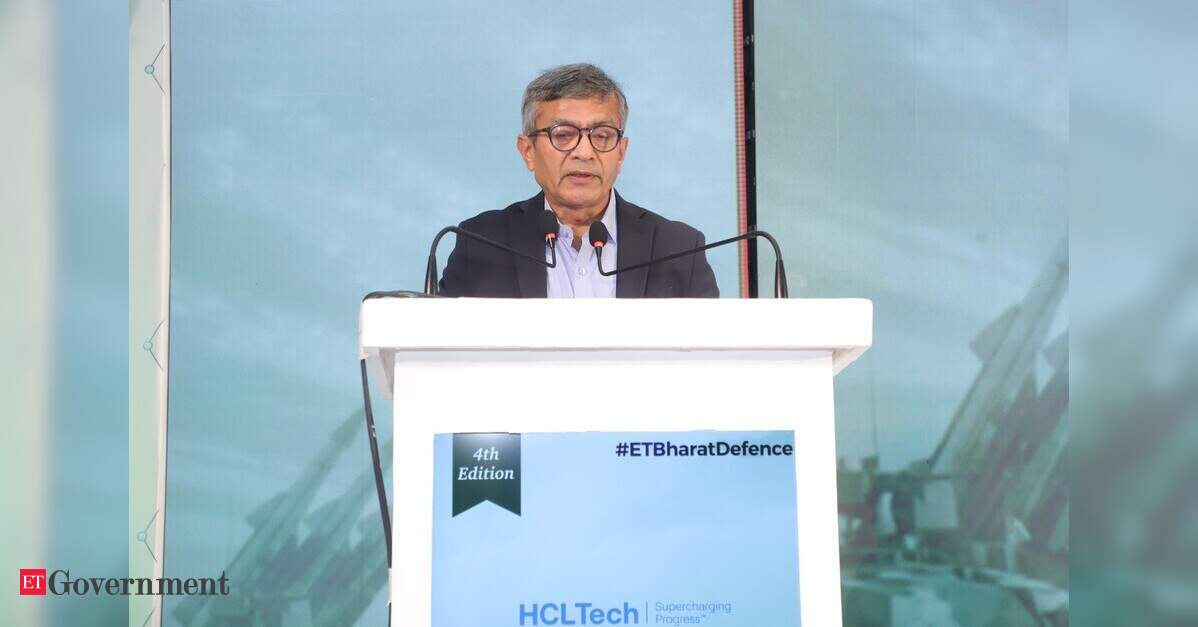
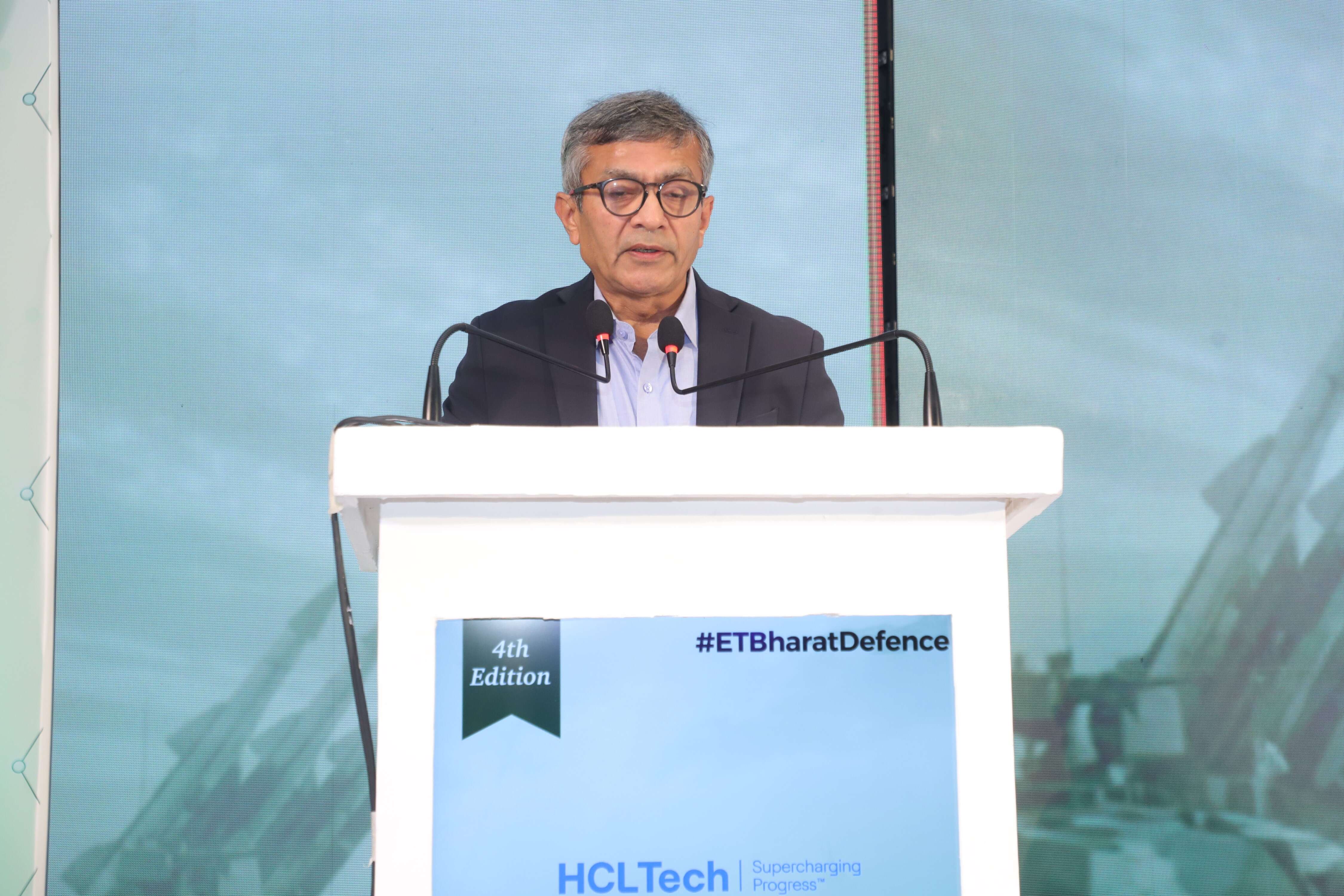
“The ultimate objective is not only to manufacture more equipment in India, but to design faster, develop faster, manufacture faster and deploy faster.”
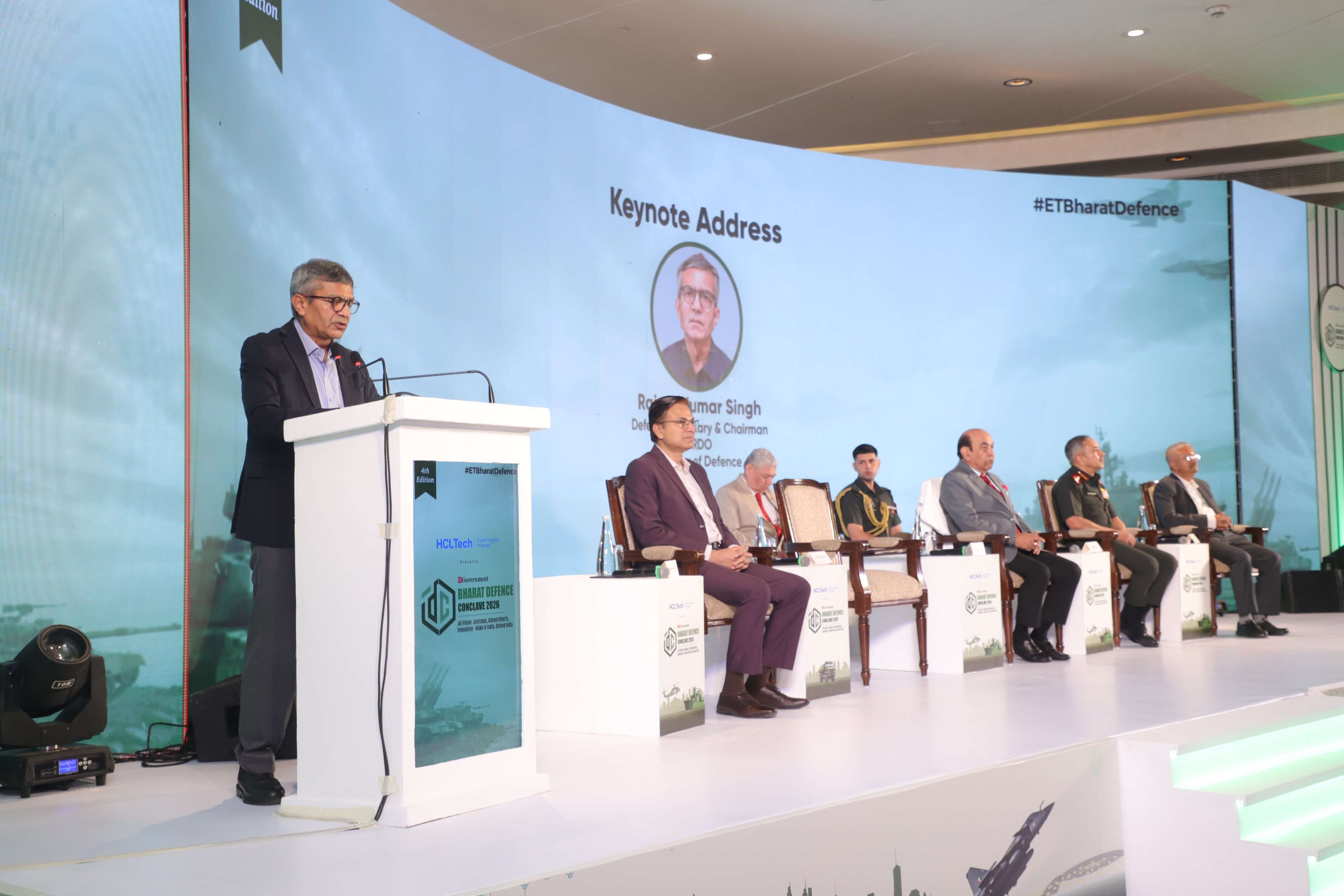
With this emphasis on speed, technological capability and domestic industrial capacity, Rajesh Kumar Singh, Defence Secretary and Chairman, DRDO, Ministry of Defence, outlined the next phase of India’s defence transformation, arguing that the country must create an ecosystem in which the armed forces, technology developers, public and private industry and government processes move increasingly in sync.
Delivering the keynote address at the Bharat Defence Conclave 2026 in New Delhi, Singh placed his argument against a global security environment marked by continuing conflicts, rapid technological change and renewed focus on military preparedness.
Modern conflicts, he indicated, are demonstrating that military power increasingly depends not simply on the number or sophistication of individual platforms, but on how effectively technologies, services and systems can operate together.
For India, this means that jointness, technological interoperability, defence industrial capacity and faster decision-making have to advance simultaneously.
Jointness must extend to technology
Singh highlighted the ongoing transformation towards greater jointness in the Indian armed forces, but made clear that integration has to extend beyond organisational structures. Jointness, in practical terms, requires a common understanding of missions and operational priorities, interoperable systems and greater commonality in logistics and other supporting structures.
The underlying principle is that capabilities should not be developed in isolation from one another. Modern military operations increasingly depend on networks connecting multiple domains and platforms. Communications, command and control, databases, electronics, artificial intelligence and other digital technologies are becoming integral to military effectiveness.
The transformation towards jointness, therefore, has to encompass technology itself. The armed forces must increasingly move away from isolated systems towards capabilities that can communicate, exchange data and operate as part of a wider architecture. The effectiveness of an individual platform will increasingly be determined by how successfully it functions within this larger network.
This technological dimension of jointness assumes particular importance because the speed and scale of warfare are changing rapidly.
Speed becoming a strategic requirement
A recurring theme in Singh’s address was speed. The conventional defence development and procurement process has historically operated over long timelines. Emerging technologies, however, are evolving far more quickly, creating the risk that systems conceived for one technological environment could face a very different environment by the time they are inducted.
The challenge for the government is therefore not simply to procure better technology but to make the institutional processes surrounding defence technology more responsive. Decision-making, acquisition, testing, production and deployment must become faster without diluting accountability.
Singh indicated that government processes need to evolve accordingly, with the objective of reducing delays and creating conditions in which promising technologies can move more rapidly towards operational use. Speed of decision-making, in this framework, is itself becoming an element of defence preparedness.
Bharat Defence Conclave brings stakeholders together
Singh was speaking at the fourth edition of the Bharat Defence Conclave, organised by ETGovernment – The Economic Times at Hyatt Regency, New Delhi, on September 24. The conclave brought together senior leaders from the armed forces and government, diplomats and defence attachés, DRDO scientists, defence manufacturers, technology companies, startups and other stakeholders in India’s defence ecosystem.
The conclave focused on jointness, Atmanirbharta and innovation, with discussions spanning future warfare, defence manufacturing, artificial intelligence and autonomous systems, cyber and cognitive warfare, emerging technologies and defence acquisition.
The Defence Secretary’s address situated defence industrial reform within this broader transformation, particularly the need to connect operational requirements with technological innovation and manufacturing capability.
Public and private sectors as partners
Singh also emphasised the growing role of the private sector in India’s defence ecosystem.
The distinction between public and private industry is becoming less relevant from the standpoint of capability creation. What ultimately matters is whether Indian companies can deliver the technologies, systems and production capacity required by the armed forces.
His remarks pointed towards an ecosystem in which public-sector enterprises, established private companies, smaller firms and technology innovators compete and collaborate on a more equal footing. Competition is particularly important.
A defence industrial ecosystem dominated by a limited number of suppliers cannot generate the same incentives for innovation, cost efficiency and technological improvement as one in which multiple capable companies compete for orders.
India’s large domestic defence requirement provides an important foundation for developing such an ecosystem. Government procurement can create demand, but the longer-term objective has to be the emergence of companies capable of developing technologies and products that are globally competitive.
The challenge is consequently not merely to replace an imported product with a domestically manufactured equivalent. It is to build industrial capability that can continually improve, innovate and respond to changing operational requirements.
Technology, industry and operational requirements
The address also highlighted the increasingly close relationship between military capability and the wider technology ecosystem.
Artificial intelligence, electronics, communications, data networks and other emerging technologies are blurring traditional boundaries between civilian and military innovation. Technologies developed outside the conventional defence establishment can increasingly have direct military applications.
This makes it important to create mechanisms through which technology companies—including smaller and newer firms—can interact with the armed forces, demonstrate equipment, undergo testing and compete for procurement opportunities. For the armed forces, the objective is to gain access to a much wider pool of technological innovation.
For industry, greater clarity about military requirements, faster testing and predictable procurement processes can provide the confidence necessary to invest in research, manufacturing facilities and production capacity. Government policy must help connect these two sides.
Procurement must keep pace with innovation
Singh’s remarks suggested that acquisition reform will remain central to this transformation. Defence procurement necessarily requires scrutiny and accountability because of the scale of public expenditure involved and the strategic importance of military equipment. But procedures must also be responsive to rapidly changing technologies and operational requirements.
The challenge is to achieve speed without compromising accountability. That balance assumes growing importance as warfare becomes increasingly technology-intensive. Lengthy acquisition cycles can become a strategic disadvantage when adversaries are simultaneously developing, testing and deploying new capabilities.
Procurement reform, therefore, cannot be treated simply as an administrative exercise. It is increasingly connected to operational readiness.
From manufacturing to capability creation
The larger message from Singh’s address was that Atmanirbharta in defence must ultimately be measured not simply by how much equipment India manufactures domestically, but by the depth, responsiveness and technological sophistication of the defence ecosystem that India creates.
Domestic production is important, but manufacturing alone cannot guarantee military-technological autonomy. India needs the ability to design and develop systems, integrate technologies, create competitive supply chains, expand production when required and continuously upgrade equipment as operational requirements evolve.
That transformation will require the government, armed forces, DRDO, public-sector enterprises, private companies and technology innovators to operate as parts of a connected national defence ecosystem. It will also require institutional processes capable of moving at a pace closer to that of technological change.
The objective, as Singh’s address made clear, is not merely more indigenous equipment. It is an ecosystem capable of turning technology into deployable military capability faster.
For India’s defence establishment, the next phase of Atmanirbharta will therefore be determined not only by where a weapon system is manufactured, but by who designs it, how quickly it can be developed and acquired, how deeply its technologies are controlled within the country, and how rapidly Indian industry can produce and deploy it when national security demands.