


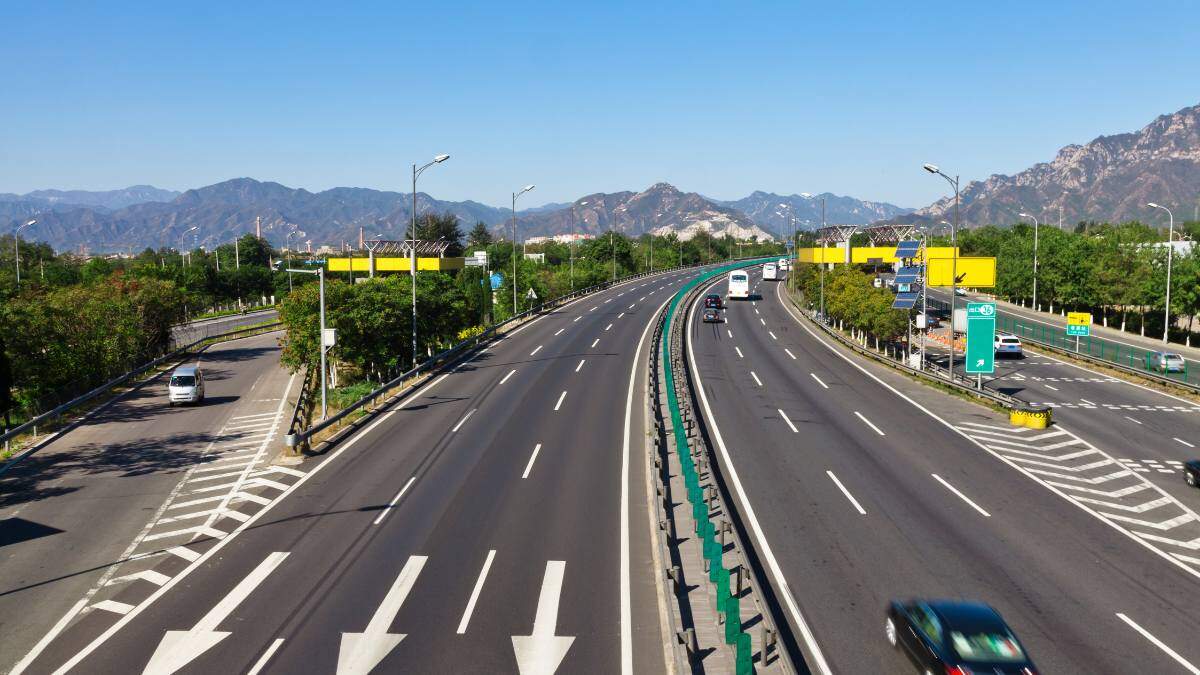
An expressway is usually measured in kilometres built and minutes saved. But its larger value lies in what it makes possible: factories that can reach markets more efficiently, logistics networks that can move goods with greater certainty, new investment beyond established urban centres and jobs closer to where people live. For Uttar Pradesh, the next stage of infrastructure-led growth is about converting connectivity into competitiveness.The State’s ambition to become a USD 1 trillion economy is not simply a target on a balance sheet. It requires a stronger productive base—more manufacturing, deeper supply chains, efficient logistics, technology adoption and employment that raises household prosperity. This transformation cannot be delivered by transport infrastructure alone. It calls for a coordinated economic geography in which expressways connect industrial clusters, freight facilities, suppliers, workers and markets.A growing network, and a larger economic purpose
Uttar Pradesh has built a significant expressway platform. UPEIDA’s position brief for 30 October 2026 records five operational expressways developed by the Authority, with a combined length of approximately 1,624 km: the Ganga Expressway (594 km), Agra–Lucknow Expressway (302 km), Purvanchal Expressway (341 km), Bundelkhand Expressway (296 km) and Gorakhpur Link Expressway (91 km).The same brief identifies nine additional expressways, aggregating approximately 983 km, as proposed for development. These include the Chitrakoot Link, Farrukhabad Link, Agra–Lucknow to Purvanchal Link, Jhansi Link, Jewar Link, Meerut–Haridwar Link, Vindhya Expressway, Vindhya–Purvanchal Link and Noida–Jewar Link. The operational network and proposed pipeline together point to a major expansion of high-speed connectivity, with the stated objective of extending such access to 42 districts—around 56 per cent of the State’s districts.The distinction between what is operational and what is proposed matters. Equally important is the purpose for which this network is used. Expressways can lower travel time and improve the movement of goods, but their economic impact grows when industrial land, warehousing, distribution facilities and supporting services are planned around them. Roadside amenities, fuel stations, electric-vehicle charging, traffic management and emergency facilities further contribute to safe and reliable corridor operations.Taking organised industry beyond the metropolitan centres
This is the rationale behind UPEIDA’s programme of 27 Integrated Manufacturing and Logistics Clusters (IMLCs) across 26 districts, strategically associated with five major expressways. The programme has a planned land bank of approximately 12,700 acres. Its purpose is to attract manufacturing and logistics enterprises, create employment and promote more balanced regional development.The IMLC model recognises that an industrial location must offer more than a plot. Investors need dependable power and water, internal roads, drainage, fire and safety services, access to rail and airports, and efficient links to suppliers and customers. The UPEIDA brief identifies infrastructure provisions that include 24–30 metre internal roads, dedicated 132/33 kV substations, water supply through overhead tanks, dedicated fire stations, storm-water drainage, street lighting and common green areas. It also records airport access within approximately 30–160 km and railway stations within approximately 2–50 km, depending on the cluster.The programme has moved from concept towards implementation. As recorded in the 30 October 2026 brief, approximately 10,928 acres—86 per cent of the planned 12,700-acre land bank—had been acquired. Fifteen nodes had crossed 90 per cent land acquisition, while seven were in the 80–90 per cent range. The remaining land processes were reported to be at an advanced stage.The same brief records that 414 acres had been allotted to 30 companies, with proposed investment of approximately ₹10,112 crore and expected employment of 12,935 persons. The sectors include packaging, food and beverages, renewable energy, chemicals and advanced materials, as well as logistics and warehousing. Companies named among the investors include Ball, Crown, Canpack, Lohum and United Breweries. These figures represent proposed investment and expected employment; the real test will be the pace at which projects secure approvals, begin construction, commence production and create sustained jobs.The availability of 42 plots, covering 344 acres across eight IMLCs through the Nivesh Mitra Portal, is another step towards making the programme accessible to investors. Transparent information, predictable processes and timely facilitation will be essential to convert available land into operational industry.A defence corridor that builds strategic capability
The Uttar Pradesh Defence Industrial Corridor adds a strategic dimension to the State’s industrial development. Announced in 2018, it is being developed across six nodes—Aligarh, Agra, Jhansi, Chitrakoot, Kanpur and Lucknow—with the objective of building an integrated defence and aerospace manufacturing ecosystem.The UPEIDA brief records allotment of 2,854 acres to 67 companies, including 10 operational units, with proposed investment of approximately ₹13,906 crore and expected employment of 16,129 persons. It also records 196 memoranda of understanding. The investment pipeline covers missiles and ammunition, aerospace manufacturing, unmanned aerial vehicles and drones, defence electronics, advanced materials and special alloys, ballistic protection systems, technical textiles and defence safety equipment.An industrial corridor becomes more competitive when it develops capabilities that are difficult to replicate. Research, testing, validation and certification are therefore as important as land and infrastructure. The ecosystem identified in the brief includes IIT Kanpur’s defence and drone initiatives, IIT BHU’s research support in advanced materials, sensors and precision engineering, and IIT Kanpur Technopark’s work in communication and space technology. It also identifies a UAV Testing Facility and a Communication Defence Testing Facility in Kanpur, and an Advanced Materials Defence Testing Facility in Lucknow.These facilities can help domestic firms develop, test and validate products closer to their production base. The next priority should be to deepen links between anchor companies, research institutions and MSMEs, so that smaller suppliers can upgrade technology, meet quality requirements and enter defence and aerospace supply chains. Aerospace and maintenance, repair and overhaul activities may also offer opportunities where demand, certification and commercial feasibility support them.The next competitive advantage: integrated logistics and technology
Manufacturing competitiveness depends on the full cost and reliability of moving goods. Expressway access must therefore be connected with rail networks, airports, freight corridors, warehouses and distribution centres. The objective is to help businesses move inputs and finished products efficiently, choose appropriate transport modes and manage inventory with greater certainty.At the same time, the next generation of industrial investment will include electronics, data centres, artificial intelligence and other technology-intensive activities. Their requirements are not identical. Electronics manufacturing needs supplier networks, skilled technicians and quality systems. Data centres require reliable power, robust digital connectivity and carefully planned cooling and water strategies. AI enterprises depend on computing capacity, talent and research linkages. Industrial planning must match each sector with suitable locations and infrastructure rather than applying a single template to every investment.Technology should not remain confined to new-economy sectors. Digital tools can improve inventory management, predictive maintenance, quality control, traceability and energy efficiency in conventional manufacturing as well. Extending these capabilities to MSMEs can strengthen the productivity of the wider industrial ecosystem.Investment must translate into jobs and local enterprise
The wider value of an anchor investment is determined partly by the local ecosystem it creates. MSMEs can supply components, packaging, fabricated products, repair services, transport, maintenance and specialised services. But their participation is not automatic. They need information about procurement standards, access to finance and technology, quality assurance and trained workers.Government, anchor investors, industry associations and training institutions can work together to build these capabilities. Apprenticeships, industry-linked curricula and practical training can help align the skills of local workers with the needs of manufacturers and logistics operators. Employment should be measured not only by announcements, but by jobs actually created, their quality and the opportunities available to people in the surrounding districts.Balanced regional development also requires realistic planning. Each cluster must be aligned with its local workforce, resource availability, transport access and economic strengths. Responsible use of land, water and energy, effective waste management and climate-resilient infrastructure are not optional additions; they influence operating costs, regulatory compliance and the long-term viability of industrial investment.Execution will determine the outcome
Investors assess the complete experience of establishing and operating a business. They look for clear procedures, reliable information, infrastructure readiness, predictable approvals and an administration that can coordinate across agencies. Industrial authorities must therefore focus on project milestones and problem-solving, while ensuring that statutory and environmental requirements are met in full.For every project, the journey from allotment to commissioning should be tracked with clear responsibilities and timelines. Progress reporting must distinguish between proposals, allotments, projects under construction and operational units. Such discipline strengthens credibility and helps public agencies target their support where it is most needed.Uttar Pradesh has created an important foundation: a growing expressway network, a geographically distributed IMLC programme and a six-node defence corridor. The next phase is to make these assets work together. If connectivity is matched with ready industrial locations, efficient logistics, research and testing capabilities, skilled people and responsive governance, infrastructure can become a powerful platform for productive investment.The measure of success will not be the length of roads alone, nor the number of projects announced. It will be the factories that produce, the supply chains that deepen, the enterprises that innovate, the workers who gain better opportunities and the districts that become active participants in the State’s growth. That is how Uttar Pradesh can turn connectivity into competitiveness—and make a lasting contribution to Viksit Bharat @2047.
