


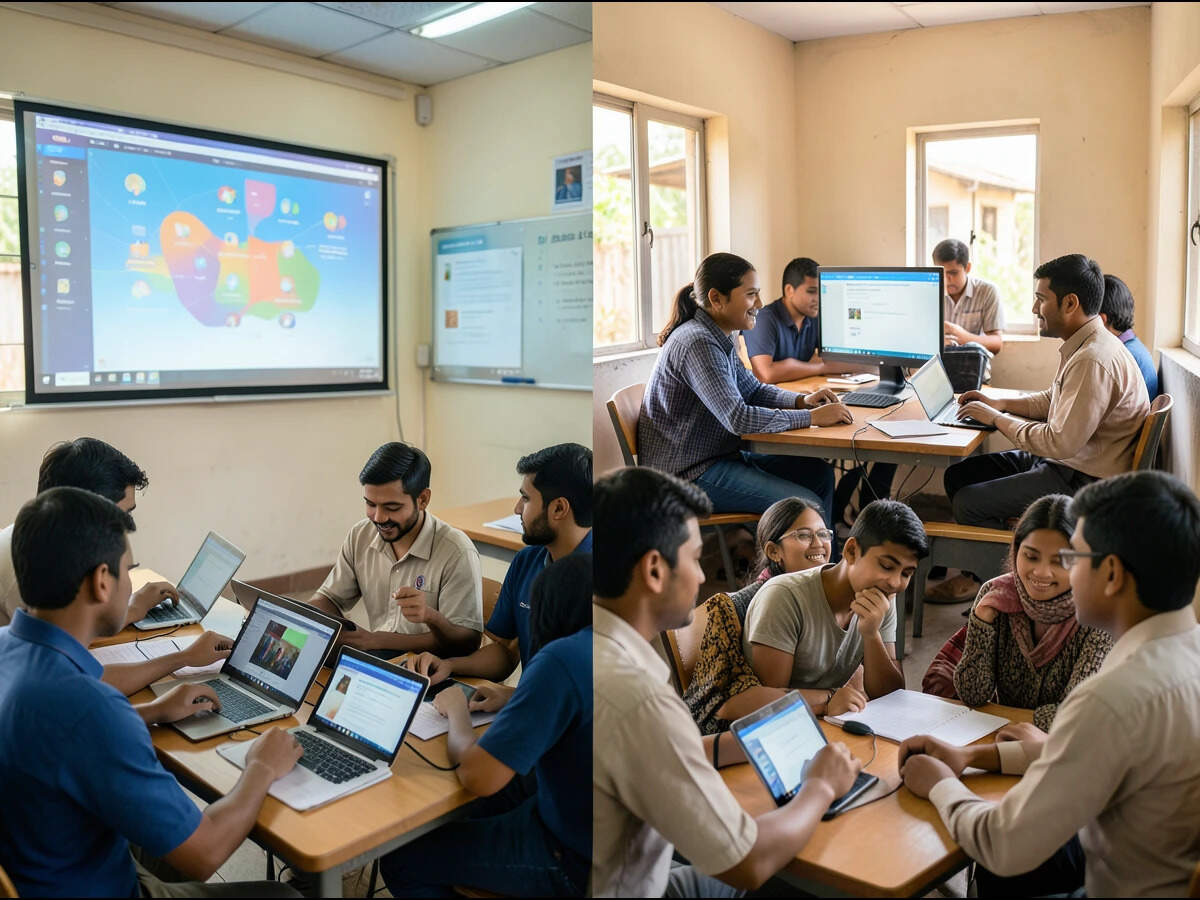
A university can invest in sophisticated digital platforms, automate examinations and move administrative processes online. But if faculty members continue to follow established practices or affiliated colleges lack the infrastructure to use these systems, how much has the institution really transformed?For university leaders, this is the more difficult side of digital transformation. Technology can streamline processes and improve access to information, but its impact depends on whether people across the institution adopt new ways of working and whether digital systems are aligned with academic and administrative priorities.Discussing these questions, vice-chancellors from different universities who gathered at the Smart Campus Conclave 2026, held at Marwadi University, organised by Bloomfield Innovations shared their challenges and how they are using technology for various administrative and academic activities. Their experiences highlighted the challenges of securing faculty participation, using digital platforms for institutional decision-making and extending technology adoption to affiliated colleges in rural areas.For Dr Sunita M. Karad, Executive Director of MIT-ADT University, technology has become increasingly embedded in teaching, learning and administration. Drawing on the university’s experience, she spoke about implementing technology modules and the transition towards a new university ERP system.The larger question, however, is who should drive such transitions and how technology can be aligned with an institution’s academic and strategic priorities.The people behind the platformsProf Anand Sharad Deshpande, Vice-Chancellor of Bagalkot University, drew a distinction between managing technology and managing the people expected to use it. With more than four decades of experience in teaching mechanical engineering and previous experience as registrar at Visvesvaraya Technological University, he argued that institutions cannot assume that introducing a digital system will automatically change established practices.His emphasis was on securing buy-in and demonstrating the practical value of a new system. Technology may be relatively straightforward to implement, but people need to understand why a change is necessary and how it will improve their work.Deshpande framed digital transformation as being only partly about technology, with the larger share of the effort going towards people and organisational change. For university leaders, this means involving faculty and administrative staff in the transition rather than treating adoption as a task for the IT department alone.The challenge becomes more complex when a university has to bring together departments, affiliated colleges and other stakeholders with different levels of digital readiness. A platform that works well at the university headquarters may not deliver the same results in a college with limited connectivity or inadequate infrastructure.From digital adoption to institutional changeBagalkot University’s experience illustrates these constraints. Established in 2023, the university serves around 100 affiliated colleges in northern Karnataka, many of which cater to students from rural backgrounds.The introduction of a digital question-paper delivery system initially encountered resistance, including concerns about bandwidth, connectivity and infrastructure. Addressing these issues required more than installing a platform. The university had to work with local bodies, the administration and participating institutions to help create the conditions needed for adoption.The experience underlines a broader point for universities expanding their digital operations: implementation cannot be separated from the context in which a system is expected to function. Institutions must account for uneven infrastructure and help users adapt to new processes if technology is to become part of routine academic administration.Digital platforms can also change the way universities communicate with their affiliated colleges and government bodies. Deshpande described the use of an online platform to facilitate communication between the university, colleges and the government, helping speed up exchanges that would otherwise depend on slower administrative channels.For institutions managing large networks, such systems can reduce delays and improve coordination. But their value depends on consistent use and on whether the processes surrounding them are redesigned to make the most of the technology.Using data to strengthen governanceThe institutional value of digital transformation extends beyond moving paperwork online. It also lies in the ability to bring together information that university leaders need to plan, allocate resources and assess performance.Ravinder Nath Anisetti, Vice-Chancellor of the Central University of Kashmir, discussed the use of the e-Samarth platform, a government-supported initiative for digital governance in higher education. The platform brings together administrative and academic functions, allowing institutions to manage information across areas such as finance, human resources, admissions and examinations.Such systems can help university leaders move from fragmented records to a more integrated view of institutional operations. Financial data, staffing patterns, academic workloads, admissions and examination outcomes can inform decisions that might otherwise rely on information collected separately across departments.Anisetti also discussed the potential use of artificial intelligence in curriculum development, including comparing curricula with national and international benchmarks and examining whether programmes develop the intended knowledge, skills and competencies.For universities, this points to a shift from digitising existing processes towards using technology to support academic planning and institutional review. The challenge is to ensure that data and digital tools inform decisions rather than simply adding another layer of reporting.That shift also raises questions about institutional capacity and accountability. Digital systems can encounter server outages, connectivity problems and security threats, including attempts to compromise university websites. When systems fail, responsibility may span the IT team, administrative leadership and senior management. Cybersecurity, continuity planning and clear accountability therefore need to be part of digital governance, rather than treated as technical concerns alone.The investment question is equally important. University leaders must decide how to balance spending on new platforms with investment in staff training, infrastructure and support. A more sophisticated system may offer little value if faculty members and administrators are not equipped to use it effectively.For university leadership, digital transformation is therefore not a one-time technology purchase. It is an institutional process that brings together infrastructure, people, governance and academic priorities. The test is not simply whether a university has adopted digital tools, but whether those tools improve how it teaches, administers and makes decisions.
