

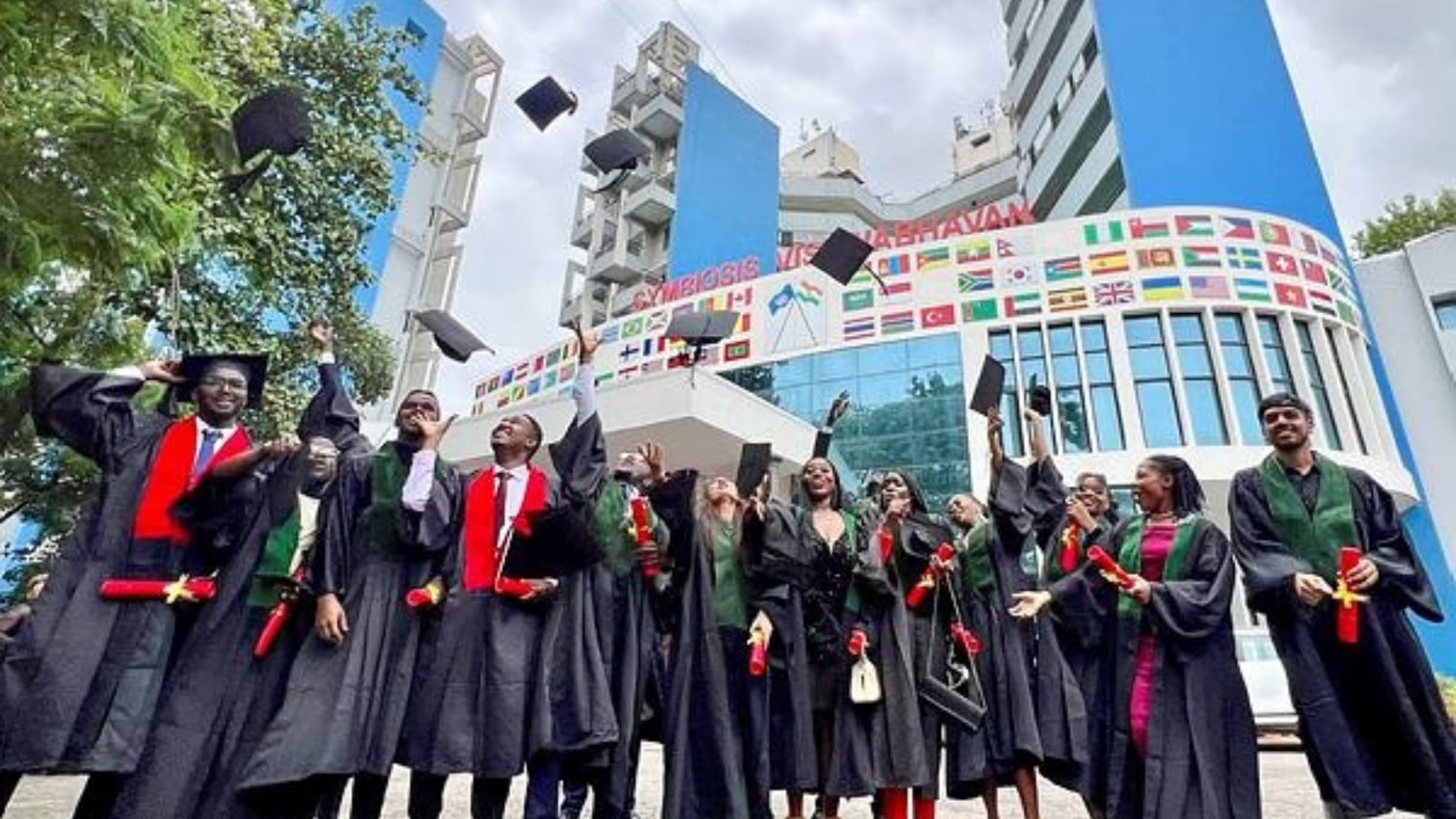
As many as 72,218 foreign students from nearly 200 countries are currently enrolled in Indian higher education institutions, the government informed the Rajya Sabha on Wednesday. Replying to supplementary questions during Question Hour, Minister of State for Education Sukanta Majumdar said the Union government has sanctioned ₹6,198.99 crore to eight public institutions under the World Class Institutions scheme, introduced to support institutions selected for the Institution of Eminence (IoE) status.
Majumdar highlighted a “significant rise in the global visibility of Indian higher education institutions,” noting that 54 institutions have secured a position in the QS World University Rankings (QS WUR) 2026. This marks a substantial jump from 11 institutions in 2014–15, when the current government assumed office. “This is India’s highest-ever representation in the QS rankings,” he said.

The minister said India’s foreign student community is diverse, with enrolments spanning a wide range of academic disciplines. “India has around 72,218 foreign students. They are from 200 countries studying different courses,” he noted, adding that the government is taking several steps to enhance collaboration with foreign universities and attract more international students.
Providing further details, Majumdar said the World Class Institutions scheme was launched to identify 10 public and 10 private higher education institutions and develop them into globally competitive teaching and research hubs. So far, 12 institutions have been notified as IoEs — eight from the public sector and four from the private sector.
Read | 80% leave UK amid tightening immigration rules, Indian students form biggest group: Govt data
“Only public institutions receive financial support under the scheme. An amount of approximately ₹6,198.99 crore has been sanctioned for the eight public IoEs since the scheme’s inception,” he added.
The Ministry of Education said the National Education Policy (NEP) 2020 has played a central role in improving the quality and global competitiveness of Indian higher education. The policy emphasises upgraded infrastructure, a stronger research and innovation ecosystem, and deeper industry–academia linkages.
Story continues below this ad
According to the ministry, NEP-led reforms have contributed significantly to India’s improved performance in global rankings. The number of Indian institutions featured in the QS WUR has doubled in five years, rising from 27 in 2021 to 54 in the latest edition.
© IE Online Media Services Pvt Ltd
