

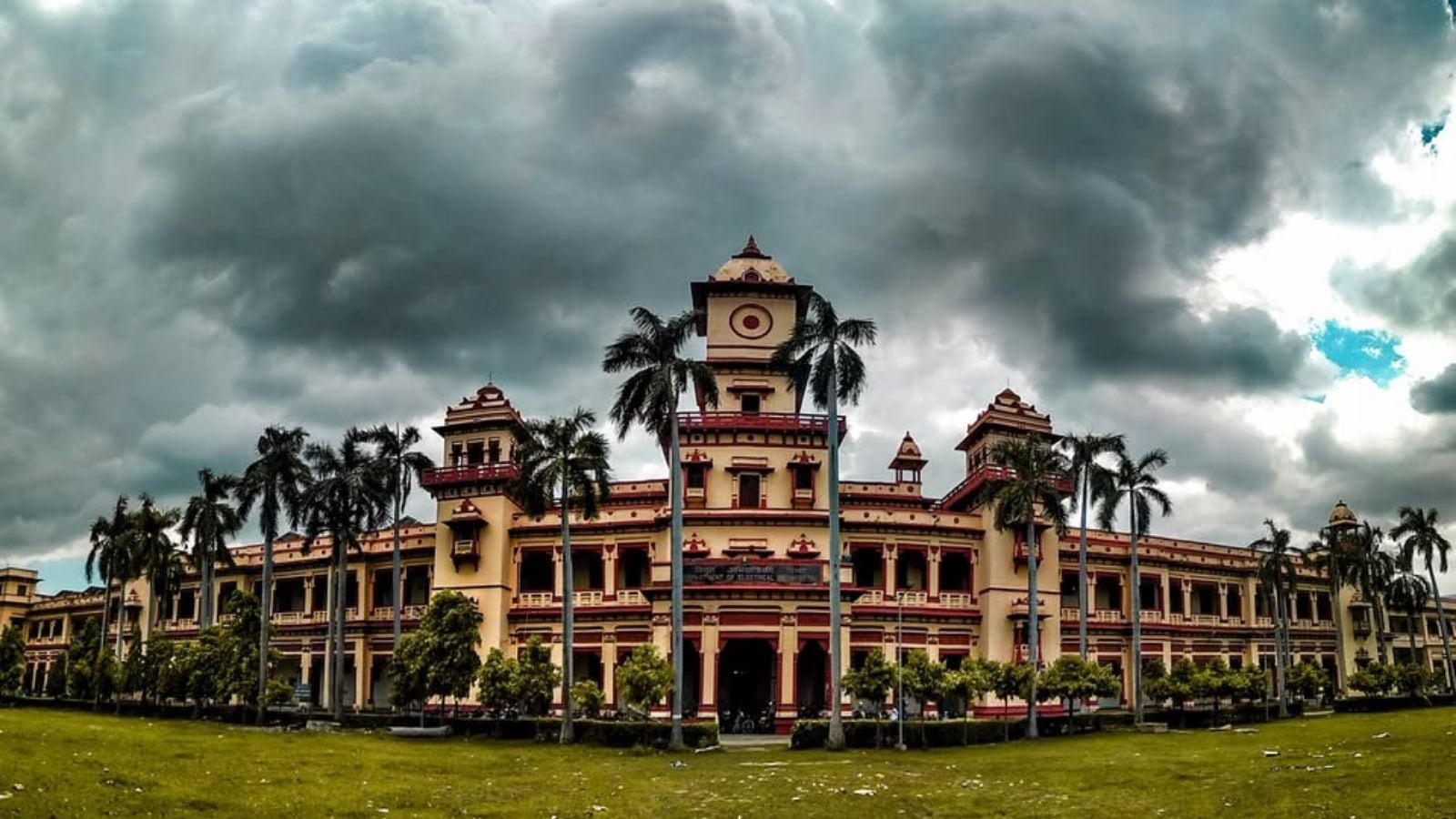
In a major shift to its undergraduate structure, IIT BHU Varanasi has announced that several five-year Integrated Dual Degree (IDD) programmes will not be offered this year, following a complete overhaul of the model. The institute said the decision stems from a comprehensive curriculum restructuring exercise undertaken in 2024–25 to align its undergraduate programmes with the National Education Policy (NEP). A key reason, IIT BHU noted, was the “inflexible” nature of the older IDD structure.
In its response to a query by indianexpress.com, IIT BHU Varanasi explained that students admitted to the earlier IDD programmes were required to complete a five-year integrated curriculum leading to both BTech and MTech degrees. As the programme was fully integrated, students had no option to exit after four years and graduate with only a BTech.


“It was found that many students wanted to exit or wanted an option to leave the programmes after completing the B Tech part. However, an exit option at that level was not possible due to the integrated nature of the programmes,” IIT BHU Varanasi said.
IIT BHU offers 17 such IDD programmes, of which 13 are not part of the Joint Seat Allocation Authority undergraduate counselling.
These programmes include Pharmaceutical Engineering and Technology, Ceramic Engineering, Industrial Chemistry, Physics, Bioengineering with MTech in Biomedical Technology, Mining Engineering, Biochemical Engineering with MTech in Biochemical Engineering and Biotechnology, Materials Science and Technology, Metallurgical Engineering, Engineering Physics, Civil Engineering, Mechanical Engineering, Mathematics and Computing, and Computer Science and Engineering.
Following the 2024-25 curriculum overhaul, the institute decided that from July 2025 onwards, all seats under the MTech IDD programmes would be converted into BTech seats in their respective disciplines. The institute emphasised that this does not reduce the number of undergraduate admissions through JEE Advanced.
At the same time, IIT BHU clarified that the MTech IDD has not been discontinued. Instead, it will now be optional, and students can choose to join it “at the end of the sixth semester” of their BTech programme in the same discipline, extending the total duration to 10 semesters.
New flexibility: Four pathways for every student
Story continues below this ad
As part of the NEP-aligned restructuring, the institute highlighted that students entering a BTech programme now have four mutually exclusive options:
1. Minor in another discipline other than the primary discipline after the fourth semester
2. Major in another discipline other than the primary discipline after the fourth semester, which extends the degree to five years
3. MTech IDD in the same discipline after the sixth semester
4. A plain BTech in their primary discipline
Story continues below this ad
Students not opting for a Major or Minor can also pursue a BTech (Honours) in their primary discipline. The institute described this as a significant expansion of choice. “The curriculum restructuring exercise has provided students admitted to BTech with more choice and flexibility in programmes,” it said.
Decision based on restructuring, not faculty constraints
Responding to questions about whether faculty shortages influenced the decision, IIT BHU said, “The decision was a strategic restructuring that afforded students more flexibility and choice, in line with NEP guidelines. The decision was not based on faculty constraints.”
The changes were formally approved by the Senate of IIT BHU and the Board of Governors.
The institute confirmed that all students admitted to IDD programmes until 2024 will continue under the “original programme structure prior to 2025.” No migration or special transition has been planned because the restructuring applies only to new admissions. It further clarified that “no programmes were discontinued,” and seat intake remains unchanged.
Story continues below this ad
The institute said that the restructured curriculum already includes new interdisciplinary opportunities. These include Majors in other disciplines, interdisciplinary project components, and Minors designed to create students “competent in two disciplines” or “with basic knowledge in the second discipline.”
Internal review and long-term impact
IIT BHU explained that its restructuring follows a “continuous and dynamic review process” through curriculum committees, departmental UG and PG committees, and the student parliament. Short-term changes — such as addition or deletion of courses — are made regularly, while major structural reforms typically occur every 5-10 years.
On student trends, the institute acknowledged: “Yes, we have observed declining interest in some of the programmes in the past few years.” However, it reiterated that programmes are rarely phased out; instead, “normally the programme goes through redesign and (is) reframed depending on industry need and student needs.”
