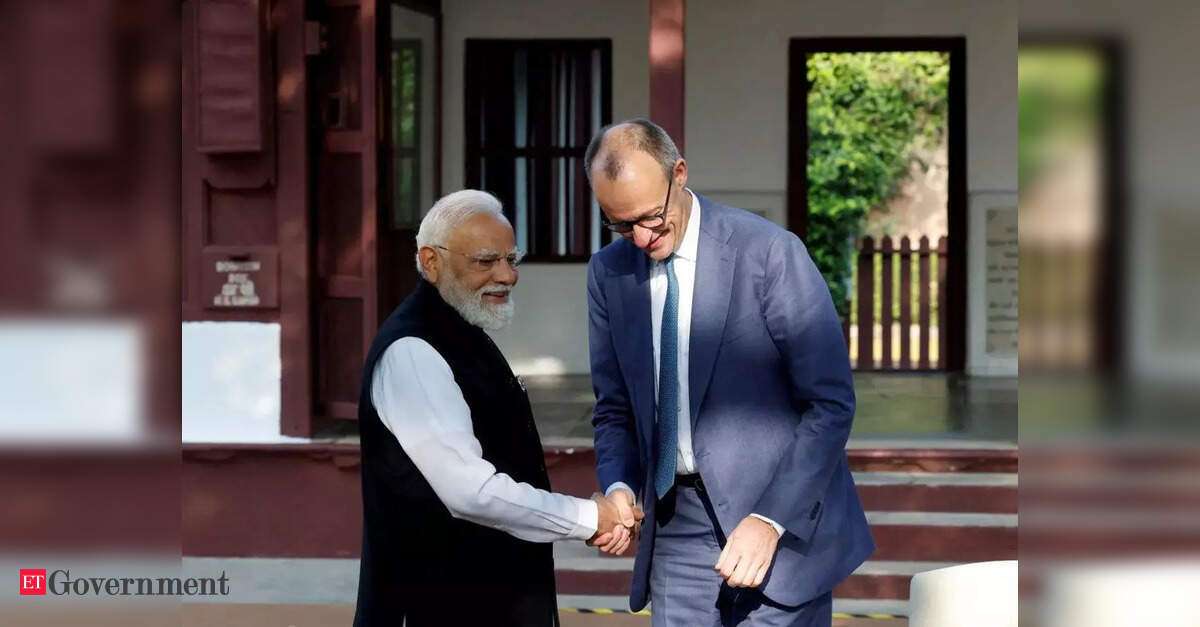
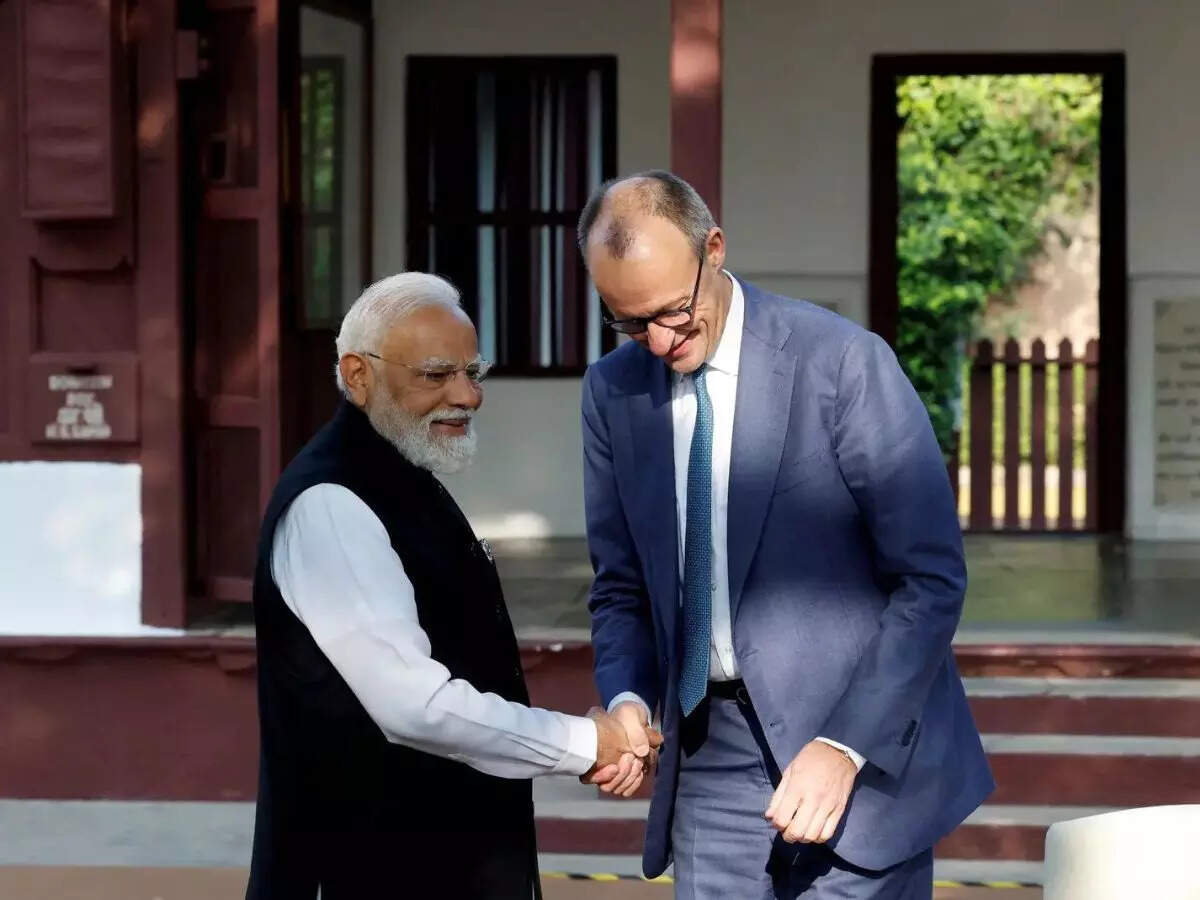
Prime Minister Narendra Modi on Monday invited German universities to establish campuses in India, unveiling a comprehensive roadmap for higher education cooperation during German Chancellor Friedrich Merz’s official visit.
Speaking at a joint press conference, PM Modi welcomed Merz’s announcement of visa-free transit for Indian citizens, calling it a step to strengthen people-to-people ties between the two countries.
“The comprehensive roadmap on higher education that we have developed today will give a new direction to our partnership in the field of education. I invite German universities to open their campuses in India. I express my gratitude to Chancellor Merz for announcing visa-free transit for Indian citizens,” the Prime Minister said.
The leaders also discussed global and regional issues, including the situations in Ukraine and Gaza. PM Modi highlighted their shared stance that terrorism poses a grave threat to humanity and reaffirmed India and Germany’s commitment to combating it.
“India has consistently advocated the peaceful resolution of all conflicts and disputes and supports all initiatives aimed at achieving this goal. We are united in our belief that terrorism poses a grave threat to humanity as a whole. India and Germany remain committed to combating this menace together, with unwavering determination,” he said.
On international governance, PM Modi stressed the need to reform global institutions, citing joint efforts through the G4 group to reform the UN Security Council. “The Memorandums of Understanding being signed today will provide fresh momentum and strength to our collaboration across all these areas,” he added.
Cooperation in climate, energy and technology
PM Modi also highlighted growing collaboration in climate action, energy, urban development, and urban mobility. He noted that upcoming green hydrogen mega projects involving companies from both countries could be game changers for the future of energy. “India and Germany are committed to developing a secure, trustworthy and resilient supply chain,” he said.
On technology, defence, and security, the Prime Minister said cooperation has strengthened over the years. He thanked Chancellor Merz for simplifying defence trade processes and announced plans to develop a roadmap to enhance cooperation between the defence industries of both nations.
“Technology cooperation between India and Germany has strengthened year after year, and its impact is clearly visible on the ground today. India and Germany share similar priorities in the field of renewable energy. The growing cooperation in defense and security is a symbol of our mutual trust and shared vision,” PM Modi said.
People-to-people ties and cultural links
PM Modi recalled the historical connections between India and Germany, citing figures such as Rabindranath Tagore, Swami Vivekananda, and Madam Bhikaji Cama as symbols of long-standing cultural and intellectual exchange. “Today, we are transforming this historical connection into a modern partnership,” he added.
Chancellor Merz’s visit coincides with the 75th anniversary of India-Germany diplomatic relations and the 25th anniversary of the India-Germany Strategic Partnership. The two-day visit, from January 12 to January 13, is aimed at further deepening cooperation across key sectors.
On January 13, Chancellor Merz is scheduled to visit Bosch and Nano Science and Engineering Centre (CeNSE) before departing for Germany.