India’s education challenge is often described as a crisis of access, infrastructure or technology. But step into a rural classroom, and a different truth reveals itself. The problem is not that children cannot learn—it is that the system has not consistently enabled teachers to teach in ways that work for the realities they face every day.
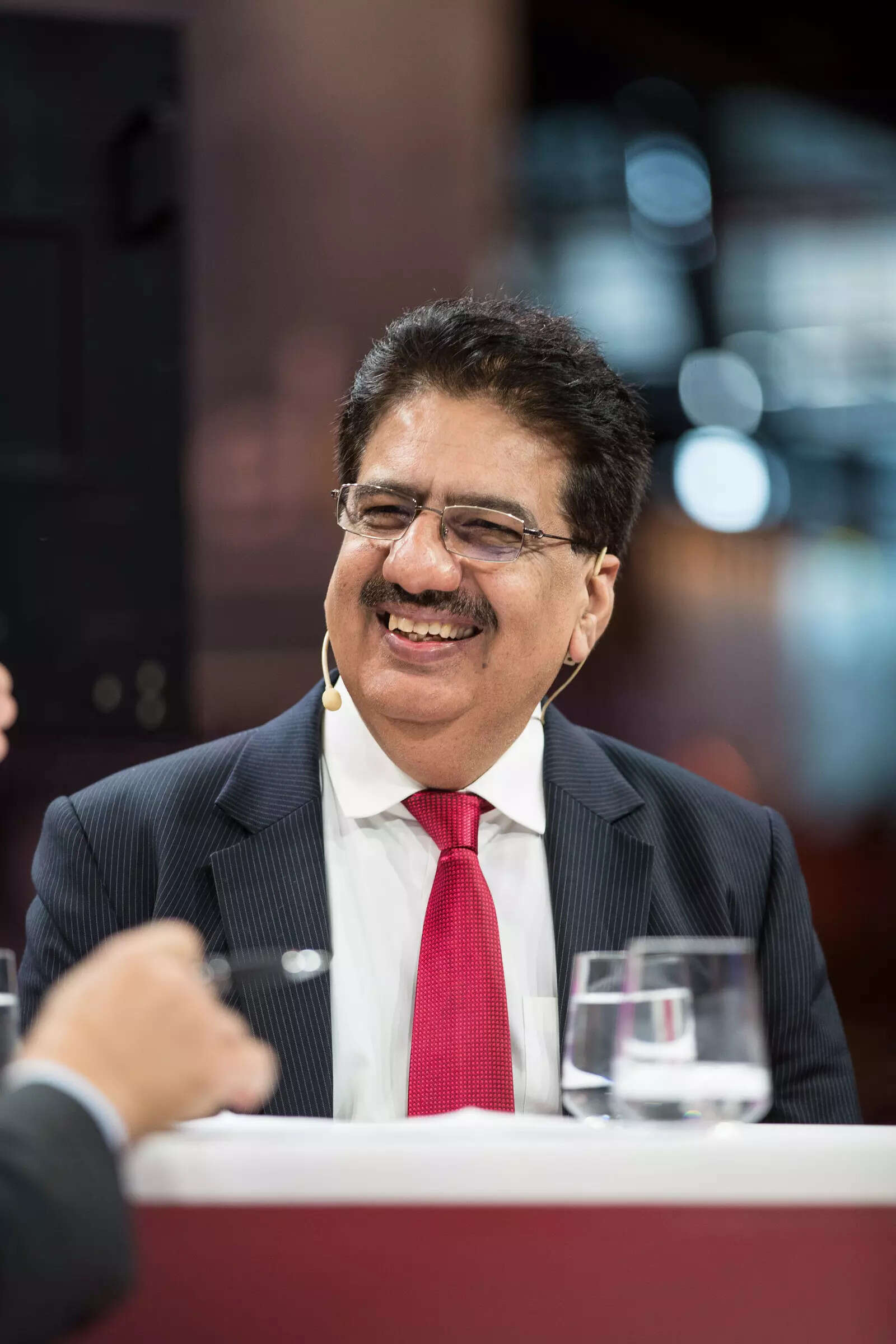
Today, fewer than half of India’s rural Grade 5 students can read a Grade 2-level text. This statistic is frequently framed as a “learning crisis”. Vineet Nayar, Founder-Chairman of Sampark Foundation and former CEO of HCL Technologies, sees it differently. What India is facing, he argues, is not a failure of children, but a teaching–learning design crisis—one that can only be solved by placing teachers firmly at the centre of education reform.
Why teachers are the real force multipliers
In most rural government schools, teachers operate under intense constraints. Multi-grade classrooms, limited resources, administrative burdens and inconsistent infrastructure are the norm, not the exception. Yet policy and reform efforts often assume ideal conditions—single-grade classrooms, uninterrupted connectivity and abundant learning materials.
“The child’s future is not shaped by technology or infrastructure alone,” Nayar emphasises. “It is shaped by a confident teacher who knows exactly what to teach, how to teach it and in what sequence.”
When teachers are given simple, structured pedagogy and classroom-ready tools, learning outcomes can improve rapidly—even in the most remote geographies. Teachers, in this model, become force multipliers: empower one teacher well, and dozens of children benefit simultaneously. Ignore the teacher, and even the most advanced solutions fail to take root.
The myth of digital transformation in rural classrooms
Over the past decade, digital tools have been positioned as silver bullets for India’s education challenges. In reality, many of these tools collide head-on with rural realities. Electricity is unreliable, internet connectivity is patchy, devices break down and teachers are expected to navigate unfamiliar interfaces with minimal support.The result is what Nayar calls “pilot fatigue”—initiatives that look impressive in presentations but end up unused in classrooms.
The answer, he believes, lies in tech-with-touch design: technology that is anchored in strong offline pedagogy, independent of WiFi and simple enough to operate intuitively. A child in Dantewada deserves the same learning opportunity as a child in Delhi—not through expensive, fragile systems, but through frugal, robust solutions that work every single day.
“When technology reduces a teacher’s workload instead of increasing it,” Nayar notes, “adoption becomes natural—and impact becomes inevitable.”
Why foundational learning gaps keep widening
One of the most underestimated challenges in India’s education system is the silent accumulation of early learning deficits. When children struggle with basic reading or number recognition in the early grades, the gap compounds with each passing year, making recovery increasingly difficult.
This problem is intensified by fragmented interventions—new textbooks, training programmes, apps and assessments that arrive in silos, without forming a coherent classroom ecosystem. Teachers are left to assemble these pieces on their own, often without clarity on how they fit together.
Foundational Literacy and Numeracy (FLN), Nayar argues, demands a disciplined, integrated approach—one that brings together pedagogy, materials, assessment and monitoring into a single, classroom-ready system.
Sampark Foundation’s work across lakhs of children demonstrates what is possible when such coherence exists. In resource-constrained settings, structured teaching methods combined with frugal, activity-based materials and supportive supervision have led to 30–35 percent improvements in learning outcomes. The challenge is large—but the opportunity to transform learning at scale is very real.
Why scale demands state-led partnerships
With more than 70 percent of Indian children enrolled in government schools, any meaningful education reform must work through public systems. Transforming foundational learning at scale is, by definition, a state-led endeavour.
This is where public–private partnerships become indispensable. Governments bring reach, legitimacy and institutional continuity. Social organisations and philanthropy contribute innovation, funding and design rigour. But success depends on deep alignment—not short-term projects.
Programmes must be rooted in state curricula, compatible with existing budgets and responsive to classroom realities. In Sampark’s experience across eight states, joint monitoring mechanisms, simple data dashboards and sustained political will have enabled millions of children to benefit.
“When governments and social innovators work as true partners rather than parallel actors,” Nayar observes, “change becomes both credible and enduring.”
Educating the girl child: beyond enrolment to empowerment
Improving access to education for girls in rural India requires addressing both structural barriers and social norms. Safe schools, functional toilets and predictable teacher presence are essential—but they are only the starting point.
True quality emerges when classrooms nurture confidence, curiosity and communication. Shifting parental attitudes often happens not through persuasion, but through visible progress. When girls return home singing lessons, performing short English skits or applying numeracy skills in everyday life, families see tangible capability—not just attendance.
Community networks, self-help groups and local champions play a critical role in reinforcing this shift, reframing girls’ education as an investment in household stability and collective pride. Over time, better learning leads to better attendance—and girls themselves begin to challenge the norms that once limited them.
Why play is serious business in learning
Children learn best when learning feels alive. Research consistently shows that interactive and gamified learning improves attention, retention and conceptual clarity—especially for first-generation learners.
In rural classrooms, simple story-led lessons, role-play and songs delivered through a TV can transform engagement levels. Children once labelled “weak” or “disinterested” begin to participate, clap, sing and step forward—behaviour rarely seen in traditional chalk-and-talk environments.
Gamification, Nayar stresses, is not a distraction. It is a powerful inclusion tool, drawing in those who are hardest to reach. When teachers have ready-made, game-based lesson plans aligned to textbooks, participation rises across the classroom and abstract concepts become intuitive.
The power of frugal innovation
Perhaps the most defining principle behind Sampark Foundation’s work is frugal innovation—not as a constraint, but as a catalyst.
Frugality forces designers to ask the right question: not what is the most advanced solution, but what will work reliably, every day, in every classroom. The result is high-quality learning experiences delivered at extremely low cost—sometimes under a dollar per child per year.
From TVs preloaded with curriculum-aligned content to tactile learning kits that make abstract ideas tangible, from structured lesson plans to assessments embedded in play rather than fear—these solutions do not demand heavy budgets or constant reinvestment. They demand thoughtful design.
“When scarcity becomes the design principle,” Nayar says, “innovation becomes robust, adoption becomes natural and scale becomes predictable.”
A quiet revolution, led by teachers
India’s education transformation will not be driven by flashy technology or quick fixes. It will be built, classroom by classroom, by teachers who are empowered, supported and respected as the architects of learning.
Fix the teacher. Fix the design. And the system will follow.