At a time when India stands on the cusp of a decisive economic transition, questions around growth sustainability, investor confidence, institutional reforms, and financial-sector stability have become central to policy discourse.
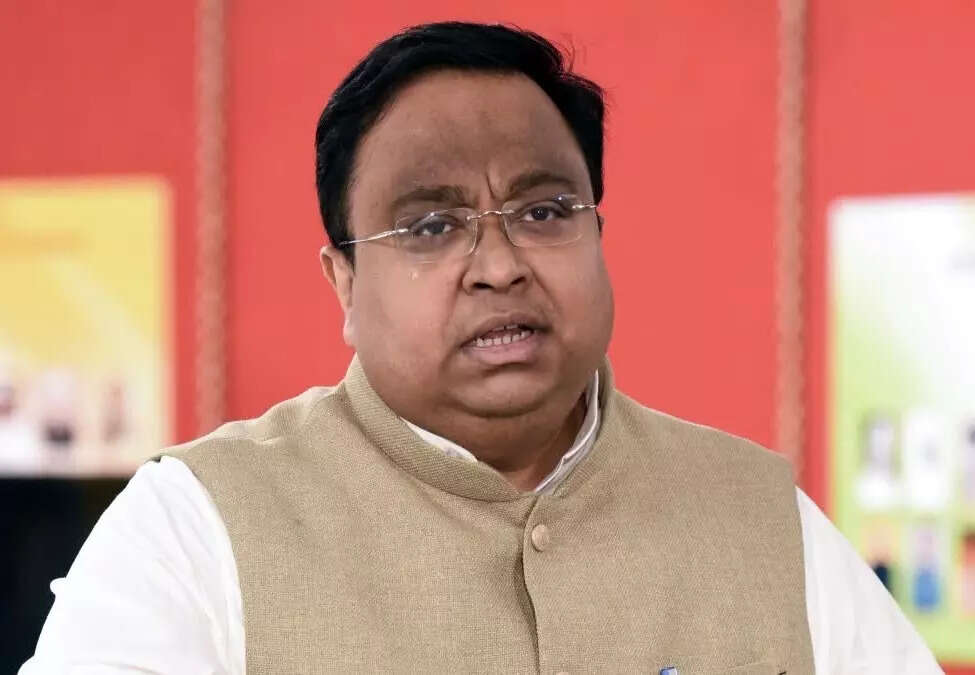
In this interview, Sasmit Patra, Member of Parliament (Rajya Sabha), speaks with Anoop Verma about the structural forces shaping India’s economic trajectory. Drawing on his legislative experience and close engagement with policy reforms, he offers an unvarnished assessment of GDP indicators, the limits of state-level growth plateaus, the evolving financial risks confronting the country, and the institutional bottlenecks that continue to challenge investors.
Patra also lays out his vision for a predictable policy environment, a more agile regulatory ecosystem, and the reforms required to move India decisively toward an 8%-plus growth path.
Edited excerpts:
Do headline GDP numbers accurately reflect on-the-ground economic momentum, or are there gaps that business leaders should note?
GDP numbers certainly indicate the direction in which the economy is moving. They help us broadly understand economic performance. However, GDP is only one indicator; a holistic view requires considering multiple engines of the economy—sectoral performance, inflation, employment, disposable income, and public expenditure. GDP also includes borrowings, whereas net national income offers a clearer picture by excluding them. Still, a 6.5–7.5% GDP growth band is a strong and positive signal for the Indian economy.
What reforms or policy shifts could enable India to move from a 6–7% growth trajectory to a sustained 8%+ growth economy?
India is plateauing at around 6–7% primarily because several large, high-performing states—Gujarat, Maharashtra, Tamil Nadu—have already reached a mature growth level. The real potential lies in states such as Odisha, West Bengal, Jharkhand, Chhattisgarh, and several northeastern states. If these states rise to their full capacity, India can achieve holistic national growth and consistently reach 8 percent or more. Our current numbers are being pulled mainly by four or five states; that must broaden.What systemic risks do you see emerging in the financial sector, especially amid global volatility and geopolitical uncertainty?
One concern is the concentration of exposure within certain NBFCs and investment platforms. While the RBI is vigilant, high exposure levels can create vulnerabilities, especially given the expanding range of products being sold. Infrastructure financing also requires long-term capital—often 20-year funds—but many lenders are borrowing short-term, creating mismatches. Additionally, global capital flows remain volatile; when U.S. bond markets become attractive, capital can flow out of India unpredictably. We must work toward stability in these inflows to strengthen the sector.
With stock markets at record highs, is this driven by fundamentals or speculative excess?
I believe India’s fundamentals are strong, and I remain bullish—echoing the late Rakesh Jhunjhunwala’s confidence in the Indian economy. Strong domestic inflows through SIPs and mutual funds reinforce this. However, many stocks are trading at very high P/E ratios, creating pockets of overvaluation. This can lead to aggressive shorting or profit-taking by large players, which may hurt small investors. While fundamentals are sound, vigilance is needed to ensure retail investors are protected.
What trends are you seeing in private investment, FDI, and corporate capex? What could meaningfully shift the needle?
India is entering a new industrial phase driven by sunrise sectors—AI, semiconductors, advanced batteries, green hydrogen, precision manufacturing, and deep-tech startups. This is pushing private investment and capex in promising directions. Investors today are not merely seeking concessions; they want predictability. Consistency in policy and performance is crucial. Frequent policy reversals discourage long-term investment. Predictability must become a core principle of our economic framework.
After several years of implementation, how do you assess the performance of the Insolvency and Bankruptcy Code (IBC)? What reforms are still required?
IBC is India’s most successful recovery mechanism. With recovery rates above 42 percent—versus around 12–18 percent under previous frameworks like DRT, SARFAESI, or BIFR—IBC has delivered superior outcomes. Importantly, it preserves companies as going concerns rather than stripping them for liquidation, thanks to robust resolution processes through NCLT/NCLAT.
However, infrastructure gaps remain a major concern. Even in Delhi, rainwater entered courtrooms, causing disruptions. Vacancies persist and facilities are inadequate. Unless the government strengthens NCLT infrastructure and capacity, the full potential of IBC will remain unrealised.
Despite improvements, investors still cite regulatory uncertainty. Where have ease-of-doing-business reforms plateaued, and how can they be revived?
The next phase of reform must be institutional and structural. India has introduced legislation such as the Vivad se Vishwas Bill and Jan Vishwas Bill to reduce compliance burdens, but we must continue eliminating redundant rules across ministries. Many state-level laws are contradictory or outdated, creating friction for businesses.
Land remains a major bottleneck. Large investors need a single-window, time-bound system for approvals, compliance clearances, and infrastructure access. In places like Dubai, opening a company takes one day. India must drastically reduce the “mental transaction cost” of doing business, not just the time taken for approvals.
Do frequent policy shifts or the use of ordinances affect investor confidence and institutional credibility?
Yes, they do. Knee-jerk policy changes or ordinances without follow-through undermine predictability. Investors must trust that policies will be consistent, transparent, and grounded in parliamentary legitimacy. A consultative, stable, and predictable policy environment is essential for attracting long-term foreign investment.
What should be the top three priorities for the upcoming Union Budget to support growth while maintaining fiscal discipline?
First, infrastructure investment must remain the core focus. Capex has a proven multiplier effect—every one rupee invested can generate up to eight rupees in returns over time. This includes freight corridors, ports, logistics, EV charging networks, and renewable energy infrastructure.
Second, we must strengthen the financial system. This includes supporting NCLT reforms, enhancing long-term FDI flows, and incentivising states to improve cooperative and rural banking systems.
Third, the budget should prioritise productive investment—R&D credits, green incentives, ESG-linked instruments, and alternative energy ecosystems. Since we are moving toward Net Zero 2050, ESG financing must expand significantly.
Is there scope for major tax reforms such as rationalising GST slabs or revisiting corporate and personal tax structures?
All three areas—GST, personal income tax, and corporate tax—need fresh thinking. GST must become more facilitative, especially for MSMEs who struggle with compliance costs. In direct taxes, we should avoid penalising higher income earners; instead, we should encourage wealth creation and spending, as several global models do.
Corporate taxation should not adopt a one-size-fits-all approach. MSMEs, startups, media companies, large corporates, and PSUs operate in very different environments. Differentiated tax structures and targeted incentives can stimulate investment, spending, and sustained economic activity.