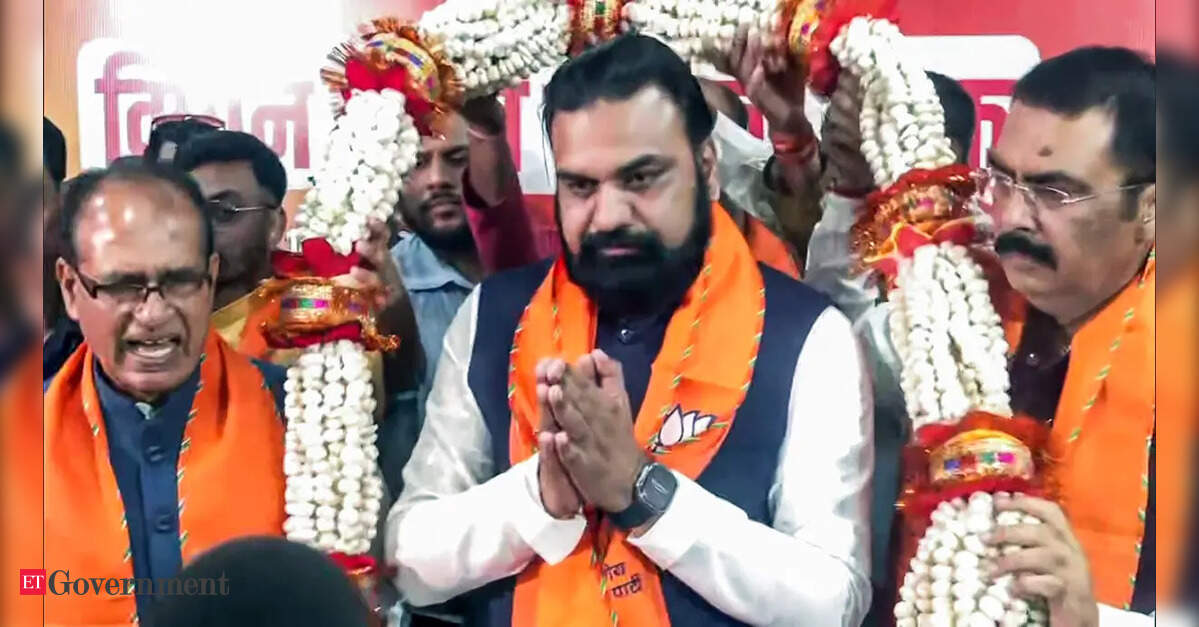
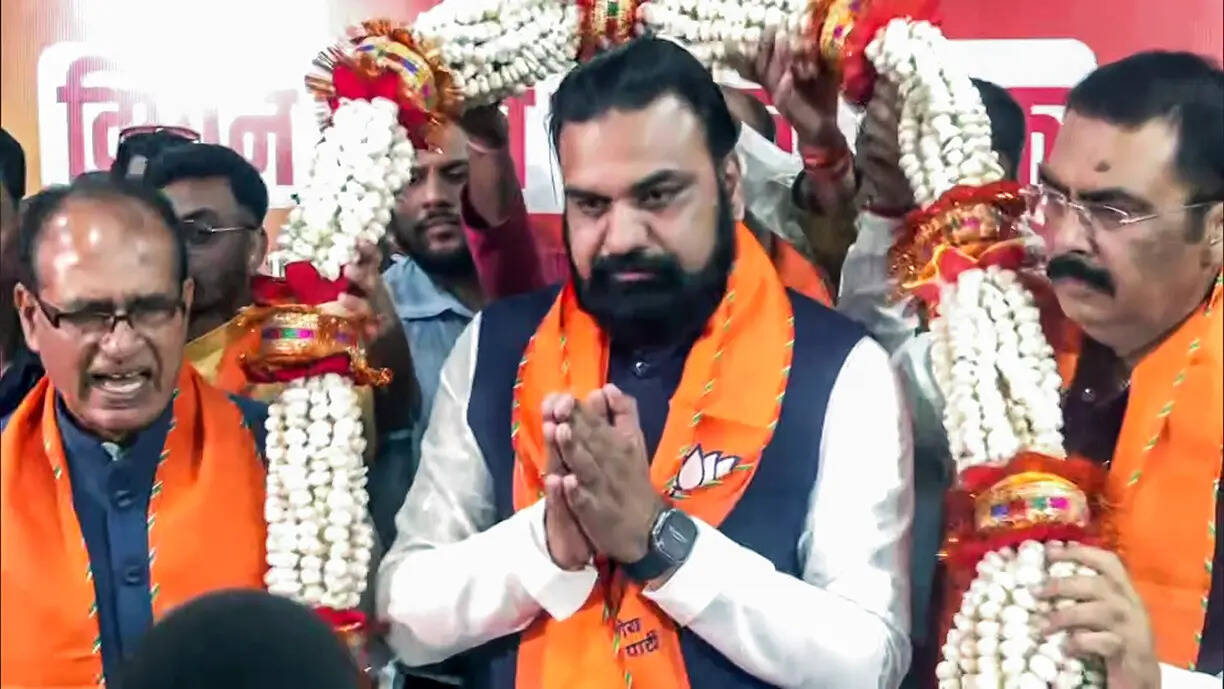
Patna woke up to a decisive political shift on April 14. For a state long accustomed to calibrated political continuity under Nitish Kumar, the sudden ascent of Samrat Choudhary marks not just a change of guard, but a structural shift in Bihar’s political grammar.
For the first time, the Bharatiya Janata Party is not merely a coalition partner in Bihar—it is the principal axis of power. And Choudhary, a leader shaped in the churn of backward caste politics and organizational discipline, is set to become the party’s first Chief Minister in the state.
This transition did not emerge gradually. It arrived with the velocity of a political realignment. Nitish Kumar’s resignation—after years of navigating alliances with both the BJP and the opposition—effectively closed an era defined by tactical flexibility. In its place, a more assertive, ideologically anchored governance model is expected to take root.
Political Journey
Samrat Choudhary’s political journey is emblematic of Bihar’s layered caste and ideological currents. The son of the late Shakuni Choudhary, he began his career in student politics before moving through multiple parties, eventually consolidating his position within the BJP.
His rise within the party has been steady rather than spectacular—marked by organizational roles, legislative experience, and a reputation for loyalty to the central leadership. That loyalty now appears to have been rewarded decisively.
Senior BJP leaders have framed his elevation as both symbolic and strategic. Narendra Modi, in his remarks, emphasized continuity with change, noting that Bihar stands “at the threshold of accelerated development under a leadership that understands both the grassroots and the aspirations of a new India.”
Similarly, Amit Shah described the transition as “a reflection of the BJP’s commitment to empowering leadership that emerges from the social realities of the state,” underscoring the party’s intent to deepen its political base among Other Backward Classes (OBCs).
Nitish Kumar’s Exit
Nitish Kumar’s departure is not merely a resignation; it is the conclusion of a political method that defined Bihar for nearly two decades. His governance model—anchored in coalition-building, administrative reform, and a carefully balanced caste equation—had created a form of stability rare in the state’s earlier decades.
However, that very model began to show signs of strain in recent years. Frequent alliance shifts diluted political clarity, and governance narratives increasingly struggled to keep pace with rising economic aspirations.
In his final remarks, Nitish Kumar maintained that his decision was guided by “the best interests of Bihar,” though the subtext of political fatigue and diminishing maneuverability was difficult to ignore.
Opposition leaders, including Tejashwi Yadav, were quick to frame the transition as a democratic opportunity. “Bihar is witnessing a reset,” Yadav remarked, adding that “the real contest now is about governance delivery, not just political arithmetic.”
BJP’s Strategic Consolidation
For the BJP, this moment is the culmination of a long-term strategy. Bihar has historically been a complex terrain—socially fragmented, politically volatile, and resistant to single-party dominance. By elevating Samrat Choudhary, the party is attempting to resolve this complexity through a combination of caste representation and centralized political messaging.
Choudhary’s OBC identity is central to this calculus. It allows the BJP to challenge traditional caste alignments while reinforcing its narrative of social mobility and political inclusion.
At the same time, the party’s central leadership is expected to play a more visible role in state governance. This raises an important question: will Bihar now witness a more synchronized Centre-State policy alignment, or will local realities impose their own constraints?
Governance Challenges: From Symbolism to Delivery
The immediate test for the new Chief Minister will not be political symbolism, but administrative delivery. Bihar continues to grapple with structural challenges—industrial underdevelopment, high outmigration, and gaps in infrastructure and human capital.
The BJP has already signaled its priorities: infrastructure expansion, investment promotion, and welfare delivery through digital platforms. However, translating these priorities into measurable outcomes will require navigating Bihar’s entrenched bureaucratic and socio-economic complexities.
Choudhary, in his initial remarks, struck a tone of cautious determination. “This is not just a political responsibility; it is a commitment to transform Bihar’s development trajectory,” he said, emphasizing governance continuity alongside new initiatives.
A New Political Grammar
What makes this transition particularly significant is not just the change in leadership, but the shift in political grammar. Bihar is moving from a coalition-driven equilibrium to a more centralized, party-led model of governance.
This shift carries both opportunity and risk. On one hand, it could enable faster decision-making and clearer policy direction. On the other, it may reduce the flexibility that coalition politics often provides in a socially diverse state.
The coming months will reveal whether Samrat Choudhary can balance these competing demands—asserting authority without alienating key constituencies, and delivering development without losing political coherence.
The Road Ahead
As Patna prepares for the oath-taking ceremony, the symbolism is unmistakable. A new leader, a new party dynamic, and a new phase in Bihar’s political evolution.
Yet, beneath the ceremony lies a more complex reality. Bihar’s electorate is increasingly aspirational, less tolerant of political drift, and more demanding of tangible outcomes. The era of political survival through alliance management may be giving way to an era defined by governance performance.
In that sense, Samrat Choudhary’s tenure begins not with a mandate secured through electoral triumph, but with a mandate to prove—quickly and decisively—that this transition is more than a reshuffling of power. The streets of Patna, restless and watchful, will be the first to judge.