As global conflicts reshape military doctrines and expose the vulnerabilities of legacy platforms, India is accelerating its push to modernise its land warfare capabilities with a sharper focus on mobility, survivability and indigenous manufacturing.
Against the backdrop of the Russia-Ukraine war’s brutal lessons in armoured warfare, rising border tensions in India’s extended neighbourhood, and New Delhi’s broader ambition of reducing dependence on imported defence systems, the Defence Research and Development Organisation (Defence Research and Development Organisation) on Friday unveiled two new indigenous advanced armoured platforms designed for future battlefield requirements.
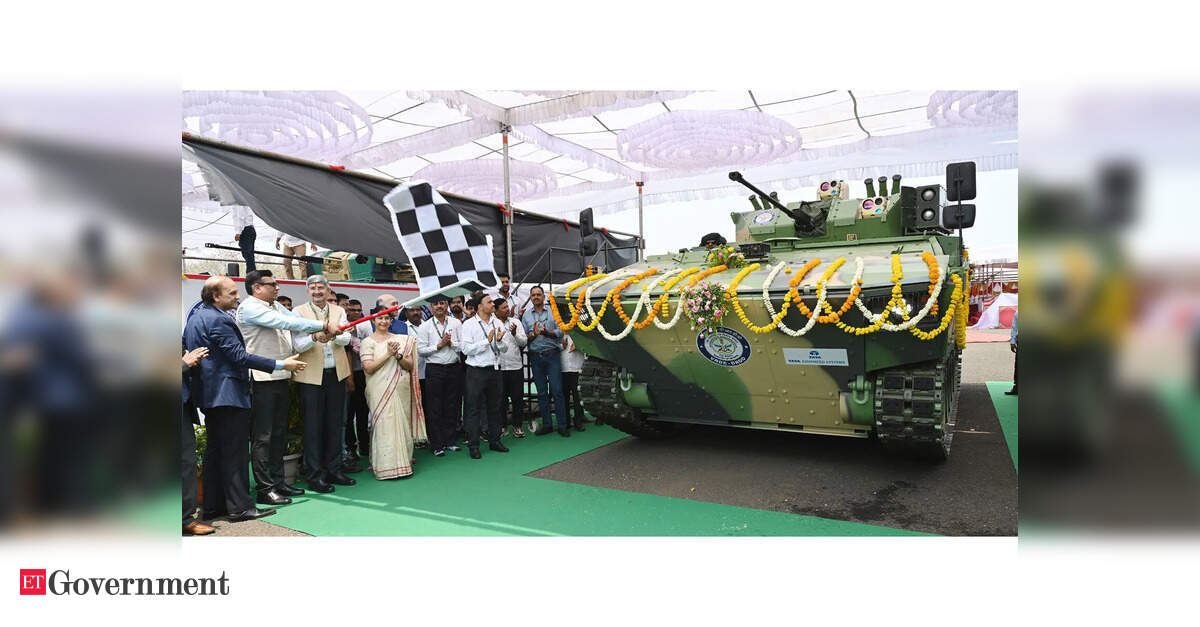
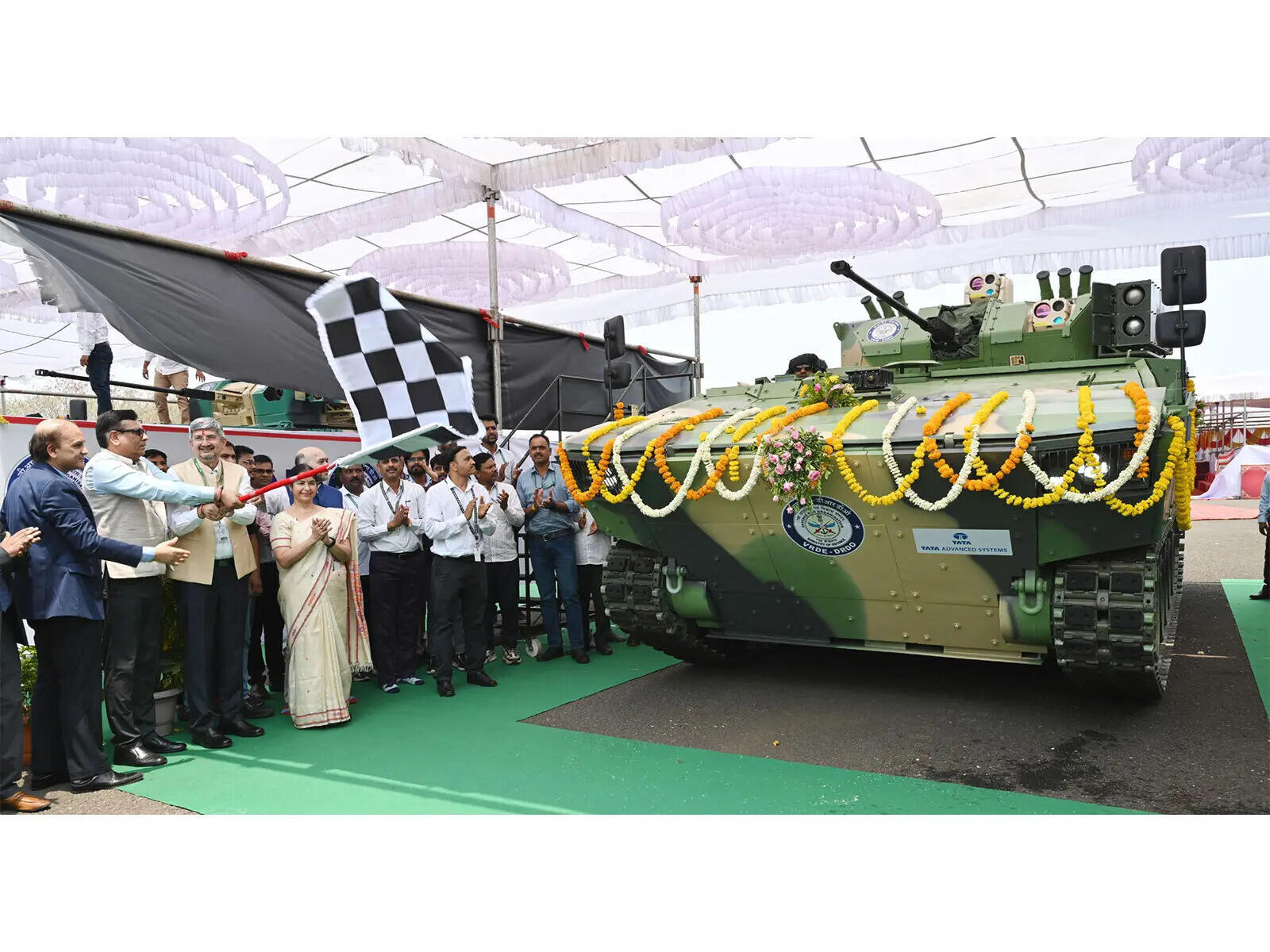
The Advanced Armoured Platforms—one tracked and one wheeled—were unveiled on April 25 at DRDO’s Vehicles Research and Development Establishment (VRDE) facility in Ahilyanagar, Maharashtra, by Dr. Samir V. Kamat, Secretary, Department of Defence R&D and Chairman of Defence Research and Development Organisation.
The unveiling comes at a time when militaries across the world are reassessing the role of armoured platforms in an era defined by drone warfare, precision-guided munitions, anti-tank missile systems and hybrid conflicts. The war in Ukraine has demonstrated that conventional tanks and infantry fighting vehicles remain relevant, but only when supported by superior situational awareness, modular protection systems and operational agility.
Simultaneously, tensions across the Indo-Pacific and persistent military competition along India’s northern borders have reinforced the need for versatile combat vehicles capable of operating across diverse terrains.
India has also been steadily pursuing defence indigenisation under the Atmanirbhar Bharat framework, particularly after the disruptions in global supply chains caused by the Russia-Ukraine conflict and increasing geopolitical fragmentation. New Delhi has sought to reduce its historical dependence on Russian-origin platforms while building domestic industrial capacity in critical defence technologies.
The newly unveiled platforms appear to be aligned with this strategic shift.
Designed to meet the emerging operational requirements of the armed forces, both vehicles are integrated with an indigenously developed 30 mm crewless turret aimed at improving battlefield survivability by reducing direct exposure of personnel during combat operations. The platforms are also equipped with a 7.62 mm PKT gun and have been configured to launch anti-tank guided missiles, significantly enhancing their offensive capabilities.
DRDO said the vehicles have been engineered to balance mobility, firepower and protection—three critical variables in modern mechanised warfare.
Powered by high-output engines and automatic transmission systems, the platforms offer a high power-to-weight ratio, enabling greater speed and improved manoeuvrability in challenging operational environments. They are designed to negotiate steep gradients and difficult obstacles while offering enhanced battlefield flexibility.
One of the key features is their protection architecture. The platforms provide STANAG Level 4 and Level 5 protection with modular ballistic and blast protection systems, enabling better resistance against mines, improvised explosive devices and enemy fire.
The amphibious capability of the platforms further expands their operational relevance. By incorporating hydro-jet systems for improved water obstacle crossing, the vehicles can operate in riverine environments and challenging terrains, offering flexibility for both offensive and defensive missions.
Defence experts have increasingly argued that future conflicts will require multi-role platforms capable of rapid adaptation. DRDO said the base architecture of these armoured systems can be modified for multiple operational roles, suggesting potential applications beyond conventional mechanised warfare.
Perhaps the most significant strategic takeaway, however, lies in the manufacturing ecosystem behind the platforms.
The systems have been manufactured through collaboration with Tata Advanced Systems Limited and Bharat Forge Limited, supported by a network of micro, small and medium enterprises. The partnership reflects the growing role of private industry in India’s defence manufacturing ecosystem—an area historically dominated by public sector enterprises.
With indigenous content currently estimated at 65 per cent and plans to raise it to 90 per cent, the programme reflects India’s broader effort to create resilient domestic supply chains in defence manufacturing while positioning itself as a potential exporter of advanced military platforms in the future.
Senior scientists from multiple DRDO laboratories, including the Vehicles Research and Development Establishment, Armament Research and Development Establishment, Defence Metallurgical Research Laboratory, High Energy Materials Research Laboratory, Combat Vehicles Research and Development Establishment and Research and Development Establishment (Engineers), were present during the unveiling.
The launch of these platforms signals more than a technological milestone. It reflects India’s attempt to recalibrate its military-industrial strategy in response to a rapidly evolving geopolitical landscape where defence preparedness is increasingly tied to technological sovereignty, supply chain resilience and the ability to fight future wars on India’s own terms.