India and New Zealand have signed an ambitious Free Trade Agreement that could significantly reshape their economic relationship while reinforcing India’s broader strategy of securing trade partnerships with developed economies amid growing global economic fragmentation.
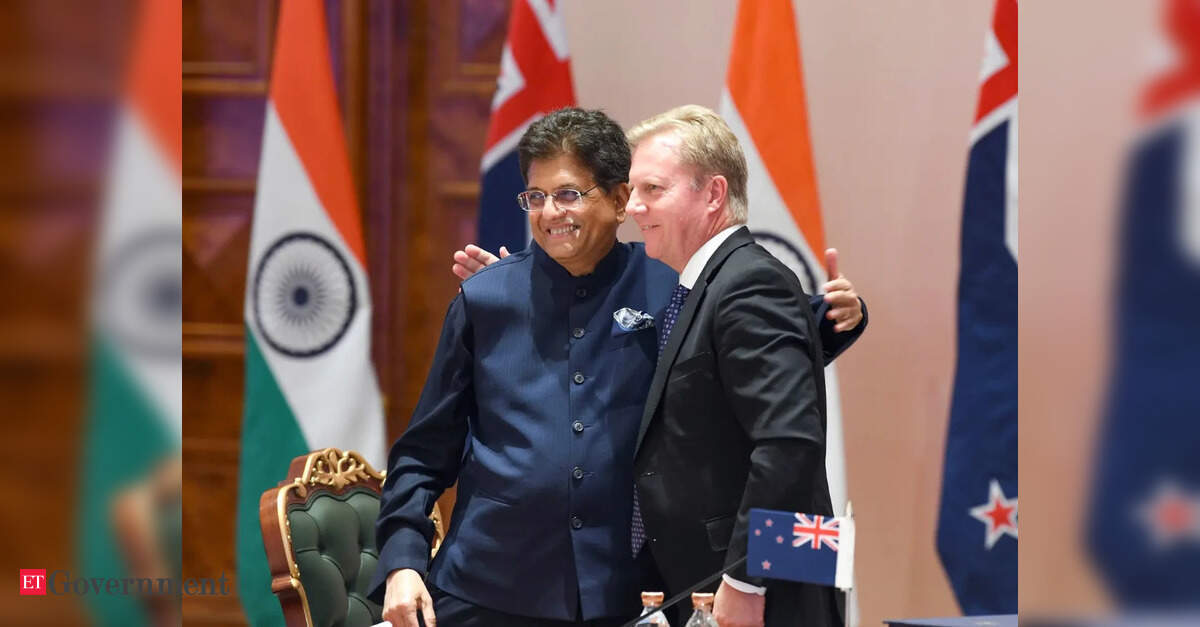
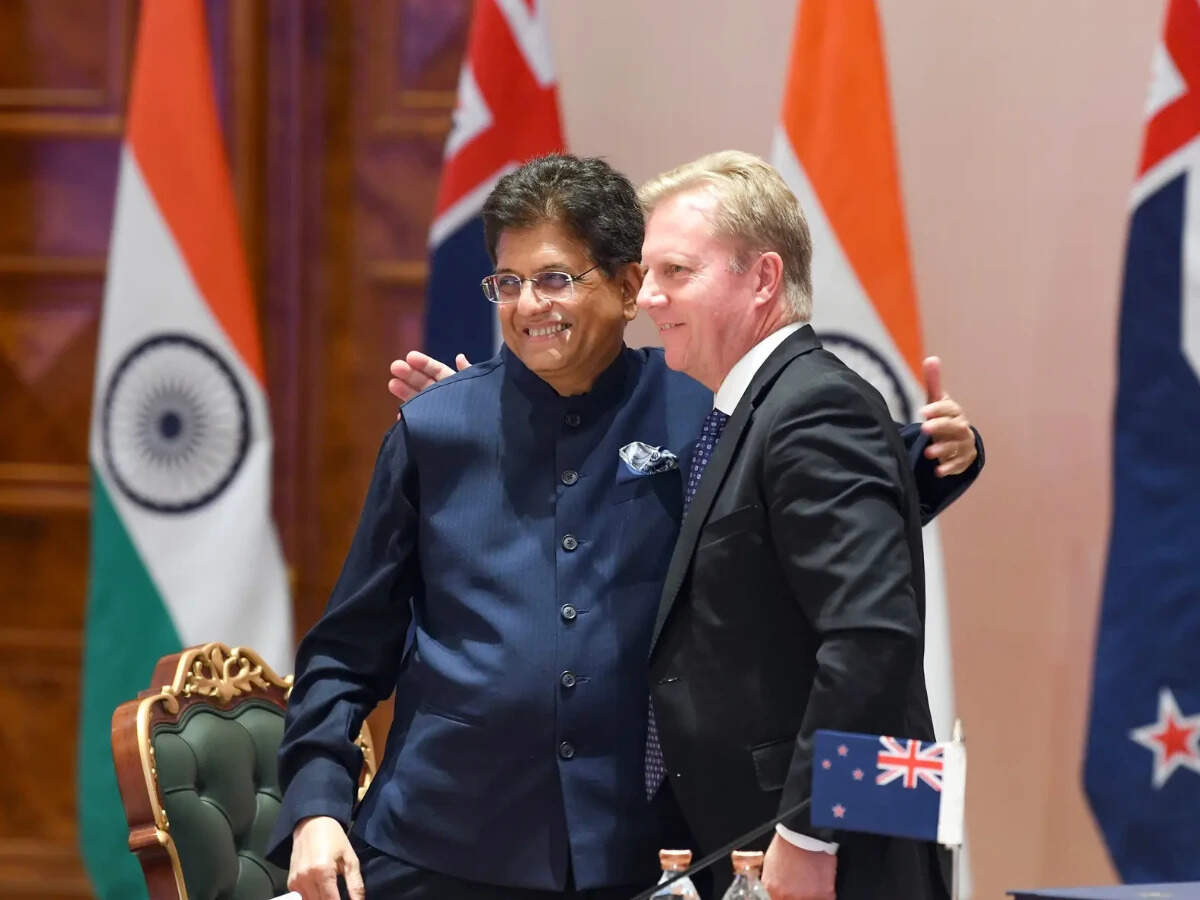
Signed in New Delhi by Commerce and Industry Minister Piyush Goyal and New Zealand’s Trade and Investment Minister Todd McClay, the agreement delivers sweeping market access commitments, expands mobility opportunities for Indian students and professionals, opens new pathways for investment flows, and reflects India’s increasingly assertive trade diplomacy in the Indo-Pacific.
The agreement was negotiated at remarkable speed. Formal talks were launched on March 16, 2025, during New Zealand Prime Minister Christopher Luxon’s visit to India and concluded within nine months after five formal rounds of negotiations and multiple intersessional meetings. For India—often seen as a cautious negotiator in trade matters—this timeline marks a notable shift.
For years, New Delhi remained skeptical of expansive trade liberalisation after concerns that earlier agreements with ASEAN countries had widened trade deficits and exposed domestic sectors to intense competition. India’s withdrawal from the Regional Comprehensive Economic Partnership in 2019 reflected those anxieties.
However, India’s trade doctrine has evolved significantly over the last few years. Instead of large multilateral arrangements, New Delhi has increasingly pursued targeted bilateral agreements that offer greater strategic flexibility. Agreements with the United Arab Emirates, Australia, the European Free Trade Association bloc, and ongoing negotiations with the European Union and the United States reflect this recalibrated approach.
The New Zealand agreement now becomes another pillar in India’s attempt to deepen economic integration with trusted partners while reducing vulnerabilities in an increasingly volatile global trade environment.
Why New Zealand Matters
At first glance, the trade numbers may appear modest. Bilateral merchandise trade between India and New Zealand stood at approximately $1.3 billion in FY 2024-25, while total trade in goods and services reached nearly $2.4 billion. But the significance of trade agreements often lies in future strategic positioning rather than present trade volumes.
New Zealand is India’s second-largest trading partner in Oceania and offers Indian exporters access to a high-income market with strong regulatory standards. For Wellington, closer ties with India help diversify trade partnerships at a time when many countries are reassessing their economic dependence on China.
Todd McClay described the agreement as a “once-in-a-generation opportunity” that would strengthen exports, create jobs and deepen bilateral ties.
A Major Export Opportunity for India
The biggest immediate gain for India is New Zealand’s decision to provide duty-free access on 100 percent of Indian exports from the day the agreement comes into force. This gives Indian exporters parity with competitors who already enjoy preferential access to the New Zealand market.
Labour-intensive sectors such as textiles, apparel, leather, footwear, engineering goods, processed foods, gems and jewellery are expected to benefit significantly. States such as Gujarat, Maharashtra, Tamil Nadu, Uttar Pradesh, Punjab and Kerala could emerge as key beneficiaries due to their export strengths.
The agreement also allows India duty-free access to critical manufacturing inputs such as coking coal, wooden logs and metal scrap—an important development as India seeks to strengthen domestic manufacturing competitiveness.
Protecting Sensitive Agricultural Sectors
India has simultaneously ensured that politically sensitive sectors remain protected. Dairy products, onions, sugar, edible oils and several agricultural products remain outside the scope of tariff liberalisation. This was particularly important because New Zealand remains one of the world’s most competitive dairy exporters, led by companies such as Fonterra.
Instead of broad market opening, India negotiated tariff-rate quotas and safeguard mechanisms for products such as apples, kiwifruit and Manuka honey. This reflects India’s increasingly calibrated trade strategy—opening markets where domestic competitiveness exists while protecting vulnerable sectors.
Services and Talent Mobility
One of the most consequential components of the agreement lies in services and mobility. New Zealand has offered India market access in 118 service sectors while extending Most Favoured Nation commitments in 139 sub-sectors. These sectors include IT services, financial services, education, healthcare, construction and tourism.
The agreement also creates a dedicated visa pathway for 5,000 Indian professionals. Indian students stand to benefit as well. STEM graduates can remain in New Zealand for up to three years after graduation, while doctoral graduates can remain for up to four years. This reflects a broader shift in India’s trade negotiations where mobility of skilled professionals has become increasingly central.
The $20 Billion Investment Question
Among the most eye-catching announcements is New Zealand’s commitment to facilitate $20 billion in investments into India. These investments are expected to flow into agriculture, manufacturing, renewable energy, infrastructure, startups and emerging technologies.
If realised, this would significantly deepen bilateral economic engagement. However, trade agreements often announce ambitious investment commitments that take years to materialise. The real challenge lies in execution.
Modi Frames the Deal as Strategic
The political signalling around the agreement has been equally strong. Soon after the signing, Prime Minister Narendra Modi welcomed the agreement and framed it as a long-term strategic milestone.
In a post on X, he said: “Today marks a landmark moment in the India-New Zealand partnership. I am delighted that the India-New Zealand FTA signed today will add unprecedented momentum to our developmental partnership. It reflects the deep trust, shared values and ambition that bind our two nations.”
He added that the agreement would benefit “farmers, youth, women, MSMEs, artisans, startups, students and innovators,” while opening new avenues for growth across sectors.
A Larger Indo-Pacific Strategy
Beyond trade numbers, the agreement carries strategic implications. As global supply chains shift and geopolitical tensions reshape economic partnerships, India is positioning itself as an alternative manufacturing and services hub. For New Zealand, stronger ties with India reduce dependence on China.
For India, the agreement expands its footprint in the Indo-Pacific and strengthens its broader economic diplomacy strategy. The real success of the agreement, however, will depend not on the signing ceremony but on implementation.
If exporters gain scale, investments materialise, and professionals secure new opportunities, the India-New Zealand FTA could become one of India’s most consequential trade agreements in recent years. If execution falters, it risks becoming another ambitious agreement whose potential remains unrealised.