SHANTI
As India seeks to expand nuclear power from a limited component of its energy mix into a major pillar of long-term energy security, a high-level industry reception in New Delhi on Monday brought together key stakeholders from both sides of the India-U.S. strategic partnership.
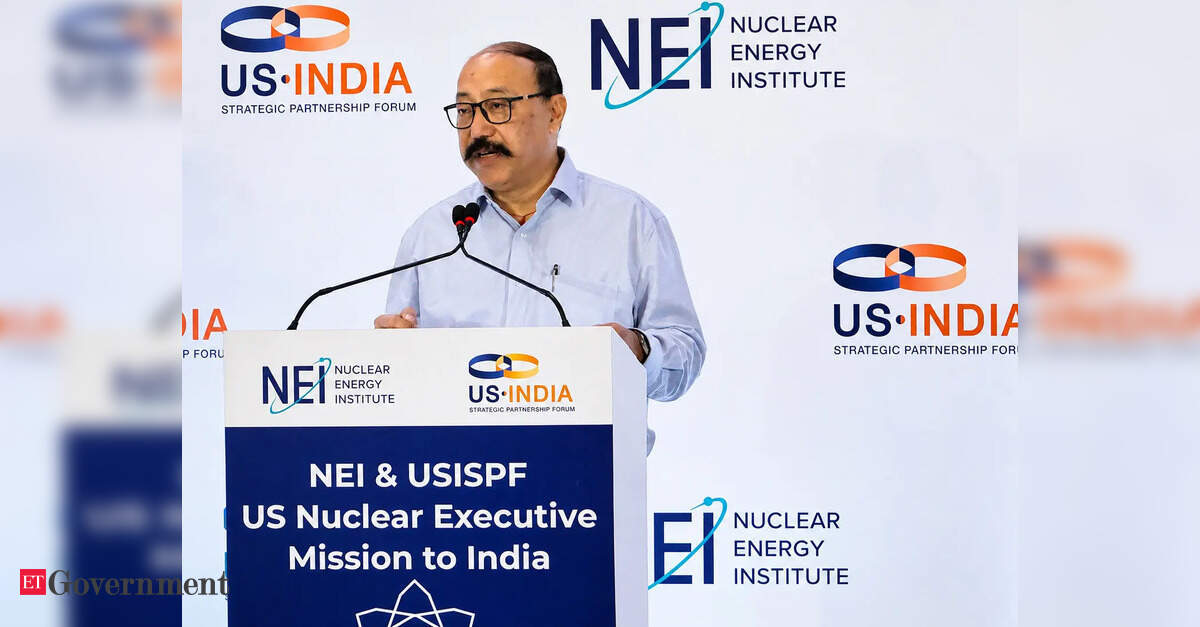
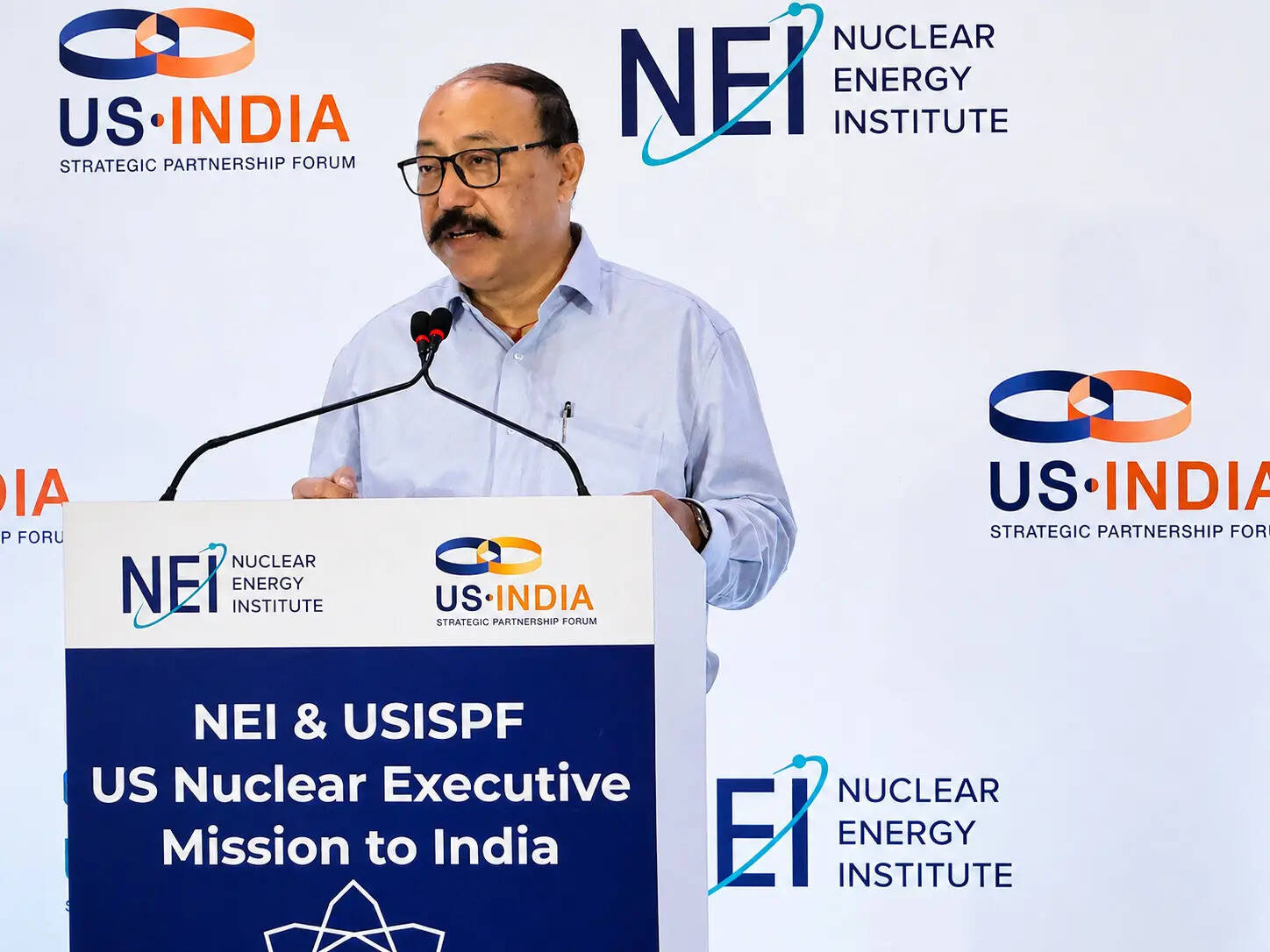
Organised by the Nuclear Energy Institute (NEI) and the US-India Strategic Partnership Forum (USISPF) under the broader US Nuclear Executive Mission to India, the event featured senior executives from the American nuclear industry, Indian policymakers, strategic experts, and industry stakeholders at a time when India is attempting to restructure the legal and investment architecture governing its nuclear energy sector.
The discussions at the reception revolved around a central strategic question: how can India accelerate the expansion of nuclear power to meet its long-term energy security and decarbonisation goals while simultaneously attracting global capital, advanced technologies, and trusted supply chain partnerships?
At the centre of the conversation was the recently enacted SHANTI Bill, which several speakers described as a potentially transformative legislative reform for India’s nuclear sector. However, it was the address delivered by Harsh Vardhan Shringla — currently serving as a Member of the Rajya Sabha and formerly India’s Foreign Secretary, Ambassador to the United States, High Commissioner to Bangladesh, and Chief Coordinator for India’s G20 Presidency — that provided the evening with its principal strategic and geopolitical framework.
Shringla framed the legislation not merely as a technical reform, but as the removal of a long-standing structural bottleneck that had constrained India’s civil nuclear partnership with global players, particularly the United States. Reflecting on the evolution of India’s nuclear engagement with Washington, he argued that earlier legislative and liability-related concerns had prevented the full realisation of the opportunities created after the India-U.S. Civil Nuclear Agreement.
“For too long in India, I think we have been stalled in this particular endeavour of ours to move forward in this critical sector,” Shringla said during his address.
Referring directly to the newly enacted legislation, he stated: “Today, we have an enabling environment that would allow investors, both our domestic investors and foreign investors, to come in and participate in this very fast-growing area of energy security.”
The SHANTI Bill, which has emerged as one of the most consequential reforms in India’s nuclear energy ecosystem in recent years, seeks to address precisely those structural uncertainties that had historically deterred foreign participation in the sector. One of the principal concerns among international nuclear suppliers had been India’s civil nuclear liability framework, particularly the provisions that exposed equipment suppliers to expansive post-accident liabilities.
Industry stakeholders had long argued that the legal uncertainty created financing difficulties, raised insurance costs, and discouraged private and international participation.
According to the government’s broader reform framework outlined around the legislation, the new legal architecture is expected to align India more closely with international nuclear liability conventions and create a more predictable investment regime for global nuclear suppliers and technology providers. The reforms are also expected to facilitate deeper collaboration between Indian public sector entities, private companies, and international nuclear firms in reactor deployment, manufacturing, fuel-cycle activities, and supply-chain integration.
Shringla recalled that during his tenure in Washington between 2019 and 2020, efforts were already underway to create “space for an alternative framework” that could attract private investments from the United States into India’s nuclear sector. He suggested that the current legislation finally provides the institutional clarity required to operationalise many of those earlier discussions.
The timing of the reform is significant because India’s energy transition strategy increasingly recognises the limitations of relying exclusively on renewable energy sources. Shringla acknowledged India’s substantial progress in renewables, noting that the country had already crossed Prime Minister Narendra Modi’s Glasgow commitment ahead of schedule.
“Today, before that deadline of 2030, we have already crossed 51% of renewable installed capacity,” he said, while also pointing out that India is now among the world’s leading producers of solar and wind energy.
Yet the core argument of his address was that renewable expansion alone cannot sustain India’s future economic trajectory, especially as the country enters an era of AI-driven industrialisation, data centre expansion, digital infrastructure growth, and rising manufacturing intensity. Shringla argued that intermittency challenges associated with renewables make baseload nuclear power strategically indispensable.
“We’ve seen that when there is peak demand at night, renewable energy doesn’t give you the sort of backup that you need. That’s where hydro and nuclear energy become very important,” he observed.
The strategic scale of India’s ambition was evident in his reference to the national objective of expanding nuclear power generation capacity from the current approximately 8.8 GW to 100 GW by 2047. But significantly, Shringla argued that the target itself should be accelerated rather than merely treated as a distant centenary goal.
“Our 100 gigawatts need not wait for 2047. We should have it forward-loading and front-loading and not backward-loading,” he said.
His remarks reflected a growing consensus among strategic planners that nuclear power is no longer being viewed solely through the lens of energy diversification, but increasingly as a foundational pillar of technological sovereignty, industrial competitiveness, and strategic resilience.
Another important dimension of the discussion involved the role of Indian private industry. Shringla rejected criticisms that greater private participation would amount to an undesirable “privatisation” of the nuclear sector. Drawing a parallel with India’s defence manufacturing transformation, he argued that private sector involvement had previously helped India move from dependence on external defence suppliers toward greater indigenous capability.
“It’s because of privatisation in the defence sector that we have gone from being 60% dependent on outside sources for our defence equipment to becoming far more self-reliant today,” he argued.
The implication was clear: India now seeks to replicate a similar strategic-industrial model in nuclear energy — one where foreign collaboration, domestic manufacturing, technology partnerships, and private sector participation operate simultaneously within a nationally controlled framework.
Shringla also highlighted India’s parallel indigenous reactor-development efforts, including Bharat Small Modular Reactor (SMR) initiatives and fast breeder reactor technologies linked to India’s thorium-based nuclear programme. These projects, he suggested, could gain further momentum through foreign investment, technology partnerships, and collaborative industrial ecosystems.
The presence of senior American nuclear industry leaders at the reception underscored the strategic convergence emerging between India’s long-term energy requirements and U.S. nuclear industry interests.
The delegation represented multiple segments of the nuclear ecosystem, including reactor developers, fuel-cycle specialists, technology providers, engineering firms, and supply-chain companies. Discussions during the event reportedly focused on project development opportunities, advanced reactor technologies, financing structures, localisation pathways, and long-term industrial partnerships.
The broader geopolitical context also loomed over the event. As global energy systems undergo rapid transformation amid climate commitments, geopolitical fragmentation, and growing electricity demand from AI infrastructure, civil nuclear cooperation is increasingly becoming intertwined with strategic partnerships among trusted democracies.
Shringla explicitly linked nuclear cooperation to the next phase of India-U.S. strategic ties, describing the sector as one of the most promising areas for deepening bilateral engagement.
“We need to find new areas of cooperation that would give us the basis to take that relationship to the next important level, and I think nuclear energy is just the right sector,” he said.
The event ultimately reflected a broader shift underway in India’s energy policy thinking. For years, India’s nuclear ambitions had remained constrained by regulatory complexity, liability concerns, financing limitations, and implementation delays. The SHANTI Bill appears intended to alter that equation by signalling institutional stability, regulatory clarity, and openness to strategic investment partnerships.
Whether the legislation succeeds in translating intent into rapid project execution will depend on subsequent policy implementation, financing mechanisms, localisation strategies, and institutional coordination. Yet the reception organised by the Nuclear Energy Institute and USISPF demonstrated that both India and the United States increasingly view civil nuclear cooperation not as a residual diplomatic agenda from the past, but as a central component of the future energy and strategic architecture of the bilateral relationship.