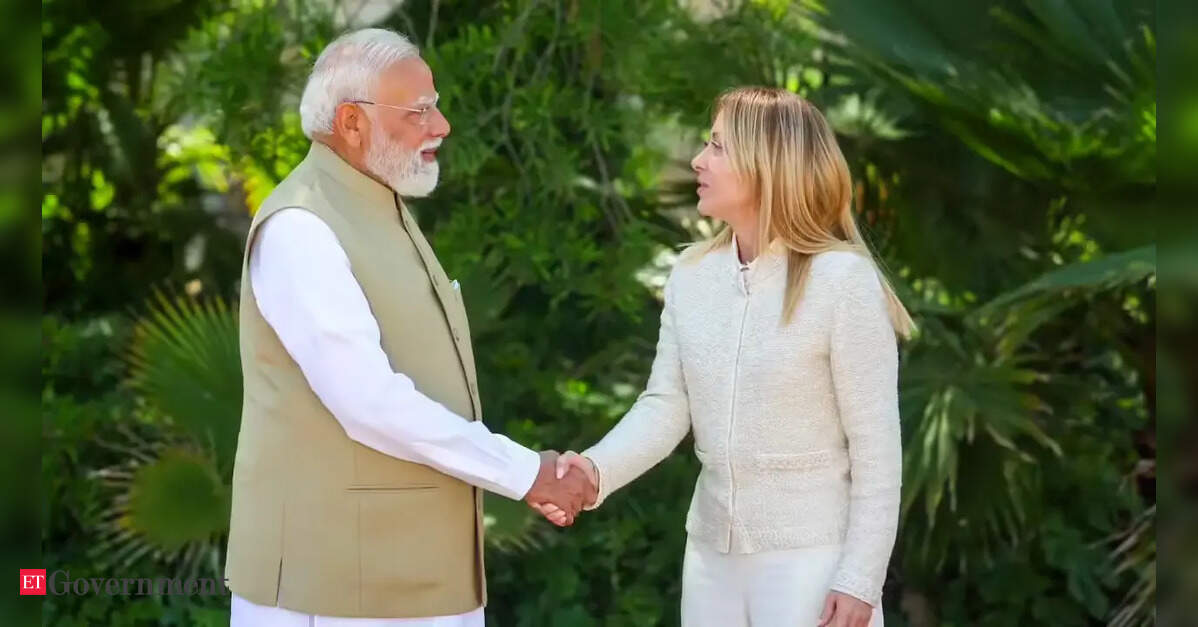
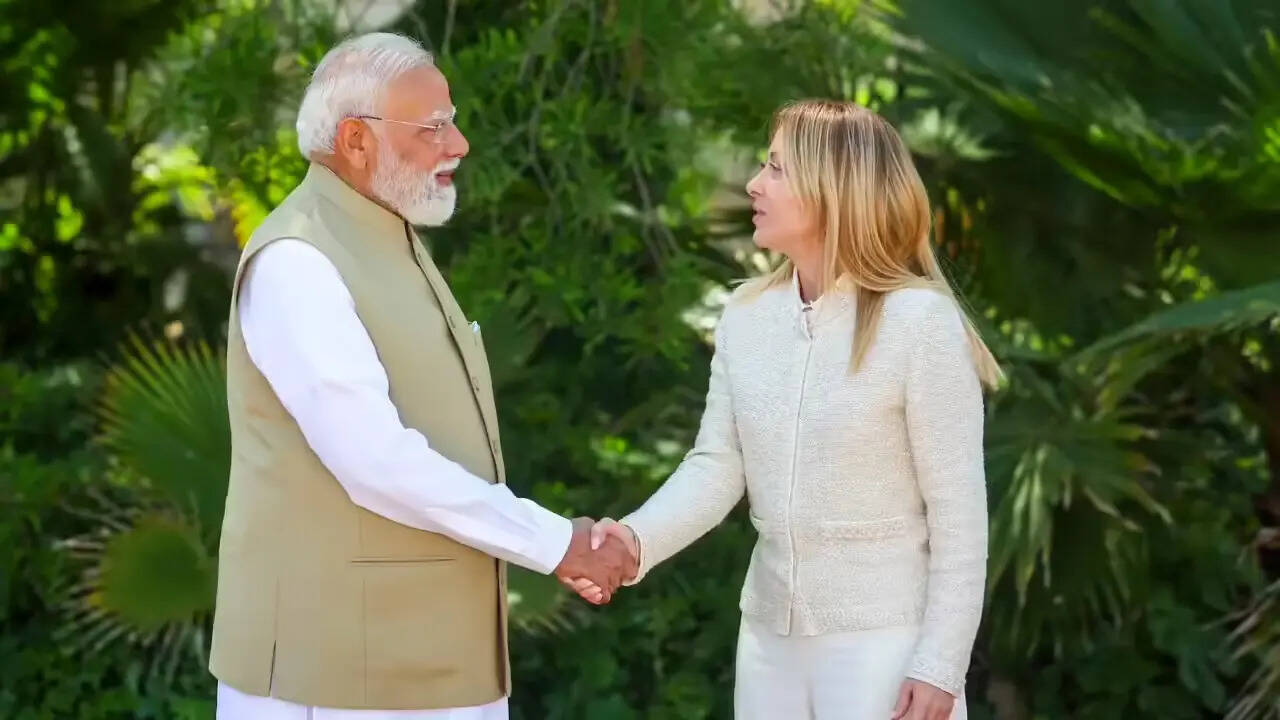
Two ancient civilisations, separated by geography but increasingly aligned by strategy, used the city of Rome this week to signal a decisive recalibration of India-Europe relations.
Prime Minister Narendra Modi’s official visit to Italy on May 19–20 was not merely another bilateral engagement in a crowded diplomatic calendar; it marked the formal elevation of India-Italy relations into a “Special Strategic Partnership” — a framework that stretches far beyond ceremonial diplomacy into defence manufacturing, critical minerals, artificial intelligence, maritime connectivity, and geopolitical coordination.
The symbolism of the visit was impossible to miss. Rome — the historic centre of Mediterranean power — became the venue where India and Italy attempted to architect a new strategic corridor linking the Indo-Pacific with Europe.
At a moment when Europe is reassessing its economic dependencies, China’s supply-chain dominance is under scrutiny, and geopolitical fragmentation is accelerating, New Delhi and Rome appear to have concluded that their partnership can no longer remain confined to trade and cultural ties alone.
Prime Minister Modi, addressing the joint press interaction with Italian Prime Minister Giorgia Meloni, framed the relationship in civilisational and strategic terms. Referring to Rome and Kashi as “eternal cities,” Modi remarked that when such ancient civilisations collaborate, their partnership acquires a significance that transcends immediate political calculations.
Giorgia Meloni, for her part, described India-Italy relations as entering a “decisive phase,” arguing that the bilateral partnership was now capable of realising its “fullest potential.” Her comments reflected a broader shift underway within Europe, where India is increasingly viewed not merely as a large market, but as a long-term geopolitical and technological partner.
At the centre of the declaration lies an ambitious economic agenda. Both countries committed themselves to expanding bilateral trade to €20 billion by 2029, while pushing for deeper integration of industrial supply chains.
The timing is significant. Europe’s search for resilient and diversified supply chains has intensified amid global disruptions caused by the Ukraine conflict, instability in West Asia, and strategic anxieties surrounding overdependence on China. India, simultaneously, is attempting to position itself as an alternative manufacturing and technology hub for Europe and the wider democratic world.
The declaration identifies a wide range of sectors for deeper cooperation: semiconductors, clean technologies, pharmaceuticals, automotive systems, ports, critical raw materials, digital technologies, infrastructure, and tourism. What makes the document noteworthy is that it moves beyond generic diplomatic language and begins outlining institutional mechanisms to operationalise cooperation.
One of the most consequential outcomes was the agreement on critical minerals cooperation. The two sides signed a Memorandum of Understanding aimed at building resilient supply chains for critical minerals and promoting joint work in mineral recovery from electronic waste and unconventional sources. In an era defined by battery technologies, semiconductors, electric mobility, and strategic competition over rare earths, this element of the partnership carries enormous geopolitical significance.
Equally important was the reaffirmation of support for the India-Middle East-Europe Economic Corridor (IMEC). IMEC has increasingly emerged as one of the most ambitious geoeconomic projects attempting to connect India with Europe through maritime, rail, logistics, and energy corridors across West Asia.
For Italy, whose Mediterranean ports provide a natural gateway into continental Europe, IMEC represents an opportunity to regain strategic centrality in global trade networks. For India, it offers a long-term route to deepen commercial access to Europe while reducing vulnerabilities in traditional shipping chokepoints.
Defence cooperation also emerged as a major pillar of the upgraded partnership. The two countries adopted a Defence Industrial Roadmap aimed at technological collaboration, co-production, and co-development in sectors such as helicopters, naval platforms, marine armaments, and electronic warfare systems. This marks a notable expansion of India’s defence diversification strategy, which increasingly seeks partnerships beyond traditional suppliers.
The defence dimension is especially important because Italy possesses advanced industrial capabilities in aerospace, naval systems, shipbuilding, electronics, and dual-use technologies. For India, which is pursuing the “Make in India” and defence indigenisation agenda, such partnerships are strategically useful not only for procurement but for technological absorption and manufacturing integration.
The joint declaration also reflects how rapidly technology diplomacy is becoming central to modern geopolitics. Both countries announced the creation of “INNOVIT India,” an innovation hub designed to connect startups, universities, investors, and research ecosystems across sectors ranging from fintech and healthcare to quantum computing and artificial intelligence.
Artificial intelligence featured prominently in the discussions. Modi thanked Italy for its participation in the India AI Impact Summit held in New Delhi earlier this year, while both leaders committed themselves to developing “human-centric, secure, trustworthy and robust Artificial Intelligence.”
The emphasis is revealing. As global debates intensify over AI governance, algorithmic sovereignty, data security, and ethical frameworks, India and Italy appear keen to shape the conversation rather than merely consume technologies developed elsewhere.
Another notable feature of the declaration was its geopolitical clarity on terrorism. Both leaders strongly condemned the April 2025 Pahalgam terror attack and reaffirmed cooperation against terrorism and terror financing through multilateral mechanisms including the UN and FATF. This explicit language reflects growing European recognition of India’s security concerns regarding cross-border terrorism.
The declaration also demonstrated increasing convergence on wider global issues. India and Italy jointly supported reform of the United Nations, reaffirmed commitment to a rules-based international order, expressed concern over the wars in Ukraine and West Asia, and underscored the importance of freedom of navigation and maritime stability.
Yet perhaps the most important aspect of the visit lies in what it reveals about the evolution of India-Europe relations. For years, India’s engagement with Europe remained disproportionately concentrated around a few major powers such as France, Germany, and the United Kingdom. Italy, despite being Europe’s third-largest economy and an important manufacturing power, often remained relatively underutilised in India’s strategic calculations.
That equation now appears to be changing rapidly. Rome increasingly views India as indispensable to Europe’s future economic resilience, Indo-Pacific strategy, and technological competitiveness. India, meanwhile, sees Italy as an influential Mediterranean gateway into Europe, particularly in sectors such as advanced manufacturing, mobility, defence systems, clean energy, and maritime connectivity.
The visit also unfolded against the backdrop of the newly concluded India-EU Free Trade Agreement negotiations, which both sides welcomed as a transformative opportunity. If implemented effectively, the FTA could fundamentally reshape India’s trade architecture with Europe over the coming decade.
Prime Minister Modi’s Italy visit therefore carried implications far beyond bilateral optics or diplomatic choreography. It reflected India’s broader strategy of constructing flexible strategic coalitions across regions while simultaneously embedding itself deeper into global technology, manufacturing, and connectivity networks.
In many ways, the Rome declaration suggests that India and Italy are attempting to move their relationship from episodic engagement to structural alignment. Whether this ambitious framework ultimately succeeds will depend not on the rhetoric of summit diplomacy, but on the speed with which both sides can translate declarations into industrial partnerships, technology ecosystems, defence projects, academic exchanges, and strategic investments.
Still, the message from Rome was unmistakable: India and Italy no longer see each other merely as friendly democracies with historical cultural links. They increasingly see each other as strategic partners navigating the turbulence of a fragmented world order together.