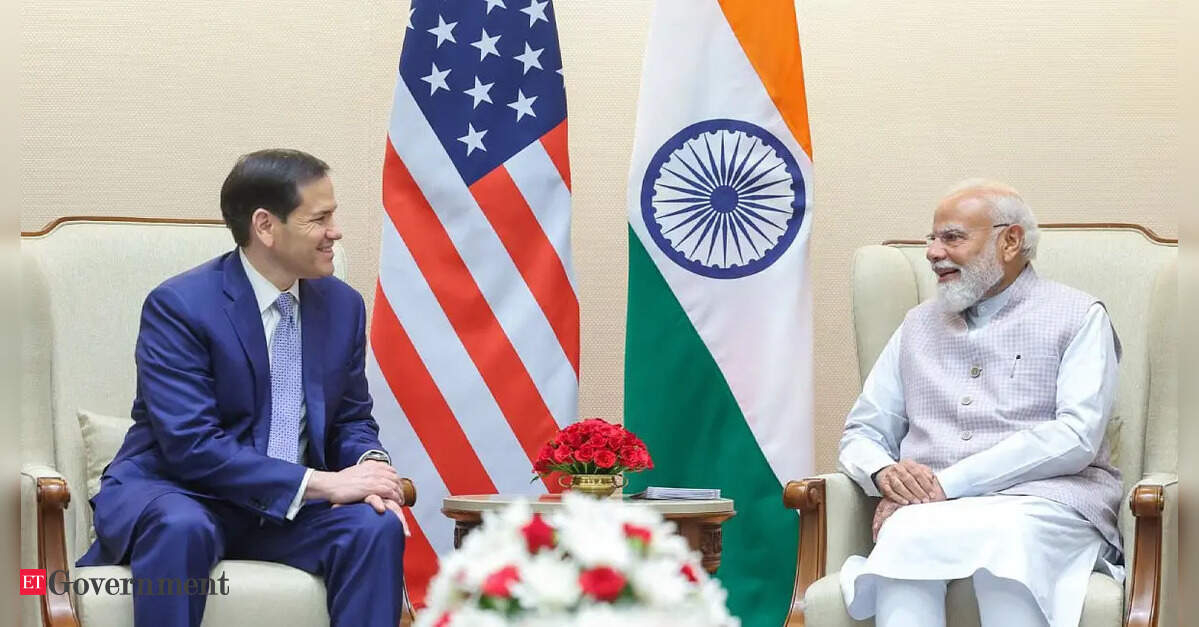
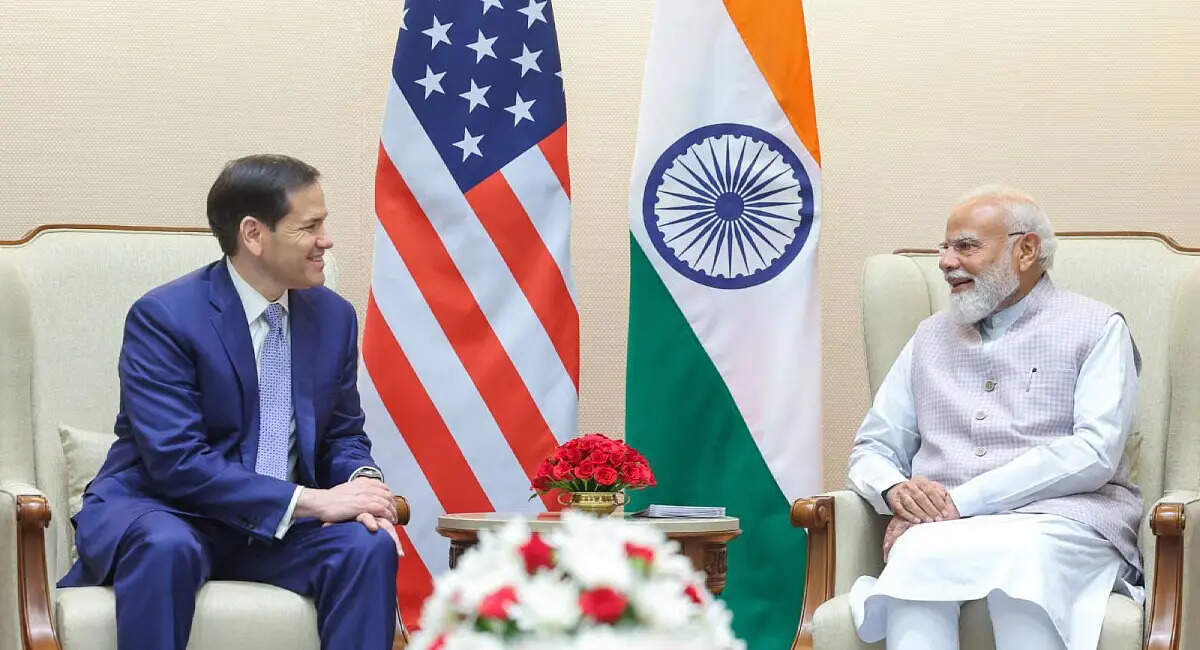
A new uncertainty has entered the already complex terrain of India–United States trade negotiations after US Secretary of State Marco Rubio publicly claimed that India had committed to purchasing $500 billion worth of American goods over the next five years.
The statement, made during Rubio’s high-level diplomatic visit to New Delhi (May 23–26, 2026) and amplified through his social media account, immediately triggered intense debate in diplomatic, economic, and strategic circles.
In a post on X, Rubio explicitly thanked US Ambassador Sergio Gor, stating that because of diplomatic efforts, “India has committed to purchasing $500 billion in U.S. goods over the next five years focusing on energy, technology, and agriculture.”
However, the assertion has run straight into an economic reality check. No minister or official from the Government of India has publicly confirmed a binding commitment of this magnitude. Instead, the claim has exposed a widening gulf between Washington’s political grandstanding and the rapidly shifting legal and macroeconomic realities governing global trade.
The Collapse of the BTA Architecture
The central flaw in Rubio’s headline figure is that the structural framework underpinning it has effectively fallen apart over the last few months.
The $500 billion purchasing target was originally conceived as part of a broader negotiation package under a proposed India–US Bilateral Trade Agreement (BTA). In an initial White House trade fact sheet released on February 6, 2026, a clear political bargain was struck: Washington agreed to lower its proposed “reciprocal tariffs” on Indian exports from 25% down to 18%. In exchange, New Delhi signaled massive procurement intentions to help reduce the US trade deficit.
However, that delicate architecture dissolved within weeks due to rapid legal shifts in Washington:
- The Judicial Disruption (Feb 20, 2026): The US Supreme Court struck down the legal basis for the Trump administration’s reciprocal tariff framework.
- The Section 122 Pivot (Feb 24, 2026): Stripped of the reciprocal tariff mechanism, the White House invoked Section 122 of the US Trade Act of 1974, imposing a uniform, flat 10% tariff on all global imports.
According to analysis by the Global Trade Research Initiative (GTRI), this shift completely flattened the playing field. Because a flat 10% tariff now applies globally, India lost the specific, country-specific competitive advantages it was actively negotiating for. Without those preferential benefits, the commercial rationale for India to guarantee half a trillion dollars in purchases evaporated.The Precedent of Cautious Diplomacy
New Delhi’s reluctance to validate Rubio’s public claims mirrors a broader international pushback against Washington’s new tariff regime. Notably, in March 2026, Malaysia completely walked away from its own trade arrangement with the US, declaring it “null and void” after uniform US tariff policies erased their hard-won trade advantages.
India is taking a similarly guarded approach. When the $500 billion figure was first floated in February, Indian Commerce Minister Piyush Goyal moved quickly to clarify that the number reflected general “commercial intent” rather than a binding obligation. Goyal explicitly stated, “We don’t have to… There is no such limitation,” emphasizing that any future procurement would strictly depend on market demand, pricing, and quality.
Macroeconomic Headwinds and the Rupee
Beyond the shifting tariff rules, translating Rubio’s claims into reality presents severe macroeconomic hurdles. According to fiscal data, India’s annual imports from the US currently hover around $53 billion. A $500 billion commitment over five years would demand an average of $100 billion annually—effectively requiring India to double its imports from the United States almost overnight.
Forcing such a dramatic, artificial surge in dollar-denominated imports across the energy, aviation, and defense sectors would place immense pressure on India’s domestic economy. Over the past year, the Indian Rupee has experienced sharp depreciation under the weight of high global energy costs and capital outflows. Artificially inflating imports to meet a political quota would severely widen India’s trade deficit and drain its foreign exchange reserves.
Domestic Political Backlash
The controversy has also triggered significant political turbulence inside India. Following Rubio’s social media announcement, opposition leaders immediately demanded clarity from the government.
Congress General Secretary Jairam Ramesh publicly questioned whether the government was making hazardous concessions to appease Washington, pointing out the severe risk a sudden import surge poses to the rupee. Opposition voices have openly asked why New Delhi is entertaining sweeping import frameworks when other regional trading partners, like Malaysia, have actively renounced them.
The Strategic Matrix
While US State Department officials, including spokesman Tommy Pigott, continue to frame the “Mission 500” initiative as a vital tool to double bilateral trade and decouple supply chains from China, India’s foundational instinct remains rooted in strategic autonomy.
While Prime Minister Narendra Modi and External Affairs Minister S. Jaishankar have reiterated their commitment to strengthening the Quad alliance and cooperating on West Asian energy security, India has historically resisted entering binding commercial agreements that constrain its economic flexibility.
Until the Government of India officially issues a formal statement outlining timelines, tariff structures, and financing mechanisms, Rubio’s $500 billion claim remains a significant piece of political aspiration—detached from the actual legal and economic ground realities of 2026.
(Anoop Verma is Editor-News, ETGovernment)