The upcoming Quad Foreign Ministers’ Meeting in New Delhi on May 26 comes at a moment of unusual geopolitical uncertainty for the Indo-Pacific.
India will host the foreign ministers of the United States, Japan, and Australia at a time when the strategic logic of the Quad (Quadrilateral Security Dialogue) remains stronger than ever, but the political cohesion and diplomatic momentum of the grouping appear increasingly fragile.
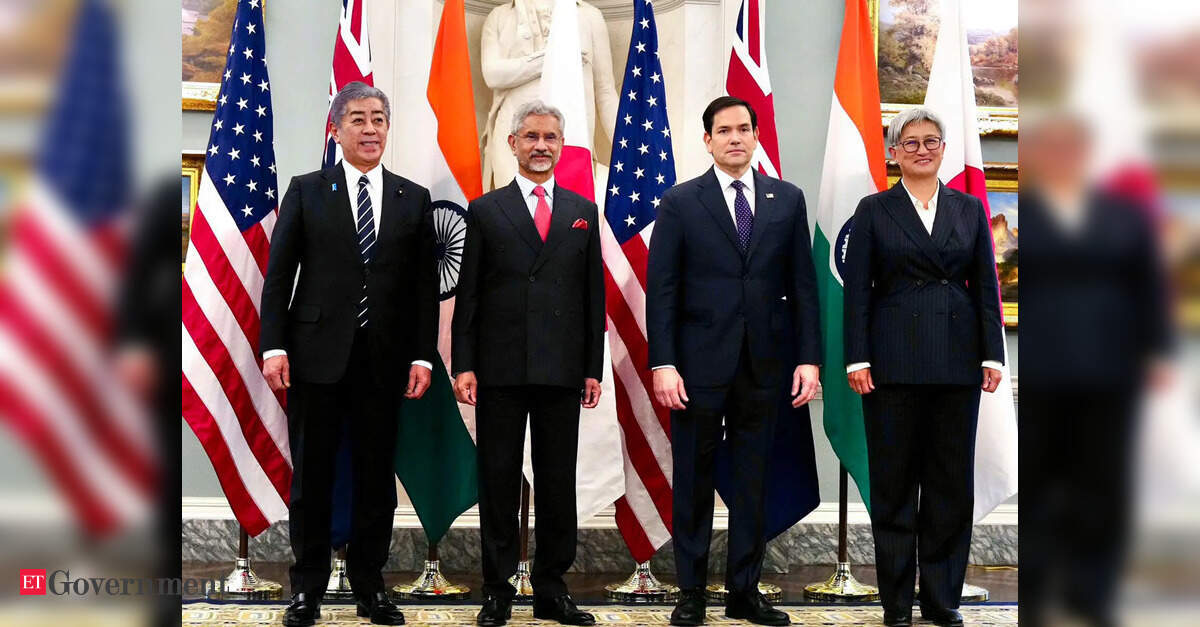
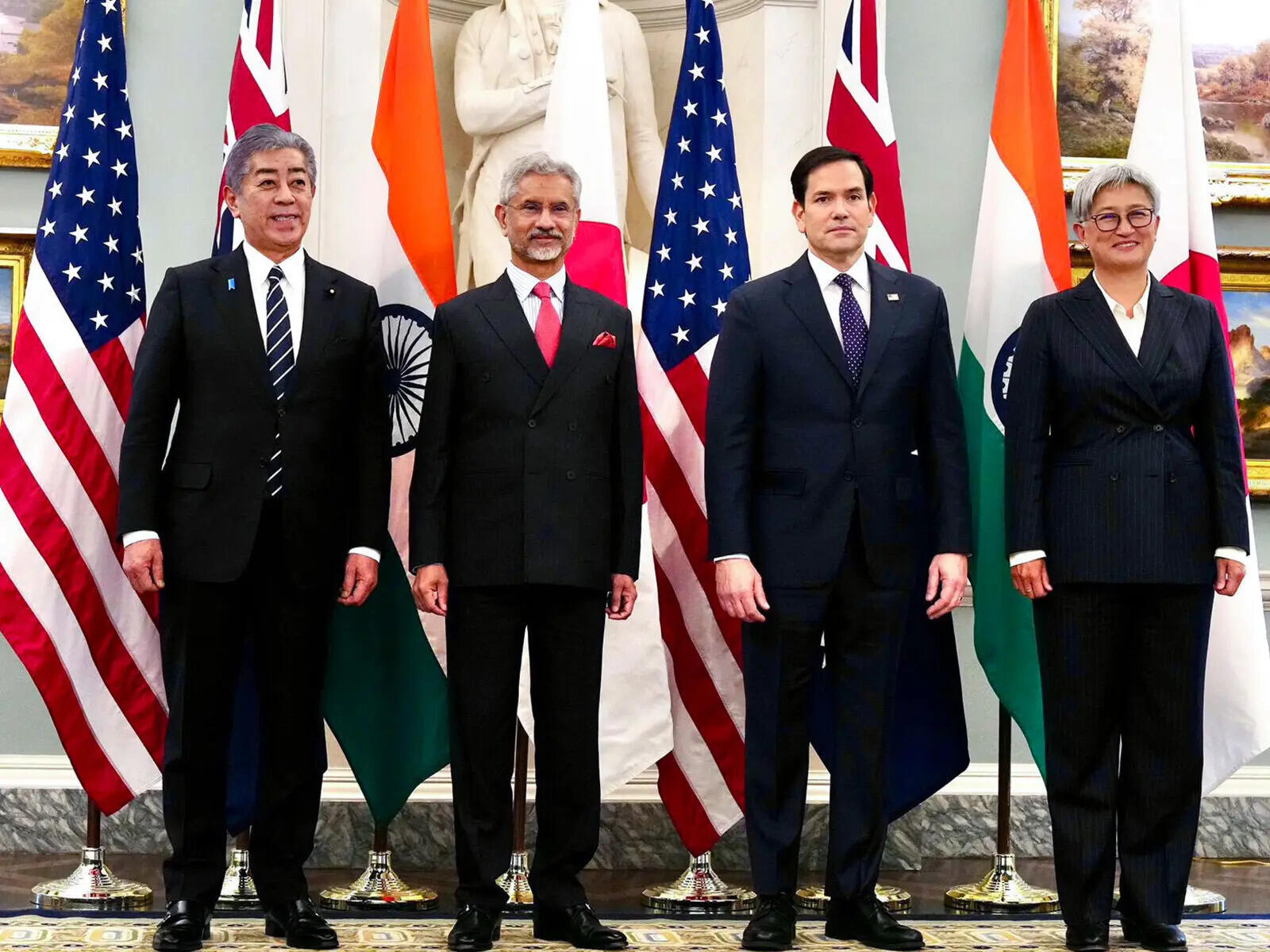
The meeting, to be attended by External Affairs Minister S. Jaishankar, Australian Foreign Minister Penny Wong, Japanese Foreign Minister Toshimitsu Motegi, and U.S. Secretary of State Marco Rubio, is officially expected to focus on advancing cooperation for a “Free and Open Indo-Pacific,” reviewing ongoing initiatives, and discussing regional and global developments.
Yet beneath the formal diplomatic language lies a more fundamental question: can the Quad still evolve into a durable strategic framework, or is it once again entering a phase of geopolitical drift?
The Quad’s history itself reflects this recurring cycle of ambition and uncertainty. The grouping first emerged during the presidency of George W. Bush after the 2004 Indian Ocean tsunami triggered unprecedented maritime coordination among India, the United States, Japan, and Australia.
Japanese Prime Minister Shinzo Abe subsequently gave the grouping ideological shape through his vision of a democratic security diamond in the Indo-Pacific. However, the Quad soon slipped into dormancy as member countries hesitated to antagonise China and pursued divergent strategic priorities.
It was during the first presidency of Donald Trump that the Quad was revived in 2017 amid rising concerns over China’s growing military assertiveness, maritime expansion, economic coercion, and influence operations across the Indo-Pacific. The Trump administration reframed the Indo-Pacific as the central theatre of geopolitical competition, and the Quad became one of the principal diplomatic pillars of that strategy.
Ironically, however, the Quad now appears less central during Trump’s second term than it did during his first.
Washington today is deeply consumed by crises outside the Indo-Pacific theatre. The continuing wars and instability in the Gulf region, the prolonged conflict in Ukraine, tensions involving Iran, and wider pressures on U.S. global military commitments have substantially diluted strategic bandwidth for sustained Indo-Pacific institution-building. While the United States continues to conduct military exercises and maintain alliances in the region, its diplomatic focus appears increasingly fragmented.
This shift has generated unease among Indo-Pacific partners. Several countries in the region are beginning to question whether the United States retains the political focus and long-term strategic patience required to anchor the regional security architecture it once championed. The concern is not that Washington is abandoning Asia outright, but that its commitments are being stretched simultaneously across multiple theatres of conflict.
That uncertainty directly affects the Quad.
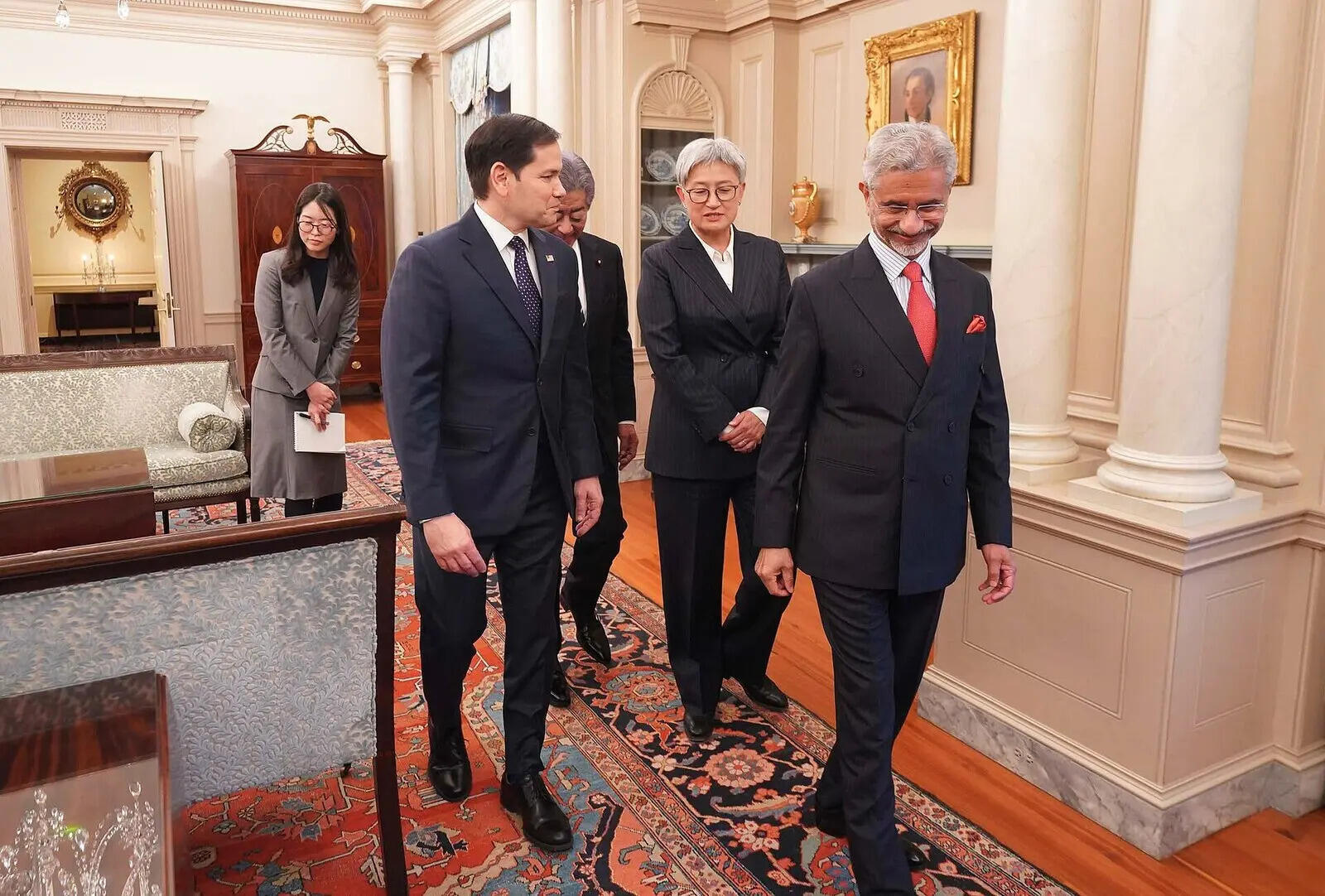
Despite regular ministerial meetings and practical cooperation mechanisms, the grouping has struggled to institutionalise itself as a coherent geopolitical force. The absence of a Quad Leaders’ Summit in 2025 was particularly revealing. India was expected to host the summit in New Delhi, but the meeting never materialised, exposing the diplomatic turbulence within the grouping.
The tensions are not merely procedural. Over the past year, serious divergences have emerged among Quad members on trade, strategic priorities, and diplomatic signalling. The United States imposed tariffs affecting even close partners. Washington’s rhetoric regarding India’s Russian energy imports generated friction.
Trump’s public claims about mediating India-Pakistan tensions after Operation Sindoor also created discomfort in New Delhi. Simultaneously, debates within Washington over the future of security frameworks such as AUKUS raised wider questions about America’s regional priorities.
Yet, despite these strains, the Quad continues to survive — and that itself is strategically significant. The reason is simple: the structural drivers behind the Quad remain intact.
China’s growing naval footprint in the Indian Ocean, militarisation of the South China Sea, pressure on Taiwan, expanding influence in Pacific Island nations, and deepening strategic engagement across Eurasia continue to reshape the balance of power in Asia. None of the Quad members individually possesses the ability to manage this geopolitical transition alone. Collectively, however, they represent enormous economic, technological, military, and diplomatic weight.
This explains why the Quad has steadily broadened its agenda beyond pure security concerns. The grouping today encompasses maritime domain awareness, resilient supply chains, semiconductor cooperation, critical and emerging technologies, cyber resilience, infrastructure partnerships, humanitarian assistance, disaster relief, and health security.
Initiatives such as the Indo-Pacific Maritime Domain Awareness programme and the Quad Indo-Pacific Logistics Network reflect efforts to create practical regional public goods rather than merely anti-China political messaging.
India, in particular, sees considerable value in preserving the Quad as a flexible strategic platform without transforming it into a formal military alliance. New Delhi’s approach has always differed from Washington’s more security-centric perspective. India prefers issue-based cooperation while maintaining strategic autonomy and avoiding treaty-bound commitments. The Quad suits India precisely because it remains informal, consensus-driven, and non-alliance based.
Japan and Australia, meanwhile, increasingly view the Quad as a stabilising hedge amid uncertainty over future U.S. strategic reliability. Both countries remain deeply embedded in American alliance structures, but they are also seeking diversified partnerships to reduce overdependence on Washington.
The central challenge facing the Quad today is therefore not operational cooperation but political coherence.
Can the grouping maintain strategic momentum when its members possess differing economic relationships with China, varying threat perceptions, and distinct foreign policy traditions? Can it evolve from a consultative framework into a more institutionalised strategic mechanism without provoking internal hesitation or external escalation?
These questions will quietly shape the discussions in New Delhi.
The meeting is expected to produce commitments on technology cooperation, maritime security, supply chains, and regional connectivity. But the real significance of the gathering lies elsewhere: whether the Quad can demonstrate sustained political seriousness at a time when the Indo-Pacific security order is becoming increasingly fluid.
For India, the stakes are particularly high. New Delhi sees the Indo-Pacific as central to its long-term strategic future. China’s expanding influence across South Asia and the Indian Ocean has made deeper cooperation with like-minded democracies increasingly important. Yet India also remains cautious about becoming excessively dependent on any single geopolitical bloc.
This balancing instinct explains India’s continued emphasis on “multi-alignment” rather than alliance politics. Ultimately, the Quad’s future may depend less on grand declarations and more on whether it can steadily build habits of strategic coordination that survive changes in leadership, domestic politics, and shifting global crises.
The grouping has already survived one collapse before. The question now is whether it can avoid another prolonged period of strategic hibernation. The New Delhi meeting may not provide definitive answers. But it could determine whether the Quad regains momentum as a credible Indo-Pacific platform — or remains an ambitious idea perpetually constrained by geopolitical distraction, strategic ambiguity, and competing national priorities.
(Anoop Verma is Editor-News, ETGovernment)