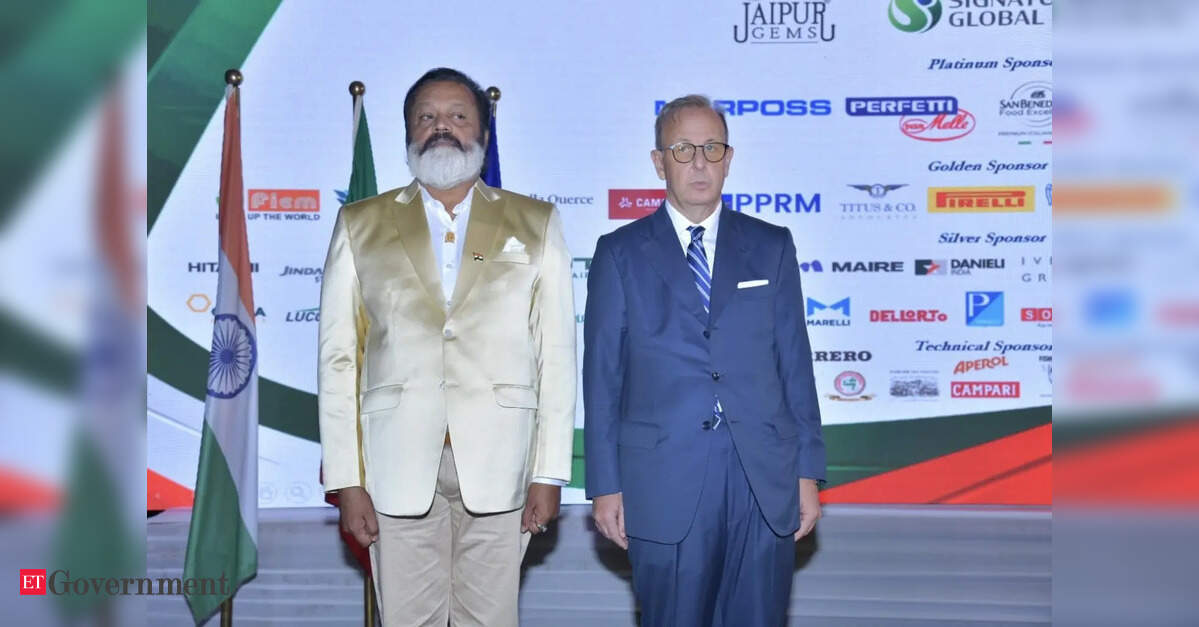
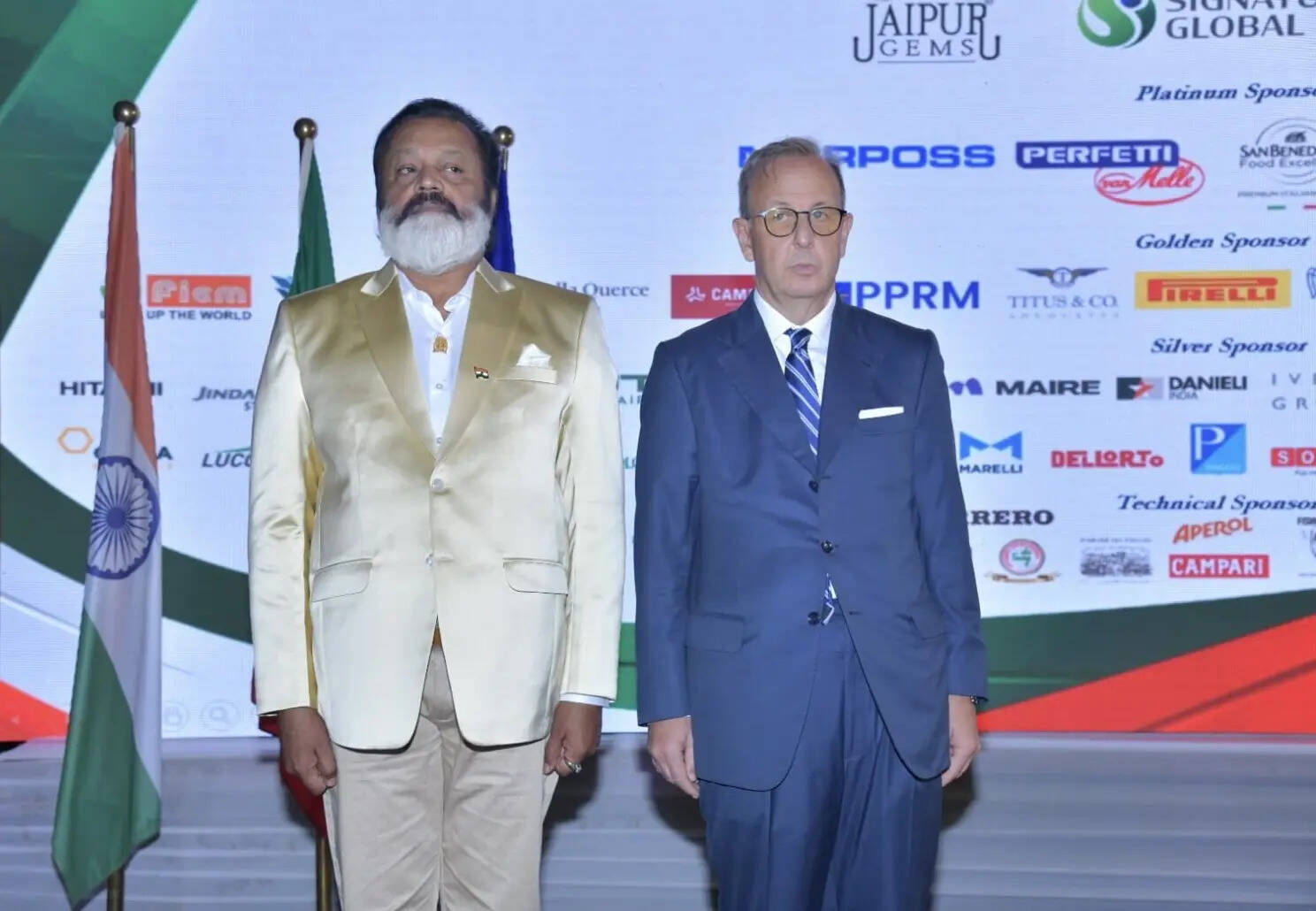
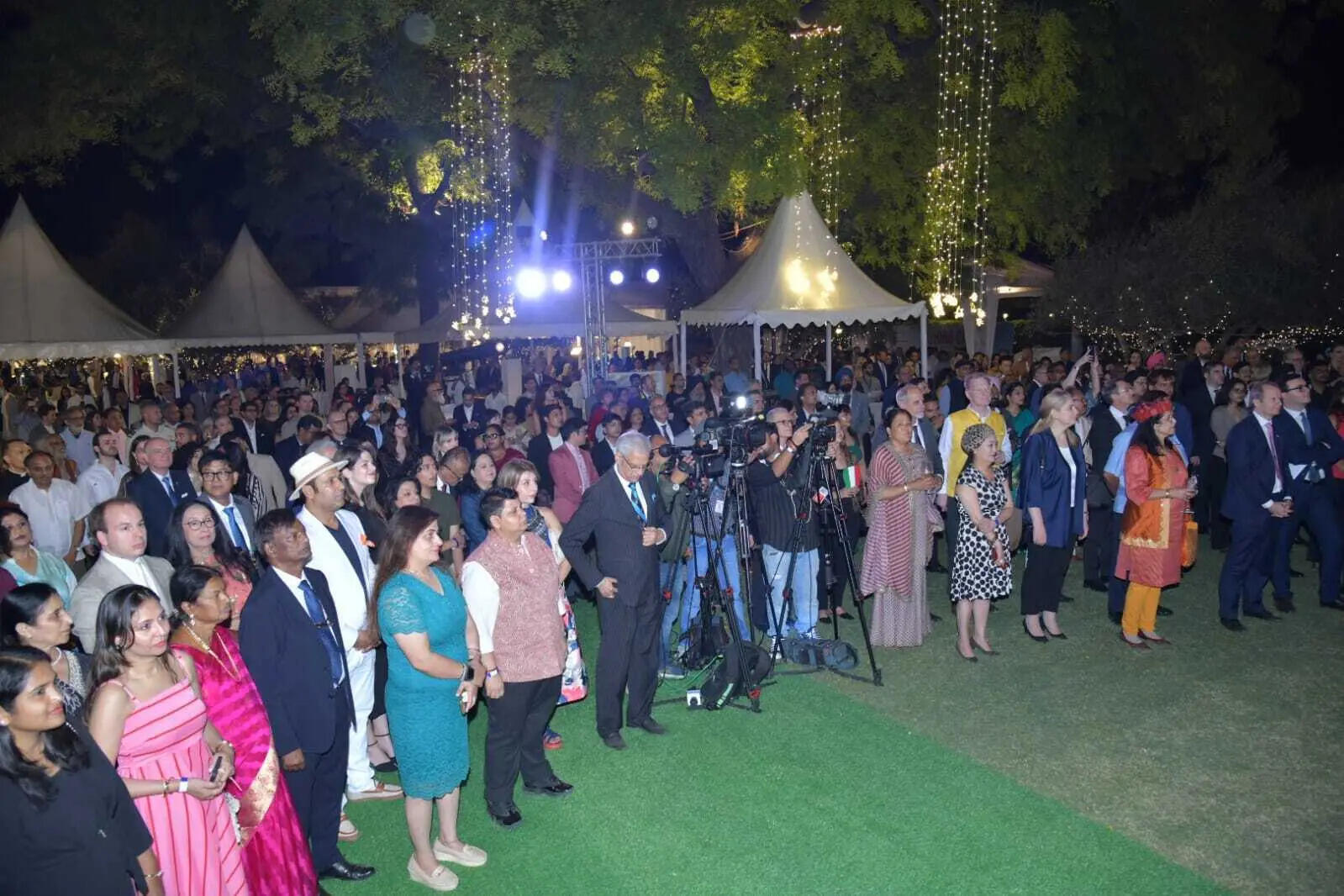
The Embassy of Italy in New Delhi transformed into a vibrant showcase of diplomacy, culture, and strategic partnership on May 29 as it celebrated the 80th anniversary of the founding of the Italian Republic.
The reception, hosted by Ambassador Antonio Bartoli, brought together an influential gathering of ambassadors, diplomats, defence attachés, industrialists, investors, strategic experts, media professionals, senior government officials, and military officers, underscoring the growing importance of the India–Italy relationship in an increasingly complex global landscape.
The occasion commemorated one of the most significant moments in modern Italian history. On June 2, 1946, Italians voted in a historic referendum to abolish the monarchy and establish a republic, laying the foundations of modern democratic Italy.
The referendum also marked the first national election in which Italian women exercised their right to vote, making it a defining milestone in the country’s democratic evolution.
This year’s celebration carried an added significance. It came barely days after Prime Minister Narendra Modi’s visit to Rome, where he met Italian Prime Minister Giorgia Meloni and elevated bilateral relations to the level of a Special Strategic Partnership, opening a new chapter in ties between the two countries.
The evening at the Italian Embassy reflected not only Italy’s rich cultural heritage but also the growing depth of its engagement with India. Guests were treated to a preview exhibition of Sandro Botticelli’s celebrated masterpiece Madonna and Child at the Italian Embassy Cultural Centre. The exhibition continued Italy’s efforts to bring some of the world’s most treasured artistic works to Indian audiences.
Ambassador Bartoli noted that the exhibition followed last year’s display of Caravaggio’s Magdalene in Ecstasy and represented another milestone in cultural exchanges between the two countries.
The cultural programme featured performances by the renowned Teatro Tascabile di Bergamo, one of Italy’s distinguished theatre-dance companies, and the internationally acclaimed vocal ensemble Mezzotono. Their performances added a distinctly Italian flavour to an evening that sought to blend diplomacy, culture, and people-to-people engagement.
Ambassador Bartoli described the performers as outstanding representatives of Italian music and performing arts who would offer guests “a small appetizer” of the broader cultural exchanges that lie ahead between the two nations.
The Chief Guest, Union Minister of State for Petroleum and Natural Gas Suresh Gopi, highlighted the remarkable expansion of cooperation between India and Italy across economic, technological, scientific, and defence domains.
“There is a growing interaction and exchanges between our respective industries. We had three business fora last year. We see strong complementarities between India’s scale, talent, tech capabilities and growing industrial base and Italy’s excellence in engineering, advanced manufacturing, design and machinery,” Gopi said.
The Minister observed that collaboration in science and technology was also gaining momentum. Referring to the Executive Programme for Scientific and Technological Cooperation (EPOC) 2025–2027, he said it would promote joint research in emerging areas including the blue economy, renewable energy, green hydrogen, quantum technologies, and infectious diseases. He also noted that defence and security cooperation had been reinvigorated, reflecting the deep trust shared by the two countries.
Ambassador Bartoli’s address provided a broader strategic perspective on the evolution of bilateral ties. Recalling the democratic choices made by Italy in 1946 and by India shortly thereafter, he emphasized that both countries are linked by shared values, democratic traditions, and civilizational heritage. “Italy and India have followed a shared journey, marked by a sincere and genuine friendship, today closer than ever,” he said.
The Ambassador noted that the timing of the National Day celebrations was particularly significant because it followed the meeting between Prime Ministers Modi and Meloni in Rome. He highlighted the decision to elevate bilateral relations to a Special Strategic Partnership and described it as a reflection of the growing convergence between the two nations.
According to Bartoli, Italy and India are united by common values, mutual trust, structural complementarities, and a shared commitment to stability, security, economic growth, and the preservation of a rules-based international order. Both countries, he observed, are ancient civilizations, democratic societies, and peninsular nations occupying strategic positions in the wider Indo-Mediterranean region.
A major focus of the Ambassador’s speech was economic cooperation. He pointed to the ambitious goal agreed upon by the two governments to raise bilateral trade to €20 billion by 2029. More importantly, he emphasized a shift in the nature of the partnership from simple trade to deeper industrial collaboration.
“For us, India is not only an export market. Rather, a priority industrial partner,” Bartoli said, stressing a vision based on co-design, co-development, and co-production.
He identified machinery, automotive components, precision agriculture, food processing, waste-to-energy technologies, critical minerals, defence manufacturing, and space as sectors with significant potential for collaboration. Italy’s technological expertise and manufacturing capabilities, he argued, could complement India’s scale, talent pool, and rapidly expanding industrial base.
The Ambassador also highlighted several initiatives undertaken during the past year, including three major business forums, the establishment of a SIMEST office at the Embassy, a €500 million funding line to support market access and joint ventures, enhanced export credit activities, and stronger scientific engagement through dedicated technology and space attachés.
Looking ahead, Bartoli announced plans for INNOVIT India, a proposed innovation hub intended to connect startups, universities, research institutions, and industries from both countries. The initiative is expected to promote innovation partnerships, talent exchanges, acceleration programmes, and market access opportunities.
The Ambassador also emphasized cooperation in higher education, healthcare mobility, maritime security, counter-terrorism financing, and connectivity initiatives linked to the India-Middle East-Europe Economic Corridor (IMEC). He noted that Italy and India were committed to developing infrastructure, digital networks, customs facilitation mechanisms, and maritime cooperation frameworks to strengthen connectivity between Europe and Asia.
While the reception was fundamentally a celebration of Italy’s national identity and democratic journey, it also served as a reflection of the extraordinary momentum currently characterizing India–Italy relations.
That momentum was formalized only days earlier through the Italy–India Joint Declaration signed in Rome following Prime Minister Modi’s official visit. The declaration elevated bilateral ties to a Special Strategic Partnership and established an ambitious framework for cooperation across virtually every major sector.
The document sets a target of achieving €20 billion in bilateral trade by 2029 and identifies sectors such as semiconductors, clean technologies, automotive manufacturing, critical minerals, pharmaceuticals, infrastructure, digital technologies, and tourism as key drivers of future growth.
The declaration also commits both countries to strengthening cooperation on IMEC, critical minerals, artificial intelligence, quantum technologies, supercomputing, renewable energy, green hydrogen, space exploration, and defence manufacturing. It envisages greater collaboration in co-development and co-production projects involving helicopters, naval platforms, electronic warfare systems, and other strategic technologies.
On security issues, the two countries pledged deeper cooperation against terrorism, including efforts to combat terror financing, while expanding maritime security coordination and information-sharing mechanisms.
The declaration also places significant emphasis on mobility, education, culture, and people-to-people ties. Both governments agreed to celebrate 2027 as the “Year of Culture and Tourism between Italy and India,” reflecting a shared understanding that cultural diplomacy remains an essential pillar of bilateral engagement.
Seen against this backdrop, the National Day reception at the Italian Embassy was more than a diplomatic celebration. It was a manifestation of a relationship that has evolved far beyond traditional diplomacy into a multidimensional partnership encompassing trade, technology, innovation, defence, connectivity, education, culture, and global governance.
As Italy commemorates eight decades of republican democracy, its partnership with India appears poised to enter one of the most consequential phases in its modern history.