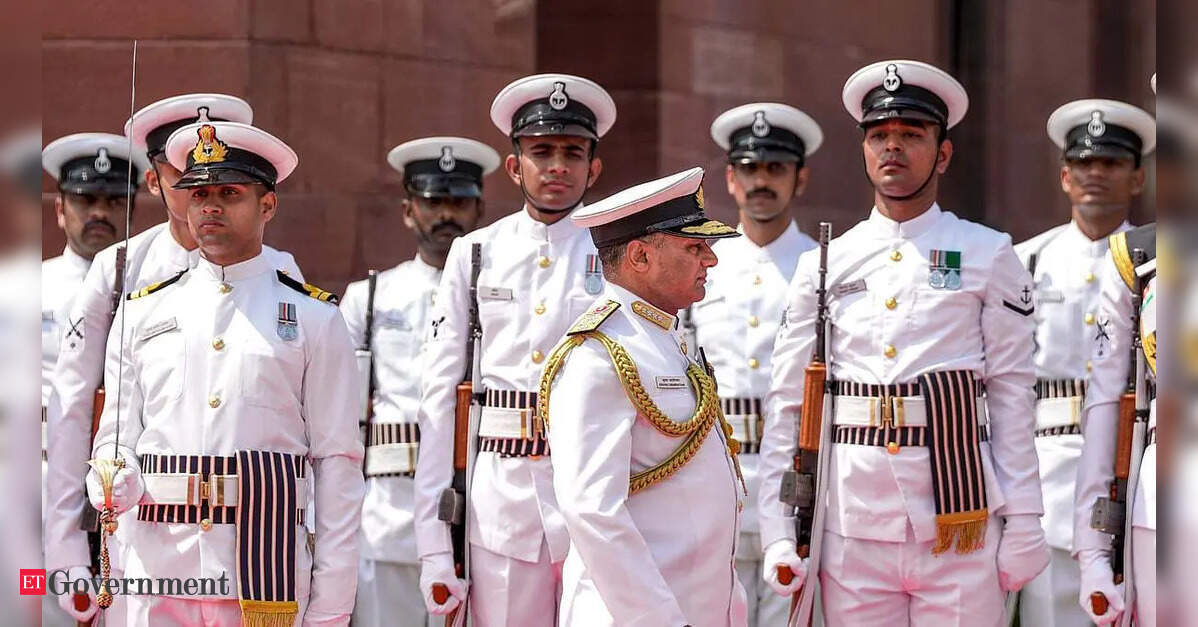
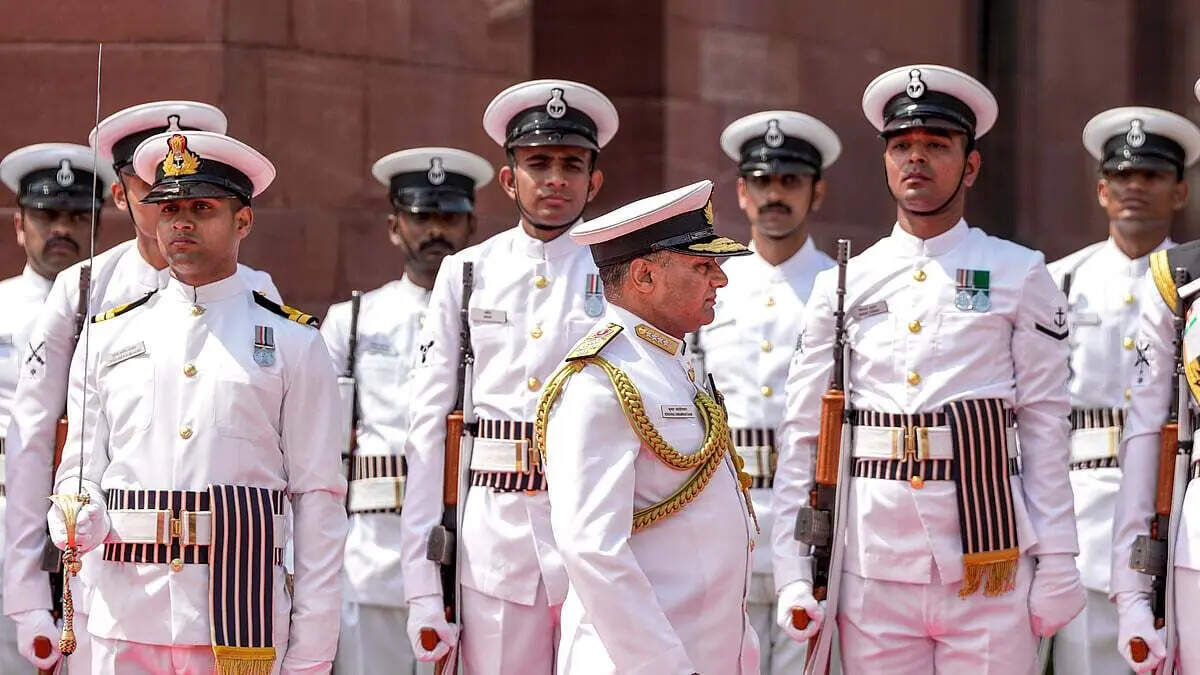
Admiral Krishna Swaminathan formally assumed charge as the 27th Chief of the Naval Staff (CNS) of the Indian Navy on May 31.
His appointment comes at a time when the Indian Ocean Region is witnessing heightened geopolitical competition, expanding Chinese naval deployments, growing concerns over maritime infrastructure security, and an accelerated global race for naval modernisation and emerging military technologies.
Admiral Swaminathan succeeds Admiral Dinesh Kumar Tripathi, who retired after completing his tenure as the Navy chief. In his first remarks after assuming command, Admiral Swaminathan underlined that maintaining operational readiness and strengthening combat capability would remain his foremost priorities. He also emphasised the importance of technological modernisation as the Navy adapts to a rapidly evolving security environment.
His elevation to the Navy’s highest post is widely seen as a continuation of the force’s long-term transformation agenda, which focuses on indigenous warship construction, network-centric warfare, maritime domain awareness, cyber resilience, artificial intelligence-enabled operations, and greater integration with the other services under India’s joint military framework.
A Career Shaped by Operations and Technology
Commissioned into the Indian Navy on July 1, 1987, Admiral Swaminathan belongs to a generation of naval leaders who witnessed the transformation of the Indian Navy from a largely regional force into a blue-water maritime power with growing global responsibilities. A specialist in Communication and Electronic Warfare, he has built a career at the intersection of operational command and technological capability development.
An alumnus of the National Defence Academy, the Joint Services Command and Staff College, the College of Naval Warfare and the United States Naval War College, he represents a cadre of officers with extensive exposure to both Indian and international military education systems.
Throughout his nearly four-decade career, he has commanded a diverse range of operational platforms, including corvettes, destroyers and aircraft carriers. One of the defining moments of his career was his command of the aircraft carrier INS Vikramaditya, where he oversaw major operational deployments and fleet-level exercises. During his tenure, the carrier was recognised as the best ship of the Western Fleet.
His command experience also includes leadership of the Western Fleet, one of the Navy’s most critical operational formations responsible for safeguarding India’s western maritime approaches and vital sea lanes. He later served as Chief of Staff of the Western Naval Command, Chief of Personnel at Naval Headquarters, Vice Chief of the Naval Staff, and eventually Flag Officer Commanding-in-Chief of the Western Naval Command before being selected for the Navy’s top position.
Leading the Navy in an Era of Strategic Competition
Admiral Swaminathan assumes office at a particularly consequential moment for India’s maritime security architecture.
The Indian Ocean has emerged as one of the world’s most contested strategic theatres. China’s expanding naval footprint, increasing submarine deployments, dual-use port infrastructure projects, and growing military presence across the Indo-Pacific have significantly altered the region’s security calculus. At the same time, disruptions to global shipping routes, threats to undersea communication cables, and the increasing weaponisation of maritime chokepoints have elevated the importance of naval power in national security planning.
Against this backdrop, Admiral Swaminathan’s emphasis on operational readiness reflects the Navy’s determination to maintain credible deterrence and sustained maritime presence across critical sea lanes. His operational experience in the Western Naval Command is particularly significant given the strategic importance of the Arabian Sea and India’s western seaboard in the broader Indo-Pacific security framework.
The appointment also comes at a time when India is intensifying cooperation with key maritime partners through frameworks such as the Quadrilateral Security Dialogue, bilateral naval exercises, logistics agreements, and defence technology collaborations.
The Modernisation Imperative
One of the most closely watched aspects of Admiral Swaminathan’s tenure will be his approach to naval modernisation.
The Indian Navy has long been regarded as the most indigenised of India’s three armed services. Yet the challenges ahead are substantial. The Navy is simultaneously pursuing aircraft carrier capabilities, nuclear submarine expansion, advanced destroyers, unmanned systems, anti-submarine warfare platforms, long-range maritime surveillance assets, and next-generation communication networks.
Admiral Swaminathan’s background in electronic warfare and communications is expected to influence the Navy’s increasing focus on network-centric operations, secure communications architecture, artificial intelligence applications, autonomous platforms, cyber warfare preparedness, and electromagnetic spectrum dominance.
Future naval conflicts are likely to be shaped not only by warships and missiles but also by data fusion, machine intelligence, cyber resilience, electronic warfare capabilities, and space-based surveillance systems. The Navy’s ability to integrate these technologies into a coherent combat architecture will be central to maintaining operational superiority.
His experience overseeing personnel management and training structures may also prove valuable as the Navy seeks to build a technologically skilled workforce capable of operating increasingly sophisticated platforms and digital systems.
An Indigenous Vision
The broader national objective of Aatmanirbhar Bharat in defence manufacturing is expected to remain a central pillar of naval planning under Admiral Swaminathan. India has already emerged as one of the few countries capable of designing and building complex warships domestically. Indigenous aircraft carriers, destroyers, frigates, submarines and surveillance systems have become key components of the Navy’s force structure.
The next phase will likely require deeper collaboration between the armed forces, defence public sector undertakings, private industry, startups and emerging technology firms. Areas such as artificial intelligence, quantum technologies, advanced materials, semiconductors, autonomous vessels, underwater drones and cyber security are increasingly becoming integral to naval capability development.
Given his extensive exposure to operational commands and strategic planning institutions, Admiral Swaminathan is expected to play a key role in aligning technological innovation with operational requirements.