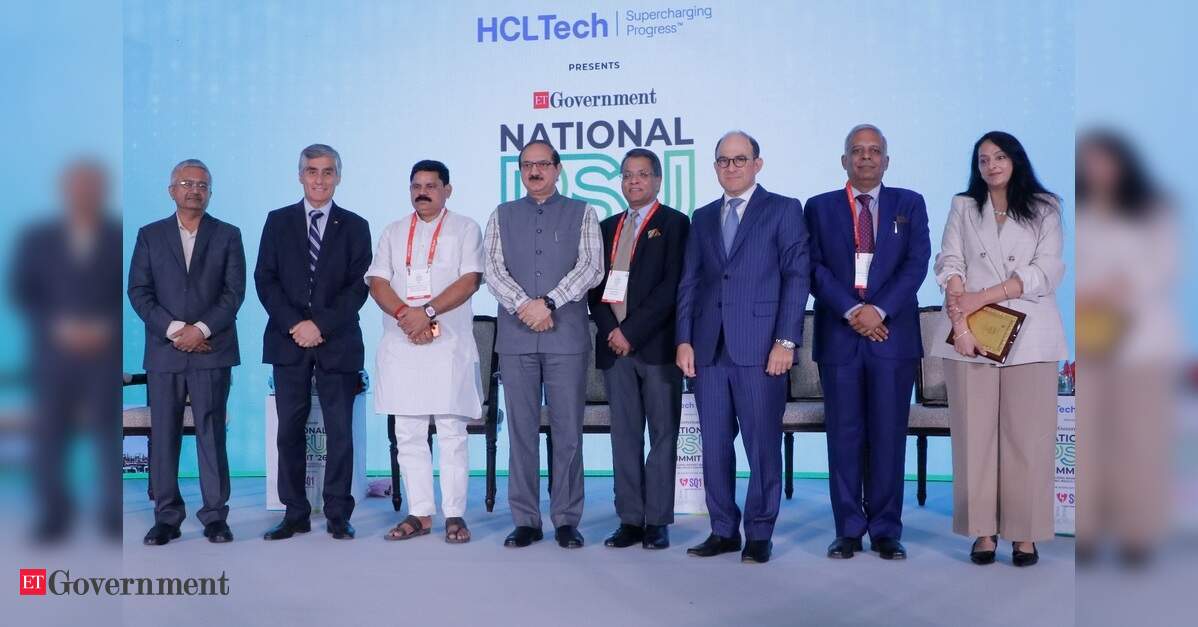
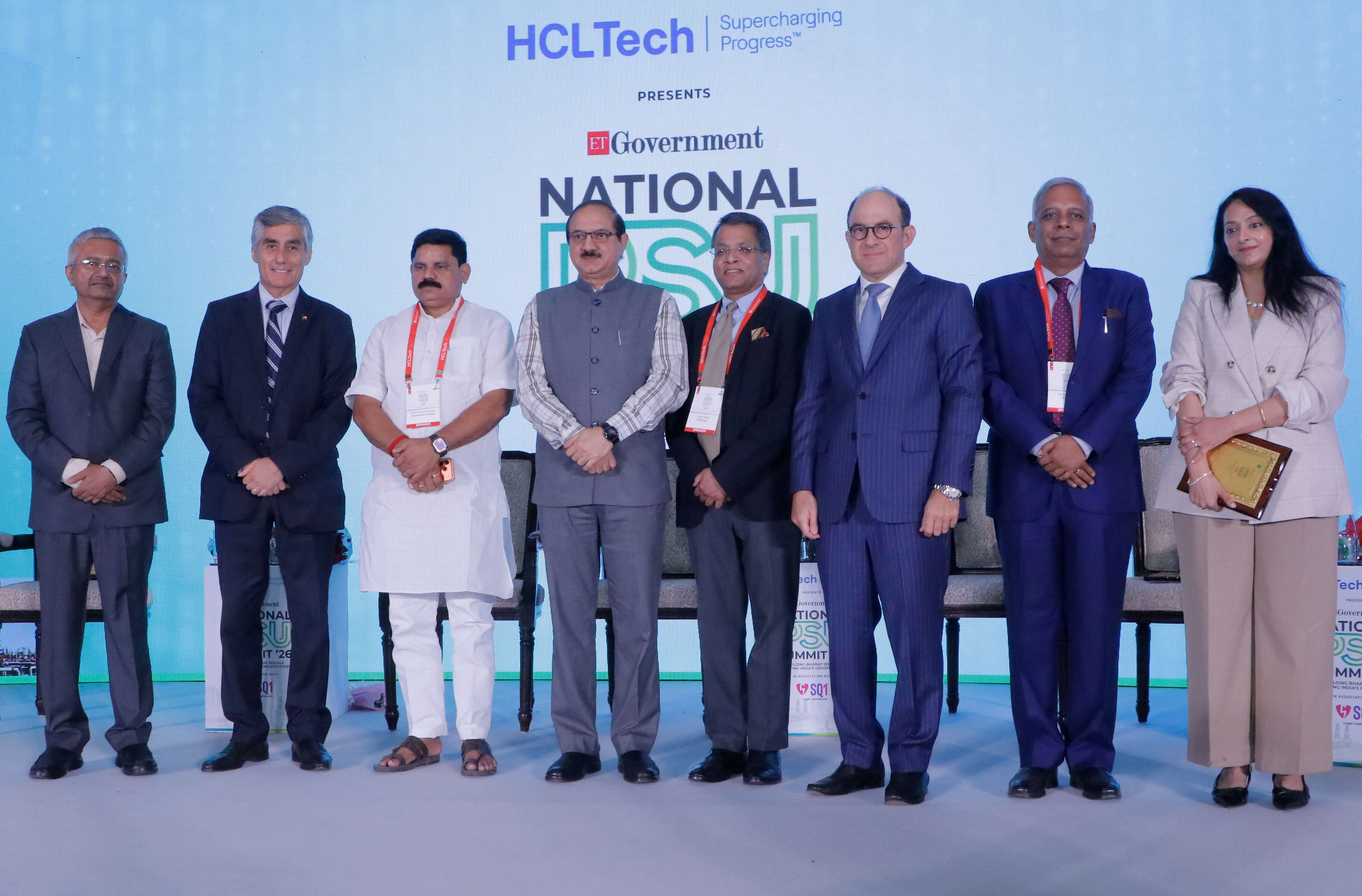
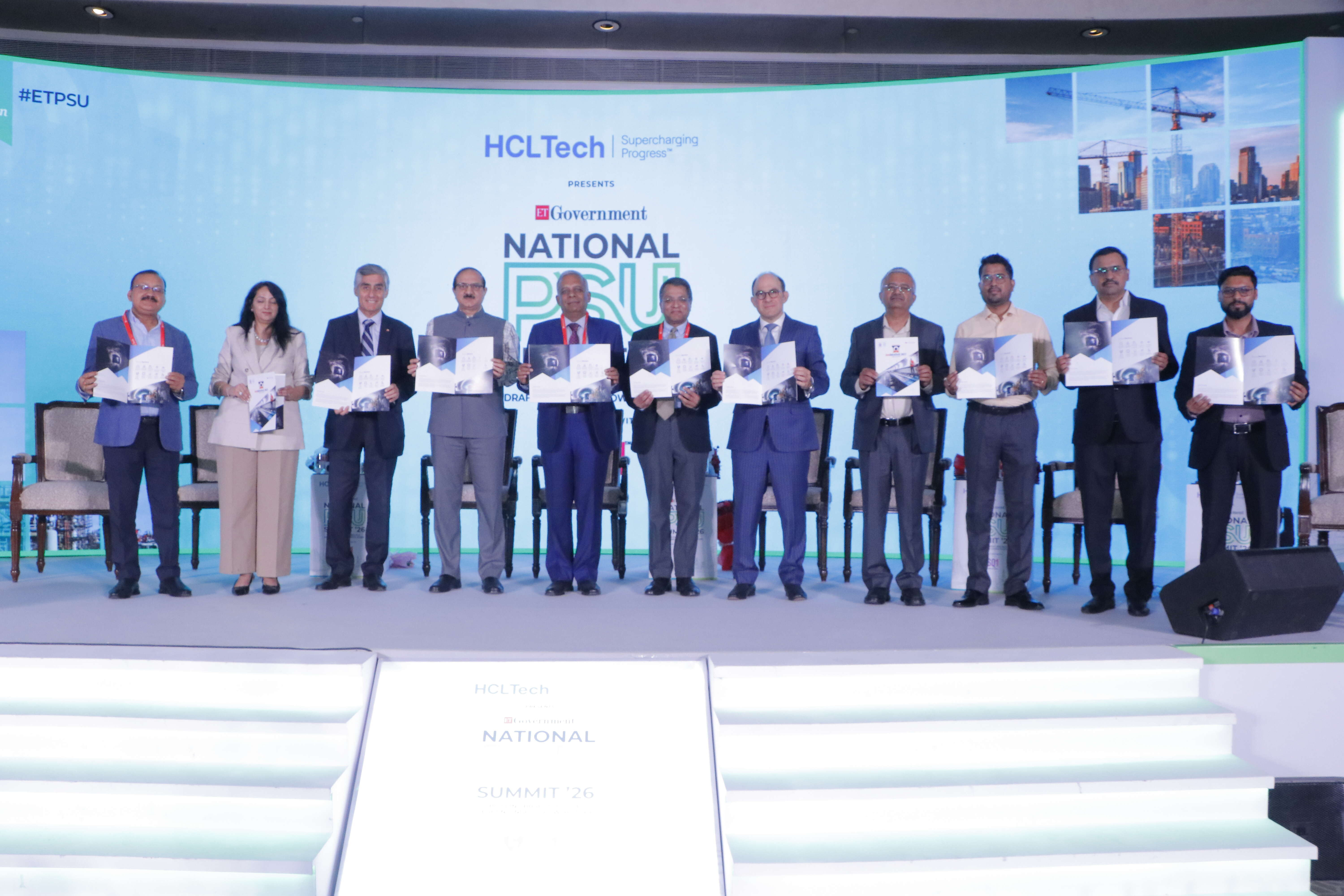
Public Sector Enterprises (PSUs) will play a pivotal role in shaping India’s journey towards becoming a developed nation by 2047, with innovation, technology, infrastructure, energy security and global partnerships emerging as the key drivers of future growth, speakers said at the inaugural session of the National PSU Summit 2026 organised, on June 19, by ETGovernment, an initiative of The Economic Times.
The inaugural session, titled “PSUs as Pillars of Viksit Bharat: Navigating Global Turbulence and Driving National Growth,” brought together policymakers, diplomats, PSU leaders and industry experts to deliberate on the evolving role of India’s public sector in an increasingly complex geopolitical and economic environment.
Welcoming the participants, Adarsh Som, Special Correspondent, ETGovernment, said the National PSU Summit has emerged as an important platform for discussions on the future of India’s public sector ecosystem. He noted that as India advances towards the goal of becoming a developed nation by 2047, the role of PSUs is expanding beyond their traditional mandate, with public enterprises increasingly expected to drive innovation, digital transformation, sustainability and economic growth.
Som said the summit seeks to bring together policymakers, PSU leaders, diplomats, technology experts and industry stakeholders to deliberate on the opportunities and challenges facing public enterprises as India moves towards the vision of Viksit Bharat.
Coal and mining reforms strengthening India’s energy security
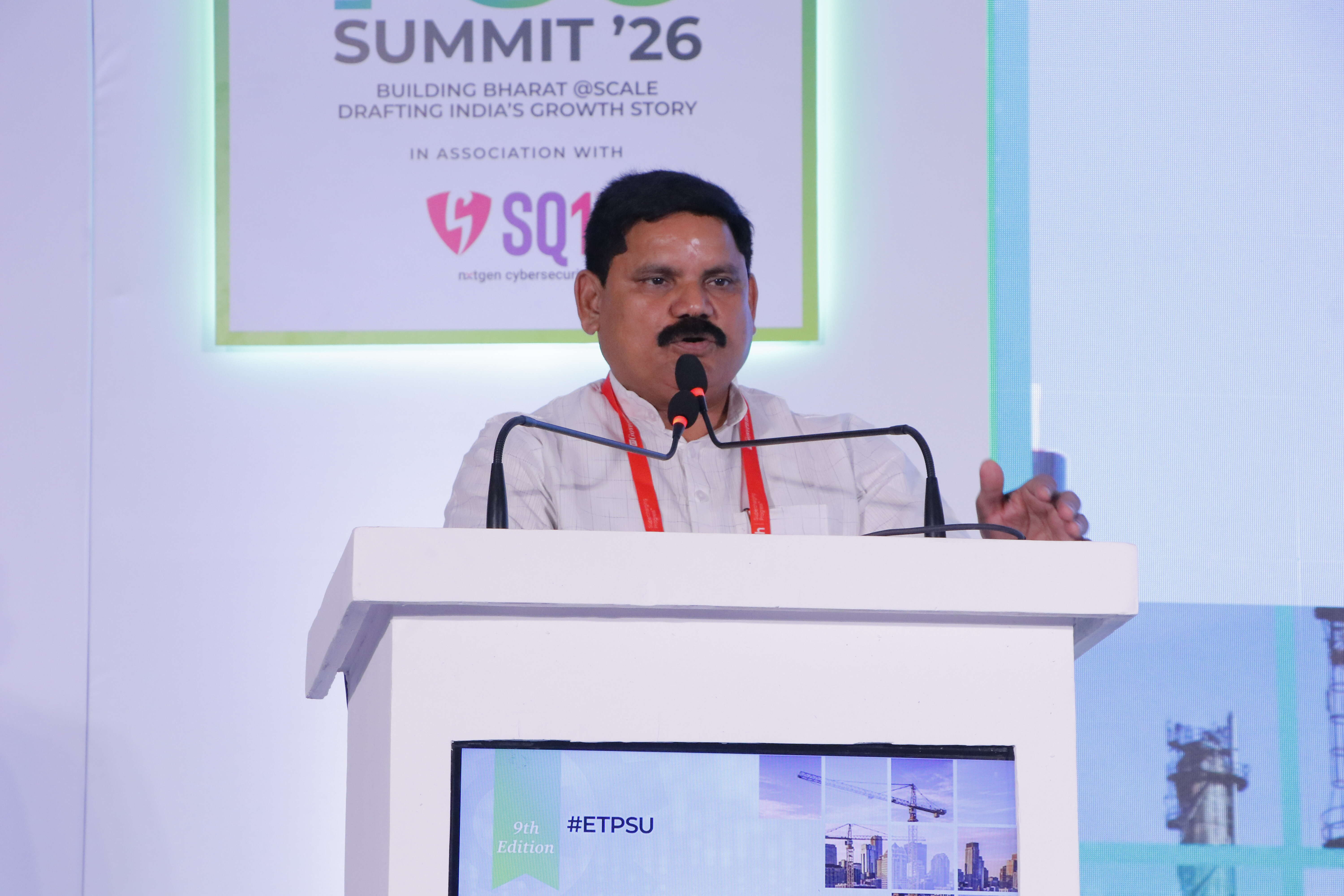
Addressing the summit as the Guest of Honour, Satish Chandra Dubey, Minister of State for Coal and Mines, Government of India, highlighted the series of policy reforms undertaken by the government to modernise the coal and mining sectors and improve operational efficiency.
Dubey said the government has introduced several measures aimed at increasing transparency, encouraging private participation, enhancing ease of doing business and accelerating mineral exploration and production. He underlined the crucial role played by coal and energy PSUs in ensuring the country’s energy security and supporting India’s economic growth.
According to the Minister, public sector enterprises operating in the coal and energy sectors have been instrumental in maintaining reliable energy supplies, supporting industrial expansion and meeting the growing energy requirements of the country. Dubey also stressed that strengthening domestic production and improving resource utilisation are essential for achieving the vision of Atmanirbhar Bharat and reducing import dependence in strategic sectors.
He said the government’s policy initiatives are aimed at creating a more efficient, competitive and sustainable mining ecosystem while ensuring long-term energy security for the country.
Technology-driven infrastructure and connectivity transforming tourism
Bhuvnesh Kumar, Secretary, Ministry of Tourism, Government of India, emphasised the transformative role of technology and infrastructure in enhancing tourism experiences and improving public service delivery.
Drawing parallels from India’s broader digital transformation journey, Kumar said technology has fundamentally changed how citizens interact with public institutions and services. He observed that India’s rapid expansion of highways, airports, digital infrastructure and transportation systems has significantly improved mobility and unlocked new tourism opportunities.
“The next phase of growth in tourism will depend on creating seamless, technology-enabled travel experiences,” he said.
Kumar also highlighted the dramatic improvements in connectivity across the country over the past decade, arguing that infrastructure expansion has significantly strengthened domestic tourism and economic activity. He stressed that technology can help create seamless and citizen-centric travel experiences, thereby improving India’s attractiveness as a global tourism destination.
India and South America can emerge as strategic partners
Mariano Agustín Caucino, Ambassador of Argentina to India, highlighted the growing strategic convergence between India and Argentina, particularly in areas such as mining, energy and food security.
Despite geographical distance, Caucino said India and Argentina enjoy a high degree of economic complementarity. He noted that Argentina possesses abundant natural resources, including significant reserves of lithium and natural gas, which could contribute to India’s long-term energy security and industrial growth.
“India and South America have enormous potential for collaboration. Argentina can contribute to India’s requirements in critical minerals, food and energy, while India can become an important partner in technology, investment and industrial development,” he said.
The Ambassador observed that bilateral ties have strengthened considerably in recent years, with India emerging as one of Argentina’s important trading partners. He also emphasised that South America remains largely insulated from geopolitical tensions, making it an attractive destination for long-term investments and strategic partnerships.
Juan Angulo, Ambassador of Chile to India, underscored the strategic importance of critical minerals in the global energy transition and positioned Chile as a reliable long-term partner for India. Angulo said Chile accounts for a significant share of global lithium and copper reserves and production, resources that are essential for electric mobility, batteries, renewable energy systems, semiconductors and data centres.
He noted that the global competition for access to critical minerals is intensifying as countries seek to secure resilient and diversified supply chains. “Critical minerals have become central to economic security, energy transition and technological development. India and Chile have an opportunity to develop a mutually beneficial partnership that goes beyond extraction to include value addition, technology cooperation and investment,” Angulo said.
He also highlighted ongoing efforts to expand economic cooperation between the two countries and invited Indian companies to explore investment opportunities in Chile’s mining and technology sectors.
Better planning and logistics efficiency key to growth
Rahul Mithal, Chairman and Managing Director, RITES Limited, argued that India’s infrastructure ecosystem must shift its focus from merely executing projects to improving planning and preparation.
Mithal observed that delays and cost overruns continue to affect infrastructure projects, often because of deficiencies at the Detailed Project Report (DPR) stage. “The question is not how we fix projects after problems emerge, but how we plan better before we build,” he said.
According to Mithal, a significant proportion of project delays can be traced to inadequate planning, incomplete DPRs, delays in approvals and changes in project scope. He stressed that greater investments of time, expertise and resources at the DPR stage could substantially reduce delays and improve project outcomes.
Mithal also announced that RITES is developing an artificial intelligence-based platform called Bharat that leverages historical project data to improve DPR preparation and identify potential risks before project execution begins.
Sanjay Swarup, Chairman and Managing Director, Container Corporation of India (CONCOR), said world-class logistics infrastructure would be essential for achieving the vision of Viksit Bharat.
Highlighting recent developments in the logistics sector, Swarup said the commissioning of the Dedicated Freight Corridors would significantly reduce logistics costs and improve the competitiveness of Indian exports. He noted that CONCOR has established an extensive nationwide logistics network comprising multimodal logistics parks, inland container depots and warehousing infrastructure.
Swarup said the company is increasingly using digital technologies, artificial intelligence and automation to improve operational efficiency and customer experience. He also highlighted CONCOR’s sustainability initiatives, including greater reliance on rail transport and the deployment of electric vehicles to reduce carbon emissions.
Technology adoption critical for future-ready PSUs
Delivering the industry address, Jyoti Makhija, India Marketing Head, HCLTech, emphasised that technology adoption would be central to the future evolution of India’s Public Sector Enterprises.
Makhija said PSUs are increasingly leveraging emerging technologies such as artificial intelligence, cloud computing, data analytics and digital platforms to improve operational efficiency, enhance citizen services and accelerate decision-making. She observed that as India moves towards the vision of Viksit Bharat 2047, technology-enabled transformation would be essential for public enterprises seeking to operate at scale while remaining agile, resilient and globally competitive.
Makhija stressed that digital transformation is no longer optional but a strategic imperative for organisations operating in an increasingly complex and data-driven environment. She also highlighted the importance of sovereign AI and indigenous technology capabilities in strengthening public sector institutions.
PSUs remain strategic assets for India’s growth
In his concluding remarks, Anoop Verma, Editor-News, ETGovernment, said Public Sector Enterprises remain among the country’s most important strategic institutions.
He noted that while India’s economy has become larger, more competitive and globally integrated, the importance of PSUs has only grown. “Whether it is energy security, transportation, defence manufacturing, mining, logistics, telecommunications or infrastructure, the footprint of India’s public sector is visible everywhere,” Verma said.
He pointed out that Central Public Sector Enterprises today possess a combined net worth exceeding ₹22 lakh crore and contribute nearly ₹5 lakh crore annually to the national exchequer through taxes, dividends and other payments.
Verma argued that the next phase of the PSU journey would be defined by innovation, technology and global competitiveness, particularly in sectors such as clean energy, advanced manufacturing, artificial intelligence, defence and critical minerals.
“The public sector is not merely a legacy institution. It is a strategic national asset that will remain central to India’s economic growth, technological self-reliance and national security,” he said.