India and Rwanda have moved to institutionalise their economic partnership with the first meeting of the India–Rwanda Joint Trade Committee (JTC), signalling a shift from broad diplomatic goodwill towards a structured framework for expanding trade, investment and industrial cooperation.
Held in New Delhi on July 30–31, the inaugural session established a formal mechanism through which the two governments will periodically review bilateral commerce, resolve market access issues and identify new areas for business collaboration.
The meeting comes at a time when India is seeking to deepen its commercial engagement with Africa through stronger economic partnerships, resilient supply chains and greater private sector participation. For Rwanda, which has emerged as one of Africa’s fastest-growing and most reform-oriented economies, closer ties with India are expected to support its ambitions in manufacturing, healthcare, digital transformation and value-added exports.
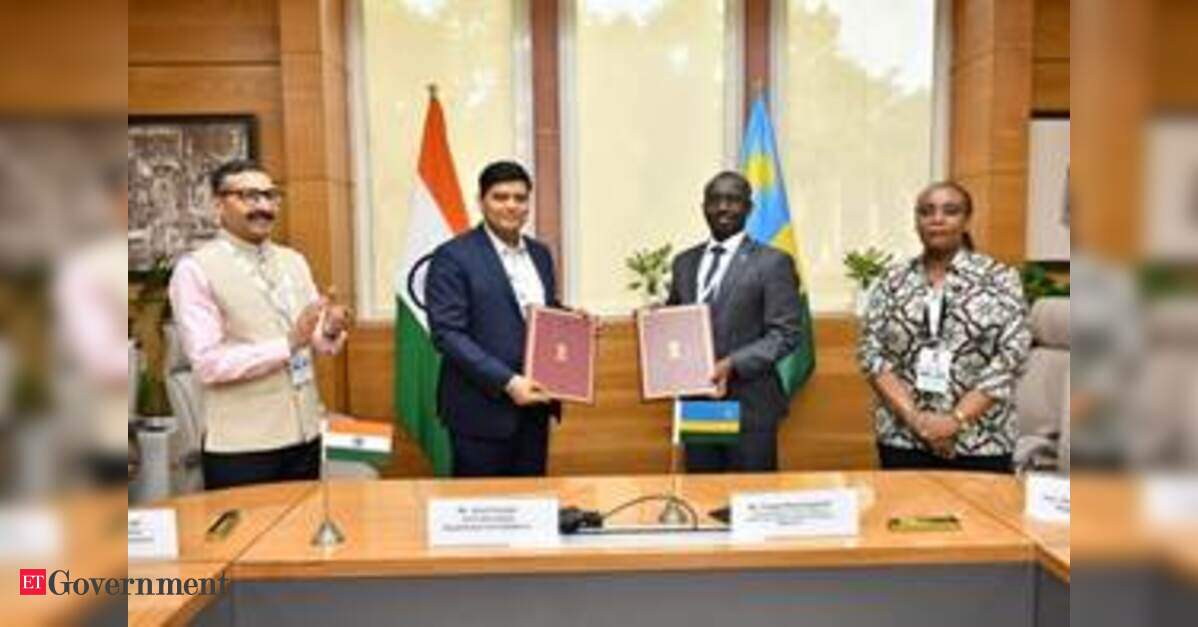
The Indian delegation was led by Amit Kumar, Joint Secretary in the Department of Commerce, while the Rwandan delegation was headed by Virgile Rwanyagatare, Director General for Asia, Pacific and Middle East Affairs in Rwanda’s Ministry of Foreign Affairs and International Cooperation.
Opening the meeting, Additional Secretary in the Department of Commerce Yashvir Singh described the Joint Trade Committee as a permanent institutional platform that would help diversify bilateral trade, expand investment flows and address logistical and regulatory bottlenecks that have constrained commercial exchanges.
The discussions reflected the complementary strengths of the two economies. India remains one of Rwanda’s most important development and economic partners, while Rwanda offers Indian companies a strategically located gateway to some of Africa’s largest integrated markets through the East African Community (EAC), the Common Market for Eastern and Southern Africa (COMESA) and the African Continental Free Trade Area (AfCFTA).
The two countries reviewed the existing trade basket and agreed that it has significant scope for diversification. India’s exports to Rwanda currently include pharmaceuticals, drug formulations, biological products, two- and three-wheelers, industrial machinery, electrical equipment, oil meals, and iron and steel products. Rwanda exports lead, spices, essential oils, copper, processed agricultural products, minerals, and precious and semi-precious stones to India.
Officials agreed that future growth would depend not only on increasing trade volumes but also on expanding the range of products and improving business-to-business engagement. Both sides committed themselves to addressing market access issues while facilitating stronger commercial linkages between enterprises in the two countries.
India highlighted opportunities to increase exports of heavy engineering products, medical devices, refined petroleum products, textiles, plastics, marine products, sports goods, scientific instruments, gems and jewellery. The pharmaceutical sector continues to be one of the strongest pillars of bilateral trade, with Indian companies accounting for nearly one-fourth of Rwanda’s pharmaceutical imports.
Rwanda, meanwhile, identified agricultural and horticultural products—including chillies, macadamia nuts, French beans, avocados, tea and coffee—along with essential oils, minerals and precious stones as sectors with strong export potential to India. The two countries also discussed cooperation between the Bureau of Indian Standards and the Rwanda Standards Board to harmonise standards and improve quality certification, an important step towards reducing technical barriers to trade.
Investment cooperation emerged as another major pillar of the discussions. Rwanda noted that India had become its second-largest foreign investor by 2025 and invited greater Indian participation across mining, agro-processing, affordable housing, manufacturing, healthcare, tourism, information and communication technology, and financial services.
To provide a more structured approach for investors, Invest India and the Rwanda Development Board were designated as focal agencies under the Joint Trade Committee framework. Both countries also agreed to exchange calendars of trade fairs, buyer-seller meets and business forums to facilitate direct interaction between companies.
One of the most strategically significant outcomes of the meeting was the emphasis on cooperation in critical minerals. As global industries increasingly compete for secure supplies of minerals essential for semiconductors, electronics, renewable energy systems and electric vehicles, Rwanda’s reserves of tin, tungsten and tantalum have attracted growing international attention.
India expressed interest in strengthening cooperation in these sectors through institutional collaboration between the Geological Survey of India and the Rwanda Mines, Petroleum and Gas Board. Such cooperation could contribute to India’s broader efforts to secure resilient supply chains for strategic minerals required by its rapidly expanding manufacturing and clean energy sectors.
Healthcare also figured prominently in the discussions. Both countries noted that a Memorandum of Understanding between their respective health authorities is in the final stages of preparation and expected to be signed soon. India proposed recognition of the Indian Pharmacopoeia while also expanding cooperation in traditional medicine, reflecting New Delhi’s efforts to promote both affordable healthcare solutions and AYUSH-based collaboration internationally.
The agenda extended well beyond conventional trade. The two delegations explored opportunities in agriculture and agro-processing, textiles, leather, green mobility, renewable energy, digital public infrastructure, fintech and cybersecurity. India also reiterated its commitment to supporting Rwanda’s human resource development through the Indian Technical and Economic Cooperation (ITEC) Programme, the Study in India initiative and the Skill India Mission, including assistance for strengthening Rwanda’s technical and vocational education ecosystem.
These discussions underline an important evolution in India–Rwanda relations. The partnership is increasingly moving beyond development assistance towards technology partnerships, industrial collaboration and value-chain integration. Rwanda’s business-friendly regulatory environment, digital governance initiatives and strategic geographic location have made it an attractive destination for Indian companies seeking to expand across the African continent.
Jacqueline Mukangira, Ambassador of Rwanda to India, expressed strong optimism about the future of the economic relationship. “I am very enthusiastic about the response we are receiving from Indian businessmen,” she said. “There is tremendous potential to expand bilateral trade, and I believe we are only beginning to realise the opportunities that exist between our two countries.”
Her assessment aligns closely with the outcomes of the Joint Trade Committee, which places considerable emphasis on encouraging direct business engagement alongside government-level cooperation. By institutionalising regular dialogue and creating dedicated mechanisms for investment promotion, both governments are seeking to translate political goodwill into measurable commercial outcomes.
The meeting concluded with Commerce Secretary Rajesh Agrawal congratulating both delegations for laying the foundation of a long-term commercial partnership while emphasising the importance of closely monitoring and implementing the decisions recorded in the agreed minutes.
The Agreed Minutes were formally signed in New Delhi on July 31, and both countries agreed to convene the second session of the Joint Trade Committee in Rwanda next year.
The establishment of the Joint Trade Committee marks an important milestone in India–Rwanda economic relations. While current trade volumes remain modest compared to India’s engagement with several larger African economies, the framework created by the JTC provides a structured roadmap for sustained expansion.
If effectively implemented, the initiatives outlined during the inaugural meeting could significantly strengthen bilateral trade, attract new investments and position Rwanda as an increasingly important partner in India’s broader economic engagement with Africa.