The battlefields of the twenty-first century are no longer confined to land, sea and air. They now extend into cyberspace, outer space, the electromagnetic spectrum and the information domain, where artificial intelligence, autonomous systems, quantum technologies and data-driven decision-making are rapidly redefining military power.
Recognising this profound transformation, Chief of Defence Staff General N. S. Raja Subramani has called upon the Indian Armed Forces to develop the intellectual agility, technological competence and joint operational culture needed to confront the security challenges of the future.
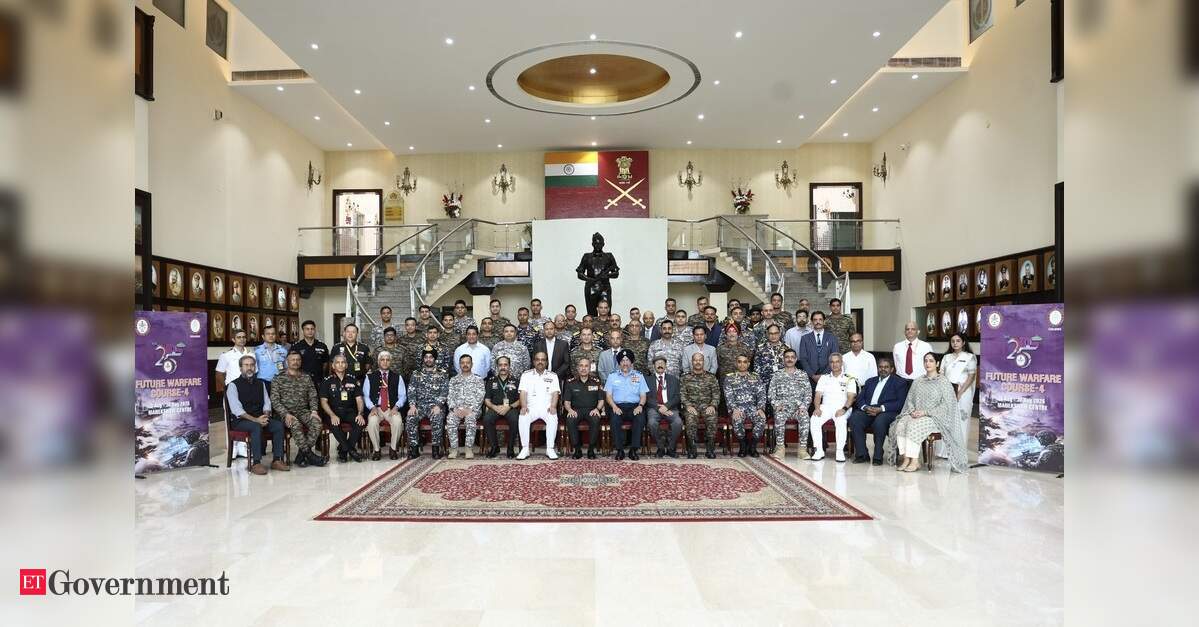
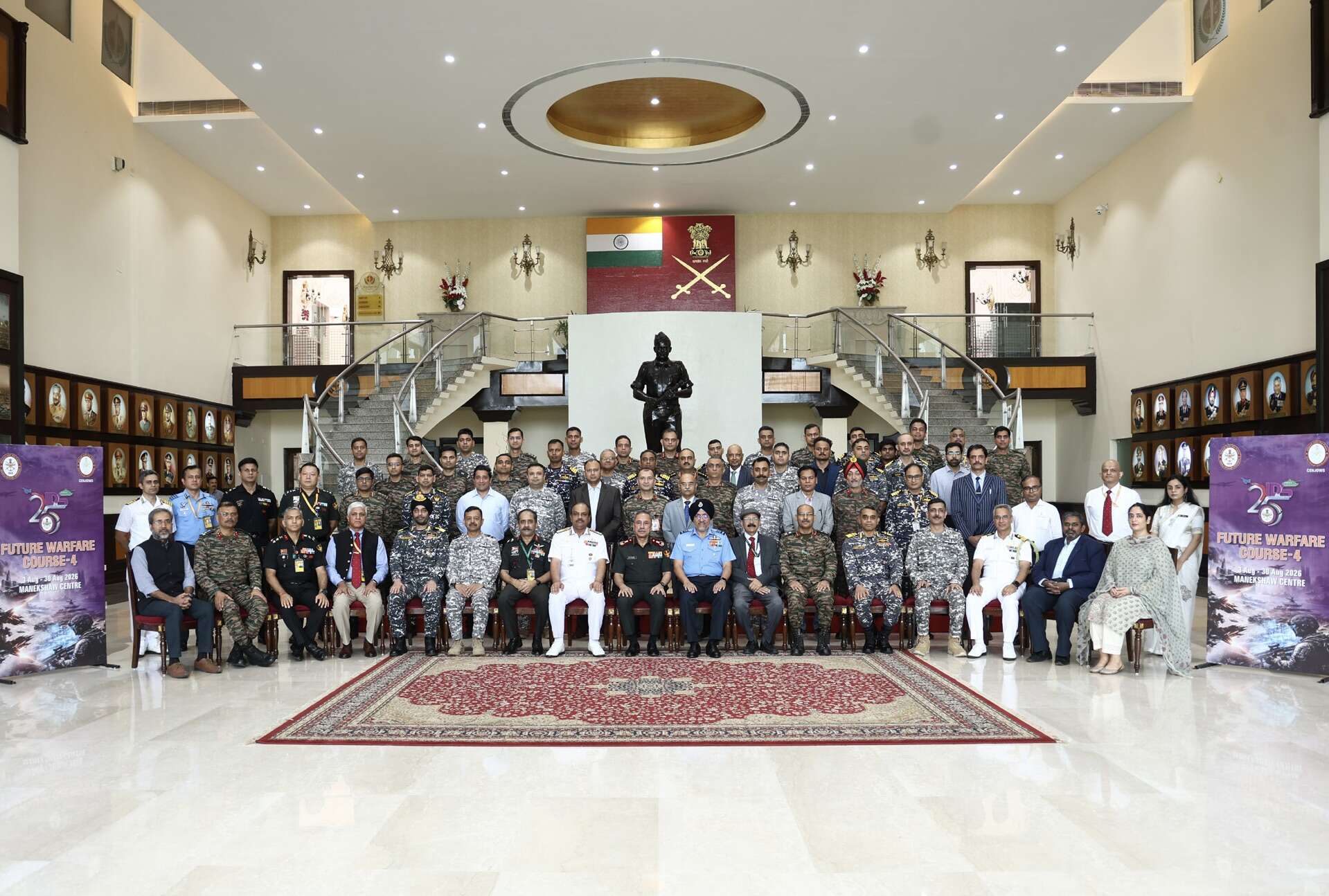
Addressing the inaugural session of the Fourth Edition of the Tri-Services Future Warfare Course at the Manekshaw Centre in New Delhi, General Raja Subramani stressed that future military success will depend not merely on possessing advanced weapon systems but on cultivating leaders who can anticipate technological disruption, integrate emerging capabilities into military doctrine and adapt rapidly to an increasingly uncertain strategic environment.
His address reflected India’s determination to prepare its armed forces for a security landscape that is evolving faster than ever before.
The month-long course, organised by Headquarters Integrated Defence Staff in collaboration with the Centre for Joint Warfare Studies (CENJOWS), has become one of India’s foremost professional military education initiatives. It brings together officers from the Army, Navy and Air Force, along with experts from academia, strategic think tanks, the defence industry, start-ups, MSMEs and research institutions.
By encouraging interaction between military practitioners and technology developers, the programme seeks to bridge the gap between operational requirements and technological innovation.
In his address, the CDS underlined that the changing character of warfare requires a fundamental shift in military thinking. Conventional battles involving tanks, artillery and fighter aircraft remain important, but they are increasingly complemented by cyber operations, electronic warfare, space-based surveillance, autonomous platforms and information campaigns that can influence the course of conflicts without traditional military engagement.
Future wars are likely to be fought simultaneously across multiple domains, demanding seamless coordination among the three services and a far deeper understanding of emerging technologies.
General Raja Subramani emphasised that military leaders can no longer afford to view technology as merely an enabling tool. Instead, technological innovation is becoming a decisive factor in strategic competition. Artificial intelligence is transforming battlefield decision-making; autonomous drones are reshaping tactical operations; quantum technologies promise revolutionary advances in secure communications and computing; while cyber capabilities have become critical instruments of both deterrence and warfare.
Officers must therefore develop the ability not only to understand these technologies but also to integrate them into operational planning and doctrine.
A recurring theme of the CDS’s address was the importance of continuous learning. He urged participants to cultivate intellectual curiosity and remain receptive to new ideas in an era where technological cycles are becoming shorter and military doctrines require constant revision. Professional military education, he observed, cannot remain limited to traditional warfighting concepts. Instead, it must prepare officers to think critically, challenge established assumptions and adapt to emerging operational realities.
This emphasis on intellectual transformation is closely aligned with India’s broader defence reforms. The establishment of the Department of Military Affairs, the drive towards integrated theatre commands and the increasing focus on joint planning all seek to improve the effectiveness of the armed forces in a multidomain operational environment.
The Future Warfare Course complements these reforms by exposing officers from different services to common strategic challenges and encouraging collaborative approaches to solving complex operational problems.
The composition of the course itself reflects the changing nature of national security. Alongside serving military officers, participants interact with scientists, defence technologists, academics, innovators and representatives of India’s expanding defence-industrial ecosystem. Such engagement is particularly significant as the country accelerates indigenous development of drones, autonomous systems, electronic warfare equipment, advanced communications, artificial intelligence applications and next-generation weapon systems under the vision of Atmanirbhar Bharat.
General Raja Subramani highlighted that the future battlefield will increasingly reward nations capable of rapidly absorbing innovation. Recent conflicts across different regions of the world have demonstrated how relatively inexpensive technologies—including unmanned aerial systems, precision-guided munitions, electronic warfare capabilities and data-driven intelligence—can alter operational outcomes. These lessons underline the need for India’s armed forces to remain agile, technologically informed and institutionally adaptable.
The course therefore places equal emphasis on technology, strategy and leadership. Participants examine evolving geopolitical trends, military history, strategic competition, logistics, information warfare, cyber resilience, space operations and emerging technologies through an integrated framework. Such interdisciplinary learning reflects the reality that future military commanders must understand not only battlefield tactics but also the broader political, technological and economic forces shaping national security.
Another important aspect of the programme is its focus on strengthening collaboration between the armed forces and India’s innovation ecosystem. Defence start-ups, private industry, research institutions and public sector enterprises are playing an increasingly significant role in developing indigenous military technologies.
Building stronger partnerships with these stakeholders can accelerate technology adoption while reducing dependence on imported defence equipment. Such civil-military collaboration is expected to become a critical pillar of India’s long-term defence preparedness.
General Raja Subramani’s address ultimately conveyed a broader strategic message: future conflicts will be won not simply by those with superior platforms, but by those who can combine technological innovation, organisational adaptability and integrated military thinking. Firepower alone will no longer guarantee success. Victory will increasingly depend upon the ability to process information faster, make better decisions, integrate capabilities across domains and adapt more quickly than potential adversaries.
As geopolitical competition intensifies and technological disruption accelerates, India’s armed forces are entering a new phase of transformation. The Fourth Edition of the Tri-Services Future Warfare Course represents far more than an academic exercise. It is an investment in developing the intellectual capital that will shape the country’s military leadership in the decades ahead.
General N. S. Raja Subramani’s inaugural address made it clear that preparing for future wars begins long before the first shot is fired—it begins with cultivating leaders capable of understanding the future before it arrives.